
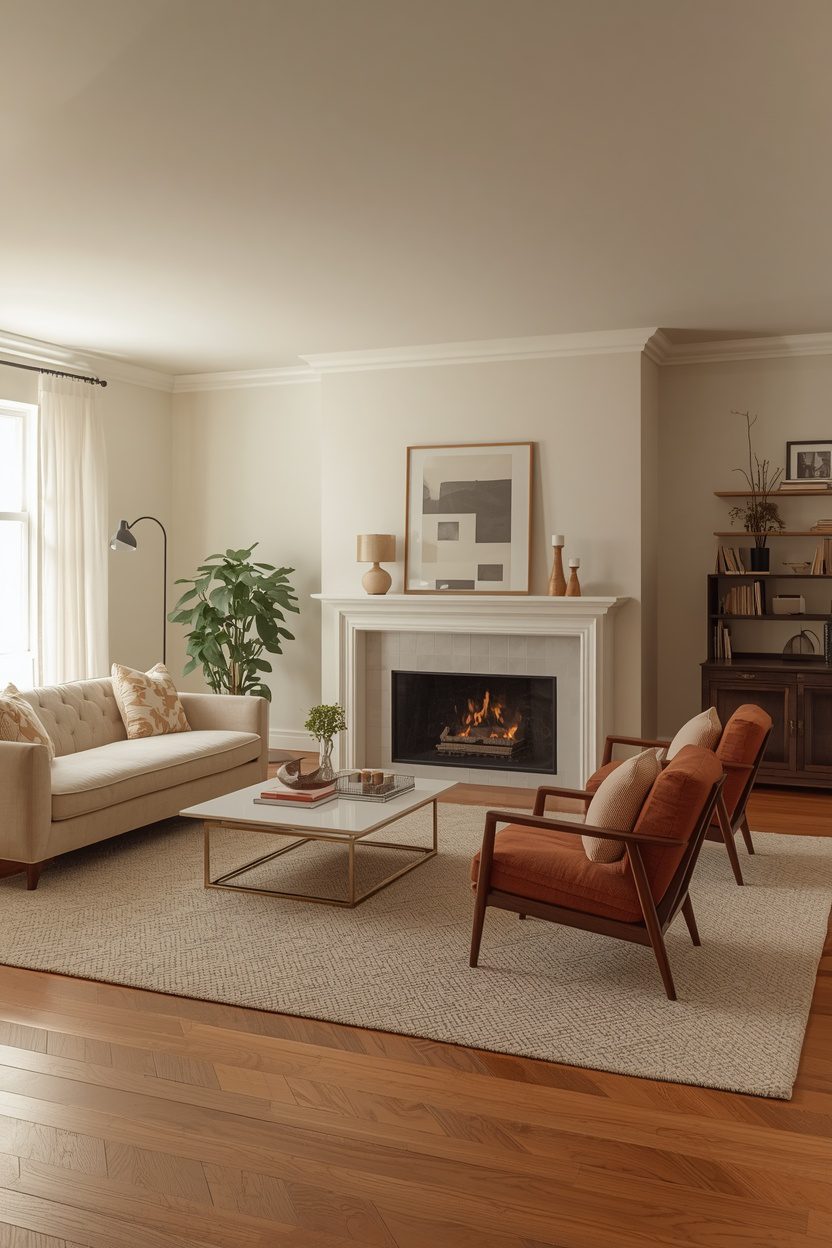
Two living rooms can hold the same furniture and feel completely different, and the difference is almost always in the arrangement. How you position pieces matters as much as the pieces themselves.
Where a floor plan tells you which configuration to use, arrangement is about the principles that make any configuration sing: focal points, balance, flow, and proportion. Master these and you can arrange any room well.
These 12 living room furniture arrangement ideas are the designer principles behind a room that just feels right. Each comes with the practical measurements you need to put the principle into action.
1. Start With a Clear Focal Point
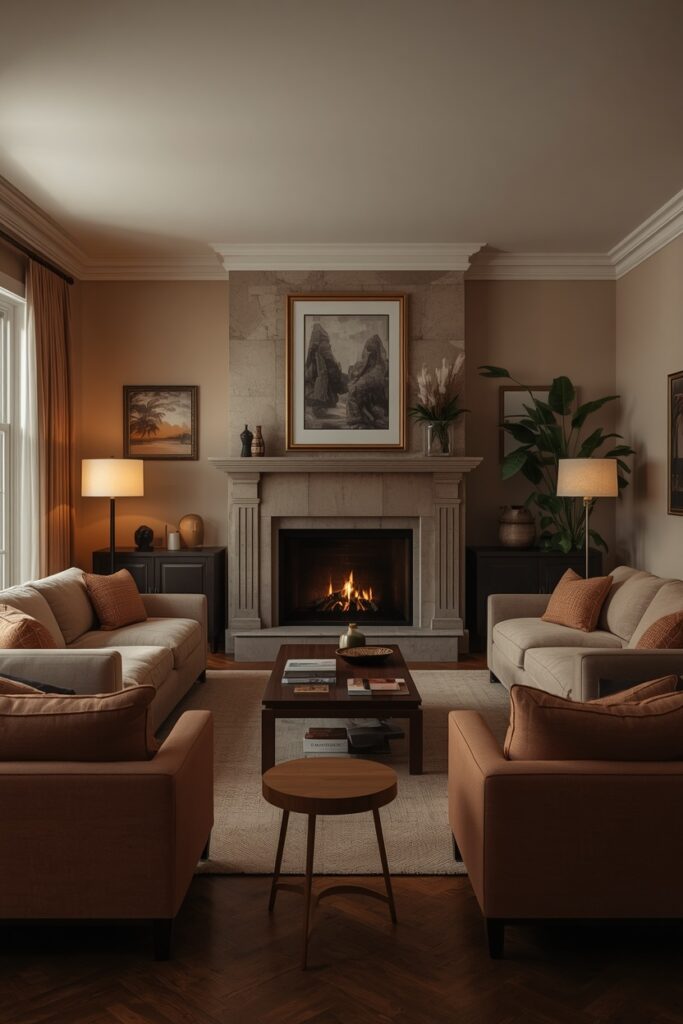
Identify your focal point before you move anything. It might be a fireplace, a large window, a media wall, or a striking piece of art. Choose one hero and let it lead the arrangement.
Turn the main seating to acknowledge the focal point, even if the pieces also serve conversation. Orienting the sofa and chairs toward the hero gives the whole room a sense of purpose.
If your room lacks a natural focal point, create one. A large artwork, a bold rug, or a media unit dressed with shelving can all become the anchor the arrangement needs.
2. Float the Sofa Away From the Wall
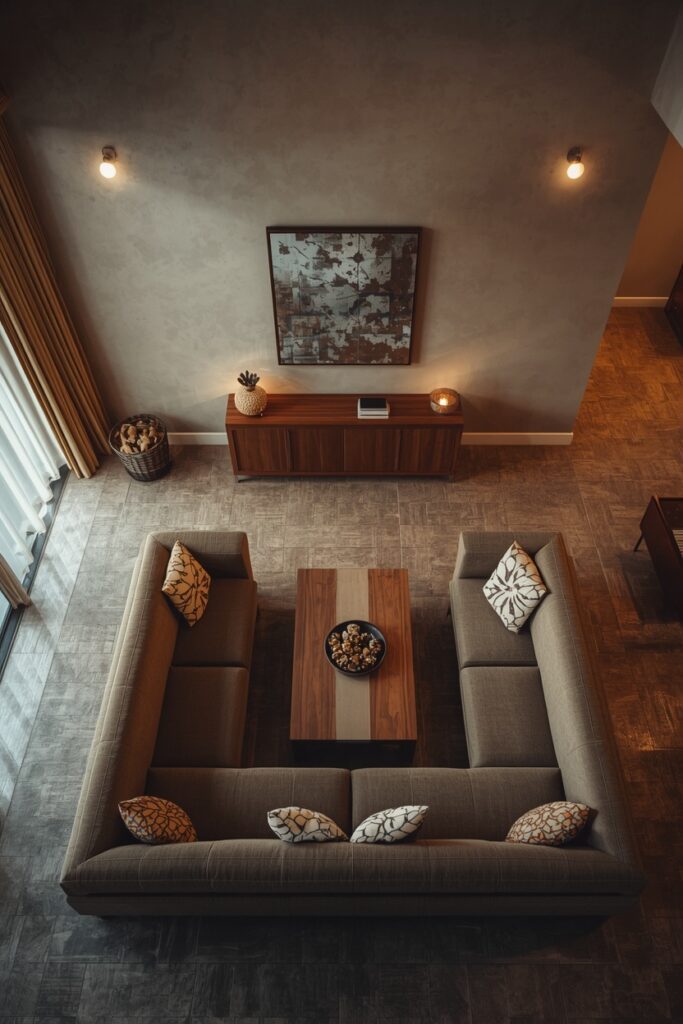
One of the simplest ways to upgrade an arrangement is to stop pushing the sofa against the wall. Floating it inward, even slightly, transforms how a room feels.
Pulling seating toward the centre creates an intimate, gathered grouping rather than a cold ring of furniture around an empty middle. The room instantly feels cozier and more designed.
Even a gap of 6 to 12 inches between the sofa and the wall makes a difference in a smaller room. In larger spaces, float the sofa fully and use the space behind it for a console or desk.
This single move solves the most common arrangement problem of all: furniture spread too thinly around the perimeter, leaving the heart of the room unused.
3. Keep Conversation Distances Comfortable
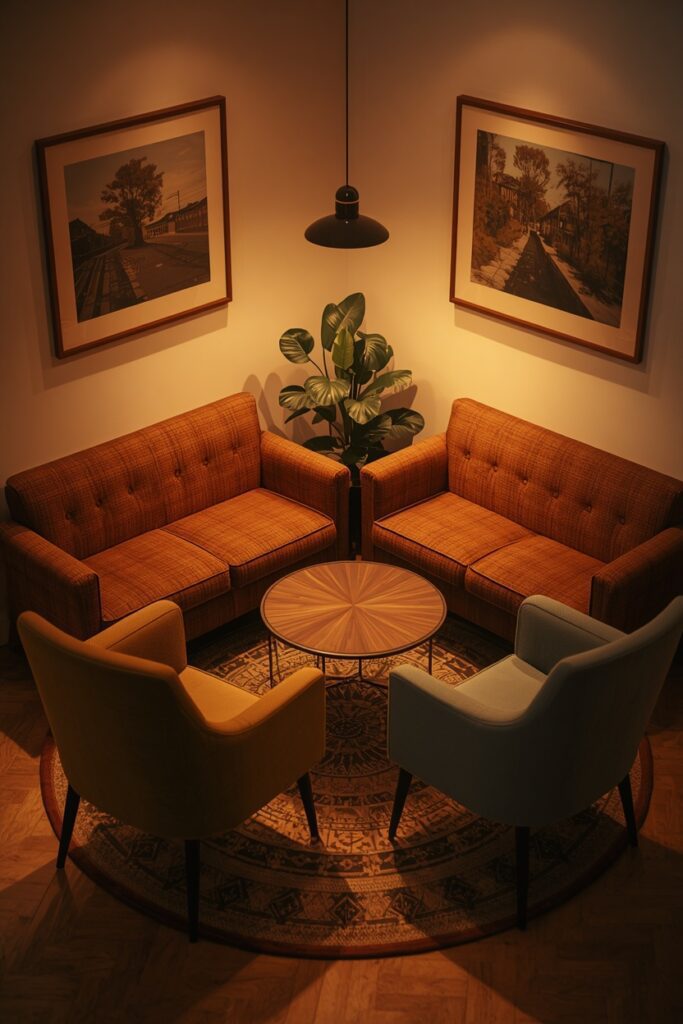
Comfortable conversation is the real test of a living room arrangement. Seating that is too far apart makes a room feel formal and cold, no matter how lovely the furniture.
Aim to keep facing seats within about 8 feet of each other, the natural distance for relaxed conversation without raising your voice. Closer is usually better than further apart.
Angle chairs slightly toward the sofa rather than lining everything up in stiff rows. A gentle turn invites people to face one another and makes the grouping feel warmer.
If a large room spreads seating too far apart, create a second, smaller conversation group rather than stretching one group thin. Two cozy clusters beat one distant ring of chairs.
4. Anchor the Group With the Right-Sized Rug
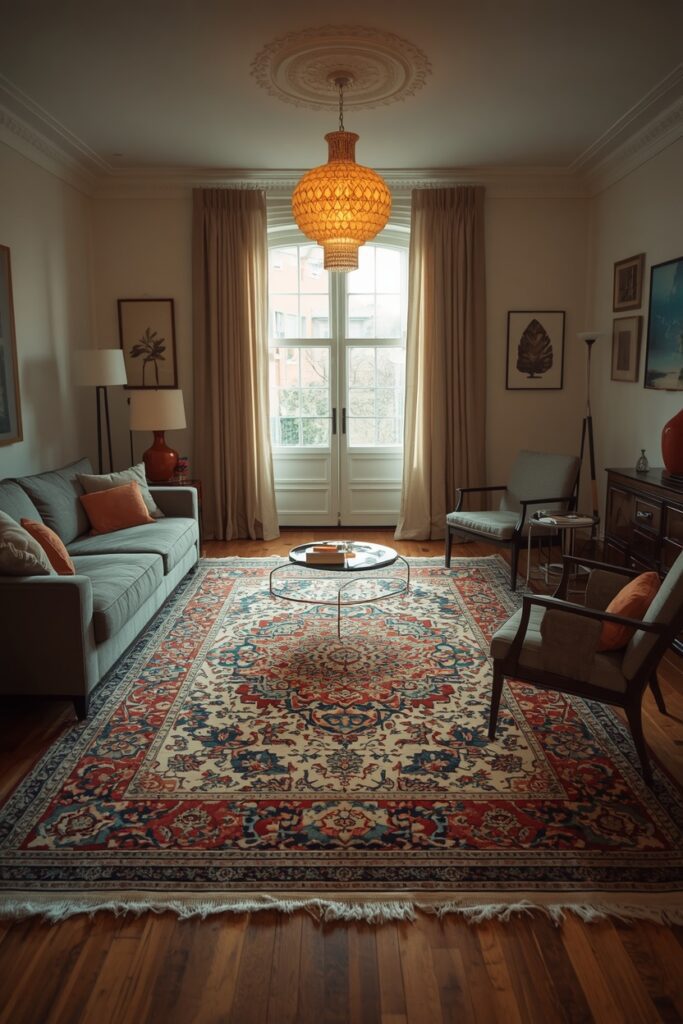
A rug is the foundation that holds a seating arrangement together. The most common rug mistake, choosing one too small, leaves the furniture looking disconnected and the room unfinished.
Size the rug so that at least the front legs of every major seating piece rest on it. In larger rooms, place all the legs fully on the rug for the most grounded, luxurious effect.
Leave a consistent border of bare floor between the rug edge and the walls, ideally 8 to 18 inches. An even margin frames the arrangement and makes the room feel deliberate.
When in doubt, go bigger. An oversized rug almost always looks better than an undersized one, which can make even good furniture feel like it is floating awkwardly.
Key Arrangement Measurements to Remember
| Element | Recommended Distance | Why It Works |
|---|---|---|
| Facing seats | Up to 8 ft apart | Easy, relaxed conversation |
| Sofa to coffee table | 14 to 18 in | Legroom plus easy reach |
| Main walkways | 30 to 36 in | Comfortable circulation |
| Rug border to wall | 8 to 18 in | Frames the seating group |
| Side table to seat | Within arm’s reach | Convenient surface for drinks |
5. Protect the Traffic Flow
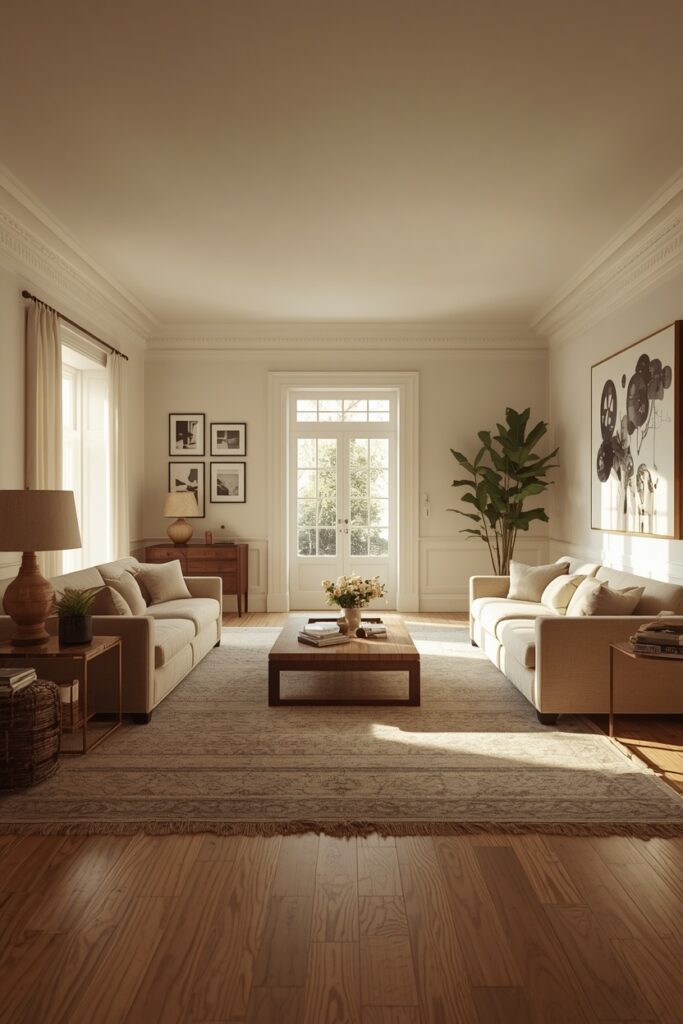
A beautiful arrangement fails if people cannot move through it easily. Traffic flow is the invisible structure that makes a room genuinely livable.
Map the natural routes through the space first, the paths between doorways, windows, and other rooms. Keep these clear so no one has to squeeze past or detour around furniture.
Allow at least 30 to 36 inches for main walkways and never block a doorway with the back of a sofa or a stray chair. Snagging a path daily quickly sours even a stylish room.
Arrange seating so people can reach every chair without climbing over others. If a guest would have to disturb someone to sit down, the flow needs rethinking.
6. Balance Visual Weight Around the Room
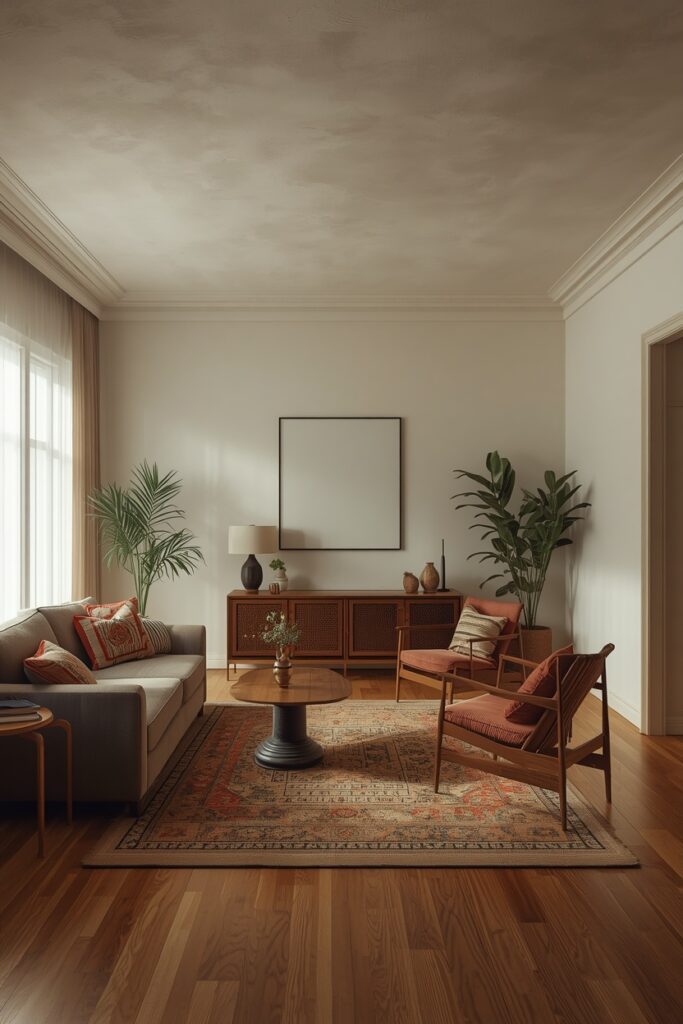
Good arrangements feel balanced, with visual weight spread evenly rather than piled into one corner. A lopsided room feels unsettled even when you cannot say why.
Think of each piece as having a weight based on its size and visual heaviness. Offset a large, dark sofa on one side with substantial elements on the other, such as a pair of chairs, a bookcase, or a tall plant.
Balance does not require symmetry. An asymmetric arrangement can feel perfectly balanced as long as the visual weight on each side of the room is roughly equal.
Distribute height around the room too, so tall pieces are not all clustered together. Spreading the high points keeps the eye moving smoothly across the whole space.
| ⚠️ Important WarningOvercrowding is the fastest way to ruin an otherwise good arrangement.Squeezing in too many pieces blocks walkways, hides your best furniture, and makes the whole room feel smaller and stressful.Be willing to remove a chair, a side table, or an accent piece; a room with breathing room always feels more considered than a packed one.If you have to turn sideways to pass between two pieces, the arrangement has too much in it. |
7. Vary Height for Visual Interest
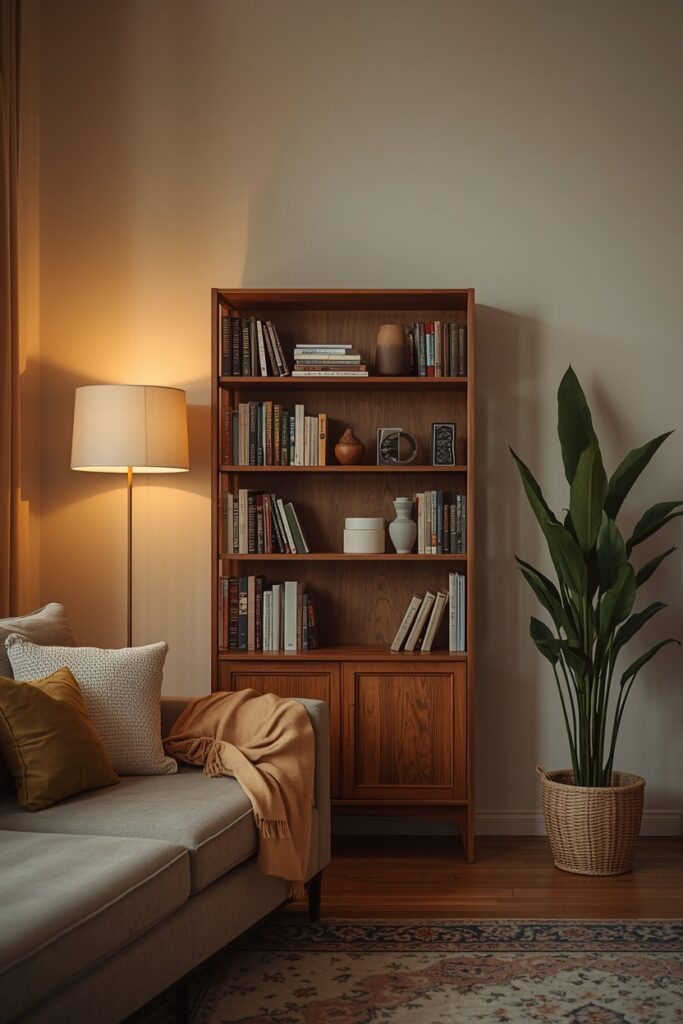
A room where everything sits at the same height feels flat and monotonous. Varying the heights of your pieces gives an arrangement rhythm and life.
Mix low and tall elements deliberately: a low sofa balanced by a tall floor lamp, a high bookcase, or a leggy plant. These vertical accents draw the eye up and stop the room feeling bottom-heavy.
Use lighting and greenery as easy height-builders. A floor lamp beside a reading chair or a tall plant in a corner adds a high point without crowding the floor.
Aim for a gentle up-and-down rhythm across the room rather than a single tall tower in one spot. Distributing the height keeps the whole arrangement feeling balanced and dynamic.
8. Pull Pieces Into Cozy Groupings
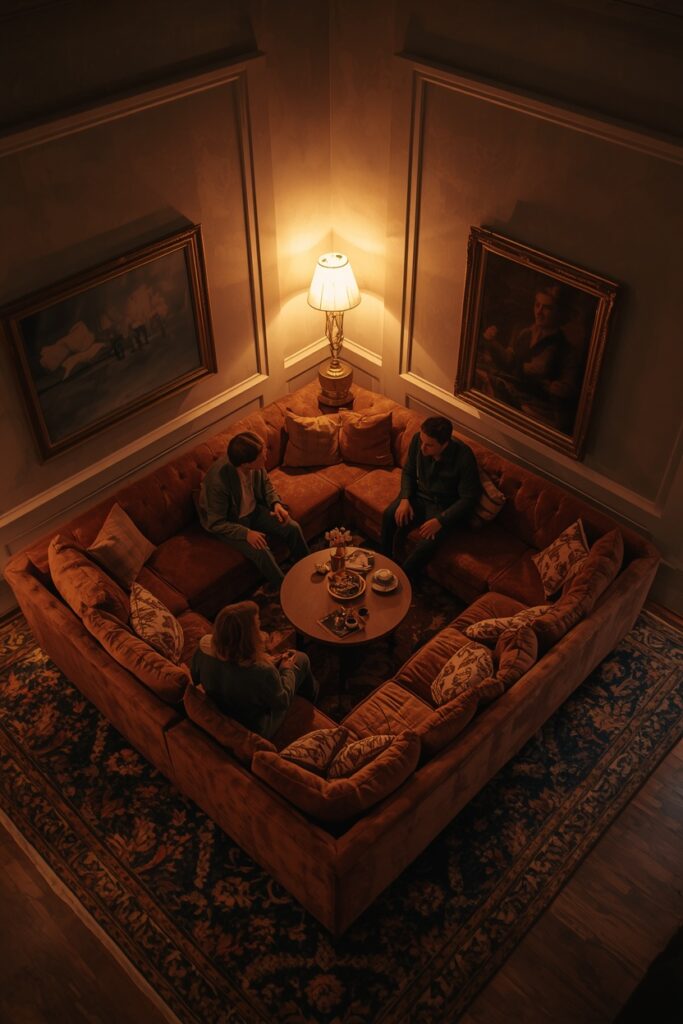
Intimacy comes from grouping furniture closely, not spreading it out to fill the room. Tight, purposeful groupings feel warm and inviting.
Gather the main seating around a shared anchor like a coffee table or ottoman, keeping everything within easy conversation and reach. The closeness is what makes the space feel sociable.
In a large room, resist the urge to push pieces apart just to use the square footage. Instead, create a defined grouping and leave generous open floor around it, or add a second grouping elsewhere.
A well-grouped arrangement also reads as more intentional. Scattered furniture looks accidental, while a tight cluster looks designed.
9. Mind Sightlines and Negative Space
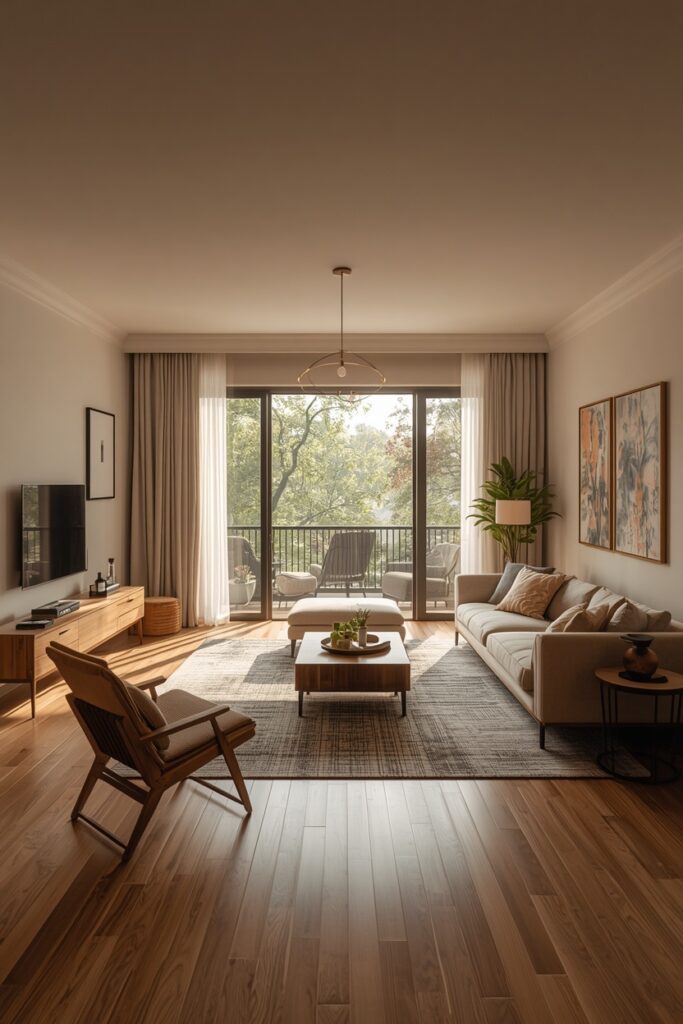
What you leave empty matters as much as what you fill. Negative space, the open areas around furniture, gives a room room to breathe and lets the best pieces stand out.
Protect key sightlines, especially the view to a window or focal point as you enter the room. An unbroken sightline makes a space feel larger and more welcoming from the doorway.
Resist filling every gap with a side table or accent chair. Deliberate empty space reads as calm and confident, while a fully packed room reads as cluttered.
Step into the doorway and look at the arrangement as a guest would. If the view in is open and inviting, the negative space is doing its job.
10. Angle Furniture for a Softer Feel
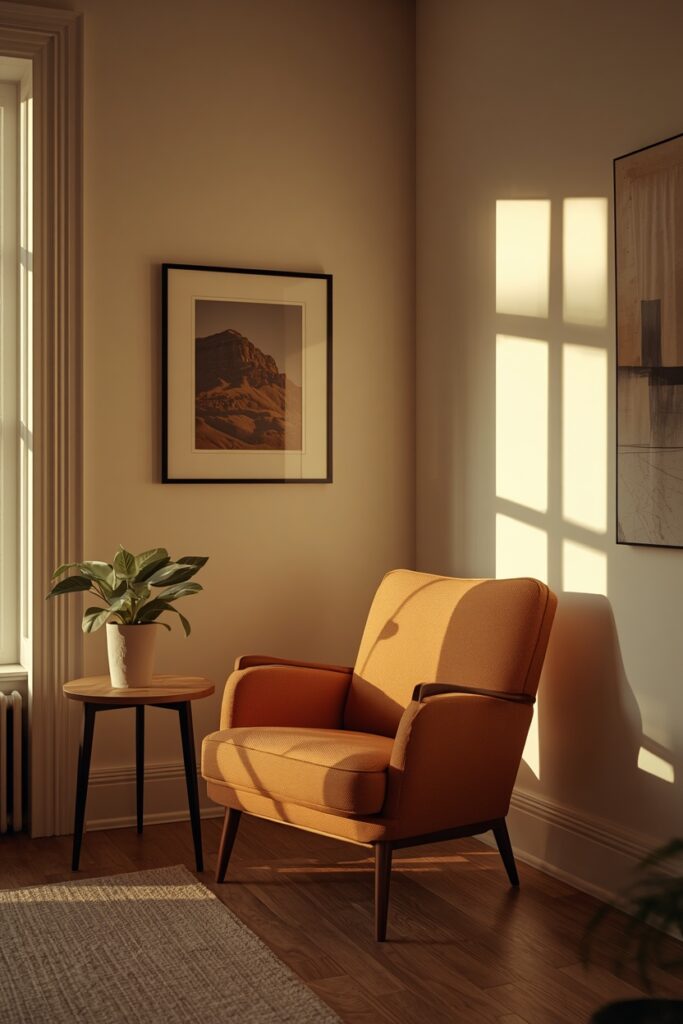
Squaring every piece to the walls can make a room feel rigid. Angling a chair or two introduces a softer, more relaxed, welcoming quality.
Turn an accent chair toward the sofa or the focal point rather than lining it up perfectly straight. The slight angle invites conversation and breaks the boxy grid of the room.
Angling also helps in awkward spaces, letting you orient seating toward a corner fireplace or television without a full diagonal layout. A single angled piece can resolve a tricky corner.
Use angles as an accent, not the rule. One or two turned pieces feel intentional, while angling everything can waste floor space and make the room feel chaotic.
11. Use Pairs and Symmetry to Ground a Room
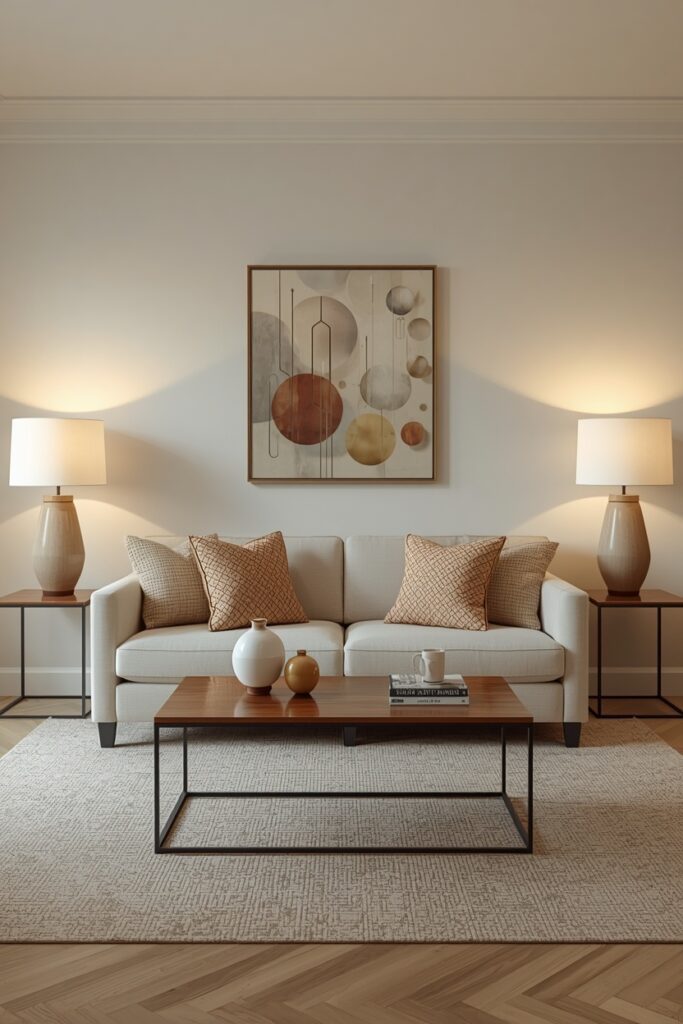
Pairs and symmetry bring instant calm and order to an arrangement. Mirrored elements feel intentional and restful, which is why designers reach for them so often.
Flank a sofa with two matching side tables and lamps, or place a pair of identical chairs opposite it. These mirrored pairs create a balanced, composed framework for the room.
Symmetry is especially powerful around a strong focal point like a fireplace, where matching pieces on either side reinforce the central axis. The result feels formal and settled.
You do not need perfect symmetry everywhere. Use it to anchor the main arrangement, then loosen up with a few asymmetric accents so the room feels collected rather than rigid.
12. Leave Breathing Room Between Pieces
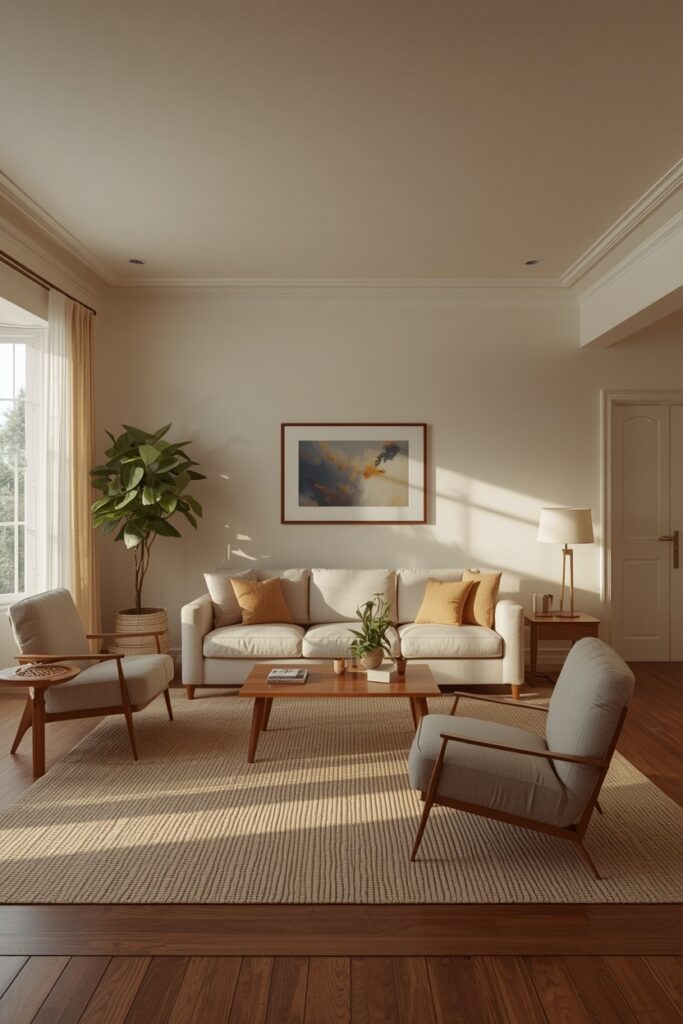
The finishing principle of a great arrangement is restraint. Leaving breathing room between pieces is what separates a styled room from a crowded one.
Give each significant piece a little space around it so it can be appreciated on its own. Furniture jammed edge to edge loses its impact and makes the room feel smaller.
Maintain consistent gaps where you can: a hand’s width between a side table and a sofa arm, a clear path between groupings, and open floor at the room’s centre or edges.
When an arrangement feels off but you cannot name why, the answer is usually to remove something rather than add. Editing down is the most underused arrangement skill of all.
| ⭐ Pro TipWhen an arrangement is not working, start over with an empty room and add pieces back one at a time.Place the largest item first, oriented to the focal point, then build the seating group around it.Add only what the room genuinely needs, checking walkways and conversation distance as you go.This reset reveals which pieces earn their place and which were only adding clutter. |
| 📌 Important NoteThe principles in this guide apply to any furniture and any style of living room.Focal point, balance, flow, and breathing room are the foundations that make an arrangement feel right.Once these are in place, the specific configuration you choose is simply a matter of taste and the shape of your room. |
Your Furniture Arrangement Checklist
Use this checklist to arrange any living room like a designer:
- Choose one clear focal point and orient seating toward it.
- Float the sofa off the wall to gather the seating inward.
- Keep facing seats within about 8 feet for conversation.
- Anchor the group with a rug large enough for the front legs.
- Protect walkways of 30 to 36 inches and never block doorways.
- Balance visual weight and vary heights across the room.
- Leave deliberate breathing room and edit out excess pieces.
Frequently Asked Questions
How do I arrange living room furniture like a designer?
Start with a clear focal point, float the sofa off the wall, and pull seating into a close grouping within about 8 feet. Anchor it with a properly sized rug, balance the visual weight, protect walkways, and leave deliberate breathing room between pieces.
Where should I start when arranging a living room?
Begin with the focal point, then place your largest piece, usually the sofa, oriented toward it. Build the rest of the seating around that anchor, adding pieces one at a time and checking conversation distance and walkways as you go.
How far apart should living room seating be?
Keep facing seats within about 8 feet for comfortable conversation, and leave 14 to 18 inches between seating and the coffee table. Closer groupings feel warmer and more sociable than furniture spread far apart.
How do I balance furniture in a living room?
Spread visual weight evenly so one side of the room is not heavier than the other, offsetting a large sofa with substantial pieces opposite. Vary heights around the room and use pairs or symmetry near the focal point to ground the arrangement.
Why does my living room arrangement feel off?
The usual culprits are furniture pushed against the walls, a rug that is too small, blocked walkways, or simply too many pieces. Floating the sofa, sizing up the rug, clearing the paths, and editing out clutter resolves most arrangement problems.
Final Thoughts
Arranging furniture well is less about following a single template and more about applying a handful of timeless principles. Focal point, balance, flow, and breathing room do the heavy lifting in every room.
Float the sofa, keep conversation close, anchor the group with the right rug, and protect the paths through the space. These moves work regardless of your furniture or your style.
When something feels wrong, trust that instinct and adjust, usually by removing rather than adding. A well-arranged living room is one that feels as good to move through and live in as it looks.