
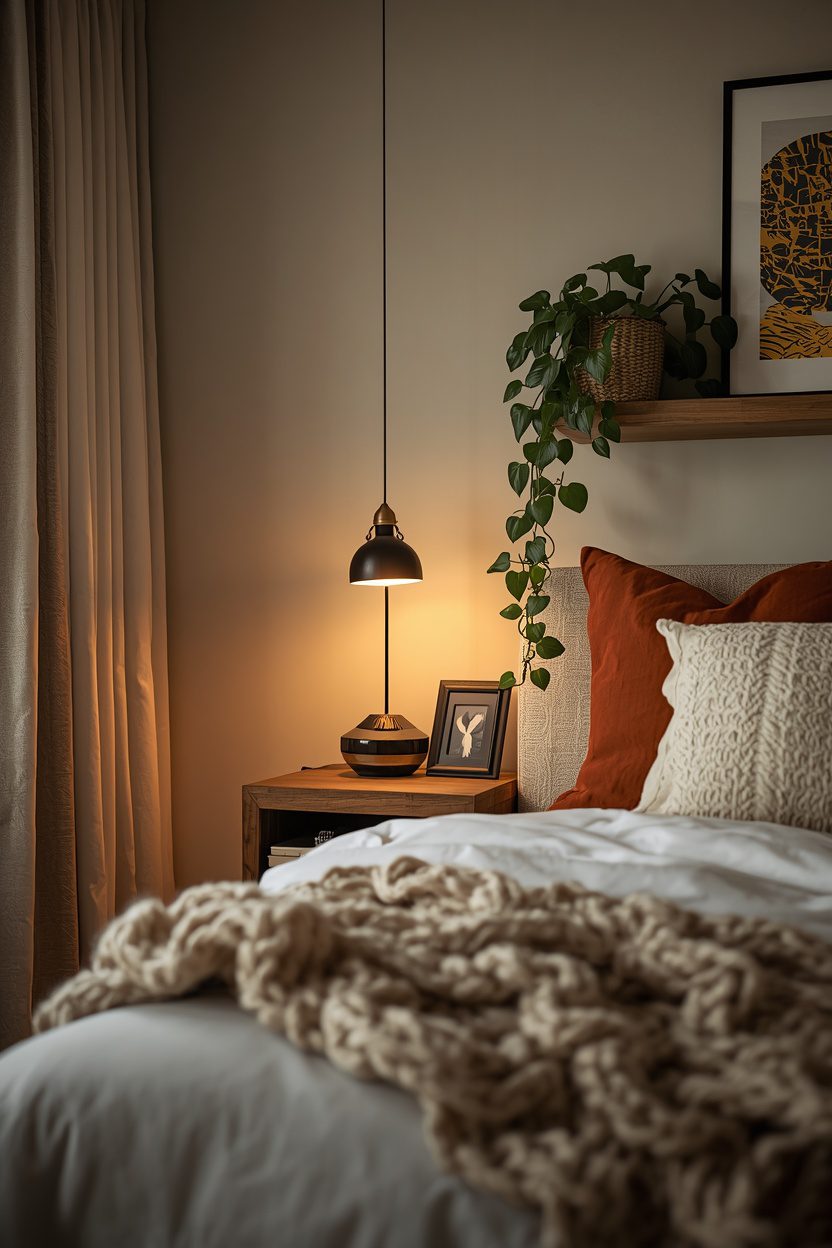
Walk into a bedroom that stops you mid-step and you notice texture before colour — the roughness of a linen duvet against a smooth walnut headboard, the grain of a jute rug underfoot, the soft pooling of lamplight on a plaster wall. That sensory pull is what separates a decorated bedroom from a room that simply holds a bed. The bedroom decor ideas in this guide are built around that principle: every numbered section below is one complete room, not a single product recommendation.
Whether you lean toward dark moody walls, bright Scandinavian oak, or somewhere in between, each idea maps out the palette, materials, layout, and lighting you need to recreate it. I have tried to flag real trade-offs where they matter — some of these schemes demand more upkeep than others, and a few only land in rooms with specific ceiling heights or natural-light conditions. Read the full idea before committing, and adapt freely.
1. Warm Neutral Palette With Layered Linen
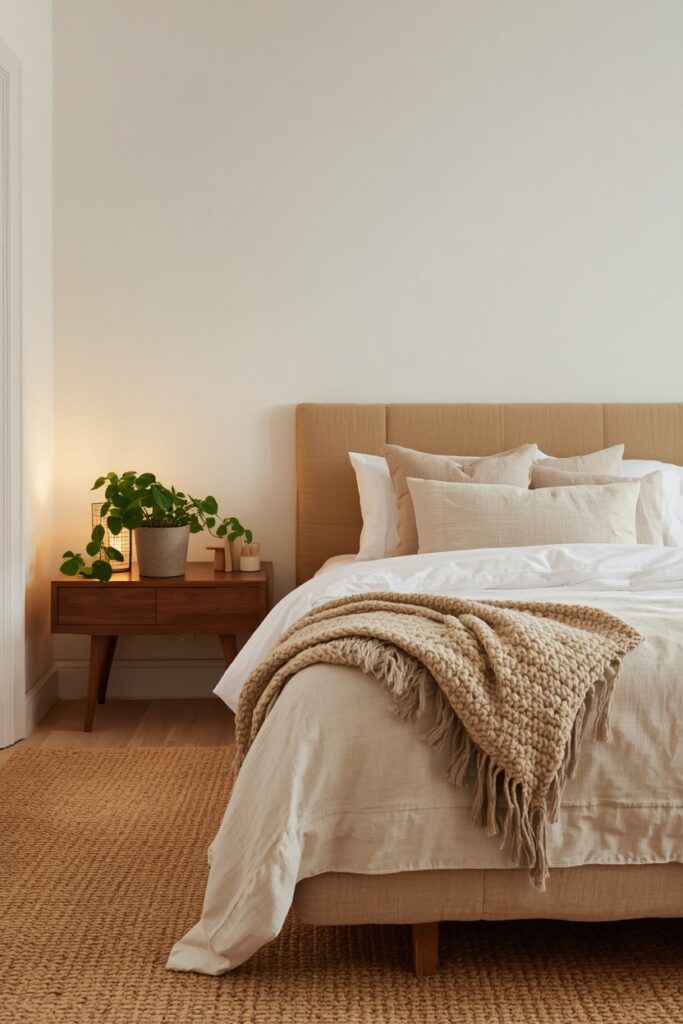
Start with walls in a sandy off-white — something with a yellow undertone rather than pink — and build the bed in undyed linen from duvet to euro shams. The headboard here is upholstered in oatmeal bouclé, roughly 140 cm wide for a queen, mounted 10 cm off the wall so it catches side light. A low walnut nightstand keeps everything grounded, and a jute rug (at least 240 × 300 cm so it extends well beyond the bed frame) adds the floor texture that stops the room from reading flat. One trade-off: linen wrinkles constantly and pills after about 18 months of weekly washing, so budget for replacement sets. Layer a chunky knit throw across the foot in a tone two shades darker than the walls to pull the eye downward and give the bed visual weight.
2. Moody Dark Green Retreat
Deep forest green on every wall, ceiling included, turns a bedroom into a space that wraps around you. Pair it with brass hardware — drawer pulls, a pendant light, towel hooks on a nearby door — so the metallics break up the darkness without competing. The bed should be low-profile, ideally a black iron frame or dark oak platform, dressed in charcoal linen with one sage-green lumbar pillow as a lighter accent. Mount a 60 cm round brass mirror above a narrow floating shelf on the wall opposite the window to bounce whatever daylight enters.
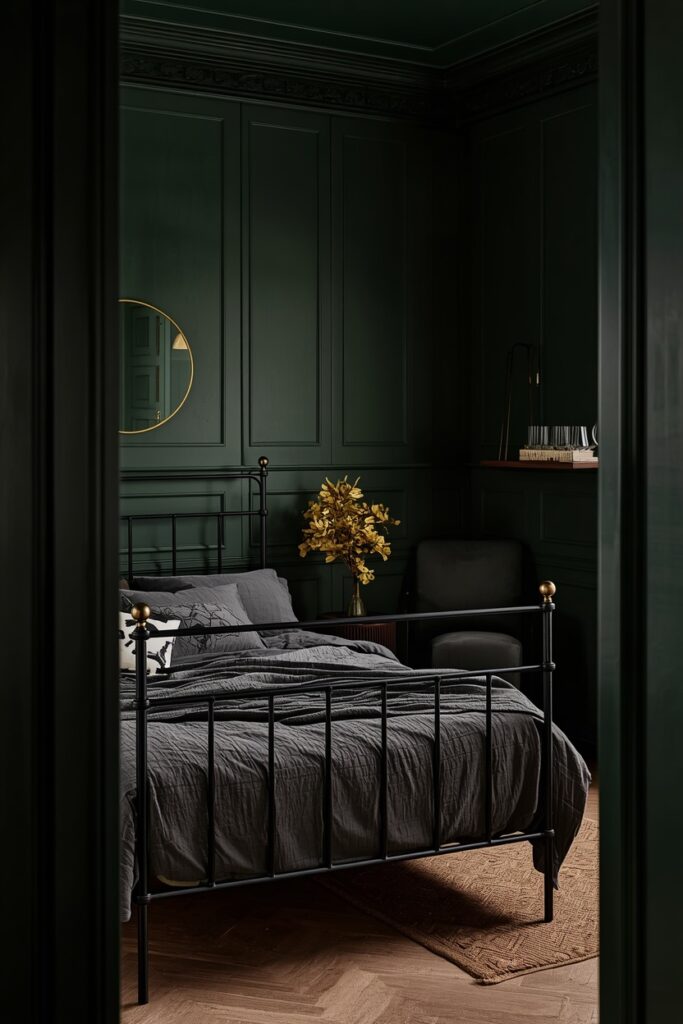
The caveat here is room size: this palette crushes rooms under 12 square metres because the colour absorbs so much light. If your room qualifies, add a single trailing plant — a golden pothos or heartleaf philodendron — on the shelf for organic contrast.
3. Japandi Bedroom With Low Platform Bed
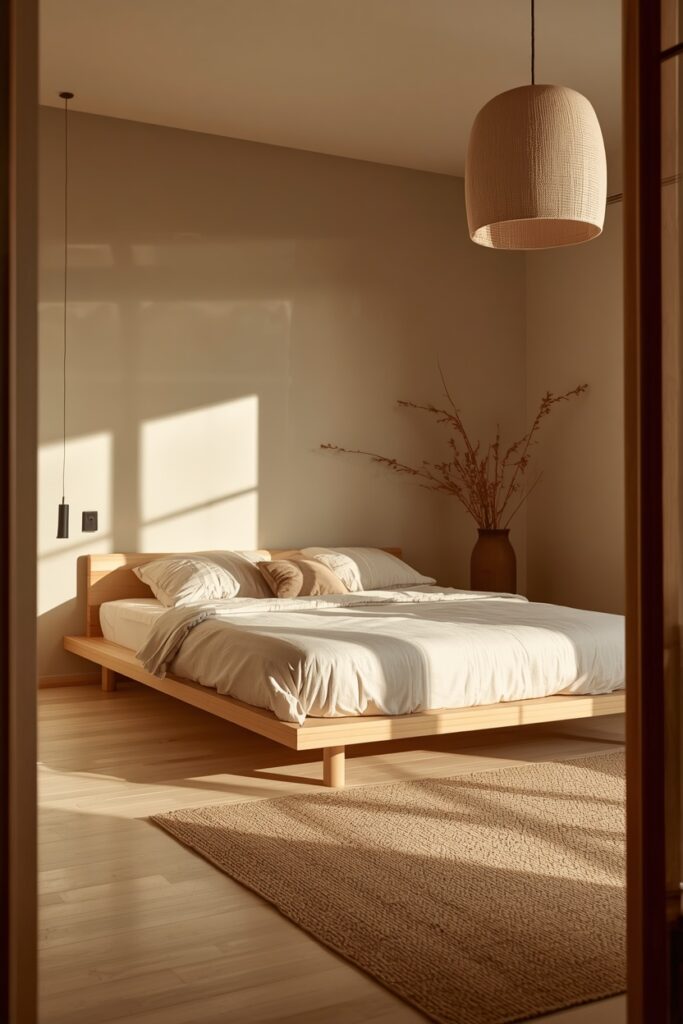
Japandi strips the bedroom down to what matters and then adds just enough warmth to keep it from feeling sterile. The centrepiece is a solid ash or white oak platform bed sitting roughly 20 cm off the floor, with a thin futon-style mattress or a standard mattress recessed into the frame. Walls stay in a warm putty — not bright white, which reads cold in this context — and the floor is either pale hardwood or large-format porcelain tile in a stone look. A single wabi-sabi ceramic vase on one nightstand, a linen pendant shade overhead set at 2700K, and a woven wool rug in cream or mushroom complete the room.
Resist the urge to add more: the power of this design sits in the negative space, and every extra object dilutes it. Window treatments should be simple roller blinds in a matching putty tone, mounted inside the frame so the wall line stays clean.
4. Soft Blush and Cream Bedroom
Pink in a bedroom does not have to read juvenile if you control the saturation.
Keep the blush to a dusty, muted tone — closer to dried rose than bubblegum — and apply it on just two walls or as the bedding colour against cream walls. The bed frame should be something with visual weight: a cane headboard, a linen-wrapped arch, or a solid timber frame in a bleached look.
Layer a cream faux-fur throw at the foot and add a small round side table in matte white or light oak. Curtains in a sheer linen filter light without darkening the room, and a single brass table lamp with a fabric shade gives the bedside a polished look.
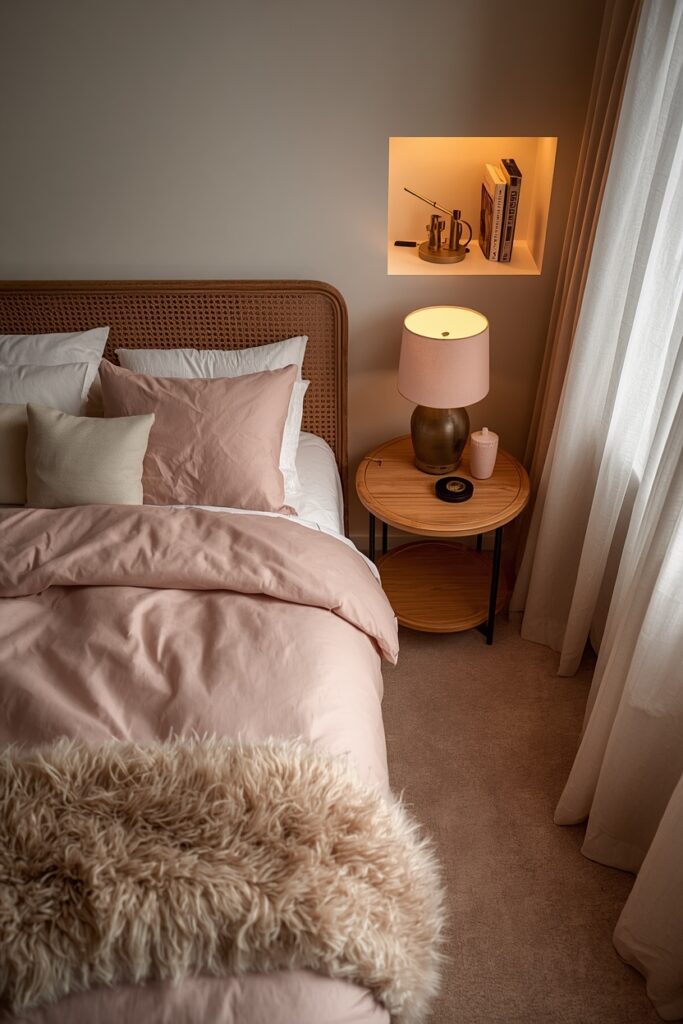
One practitioner note: blush tones shift dramatically under different bulb temperatures, so test your paint swatch at night under the actual bedside light before committing.
5. Industrial-Modern Bedroom With Exposed Brick
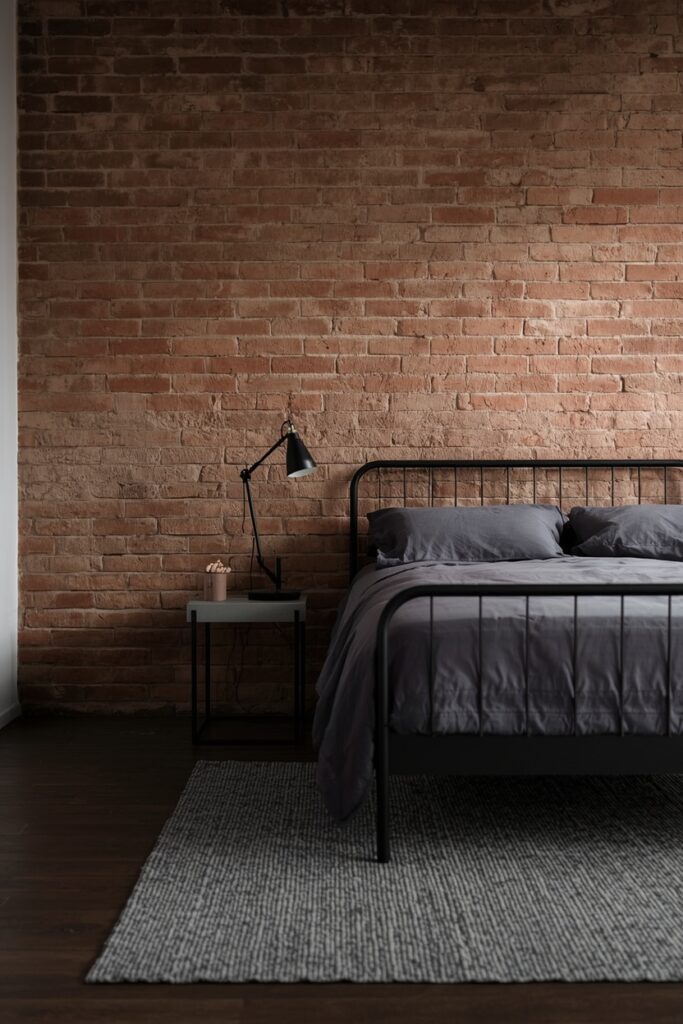
If you have an exposed brick wall or can add a realistic brick veneer panel, anchor the bed against it and let the texture do the talking. The bed frame should be matte black metal — thin legs, no ornate scrollwork — dressed in washed cotton in slate or charcoal. A concrete-look side table or a reclaimed-wood stump keeps the industrial thread going. Lighting matters more here than in most schemes: use a black swing-arm wall sconce on each side of the bed (saves nightstand space and adds visual interest) set to around 2700K. The floor should be a dark-stained hardwood or polished concrete softened by a large flat-weave rug in a heathered grey. Watch the acoustic trade-off — hard surfaces bounce sound, so a thick rug and heavier curtains help dampen the echo that bare brick and concrete create.
6. Coastal Calm Bedroom in Blue-Gray Tones
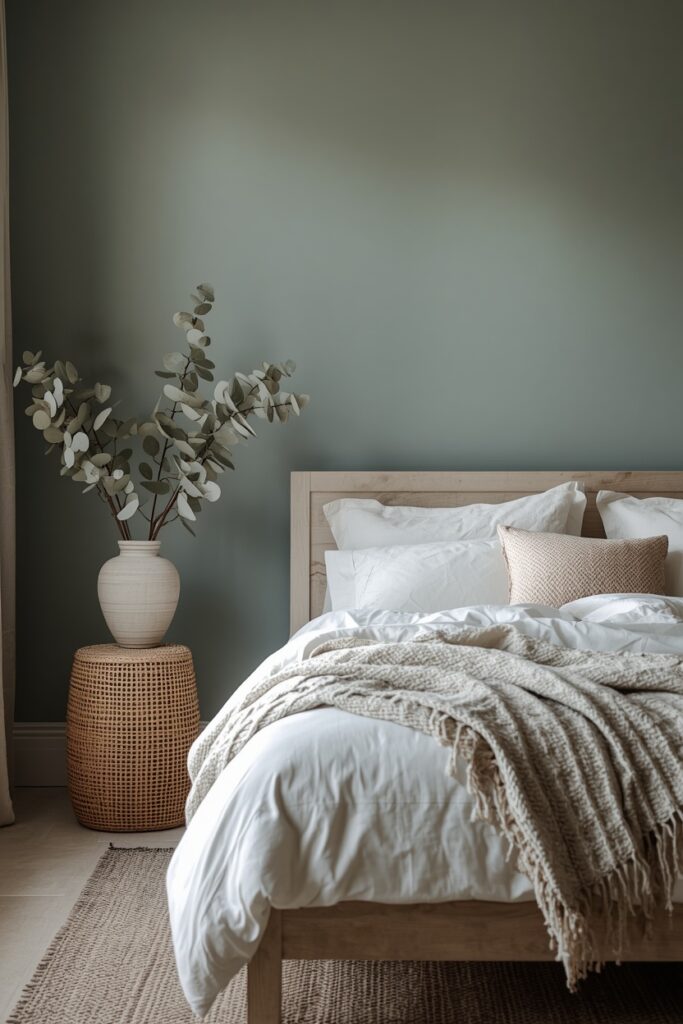
This is not the shell-and-anchor beach theme — it is a tonal room built on watery blue-grays, sandy whites, and pale driftwood. Walls go in a soft blue-gray with a green undertone so the colour shifts gently between daylight and evening. The bed frame is whitewashed oak or reclaimed pine, dressed in stonewashed cotton in white and a single chambray throw in a deeper blue. Nightstands should be simple — a rattan side table or a pale timber cube — and keep surfaces nearly bare: one ceramic lamp, one small vase of dried pampas or eucalyptus.
The rug is either a natural sisal or a low-pile cotton in off-white, sized so it sits under the bottom two-thirds of the bed. Curtains in a heavy unbleached cotton add the drape and softness that prevents the room from tilting too crisp.
7. Mid-Century Modern Bedroom With Warm Wood
Walnut is the backbone of this room — a walnut bed frame with tapered legs, a matching two-drawer nightstand, and if budget allows, a walnut-veneer dresser along the opposite wall. Walls stay warm white or light mushroom so the wood grain stays the focal point. Bedding should contrast: think a burnt-orange or mustard linen duvet against the brown tones, with one or two accent pillows in olive or terracotta.
A starburst mirror or a graphic print above the bed gives the wall behind it a mid-century signature. Rugs go geometric — a flatweave kilim in earthy tones sized at 240 × 300 cm anchors the furniture grouping.
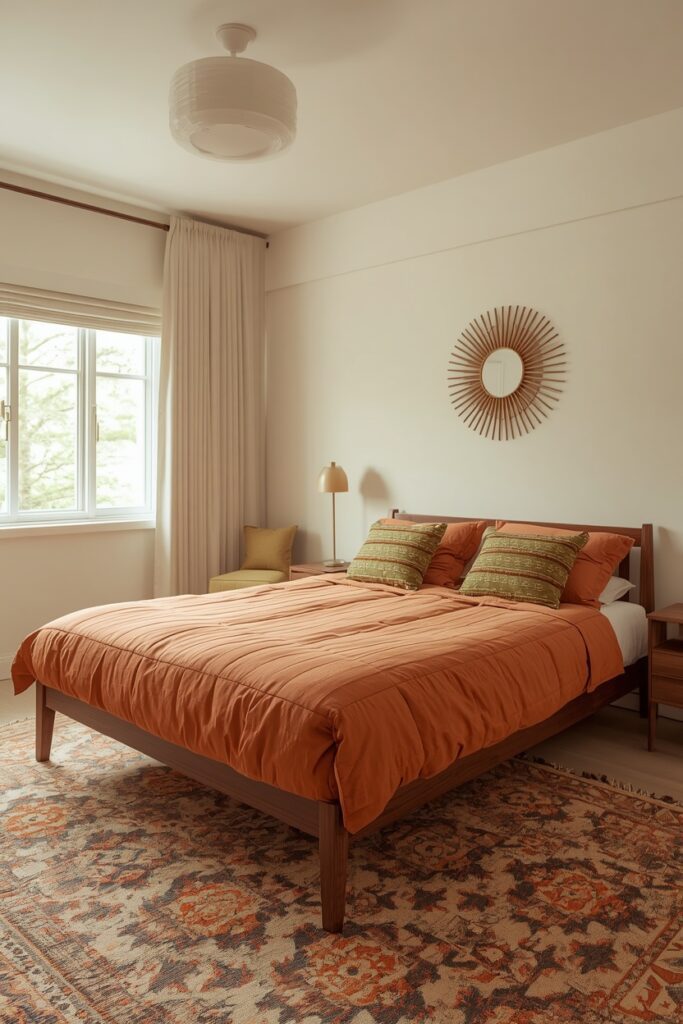
One note on walnut furniture: solid walnut commands a real premium, so walnut-veneer over engineered wood is the practical route for most budgets without sacrificing the look.
8. Scandinavian White and Oak Bedroom
Everything here is about light: white walls, white bedding, light-oak furniture, and sheer curtains that let every lumen through. The bed frame is a simple oak rectangle — no headboard needed if you mount a long floating shelf about 30 cm above the pillow line for books and a small plant. Nightstands are slim oak stools or wall-mounted boxes. A single sheepskin draped over a Danish-style lounge chair in the corner adds the softness the room needs.
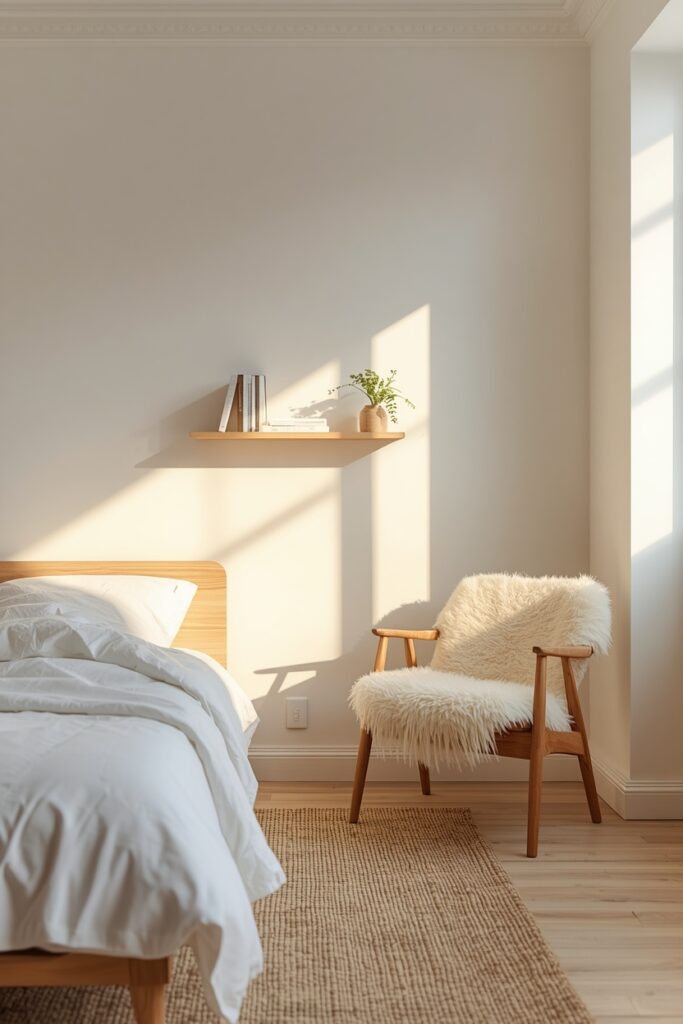
Keep the rug pale — a handwoven wool in ivory or soft gray, at least 200 × 290 cm — and resist adding colour beyond what the plants and book spines provide. The risk with this scheme is that it photographs beautifully but shows every mark; light oak and white textiles demand regular upkeep and benefit from washable slipcovers where possible.
9. Bohemian Earth-Tone Bedroom Decor in Warm Layers
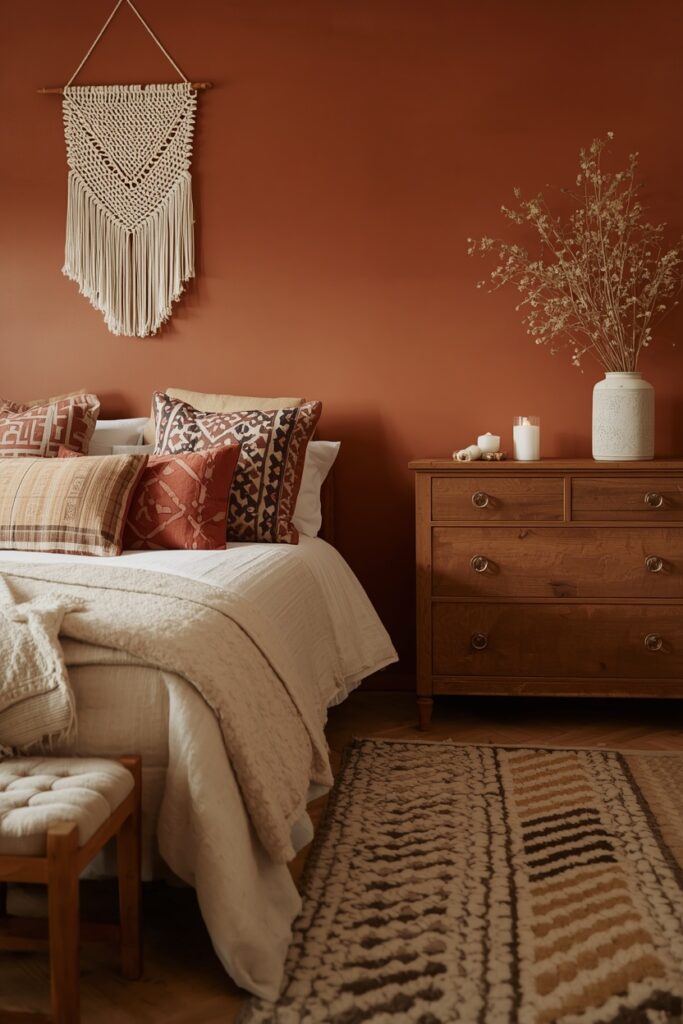
Layer is the operative word here — this room stacks pattern on pattern and gets away with it because every piece shares the same warm, earthy colour family. Start with terracotta or rust-coloured walls, then dress the bed in a mix of block-print and mudcloth pillows over a cream base duvet. The headboard can be a large macramé wall hanging or a rattan sunburst mounted directly to the wall. A vintage or vintage-look wooden dresser with visible grain keeps the room grounded, and a thick hand-knotted wool rug in cream and brown brings warmth underfoot. Hang a cluster of dried florals — palm fronds, bunny tails, dried roses — in a tall stoneware vase on the dresser top. Two candle holders in brass or blackened iron on the nightstand supply the evening glow that makes this style sing after dark.
10. Art Deco Bedroom With Velvet and Gold
Art Deco demands commitment: half-measures make it look like a hotel lobby. Go with a channel-tufted velvet headboard in deep teal, emerald, or navy — floor-to-ceiling if the ceiling height allows, or at least 150 cm tall for a queen bed. Walls should be a rich cream or warm charcoal, and the metallic accent is gold throughout: gold-framed mirror, gold drawer pulls, a gold arc floor lamp beside a reading chair. Bedding stays relatively simple — ivory or champagne sateen — so the headboard remains the star. A round marble-top side table on gold legs replaces the standard nightstand.
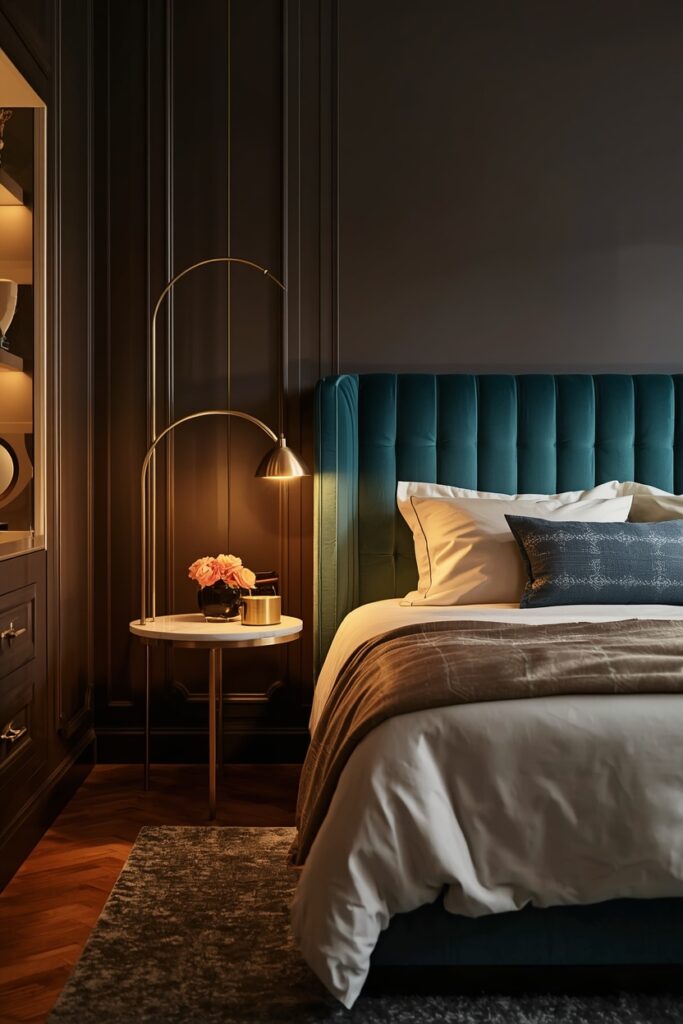
The floor gets a plush, deep-pile rug in a solid dark tone. Be warned: velvet headboards attract pet hair and dust; a lint roller on the nightstand becomes a weekly habit.
11. Rustic Farmhouse Bedroom With Iron Bed Frame
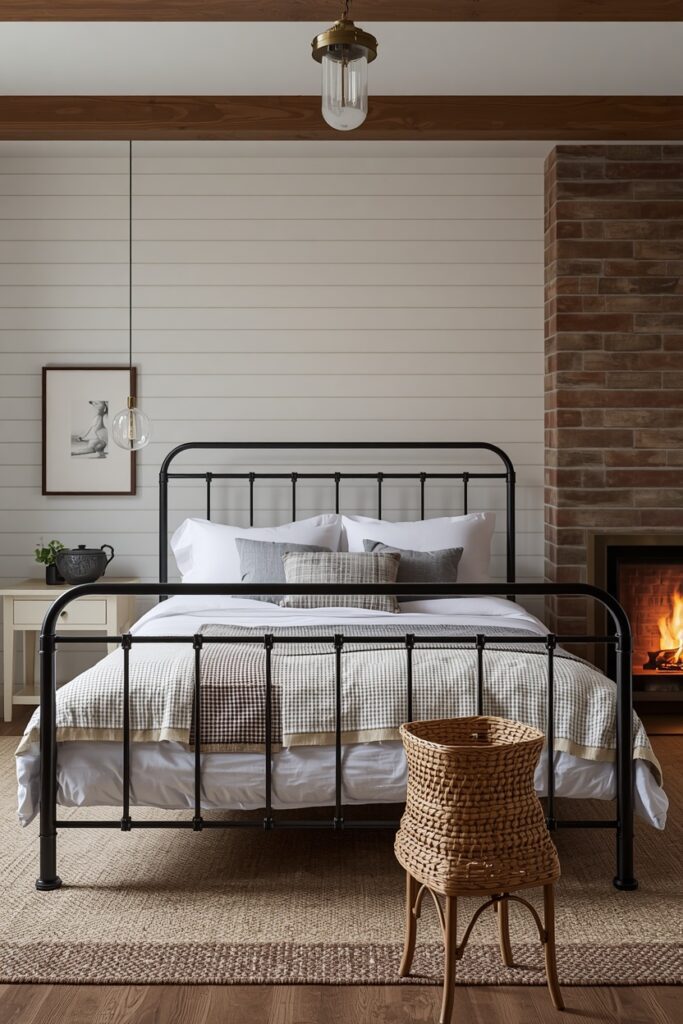
An iron bed frame in matte black or aged bronze sets the tone instantly — look for one with simple straight bars rather than ornate curlicues, which date the look. Pair it with crisp white bedding in a waffle or matelassé weave for texture, and add a patchwork or vintage-look quilt folded at the foot. Walls are best in a warm off-white or very pale sage, and one accent wall of shiplap or tongue-and-groove panelling behind the bed adds the farmhouse signature without overwhelming the room. Nightstands should be mismatched on purpose: a small wooden stool on one side, a painted two-drawer table on the other.
A large woven basket at the foot of the bed holds extra blankets and keeps the room tidy. Install a pair of simple glass pendant lights on either side of the bed, hung low enough to cast a reading pool, at 2700K warm white.
12. Modern Minimalist With Statement Headboard
Minimalism in a bedroom only succeeds when the few remaining pieces carry real presence — and the headboard is the obvious candidate. Choose an oversized upholstered headboard in a rich material: heavy linen in charcoal, thick felt in camel, or performance velvet in a dusty olive. Mount it wall-to-wall if possible so it reads as architecture rather than furniture.
The rest of the room strips back: floating nightstands no wider than 35 cm, recessed ceiling lights or hidden LED strips behind the headboard set to 2700K, and bedding in one solid colour that sits two shades lighter or darker than the headboard. The floor is bare hardwood or polished concrete with a single rectangular rug under the bed. Storage hides behind flush-panel wardrobe doors with push-to-open latches — no visible handles.
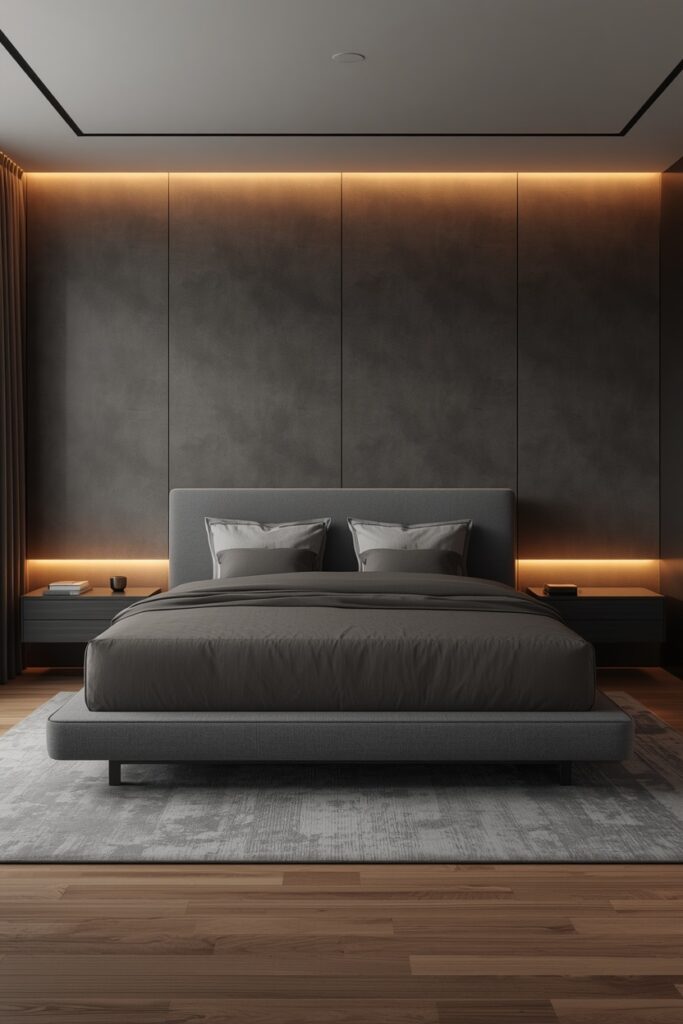
This approach rewards restraint, but the headboard has to earn its keep; a cheap one exposed this starkly will look it.
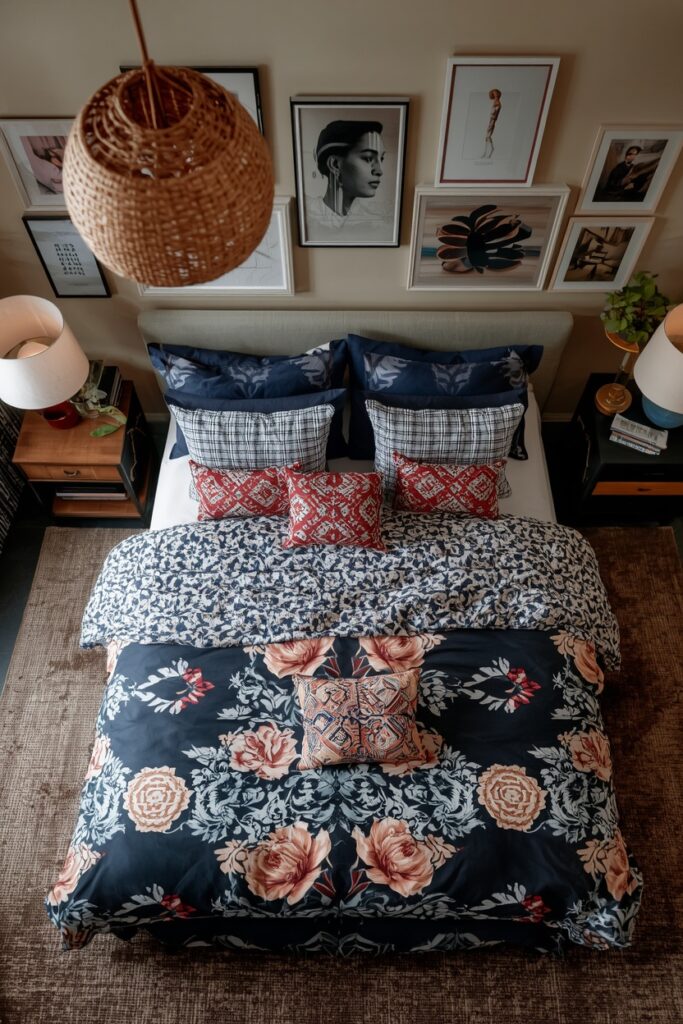
13. Eclectic Bedroom Decor With Mixed Patterns
Mixing patterns scares most people, but the trick is sharing one colour across every textile.
Pick a single anchor colour — deep navy, terracotta, or olive — and make sure it appears in every patterned piece: the duvet, the accent pillows, the curtains, and the rug. From there, vary the pattern scale: a large-scale floral on the duvet, a small geometric on the pillows, a solid with texture on the curtains, and a stripe or medallion on the rug. The bed frame can be almost anything — painted wood, upholstered, even brass — because the textiles do the heavy lifting. One wall of gallery-style art in mismatched frames ties the collected look together. Nightstands should differ: one vintage find, one modern piece, both roughly the same height. The overhead light can be a statement pendant — paper, rattan, or coloured glass — since nothing else in the room matches anyway.
14. Warm Terracotta and Clay Bedroom
Terracotta is one of the most forgiving wall colours because it reads warm under every light condition — daylight, lamplight, candlelight. Paint the walls in a mid-tone terracotta and pair it with bedding in cream and rust, keeping the dominant fabric a slubby cotton or raw linen. The bed frame should be dark — wrought iron or espresso-stained oak — to ground the warmth and prevent the room from drifting too orange. A large round mirror in a thin black frame on the wall above a low dresser reflects light back into the room.
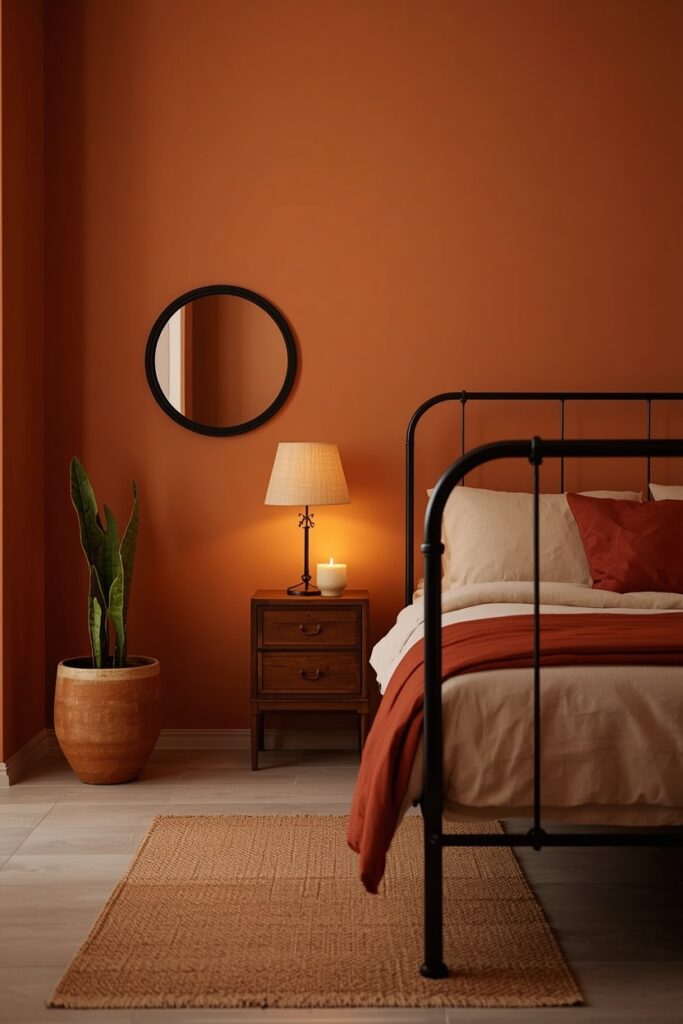
Clay and ceramic accessories belong here: a stoneware table lamp, terracotta planter with a snake plant, and a small sculptural bowl on the nightstand. For the rug, go with a flat-weave in sand and rust tones, at least large enough to extend 60 cm beyond each side of the bed frame.
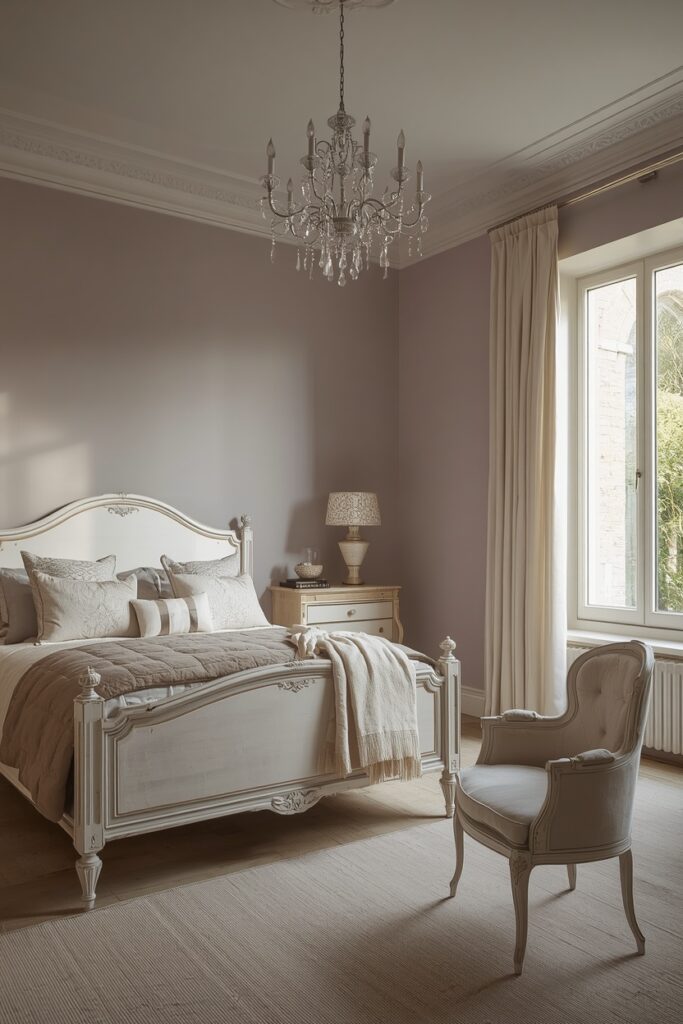
15. French Country Bedroom With Soft Florals
French country avoids the twee territory when you anchor it with substantial furniture and a restrained palette. Start with a carved or distressed wood bed frame in a creamy white or pale grey — something with a slight arch to the headboard — and dress it in a muted floral duvet where the background colour matches the walls. Walls go in a warm linen white or the palest lavender, never a saturated purple. Nightstands should have turned legs and at least one drawer, painted in the same distressed paint as the bed. A linen-upholstered bergère chair in the corner, even a small one, anchors the French reference.
Curtains are floor-length in a lightweight cotton, slightly puddling at the hem for that undone softness. A crystal or beaded chandelier overhead — scaled to the room, not a ballroom — supplies the evening sparkle, set to 2700K warm white.
16. Dark Bedroom Decorating With Rich Jewel Tones
A jewel-tone bedroom commits to saturation: deep sapphire, rich amethyst, or dark emerald on the walls, with matching or complementary depth in the textiles. The key to keeping it from caving in is metallic relief — brass picture frames, a gold-toned pendant, copper-toned drawer pulls — that catches and returns light across the room. The bed frame is best in dark wood or a deep upholstered style; avoid white frames here because the contrast is too stark.
Bedding should layer: a velvet quilt in a slightly lighter shade of the wall colour, sateen sheets in ivory or champagne underneath, and two or three accent pillows in a complementary jewel tone. A large artwork above the bed — abstract, moody, or photographic — gives the eye a resting point. One honest note: jewel-tone rooms photograph dramatically, but living in them daily requires good task lighting at the vanity and reading spots to avoid eye strain.
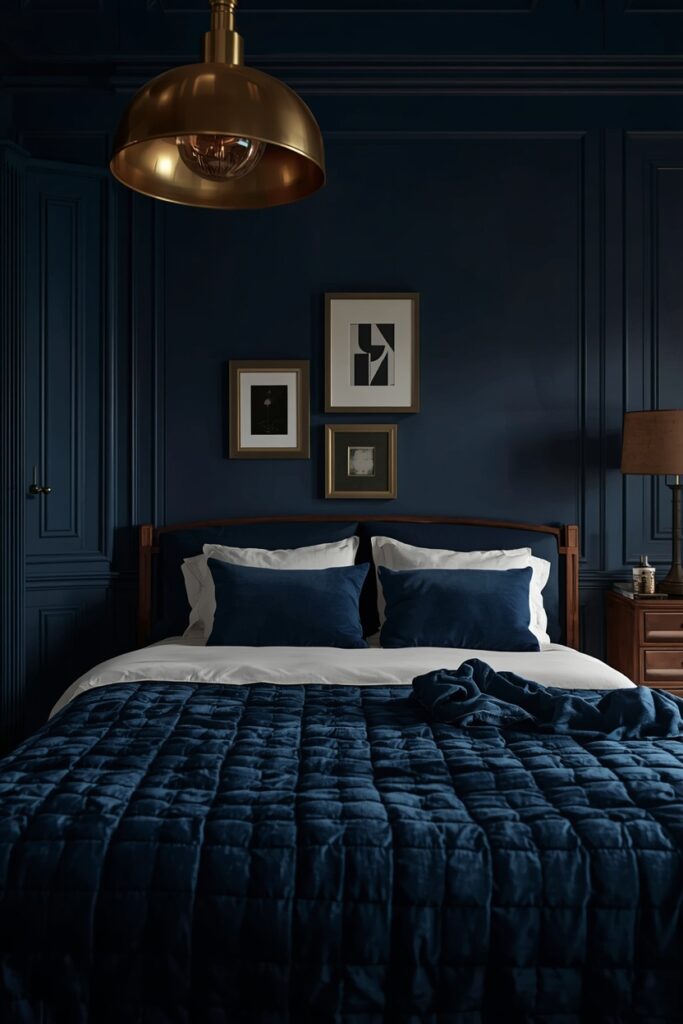
Supplement the ambient light with at least two focused lamps on dimmers.
Where I’d Start if I Only Did Three Things
If I only did three things, I would start with the bed — pick a frame with genuine character (iron, walnut, cane, something with texture) because it anchors every other decision. Second, I would choose one accent colour for textiles and commit to it across pillows, throw, and rug so the room reads as one thought rather than a collection of nice objects. Third, I would swap the overhead ceiling light for two bedside sconces or table lamps at 2700K — that single change shifts a bedroom from feeling like a lit box to a space that actually invites rest.
Frequently Asked Questions
What are the most timeless bedroom decor ideas for a rental?
Layered bedding, a quality rug, and good lighting transform a rental bedroom without touching walls. Choose a statement headboard that leans against the wall — no drilling — and invest in curtain rods that mount with adhesive or tension fit. These pieces travel with you and outlast any single lease.
How do I mix patterns in a bedroom without it looking chaotic?
Anchor every patterned piece with one shared colour, then vary the pattern scale: pair a large-scale floral with a small geometric and a textured solid. Keep the background colour of most pieces neutral so the eye has resting points between the busier fabrics.
What ceiling height works best for dark-walled bedrooms?
Dark walls absorb light, so rooms with ceilings below about 2.4 metres can start to close in. If your ceiling is low, paint it white or one shade lighter than the walls to create a visual lift, and add wall sconces that cast light upward. Rooms with ceilings at 2.7 metres or above handle full dark saturation comfortably.
Should the bedroom rug go under the entire bed or just the bottom half?
Place the rug so it extends at least 60 cm beyond each side and the foot of the bed — your feet should land on it when you swing out in the morning. Under the entire bed is ideal for larger rooms, but the two-thirds placement with the rug starting at the midpoint of the bed is the practical standard for a 240 × 300 cm rug under a queen frame.
Final Thoughts
The best bedroom decor ideas share one quality: they treat the room as a complete environment rather than a surface to accessorise. Pick one vision from this list — the palette, the materials, the layout — and build it as a whole. Swap out individual pieces if your budget demands a phased approach, but keep the underlying design direction consistent from headboard to rug to lighting. A bedroom that looks and rests well is not a matter of spending more; it is a matter of choosing fewer things that belong together.