
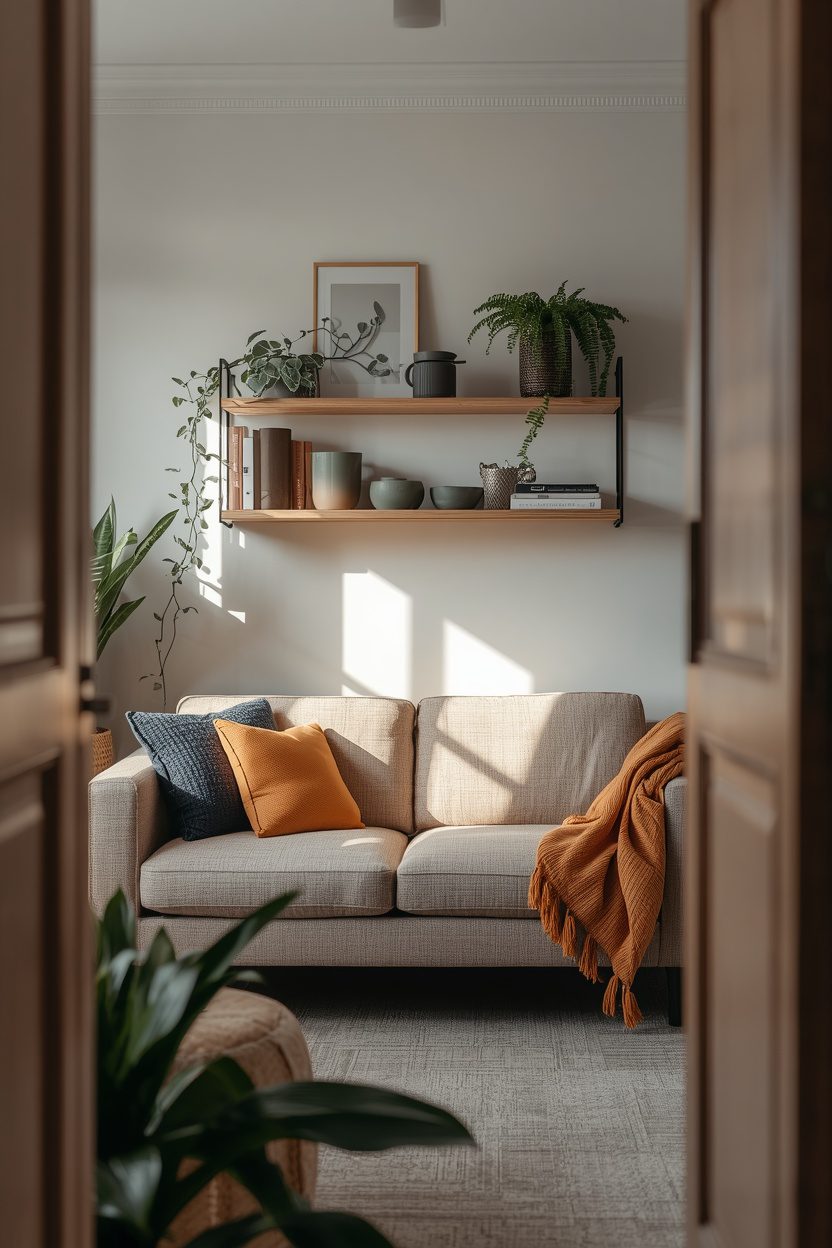
The most common mistake in a small lounge is buying standard-sized furniture and hoping it will somehow fit — it never does, and the room ends up feeling cramped rather than compact. Good small lounge decorating ideas start with honest measurements, continue with furniture scaled to the space, and close with visual tricks that push the walls outward. Each of the 14 ideas below is designed for rooms under about 15 square metres, and every piece of furniture I recommend exists in the dimensions a tight floor plan actually allows.
A few principles run through every idea here: keep the floor visible wherever possible (legs on furniture, open-base shelving), use vertical wall space for storage so it does not eat into walking room, and limit the colour palette to three tones so the eye moves smoothly rather than bouncing between competing surfaces. With those rules set, the range of styles you can achieve in a small lounge is far wider than most people expect.
1. Light Neutral Compact Lounge With Leggy Furniture
Furniture with visible legs creates the illusion of space by letting the eye see floor beneath each piece. Choose a compact two-seater sofa with slim tapered legs in a warm off-white or pale oatmeal, and pair it with a small round coffee table — glass-top or light wood — on slender metal legs. A single armless accent chair in linen tucks into the corner when not in use. The rug should be light and low-pile, covering the seating zone but stopping well short of the walls.
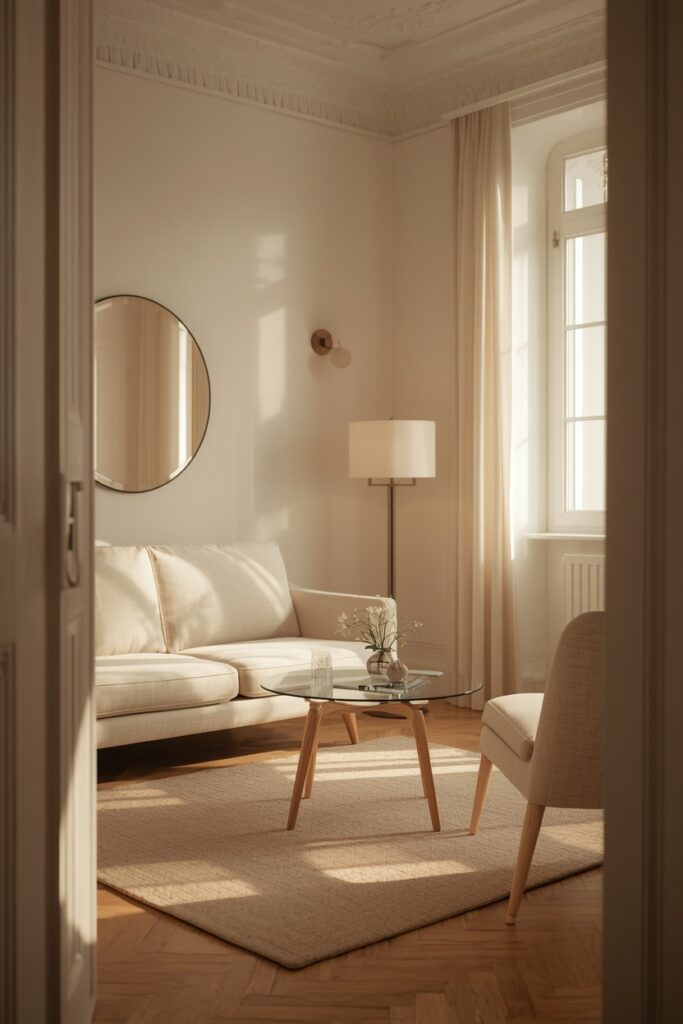
Walls stay in warm white, and a single round mirror on the largest wall reflects light and doubles the visual depth. Lighting is a slim floor lamp behind the sofa and a wall-mounted sconce — skip the pendant if ceiling height is below 2.5 metres, because low-hung pendants shrink a small room further.
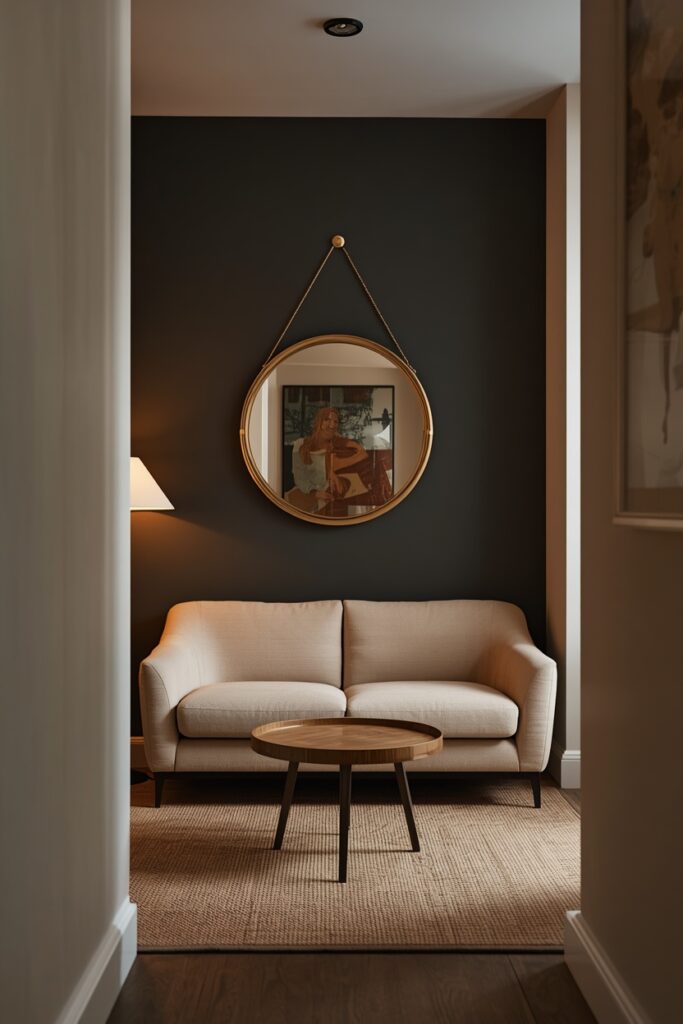
2. Dark Feature Wall With Compact Seating
Going dark in a small room sounds counterintuitive, but one feature wall creates depth that white cannot.
Paint the wall behind the sofa in a deep tone — charcoal, dark navy, or forest green — and keep the remaining three walls in warm white. The dark surface recedes visually, creating the illusion that the wall is further away than it is. Place a compact sofa against it in a contrasting light tone, and keep the coffee table small and round — square tables eat corners in tight rooms. A mirror or light-toned artwork on the dark wall bounces light back into the space. Limit your colour palette to three tones: the dark wall, a warm neutral, and one accent. This approach adds drama without the claustrophobia that four dark walls would create in a room this size.
3. Compact Japandi Lounge With Floor Seating
In a very small lounge — under 10 square metres — conventional seating may not fit comfortably. Floor seating solves this: a large floor cushion, a low tatami-style seating platform, or a pair of oversized meditation cushions arranged around a low wooden table create a conversation area that barely touches the room’s volume. Walls go in warm putty or pale stone, and the floor is bare hardwood or a single flat-weave rug in cream. One floating shelf on the wall holds a ceramic vase and a trailing plant.
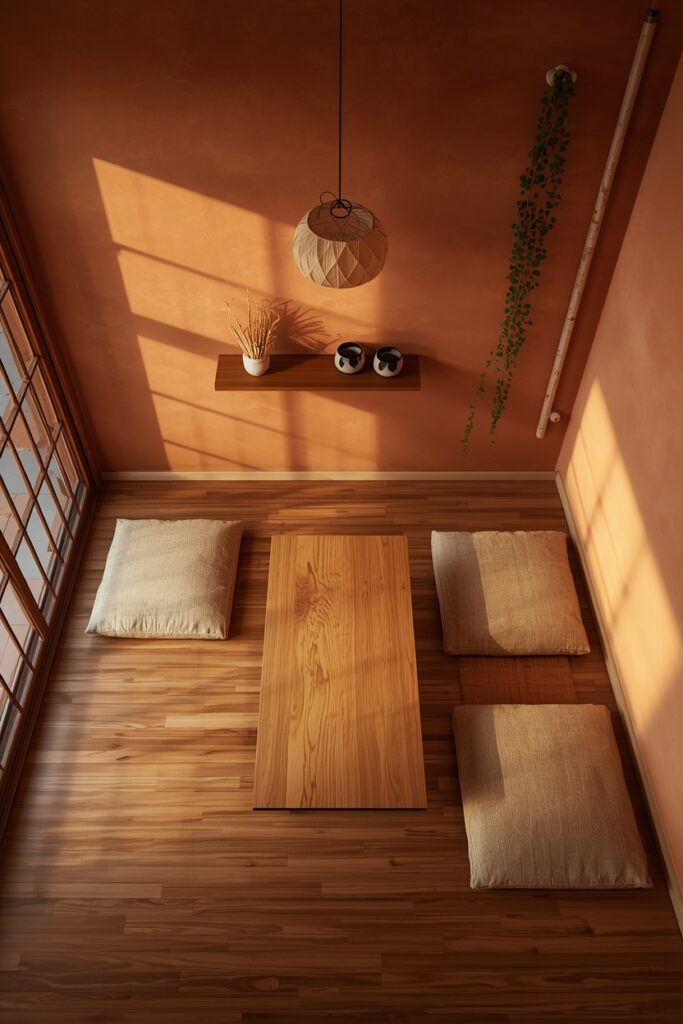
A rice-paper pendant hangs at a height that clears seated heads. This approach is not for everyone — getting up from the floor is a consideration for some people — but in terms of making a tiny room liveable and welcoming, almost nothing matches the openness that removing conventional furniture creates.
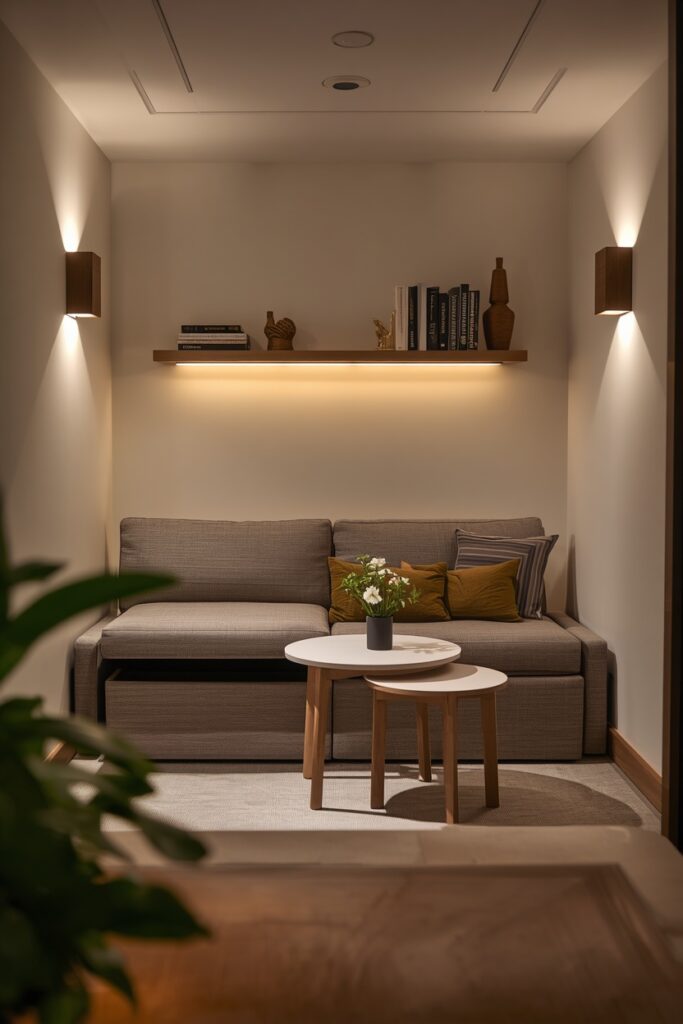
4. Multifunctional Small Lounge Decorating Ideas With Storage Sofa
A sofa with built-in storage — lift-up seat, pull-out drawer, or a chaise section with a hidden compartment — removes the need for a separate storage unit and frees wall space. Choose one in a neutral performance fabric with clean lines, and position it against the longest wall. Instead of a coffee table, use a nesting pair that stacks when not in use, or a slim C-shaped side table that slides over the sofa arm. Mount a narrow floating shelf above the sofa for a few books and a plant, and install two wall sconces for reading light so no floor lamp eats into your circulation space.
The rug should be large enough to anchor the sofa but not so large that it blocks the room’s main walkway. This practical setup suits anyone whose lounge doubles as a guest room, play area, or home office at different times of day.
5. Bright Coastal Compact Living Room
Coastal tones — sandy whites, pale blues, and natural fibres — suit small lounges because they are inherently light-reflective. The sofa is a compact slipcovered piece in white or natural linen, paired with a single rattan accent chair. A round bleached-wood side table replaces a full coffee table, keeping the centre of the room open. The rug is a natural jute or sisal in a light tone, and one blue-and-white patterned cushion on the sofa provides the only colour accent.
A woven pendant in rattan or seagrass hangs overhead if ceiling height permits. Walls stay in the warmest white available, and a large framed coastal photograph — ocean, sand dunes, or driftwood — adds the scene without cluttering the space.
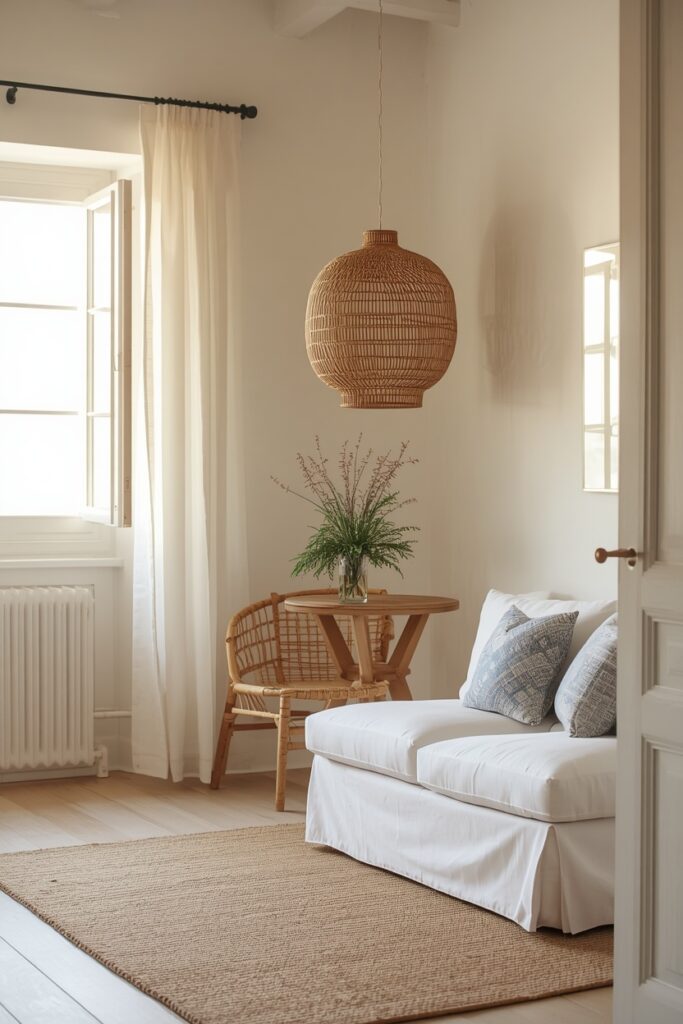
Keep surfaces nearly bare: one small plant, one candle, one book stack. This room depends on restraint for its airy character.
6. Vertical Shelving Wall for Compact Rooms
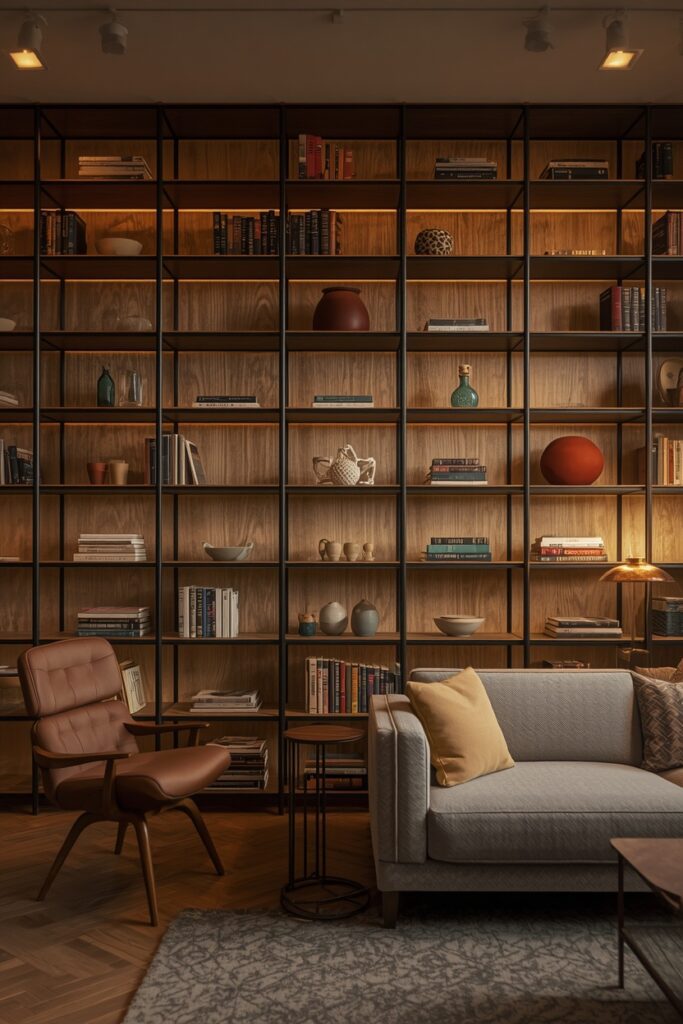
When floor space is tight, the walls become your storage surface. A floor-to-ceiling shelving unit — either a slim metal-and-wood ladder shelf or a built-in set of floating shelves — turns one wall into a library, display, and storage zone without taking more than 25–30 cm of floor depth. Style the shelves with a mix of vertical and horizontal books, one or two small plants, a couple of ceramic objects, and leave about a third of the shelf space empty so it does not look like a warehouse. The sofa sits perpendicular to the shelving wall, creating a natural L-shaped seating arrangement with a small armchair at the open end. A slim console table behind the sofa provides a surface for a lamp without needing a side table. This layout gives the room three distinct visual zones — seating, shelving, and a walkway — in under 12 square metres.
7. Compact Mid-Century Lounge With Warm Wood
Mid-century modern furniture was originally designed for the modest post-war homes of the 1950s and 60s — which means its proportions suit small rooms far better than most contemporary oversized sofas. Look for a compact two-seater with tapered walnut legs and a firm cushion in a saturated colour: olive, mustard, or teal. A small round walnut coffee table and a matching side table keep the wood thread consistent. The rug is a geometric flat-weave in muted earthy tones, sized to sit under the front legs of the sofa and the coffee table. A single starburst mirror or a graphic print above the sofa adds the mid-century accent.
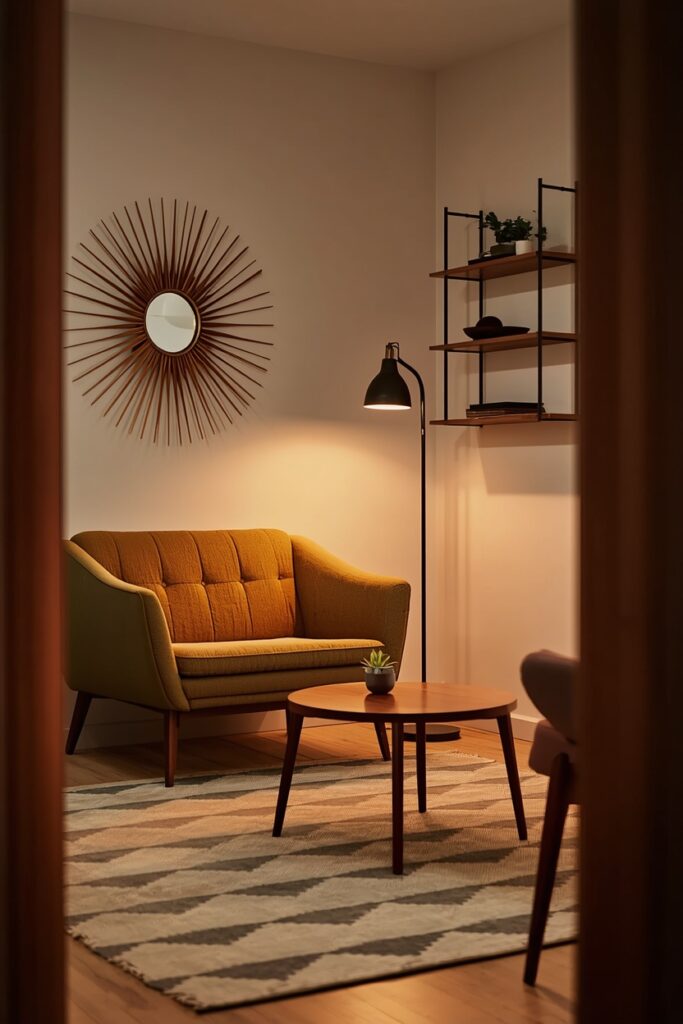
Wall-mounted teak shelving replaces a freestanding media unit, keeping the floor clear. Lighting is a slim brass floor lamp with a cone shade — the classic mid-century profile that takes up almost no visual space.
8. Oversized Art as a Compact Room Focal Point
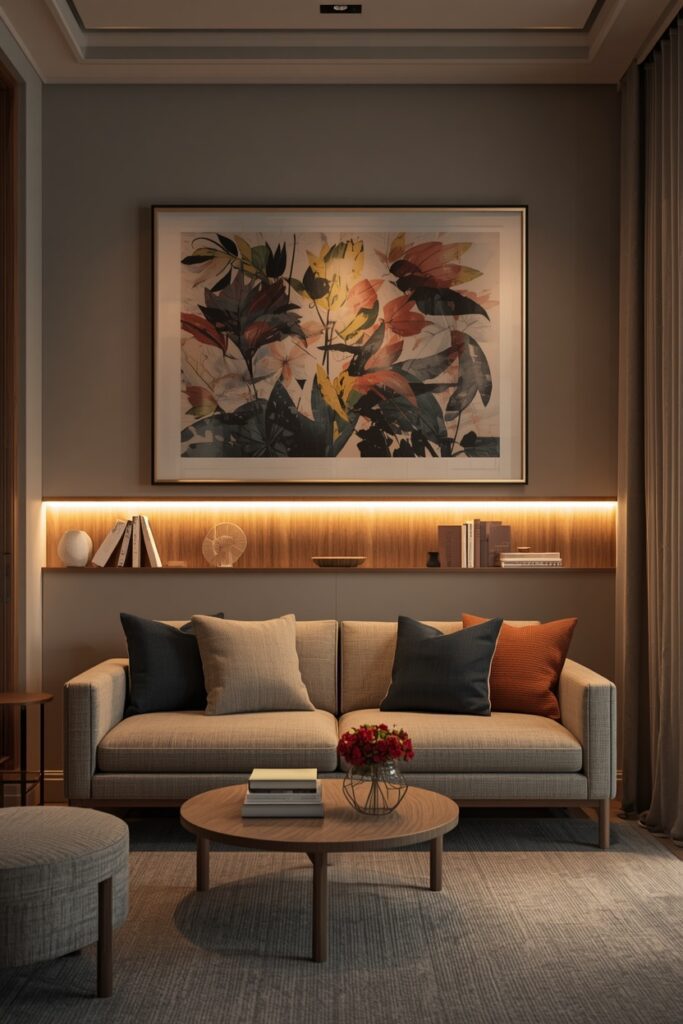
One large piece of art — bigger than you think you should go — makes a small room look larger because it tricks the eye into reading the wall as bigger than it is. Choose a piece at least 90 × 120 cm and mount it low, with its centre at standing eye level, on the wall opposite the entry so it is the first thing you see when you walk in. Keep the furniture below it simple and low-profile: a compact sofa, a slim coffee table, and no competing wall decor anywhere else in the room. Pull two accent colours from the artwork and use them in throw pillows and a single vase.
A picture light or a slim track light washing the art from above gives it gallery presence. This is the most impactful single investment for a small lounge — it replaces multiple smaller objects and gives the room a clear focal anchor.
9. Mirror Tricks That Double Visual Depth
Mirrors double the perceived depth of a room instantly, and in a small lounge, strategic placement can make a 10-square-metre space look like 15. The most effective position is on the wall opposite or perpendicular to the main window, where the mirror reflects natural light deep into the room. Choose a large rectangular mirror — at least 80 × 120 cm — in a slim frame that matches your hardware tone: brass, black, or natural wood.
A second smaller mirror or a mirrored side table adds another reflective surface without looking like a dance studio. Keep the wall around the large mirror clear of competing objects so the reflected view stays uncluttered. One caveat: mirrors opposite cluttered shelving or a messy entry hall double the chaos, so edit the view before installing.
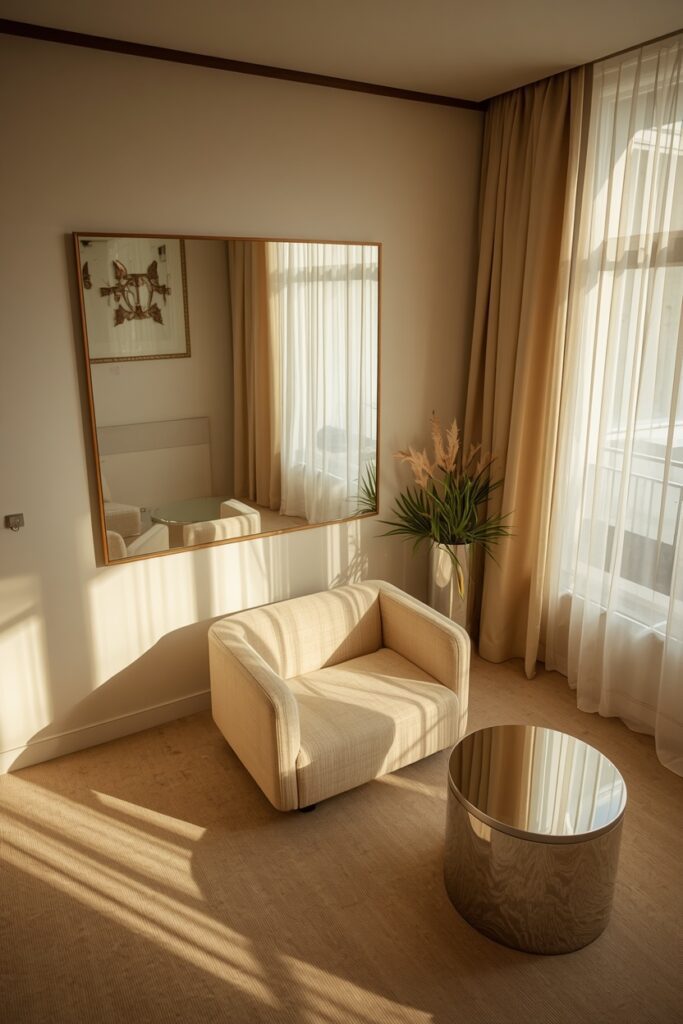
Pair with light-coloured walls and sheer curtains to maximise the light-bouncing effect.
10. Warm Small Lounge Decorating Ideas With Earthy Tones
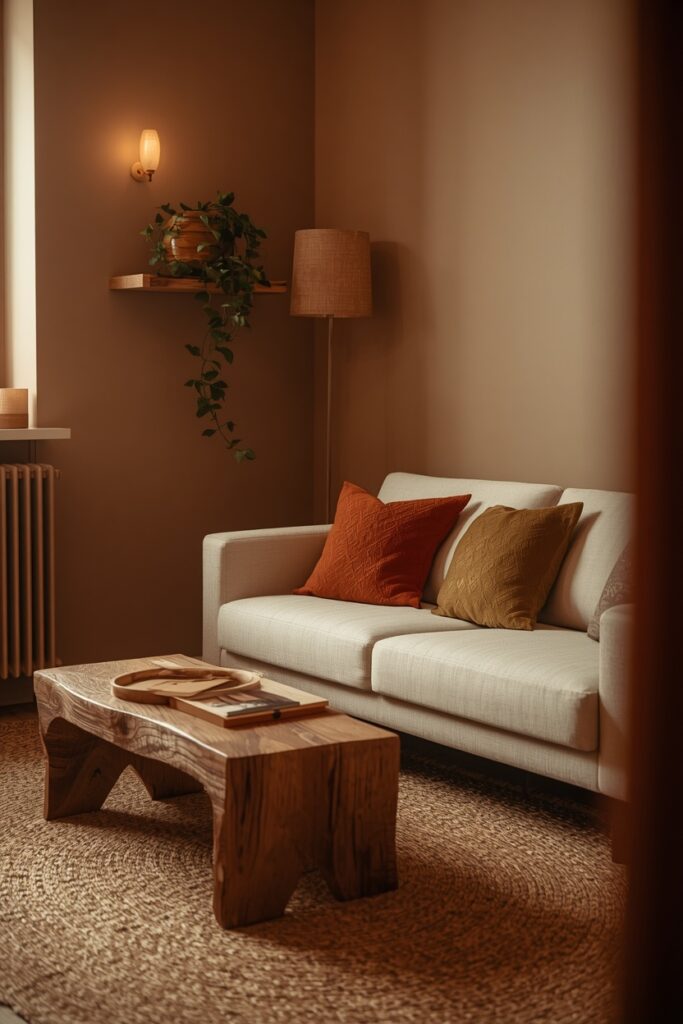
Small does not mean sterile — earthy tones bring warmth and character to compact rooms without shrinking them if you control the saturation. Use a warm mushroom or light terracotta on the walls, keeping the tone in the light-to-mid range rather than deep. The sofa is a compact two-seater in cream or stone linen, and the coffee table is a small wooden piece — reclaimed or raw-edged — that adds texture. A woven jute rug covers the seating zone, and two cushions in rust and olive bring the earthy palette to the sofa. A small trailing plant on a wall-mounted shelf and a ceramic table lamp in a sandy glaze complete the warmth. This palette suits rooms with at least one good-sized window; in darker rooms, stick to the lighter mushroom range and supplement with warm 2700K lighting at every seat.
11. Compact Lounge With Daybed Instead of Sofa
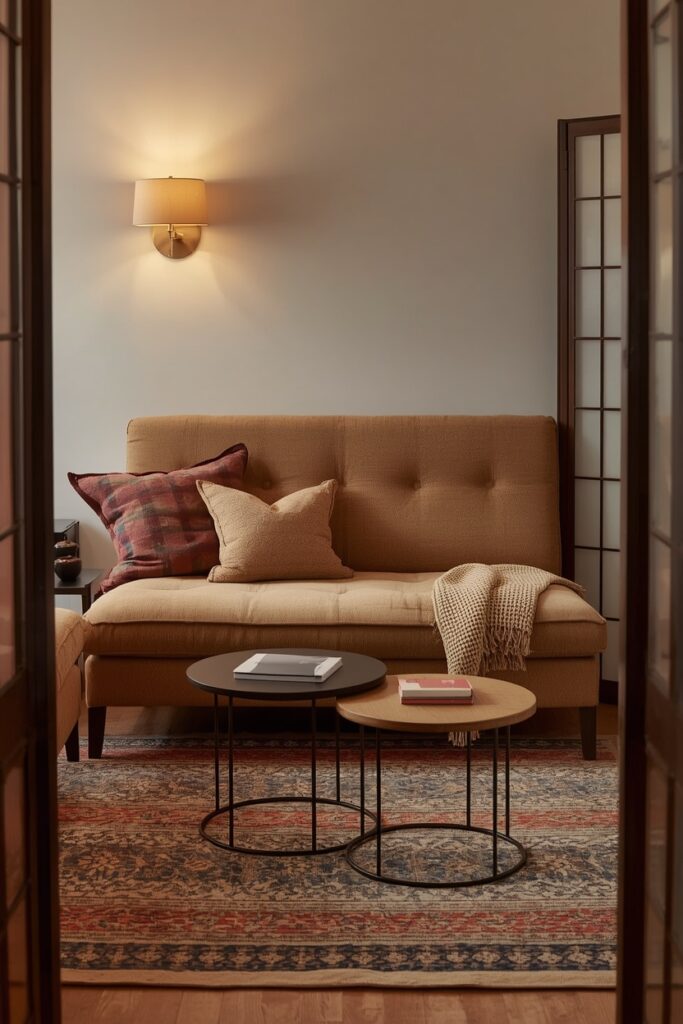
A daybed — a sofa by day, a guest bed at night — is one of the smartest furniture choices for a small lounge that doubles as a spare room. Choose one with a bolster back and two side bolsters so it reads as a sofa during the day, and dress it in a fitted sheet and a throw that can be quickly pulled back for overnight guests. Position it against the longest wall, with a small round side table at one end and a wall sconce above for reading light. The coffee table should be a slim oval or a pair of nesting tables that slide together when the daybed is opened for sleeping.
A rug anchors the seating side, and a curtain or folding screen behind the daybed can hide stored bedding. This is a practical solution for small apartments where every room must serve more than one purpose.
12. Indoor Greenery Accent for Compact Rooms
Plants are the highest-impact, lowest-cost decorating tool for a small lounge — they add colour, texture, height variation, and visual life without taking much floor space if you go vertical. Mount a set of wall-mounted planters at staggered heights on one wall, or hang two trailing plants — a pothos and a string of pearls — from ceiling hooks near the window. One medium floor plant in a tall pot — a snake plant or ZZ plant that tolerate low light — anchors a corner. Keep the rest of the room minimal and neutral so the greenery becomes the colour story.
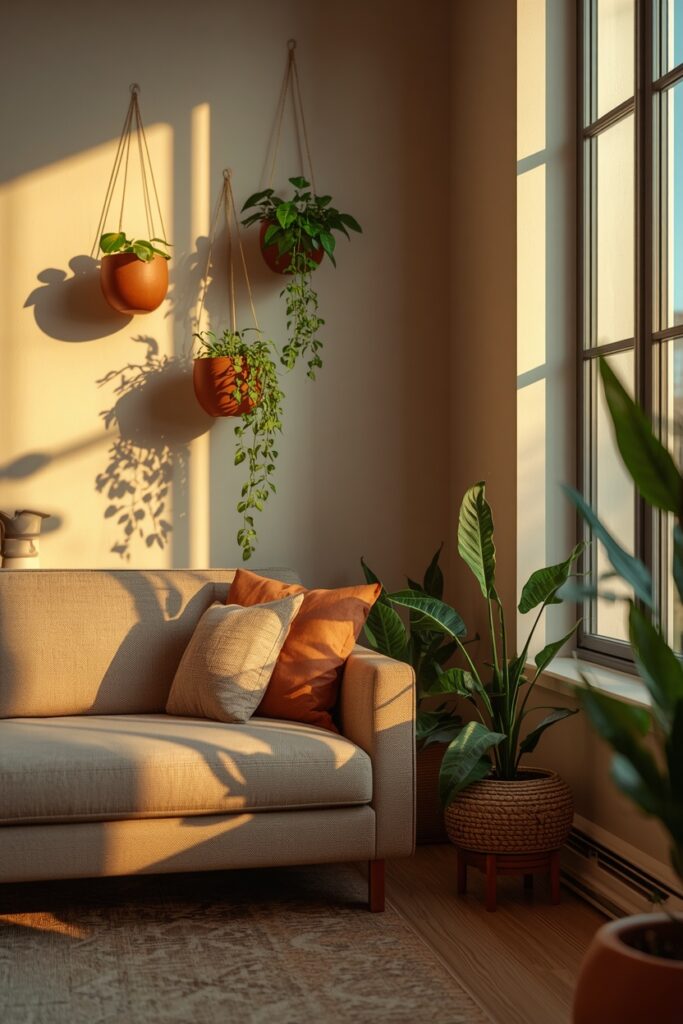
A light-coloured sofa, a simple rug, and one or two ceramic accessories in earthy tones complete the palette. One practical note: trailing plants near the ceiling do drip when watered, so water them over a sink or place a drip tray underneath until the drainage stops.
13. Compact Lounge With Floating Media Unit
Wall-mounting the media unit — television, console, speaker — frees the floor beneath it and makes the room look larger. A floating unit in light wood or matte white, mounted at a comfortable viewing height (centre of screen at seated eye level, roughly 100–110 cm from the floor), replaces a bulky TV stand that can eat up to 45 cm of depth. Run cables through the wall or use a cable cover strip painted to match the wall colour.
Below the floating unit, the freed floor space can hold a low plant, a basket, or simply remain empty as breathing room. The sofa faces the unit at a comfortable distance — roughly 2 to 2.5 times the screen width — and a slim side table replaces a coffee table to save the distance between. Mount the soundbar below the unit rather than adding a freestanding speaker.
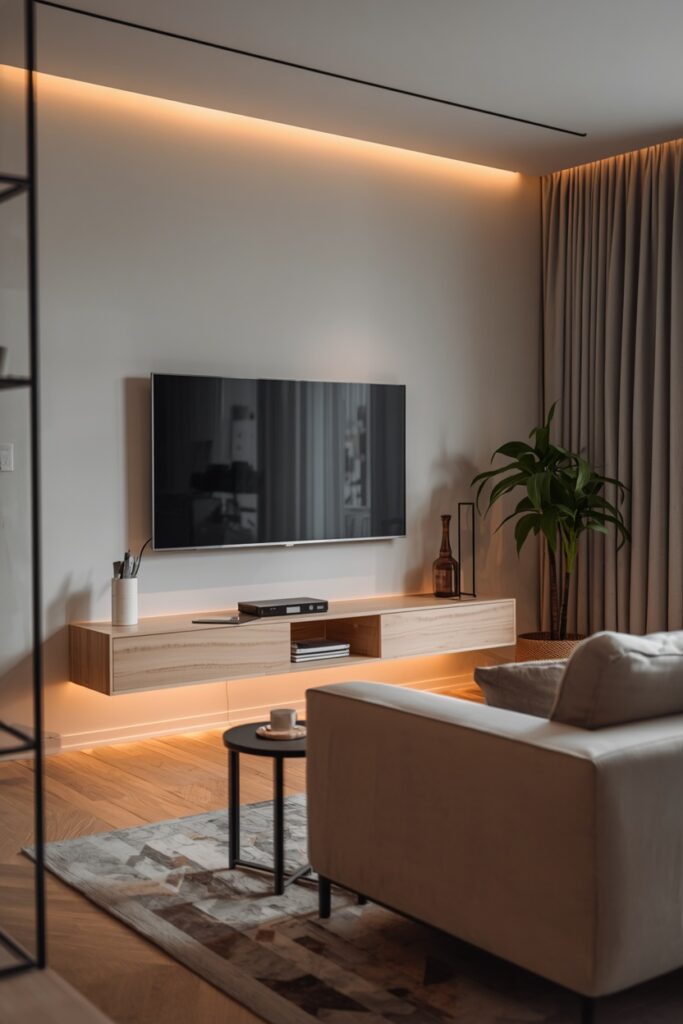
This one move — floating the media centre — reclaims the single largest chunk of floor space in most small lounges.
14. Small Lounge Decorating Ideas With a Bold Rug
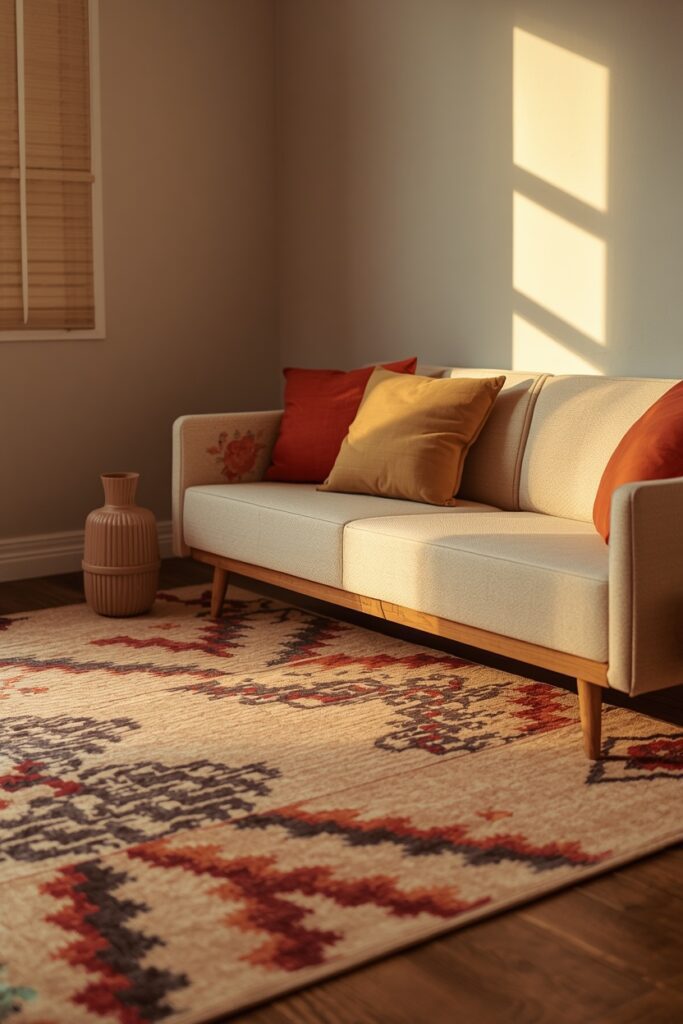
In a room where every surface is neutral, a single bold rug becomes the room’s entire personality — and it does so without taking any additional space. Choose a rug with a strong pattern (geometric, Persian-inspired, abstract colour blocks) in colours you love, and size it to anchor the seating area with front legs of every seat resting on it. Keep the sofa, walls, and curtains in solid neutrals — warm white, pale gray, soft stone — and let the rug carry the visual weight. Pull one or two accent colours from the rug into throw pillows and a single vase or ceramic object. This approach lets you swap the room’s character by changing the rug alone, which costs a fraction of repainting or replacing furniture. One caution: patterned rugs in small rooms should have a light background — dark backgrounds in a tight space can make the floor read heavy.
Where I’d Start if I Only Did Three Things
If I only did three things, I would start by measuring the room — exact centimetres, including doorways, window recesses, and radiator positions — because buying furniture without measurements is how most small-lounge mistakes happen. Second, I would choose a sofa with visible legs and a compact profile, roughly 150–170 cm wide for a two-seater, so it fits the room rather than filling it. Third, I would mount a large mirror on the wall opposite the window to effectively double the daylight entering the space — the simplest, cheapest, and most dramatic visual trick in any small room.
Frequently Asked Questions
What small lounge decorating ideas create the biggest visual impact?
Three moves deliver the most return in a compact lounge: a large mirror reflecting natural light, a single oversized artwork as a focal anchor, and a rug with a strong pattern on a light background that gives the room personality without additional furniture. All three add visual space or character without taking any floor area.
What sofa size fits a small lounge room?
A two-seater between 150 and 170 cm wide is the safe range for rooms under 15 square metres. Add a compact armless accent chair rather than upgrading to a three-seater, which will crowd the space. Always check depth as well — look for sofas under 85 cm deep so the walkway around the seating stays open.
Should I avoid dark colours in a small living room?
Not entirely — one dark accent wall behind the sofa can create depth that makes the room look deeper. The key is keeping the remaining walls and the ceiling light. Avoid dark colours on more than one wall, and make sure the room has at least two light sources at 2700K to compensate for the light the dark surface absorbs.
How do I create storage in a small lounge without adding furniture?
Wall-mounted solutions are the answer: floating shelves, wall-mounted media units, hooks for bags and throws, and a floating sideboard with concealed storage. A sofa with built-in lift-up storage or a pull-out drawer also hides blankets and cushions without adding any extra footprint.
Final Thoughts
The best small lounge decorating ideas share one principle: every piece earns its floor space. Measure first, choose furniture scaled to the room, and use vertical surfaces — walls, mirrors, mounted shelving — to provide the storage and visual interest that a larger lounge achieves with more furniture. A compact living room designed with intention reads as purposeful and inviting, not cramped.