
A nursery designed only for a newborn has a shelf life of about 18 months — then the crib converts to a toddler bed, the changing table becomes unnecessary, and the room needs a complete rethink. The smartest nursery ideas design for that transition from the start: furniture that converts, storage that scales, and a palette that ages beyond the baby stage without requiring a repaint. Each of the 16 ideas below is a full nursery scheme — crib, storage, seating, lighting, and palette — designed to look beautiful on day one and still work at year three.
A few safety notes run through every idea: crib placement should be away from windows, cords, and wall-mounted objects that could fall into the crib. Secure all furniture to the wall with anti-tip brackets. Use non-toxic, low-VOC paint. Keep soft items (pillows, stuffed animals, loose blankets) out of the crib during sleep per safe-sleep guidelines — they belong on the nursing chair or a shelf, not in the sleeping space.
1. Warm Neutral Nursery With Natural Wood
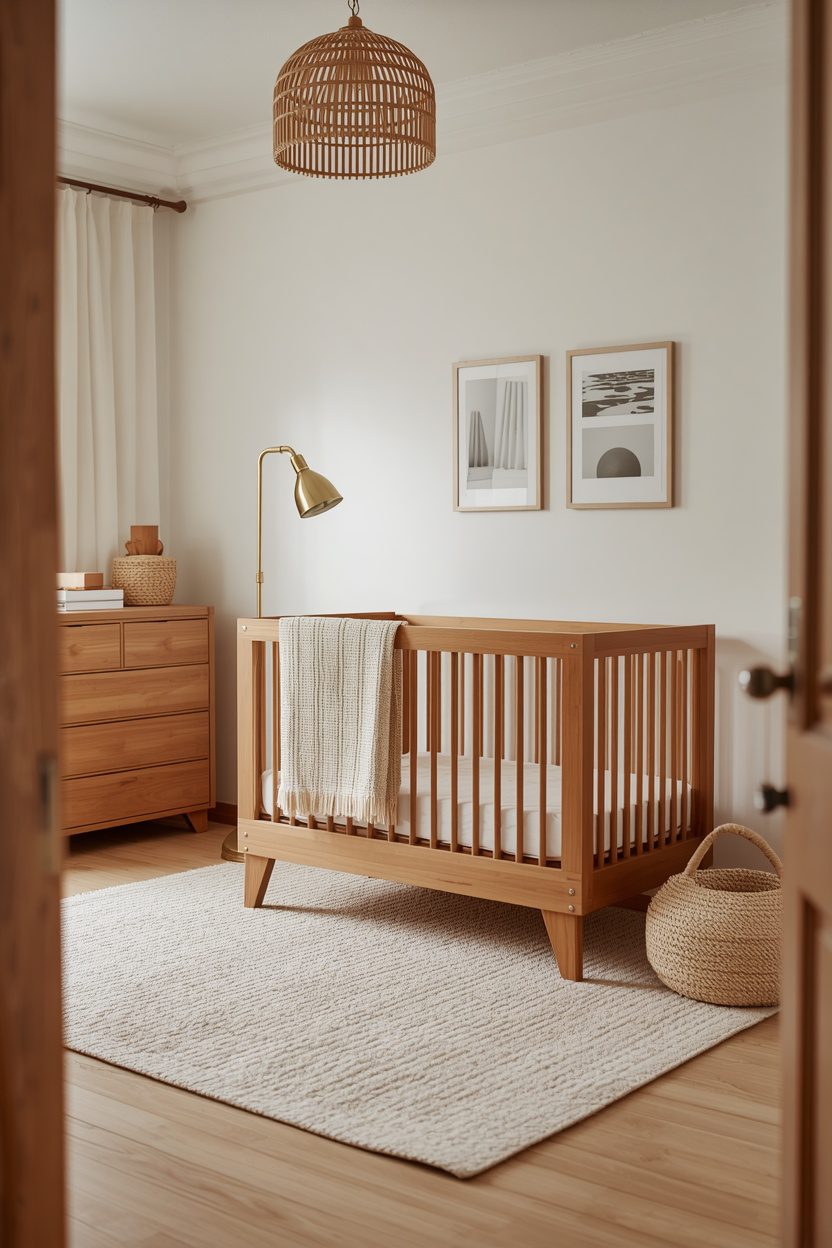
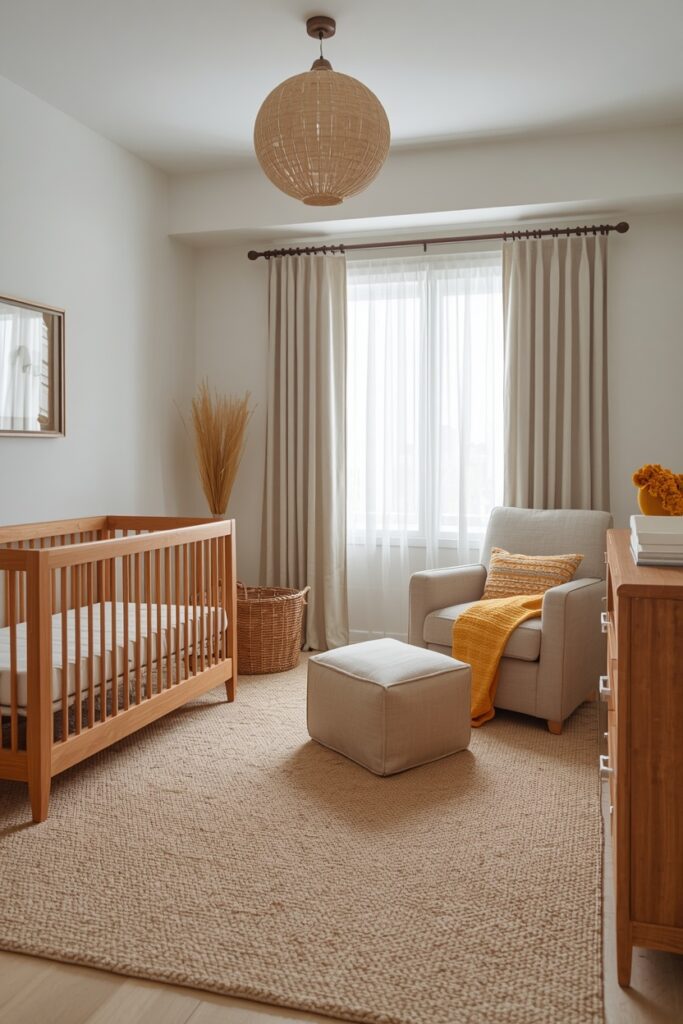
A neutral palette — warm white walls, natural wood crib, and linen textiles — creates a calm nursery that transitions effortlessly to a toddler room and eventually a child’s room without a single colour change. Choose a convertible crib in solid oak, birch, or beech that transforms into a toddler bed and then a daybed as the child grows. A matching dresser with a removable changing-pad tray on top serves as the changing station now and a regular dresser later. The glider or nursing chair should be a quality piece in a neutral fabric that moves to the living room when nursing ends.
A jute or cotton rug anchors the floor, and sheer curtains filter light during naps without fully darkening the room (add blackout blinds behind them for sleep training). Accent colour — if any — comes through one or two removable items: a mustard throw, a sage cushion, or a set of wooden toys on the shelf.
2. Sage Green Nursery With Botanical Touches
Sage green walls paired with botanical accents — a leaf-print crib sheet, a small potted plant on a high shelf, a framed botanical illustration — create a nature-inspired nursery that reads calm and gender-neutral. Choose a sage with a gray undertone for a modern read, and apply it to all four walls or as an accent on the crib wall only. Furniture should be warm wood (oak or birch) or matte white. A white or cream crib dressed in sage and white bedding ties the palette together.
The glider should be in a neutral fabric — cream, oatmeal, or soft gray — that coordinates without matching exactly. A flat-weave rug in cream or a natural jute completes the floor.
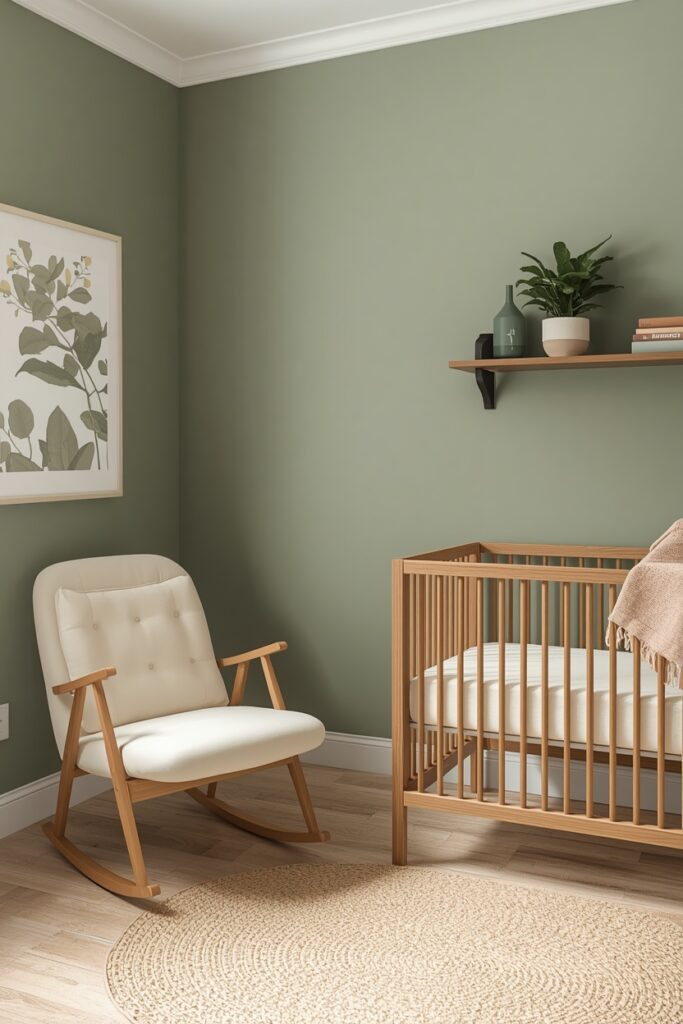
Plants on high shelves (well out of reach) add living greenery; choose non-toxic varieties (spider plant, Boston fern, parlour palm) in case a curious toddler eventually reaches them. This palette ages beautifully — sage green suits a child’s room at any age.
3. Soft Blue Nursery With Cloud Theme
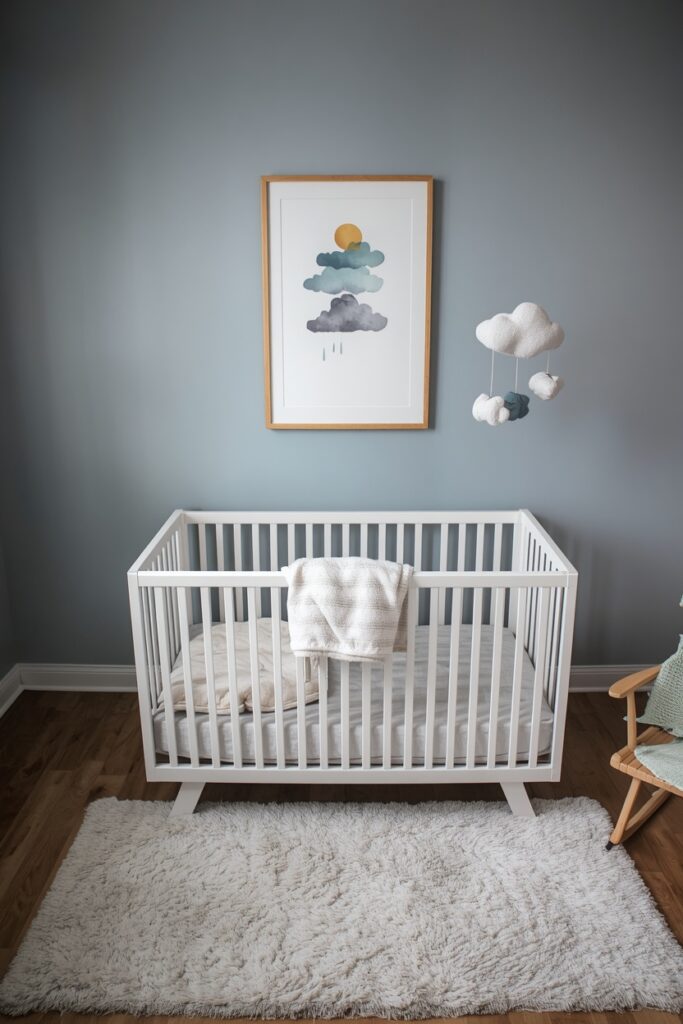
A soft blue — not baby blue, but a muted, slightly gray-toned blue — creates a serene nursery that sidesteps the dated pastel look. Apply it on all four walls or on the crib wall as an accent, with the remaining walls in warm white. The cloud theme enters through textiles and art rather than wall decals: a cloud-shaped cushion on the glider, a framed watercolour of a cloudy sky above the crib, and a mobile with felt cloud shapes hung from the ceiling. The crib is white or natural wood, and the dresser matches. A plush rug in soft white or pale gray covers the floor beside the crib for bare-foot comfort during night feeds. Curtains should be a heavier linen in white with a blackout lining — the soft blue walls glow beautifully when the room is dimmed for sleep. This palette transitions to a toddler room easily: swap the cloud mobile for a reading light and the crib for a bed, and the room grows up.
4. Monochrome Black-and-White Nursery
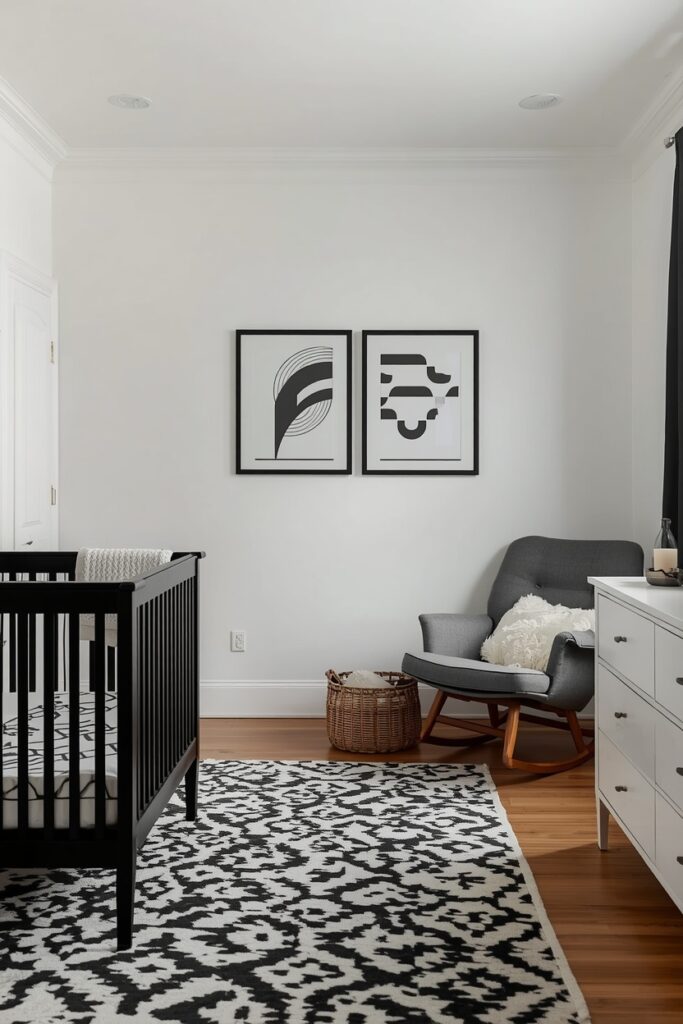
A monochrome nursery — black, white, and gray only — creates a high-contrast environment that newborns can actually see. Research shows that newborns respond most strongly to black-and-white patterns in their first months, making this aesthetic both beautiful and developmentally supportive. Paint the walls in warm white and introduce black through the crib frame (matte black metal or black-stained wood), a black-and-white patterned rug, and graphic black-and-white art prints at crib-rail level. The changing station and dresser should be white or light gray. A glider in a light-gray or cream fabric softens the contrast.
Accent textures come through: a chunky white knit throw, a gray sheepskin on the glider, and a black wire basket for blanket storage. As the child grows, this palette adapts to any added colour — the monochrome base serves as a permanent neutral that supports whatever interests and colours the child develops.
5. Nursery Ideas With a Statement Mural Wall
A hand-painted or wallpaper mural on the crib wall — mountains, a rainbow arch, an abstract landscape, or an oversized moon — gives the nursery a focal point that replaces the need for multiple small decorations. Choose a mural with a muted palette: soft greens and grays for mountains, warm pastels for a rainbow, creams and golds for a moon. The remaining walls stay in a solid colour pulled from the mural’s palette.
Keep the rest of the room simple — a neutral crib, a matching dresser, a solid-colour rug — so the mural breathes. A peel-and-stick mural offers a renter-friendly option and removes cleanly when the child outgrows the design. Position the mural behind the crib so it is visible from the doorway and serves as the room’s first impression.
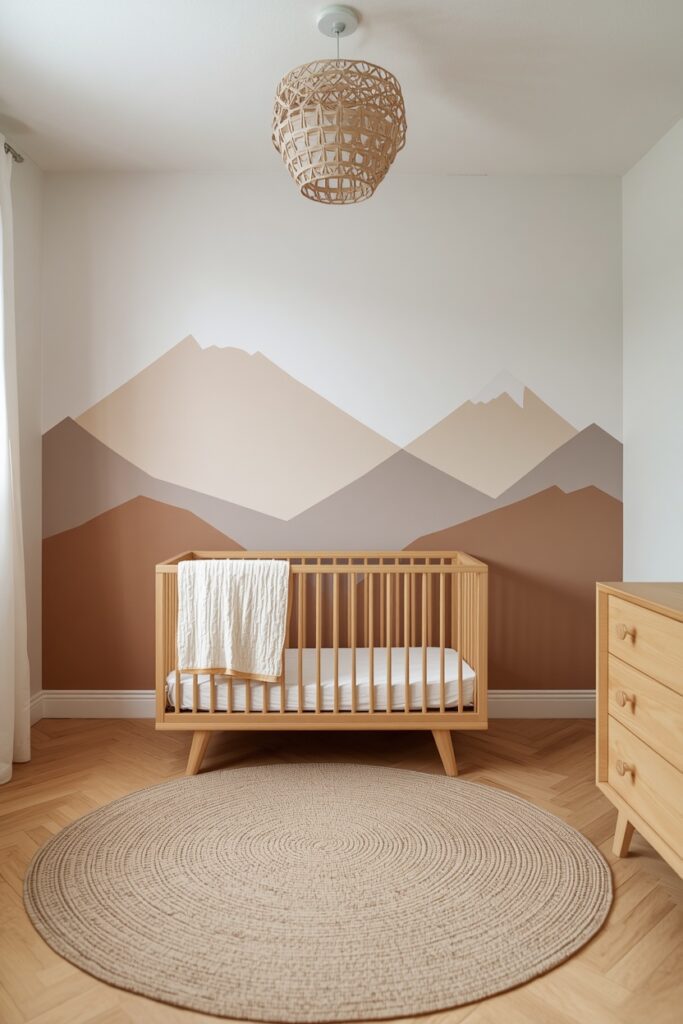
A hand-painted version can be updated or painted over as interests change — mountains today, a starfield at age four.
6. Warm Terracotta and Cream Nursery
Terracotta — a dusty, muted clay tone — brings warmth and earthiness to a nursery without the sweetness of pink or the coldness of gray. Paint the crib wall in a soft terracotta and keep the remaining walls in warm cream. The crib and dresser should be natural wood or cream to coordinate with the lighter walls. A cream bouclé or linen glider adds soft seating for feeds and bedtime reading. The rug is a woven cotton or jute in cream and warm brown.
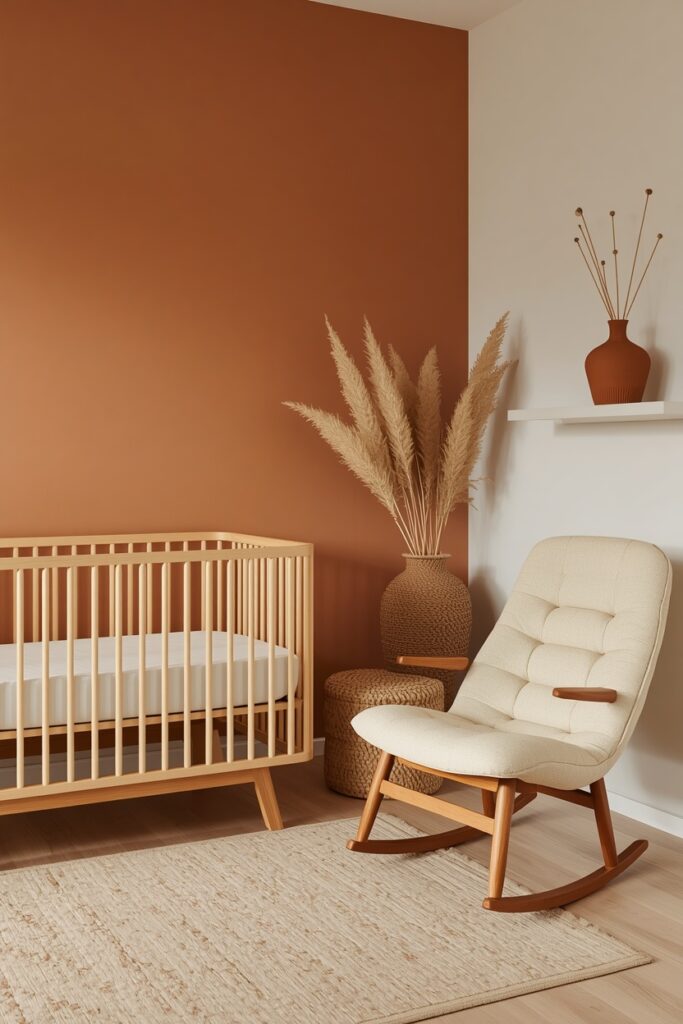
Accent objects — a terracotta ceramic lamp, a wooden mobile, a hand-thrown clay vase with dried pampas grass on a high shelf — extend the earthy palette without introducing competing colours. This nursery reads warm and inviting at every time of day and transitions beautifully to a toddler room — terracotta ages better than any pastel and suits a child’s room well into school years.
7. Scandinavian Nursery With Birch Furniture
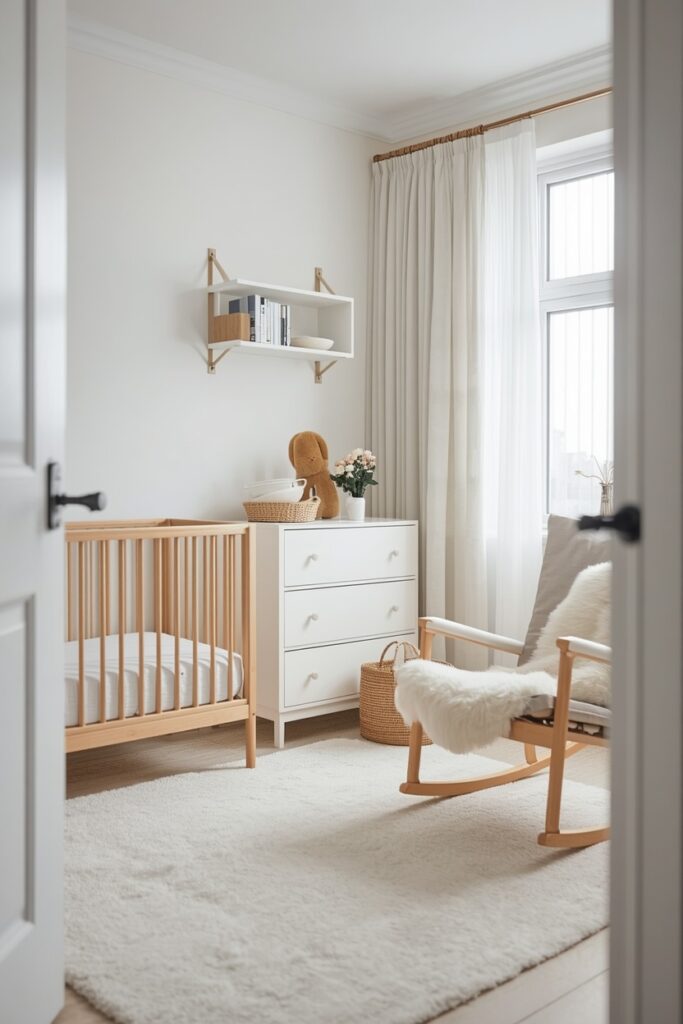
A Scandinavian nursery maximises light and simplicity: white walls, birch or pine furniture, and the softest possible textiles. The crib is a birch frame with simple clean lines and a white mattress. A matching birch dresser and a wall-mounted birch shelf hold essentials. The glider is white or pale gray with a sheepskin draped over the back. A white cotton rug with a subtle texture (waffle or ribbed) covers the floor beside the crib. One accent colour — the softest mustard, a pale blush, or a muted sage — appears in one or two removable items only: a cushion, a throw, or a set of shelf objects. Curtains are the sheerest white linen backed by a blackout roller blind. The room depends entirely on natural light for its beauty, so it suits east- or south-facing rooms best. This nursery translates to a toddler room with no paint change — swap the crib for a low bed and the room grows up.
8. Nursery With Open Shelving Toy Display
Open shelving at child height — once the baby becomes a toddler — creates an accessible toy display that encourages independent play and tidy-up habits. Position a low bookshelf or a set of cube storage units (40 × 40 cm per cube) against one wall, with curated toys and books displayed face-forward. In the newborn phase, style the shelves with soft toys, board books, and decorative objects — they serve as decor before they serve as play. As the child grows, replace the decor with the toys the child actually uses, rotating them weekly to keep the display fresh and manageable. Woven baskets inside the cube openings hide smaller toys and pieces.
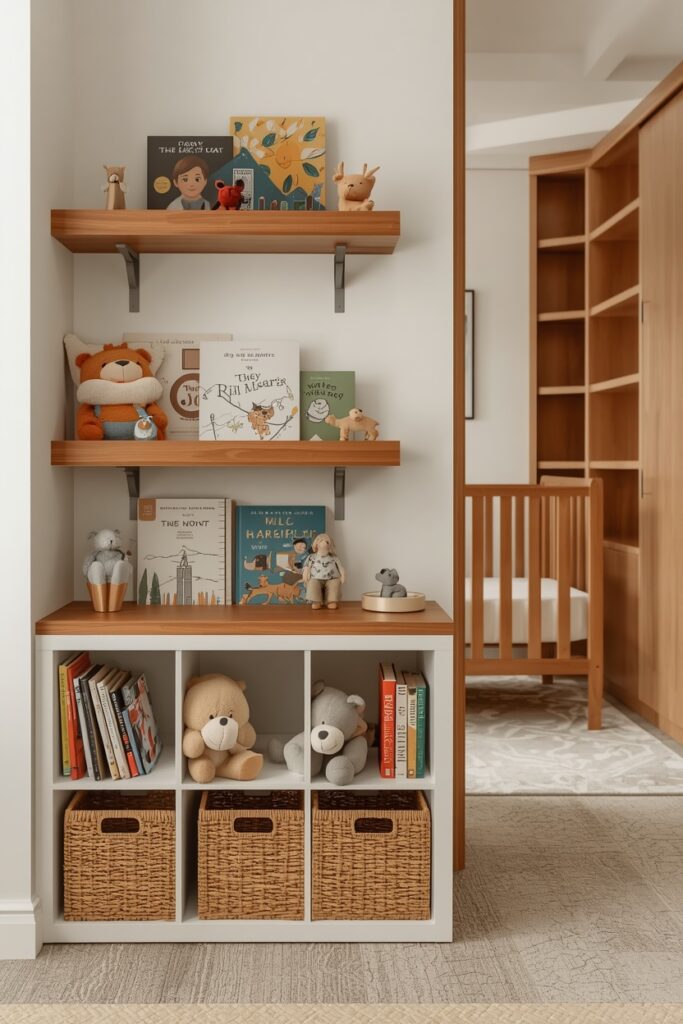
Keep the upper shelves for parent-access items (nappy supplies, medicines, keepsakes) and the lower shelves for child-access items. This setup supports a Montessori-inspired approach where the child’s environment is accessible, ordered, and visually calm.
9. Nursery With Reading Nook Corner
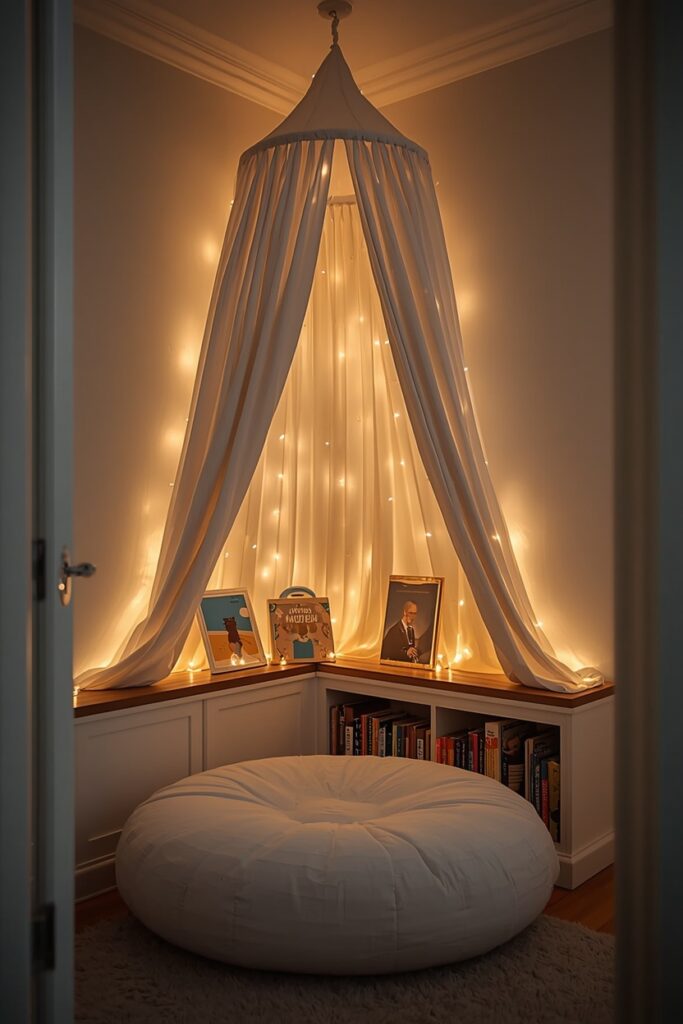
A dedicated reading corner — a small canopy or tent, a floor cushion, and a forward-facing bookshelf — gives a nursery a second zone that becomes increasingly useful as the child grows from lap-reading to independent page-turning. Mount a simple fabric canopy (sheer cotton or muslin) from a ceiling hook above a large floor cushion in the corner furthest from the crib. A narrow forward-facing bookshelf (also called a ledge shelf) mounted at child height on the adjacent wall displays board books with covers visible. In the infant stage, the reading nook serves as the nursing corner — place the glider under the canopy with the bookshelf within arm’s reach. As the child grows, the glider leaves and the floor cushion becomes the child’s reading spot.
The canopy creates a defined, enclosed micro-space that toddlers find comforting and engaging. Use a warm-white LED fairy light strand woven through the canopy fabric for a gentle evening glow.
10. Navy and Gold Nursery for a Rich Palette
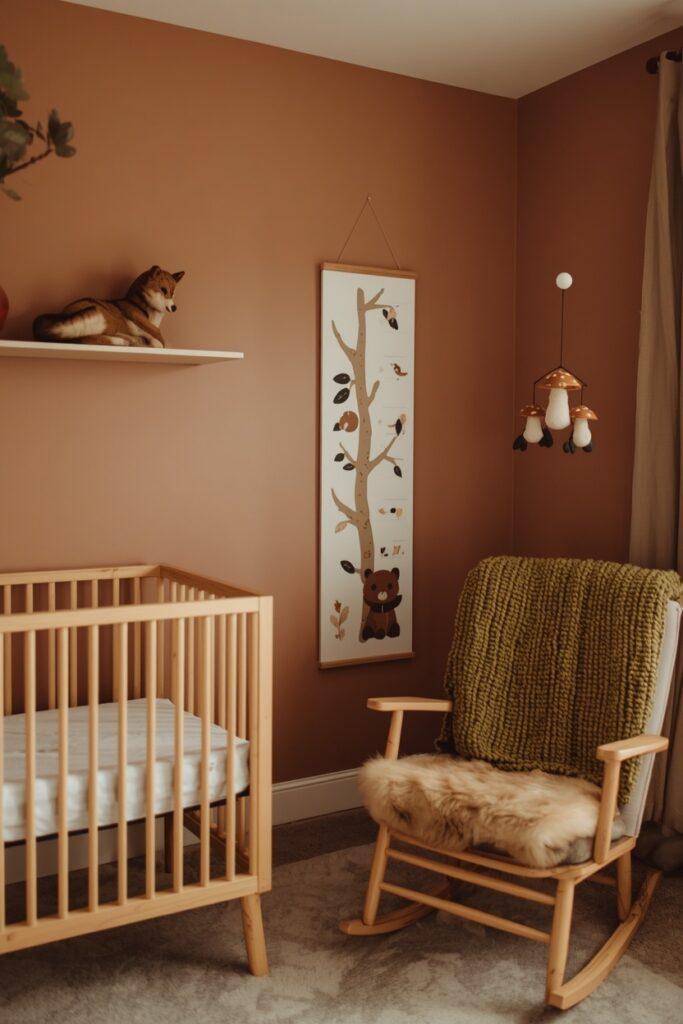
Navy walls paired with gold accents — a gold-framed mirror, a brass mobile, gold drawer pulls — create a nursery that reads sophisticated and warm rather than the typical pastel sweetness. Apply navy on the crib wall and keep the other three walls in warm white. The crib should be white or natural wood to contrast with the dark wall. A cream or ivory glider adds softness.
Gold hardware on the dresser, a gold-finished pendant light or sconce, and a gold-framed piece of art above the crib introduce the metallic thread. A cream rug with a subtle gold or navy pattern anchors the floor.
This palette suits nurseries that double as a design showpiece — it photographs beautifully and transitions seamlessly to a child’s room by simply swapping the crib for a bed. Navy hides the inevitable wall marks from small hands better than pale colours, which is a genuine practical advantage.
11. Nursery Ideas With a Canopy Crib Drape
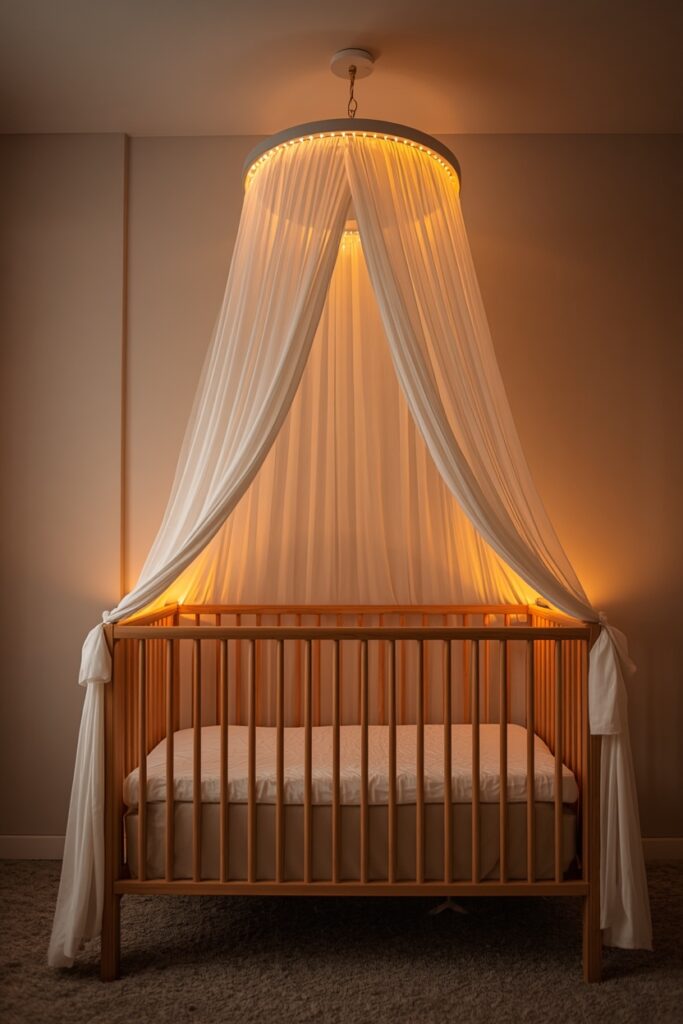
A fabric drape — sheer muslin, lightweight linen, or cotton voile — hung from a ceiling-mounted ring or hook above the crib creates a canopy effect that adds softness and a sense of enclosure without enclosing the crib itself. The drape should hang from a point roughly 60–90 cm above the crib rail and cascade outward, touching the floor on either side. During sleep, gather the drape to the sides with tie-backs so it is well away from the sleeping area — the drape is a decorative element, not a sleep enclosure, and should never hang loose over or inside the crib. Choose a fabric in white, cream, or the palest shade of the room’s palette. A strand of warm-white micro-LED lights threaded along the ring or the top of the drape adds a gentle glow for evening feeds. This single addition transforms a standard crib into a focal piece that anchors the room.
12. Woodland Theme Nursery in Muted Tones
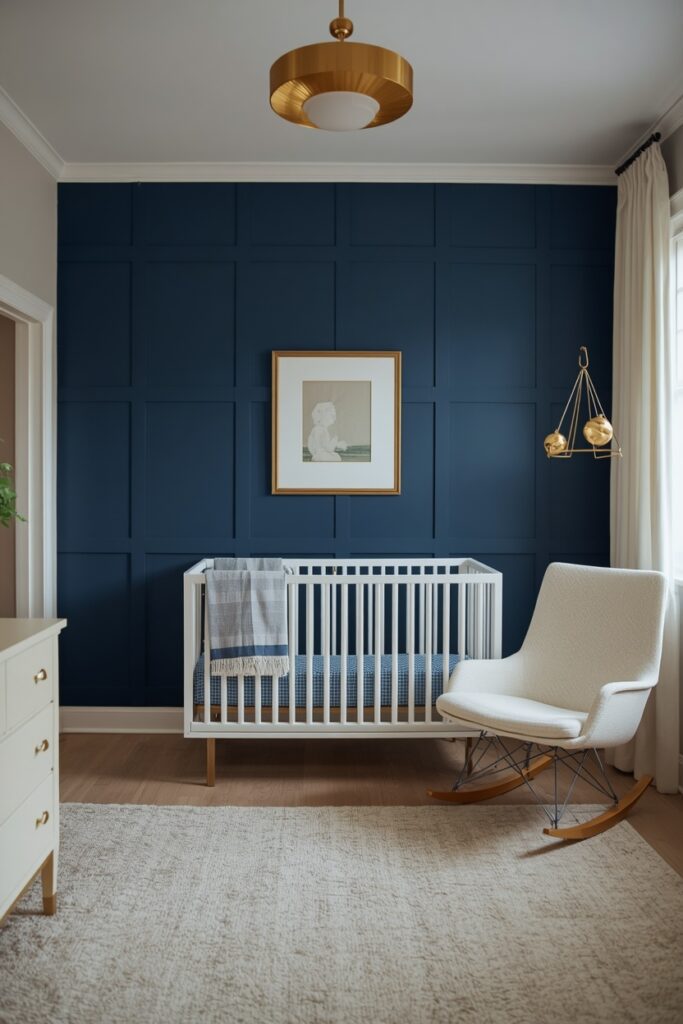
A woodland nursery — forest animals, trees, mushrooms, and earthy textures — avoids the cartoonish by keeping the palette muted and the execution textural rather than graphic. Use a soft sage or warm putty on the walls and introduce the woodland theme through handmade objects: a wooden fox figurine on the shelf, a felt mushroom mobile above the crib, a tree-shaped growth chart on the wall, and a forest-scene watercolour print in a natural-wood frame. The crib is natural wood or white, and the textiles are earthy: a moss-green knit throw, a cream crib sheet with a subtle leaf print, and a fawn-coloured sheepskin on the glider.
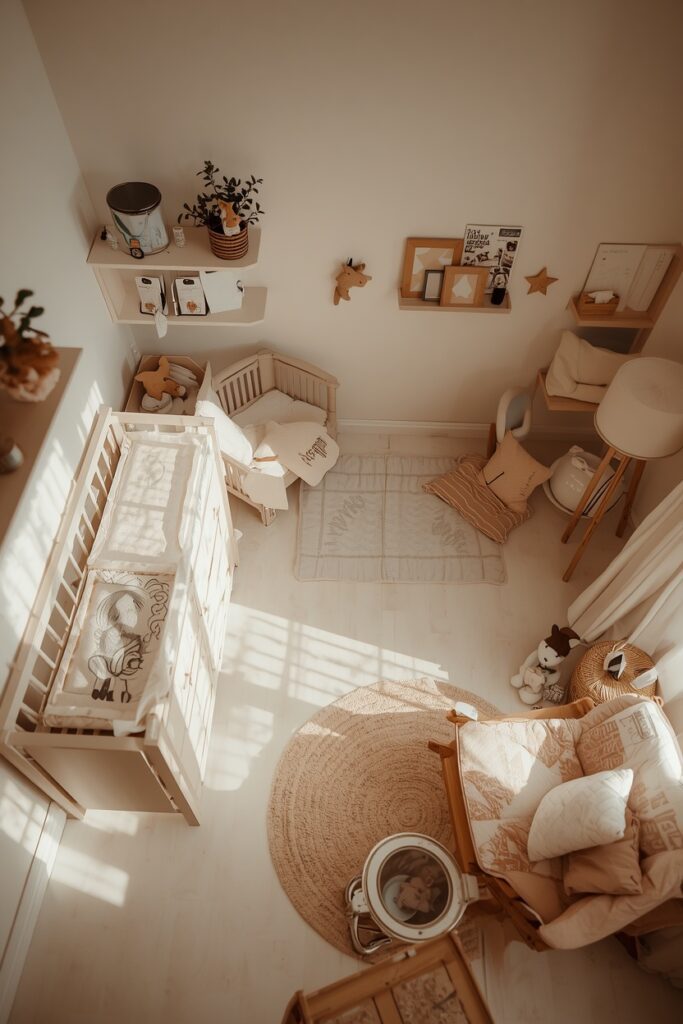
A flat-weave rug in cream and soft brown anchors the floor. This approach creates a woodland atmosphere through suggestion and material rather than literal illustration, which means it ages well and does not feel juvenile once the child outgrows the baby stage.
13. Small-Space Nursery With Multi-Use Furniture
In a compact nursery (under 8 square metres), every piece of furniture must serve more than one purpose. A mini crib (typically 60 × 100 cm, roughly 30 percent smaller than a standard crib) saves floor space during the first year. A dresser with a removable changing-pad tray on top replaces a separate changing table. A wall-mounted fold-down shelf provides a surface for feeding supplies that folds flat when not in use. The glider, if space permits, should be a compact armchair with a small footstool rather than a full-size recliner. If the room cannot fit a glider, a cushioned window seat or a floor cushion with back support serves the purpose during night feeds.
Mount shelving on the walls rather than using freestanding bookcases. Keep the floor as clear as possible — visible floor reads as space, and a clear floor is safer once the baby starts crawling. The colour palette should be light and warm to expand the room visually.
14. Blush and Brass Nursery
A dusty blush — muted, brownish pink rather than hot pink — paired with brass accents creates a nursery that reads warm and sophisticated. Apply blush on one accent wall behind the crib and keep the others in cream or the palest version of the blush. The crib can be white, natural wood, or brass-toned metal for a vintage touch. Brass enters through the mobile, the drawer pulls, a small brass shelf bracket, and a brass-finished pendant light or sconce.
A cream bouclé glider with a blush cushion provides the seating. The rug is a soft cream or a natural cotton weave.
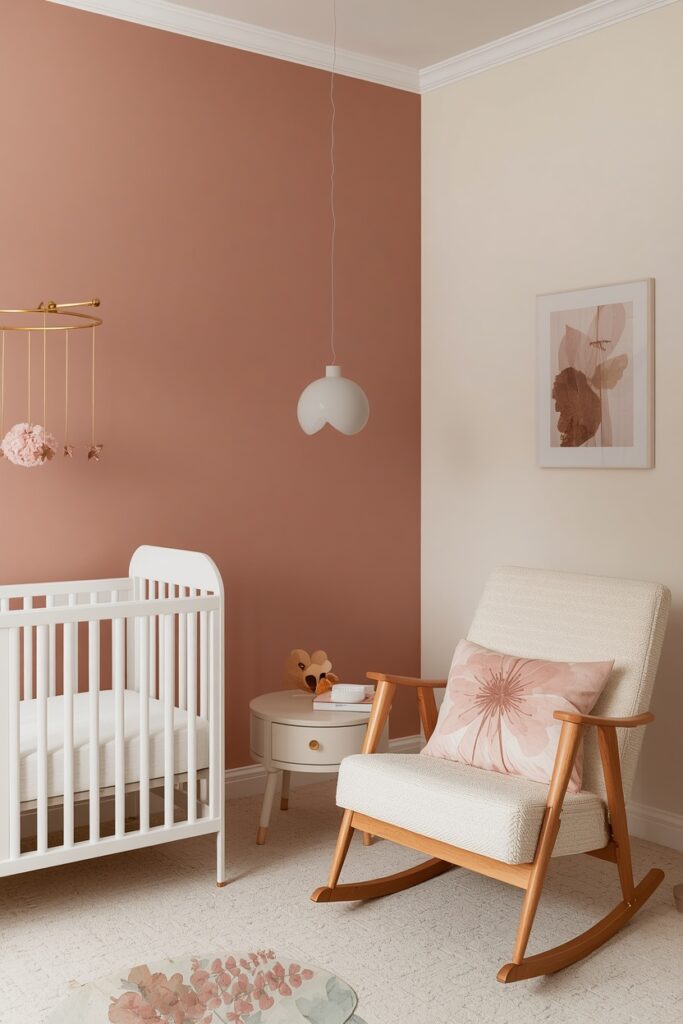
A framed print in soft tones — a watercolour, an abstract, or a botanical — above the crib adds the wall interest. This palette suits anyone who wants a pink nursery that avoids the saccharine quality of full-strength pink — the brown undertone in dusty blush is the key, and brass grounds it with metallic warmth rather than glitter.
15. Nursery With Blackout Curtains as a Design Feature
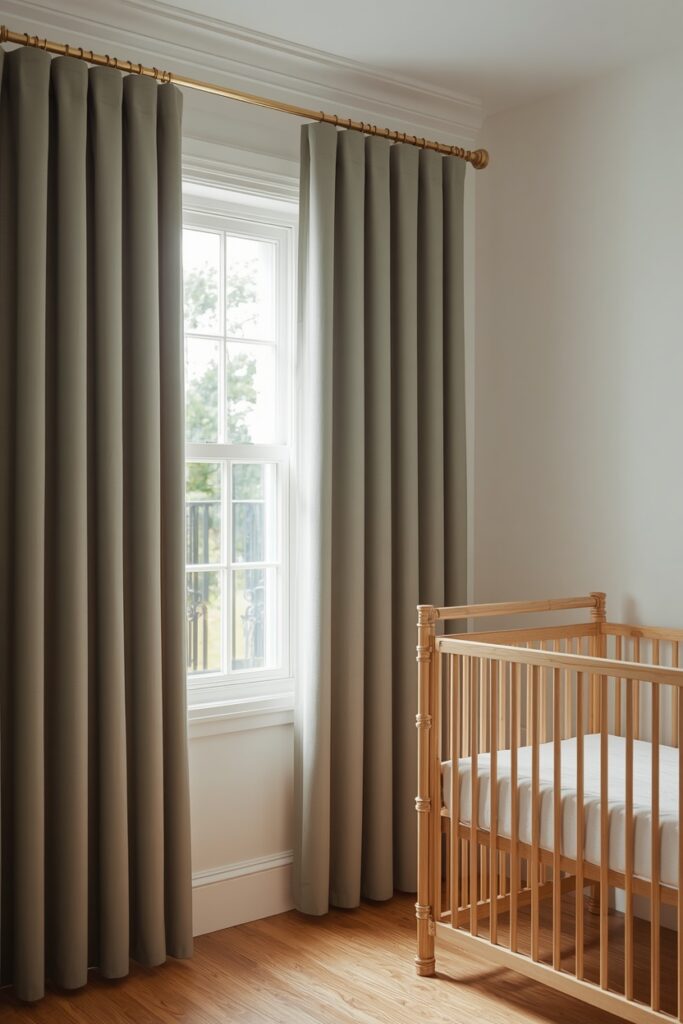
Blackout curtains in a nursery are a functional necessity for nap time and early bedtimes — and they can also be one of the room’s strongest design elements when chosen with care rather than defaulting to a basic white panel. Choose a full-length curtain in a colour that anchors the room: deep sage, warm clay, soft navy, or a rich cream. The fabric should be heavy enough to block light without a separate lining — look for triple-weave blackout fabrics that hang well and drape softly. Mount the curtain rod 10–15 cm above the window frame and extend it 15–20 cm beyond each side so the curtains stack clear of the glass when open, maximising daylight. A brass or matte-black rod with simple finials adds a hardware accent. The curtains become a framing element for the window — one of the nursery’s most prominent surfaces — and their colour sets the tone for the room’s palette. During the day, the stacked curtains add height and volume to the wall; at nap time, they transform the room into a dark, restful cave.
16. Nursery Ideas With a Dedicated Night-Feed Station
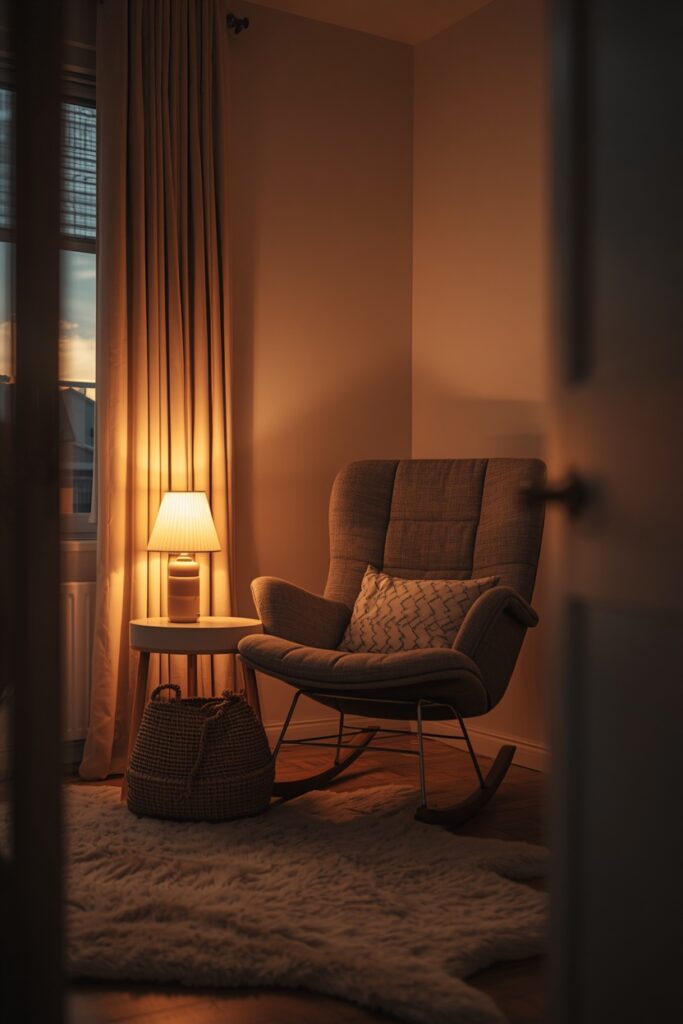
A dedicated night-feed zone — a comfortable chair, a dimmable light source, a small side table, and a basket for supplies — makes 3 AM feeds more manageable and keeps the mess contained to one corner rather than spreading across the room. Position the glider or armchair near the crib but not beside the window (cold drafts at night) and not directly under the overhead light (too bright for night feeds). A small table or a wall-mounted shelf at arm height holds a water bottle, a burp cloth, and a phone charger. The light source should be a dimmable lamp or a smart bulb set to the warmest possible red-orange tone — this wavelength disrupts sleep hormones the least for both parent and baby. A woven basket beside the chair holds spare swaddles and muslins.
The floor beneath the chair should be a soft rug or a sheepskin for bare feet in the dark. This zone exists for the first 6–12 months and converts naturally into a reading corner once night feeds end — the chair stays, the side table stays, and the supply basket becomes a book basket.
Where I’d Start if I Only Did Three Things
If I only did three things, I would start by choosing a convertible crib — one that transforms from crib to toddler bed to daybed — because it eliminates the cost and disruption of buying a new bed at 18 months. Second, I would install blackout curtains that double as a design element, because sleep quality (for both baby and parents) depends on room darkness, and good curtains serve that function for years. Third, I would set up a dedicated night-feed corner with a dimmable warm light, a comfortable chair, and a supply basket at arm height, because the first six months of night feeds are much more tolerable when the station is organised and the lighting is right.
Frequently Asked Questions
What nursery ideas suit a gender-neutral design?
Warm neutrals (cream, oatmeal, soft mushroom), sage green, and muted earthy tones all read gender-neutral and age well beyond the baby years. Avoid the traditional blue-pink binary and focus on texture and material — natural wood, linen, and jute — rather than colour-coded themes. These palettes suit any child and adapt easily as the room evolves.
When should I start decorating the nursery?
Most parents begin setting up the nursery during the second trimester (weeks 14–27) to allow time for paint to off-gas, furniture to arrive, and the room to settle before the due date. Aim to have the room functionally ready — crib assembled, changing station stocked, blackout curtains hung — by week 34, leaving a buffer before the due date.
What paint should I use in a nursery?
Use a low-VOC or zero-VOC paint in an eggshell or satin sheen for easy wipe-down. Allow the paint to cure fully (7–14 days with good ventilation) before placing the baby in the room. All major paint brands now offer low-VOC lines, so there is no compromise on colour selection.
Is a glider or a rocking chair better for a nursery?
A glider with a smooth back-and-forth motion is generally more comfortable for extended feeds and easier to get in and out of than a rocker. Choose one with padded armrests (for supporting a feeding pillow), a high back, and a lumbar cushion. Test the seat before buying — you will spend hundreds of hours in it during the first year.
Final Thoughts
The smartest nursery ideas design for the first three years, not just the first three months. Choose a palette that ages beyond pastels, invest in convertible furniture that grows with the child, and set up the night-feed and sleep infrastructure before the baby arrives. A nursery designed with transitions in mind saves money, reduces future disruption, and creates a room that the child can call their own for years rather than months.