
The reason so many lounge rooms look interchangeable is that people shop piece by piece — a sofa here, a rug there, a lamp from a different aisle — without a binding palette or material thread connecting the decisions. Good lounge decor ideas solve that by presenting one complete vision: the sofa shape, the rug scale, the wall treatment, the lighting layers, and the accent materials as a single package. That is what each of the 20 ideas below delivers.
Some of these schemes suit open-plan spaces where the lounge shares a sightline with the kitchen; others assume a separate, enclosed room. I have flagged which is which where it matters, and I have included honest trade-offs — because a cream bouclé sofa with a toddler is a very different proposition than one in a child-free home. Pick the idea closest to your taste, then adjust proportions to your actual floor plan.
1. Warm Neutral Living Room With Olive Sofa
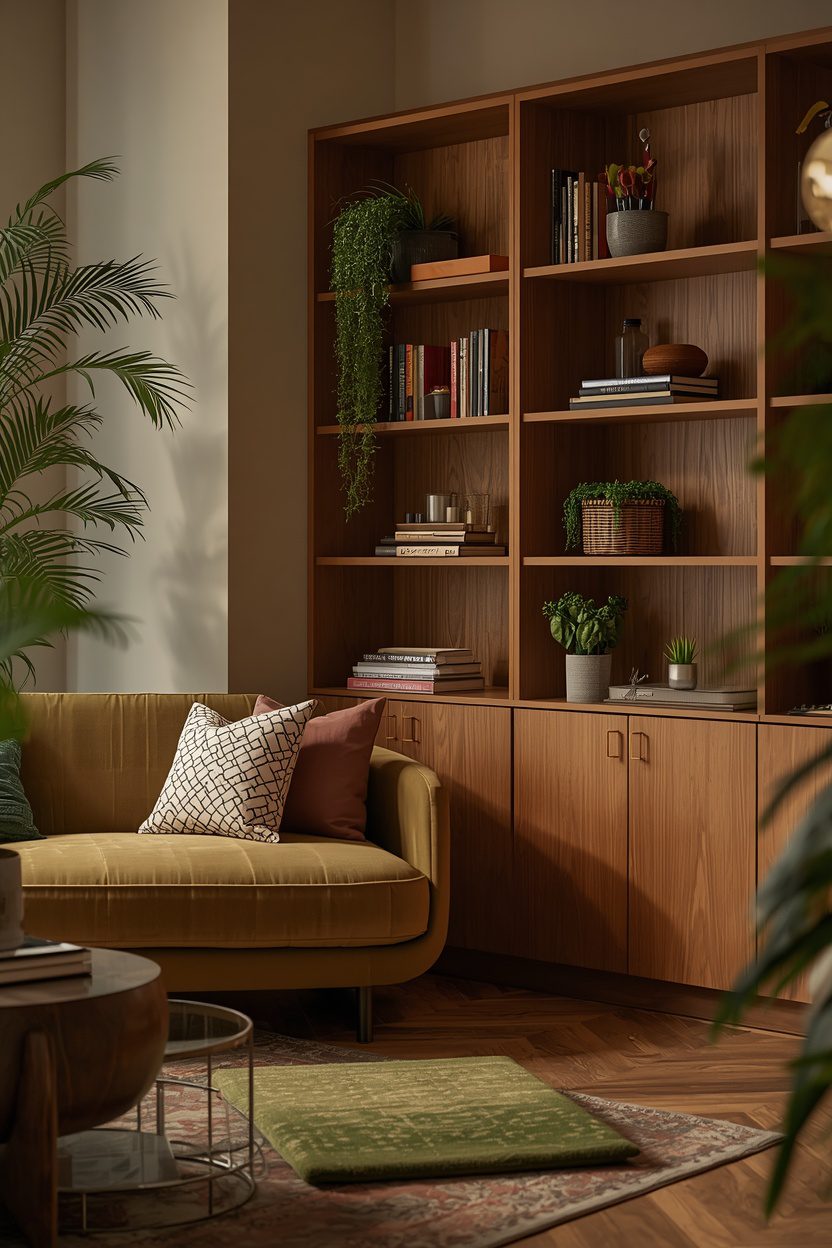
A deep olive linen sofa anchors this room in colour without shouting. Walls stay in a warm off-white, floor is a mid-tone oak or oak-look engineered plank, and the rug is a large flat-weave in cream and sand, sized so all front legs of every seat sit on it. A round walnut coffee table centred on the rug keeps circulation open, and a pair of ceramic table lamps in a sandy glaze sit on either side of the sofa on slim side tables. Curtains are an unlined natural linen that puddles slightly at the floor.
The accent colour comes through throw pillows — two in rust, one in cream — and a single large woven basket holds blankets. This room reads polished enough for guests but liveable enough for daily use; olive linen hides wear better than cream and cleans up with a damp cloth and mild soap.
2. Modern Monochrome in Charcoal and White
This lounge commits to a two-colour palette and relies entirely on texture for variety. The sofa is a deep charcoal performance fabric — bouclé or heavy linen — paired with a charcoal-and-white geometric rug that anchors the seating area. Walls are bright warm white, and a single charcoal accent wall behind the main media unit or shelving adds depth.
The coffee table is white marble on black steel legs, flanked by two charcoal leather accent chairs. A pair of matte white ceramic pendant lights overhead and a black arc floor lamp behind the sofa provide the lighting layers. Keep decor sparse: a single tall black vase with dried pampas grass on a side table, and a stack of books with neutral spines on the coffee table.
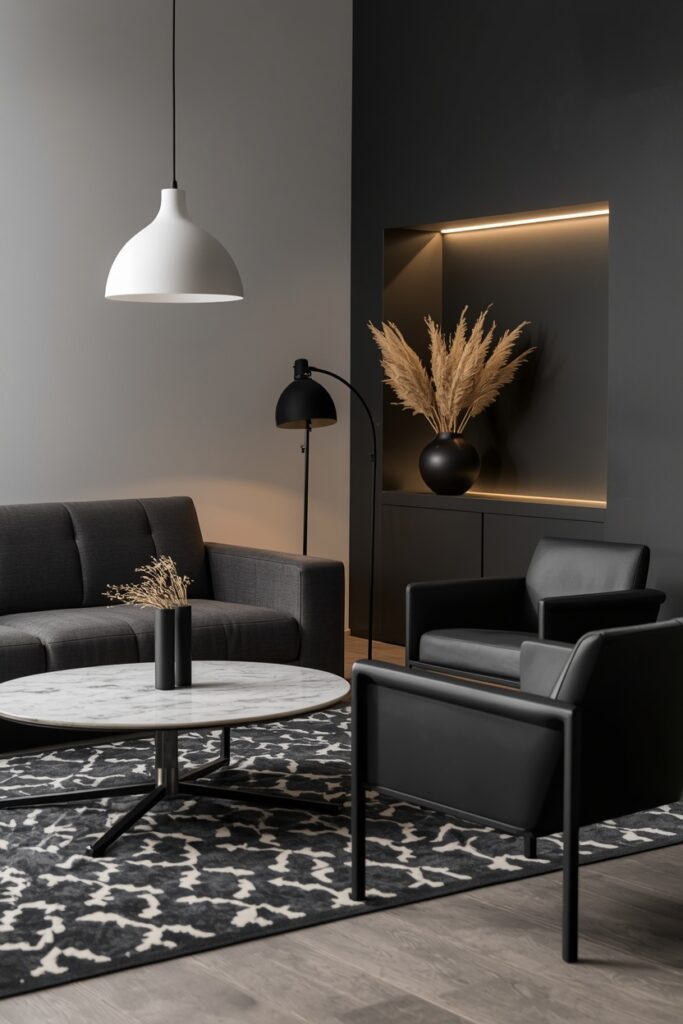
This scheme rewards restraint — every added colour weakens the graphic impact.
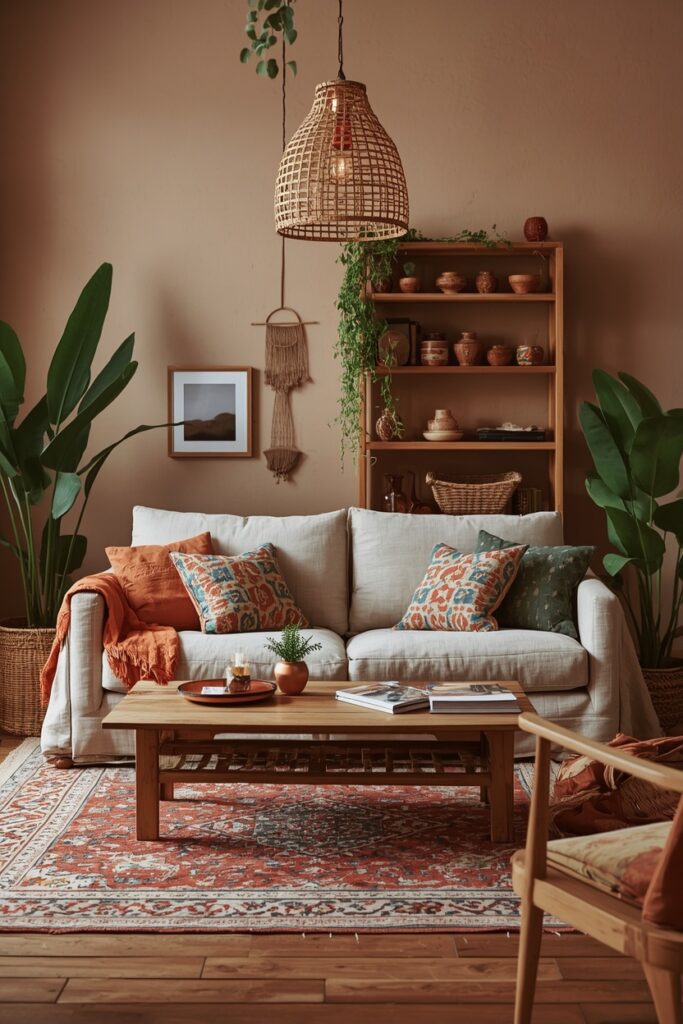
3. Bohemian Lounge With Layered Textiles
The bohemian lounge builds visual richness through accumulation — rugs stacked, pillows massed, throws draped, and every surface carrying something made by hand. Start with a low, deep sofa in natural linen or a warm beige, and place a large vintage-look rug beneath it. Layer a smaller kilim or Moroccan rug on top at an angle. Cushions mix block-print, mudcloth, and solid textures in an earthy family: terracotta, ochre, sage, and cream. A carved wooden coffee table or a brass-tray table adds warmth, and a rattan bookshelf against the wall holds plants, books, and ceramics in varying heights. Lighting comes from a rattan pendant and multiple table lamps or candles. The trade-off is maintenance — layered textiles collect dust and pet hair quickly, so this look suits homes with a willingness to vacuum and shake out pillows weekly.
4. Scandinavian Minimalist Lounge in Light Wood
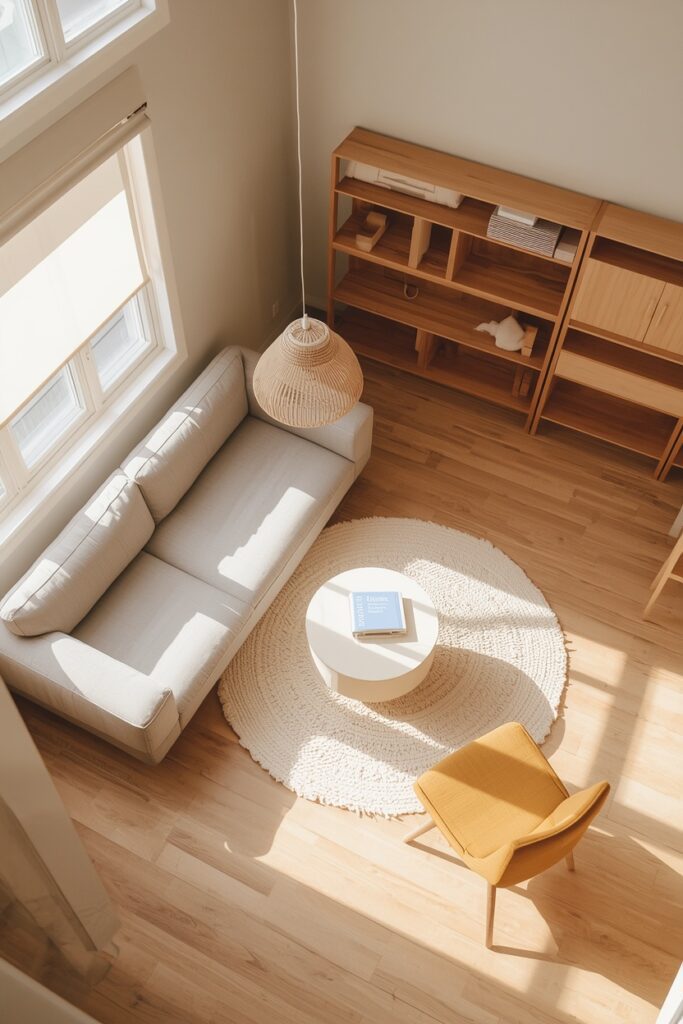
Scandinavian minimalism in a lounge means letting light and form carry the room. Walls are warm white, the floor is light oak or birch, and the sofa is a compact, clean-lined two-seater in pale gray or off-white. A round coffee table in light wood sits on a white or cream wool rug. One accent chair — a statement piece in a warm tone like mustard or soft terracotta — provides the only colour in the room. A single large pendant in paper, linen, or pale wood hangs low over the coffee table.
Shelving is open and sparsely styled: a few books, one vase, one plant. The window treatment is a sheer roller blind that lets maximum light through. This room photographs beautifully but demands discipline — every out-of-place object stands out because there is nothing to hide behind.
5. Mid-Century Modern With Teak and Brass
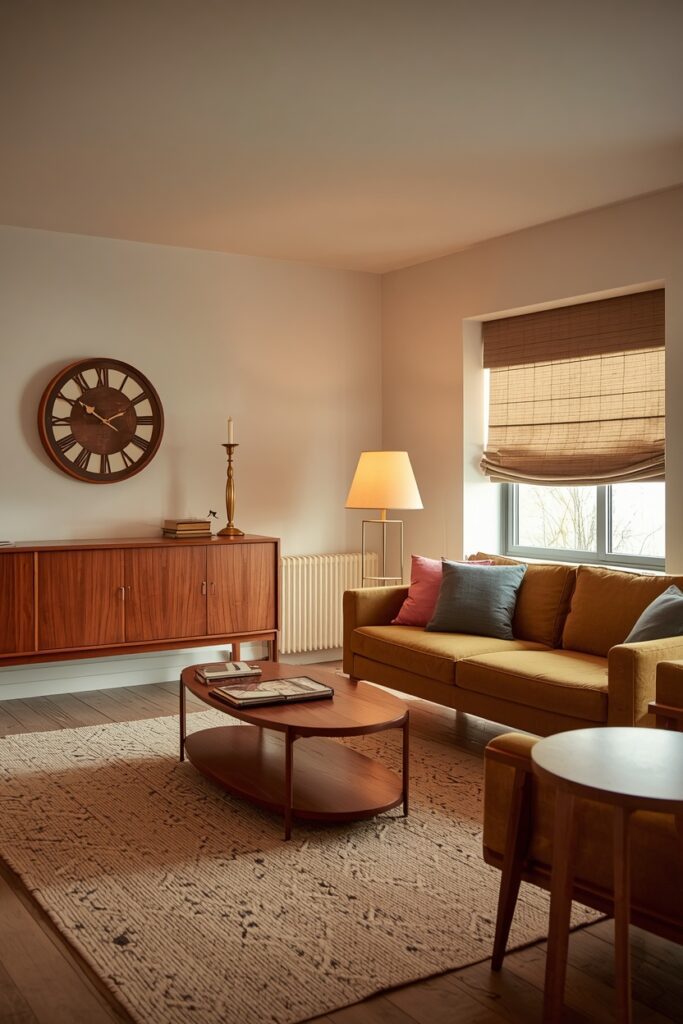
Teak furniture — sideboards, media units, coffee tables with tapered legs — defines this scheme. Walls go in a warm white or the palest mushroom, and the sofa is an angular mid-century shape upholstered in a saturated tone: olive, burnt orange, or deep teal. The rug is a geometric flat-weave in earthy colours, and two brass table lamps with drum shades sit on the teak sideboard.
A starburst clock or sunburst mirror on the wall above the sofa gives the room its mid-century signature. Window treatments are simple — flat Roman shades in a linen blend. If you are sourcing actual vintage teak, check for dryness and cracking — Danish teak from the 1960s often needs oiling with teak oil once or twice a year to maintain its sheen.
Modern reproductions are more stable but lack the grain character of the originals.
6. Lounge Decor Ideas With a Statement Gallery Wall
A gallery wall replaces wallpaper and paint colour as the focal feature — and it suits any furniture style beneath it. The wall behind the sofa is the natural location, and the arrangement should extend from roughly 15 cm above the sofa back to about 30 cm below the ceiling line. Mix frame sizes and orientations, but keep the frame colour to one family (all black, all natural wood, or all thin brass). Space frames 5–7 cm apart and start by laying the arrangement on the floor before committing to nails.
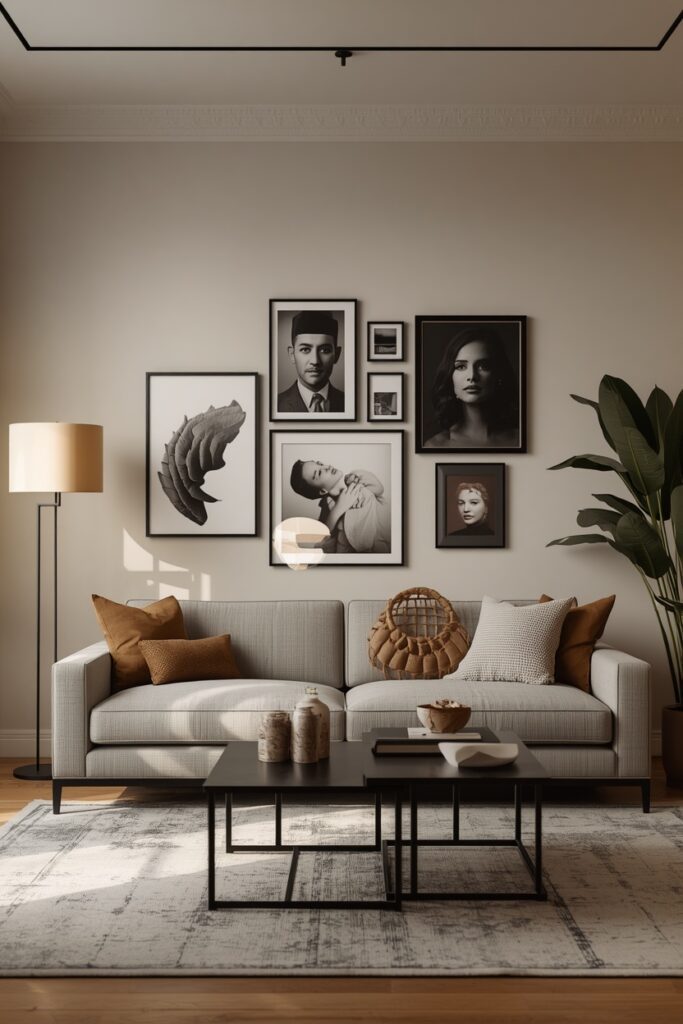
The rest of the room stays quiet — a solid-colour sofa, a simple rug, and minimal accessories on the coffee table — so the gallery wall can breathe. One practical note: avoid gallery walls opposite large windows, because the glass creates glare on framed pieces throughout the day.
7. Coastal Lounge With Rattan and Soft Blues
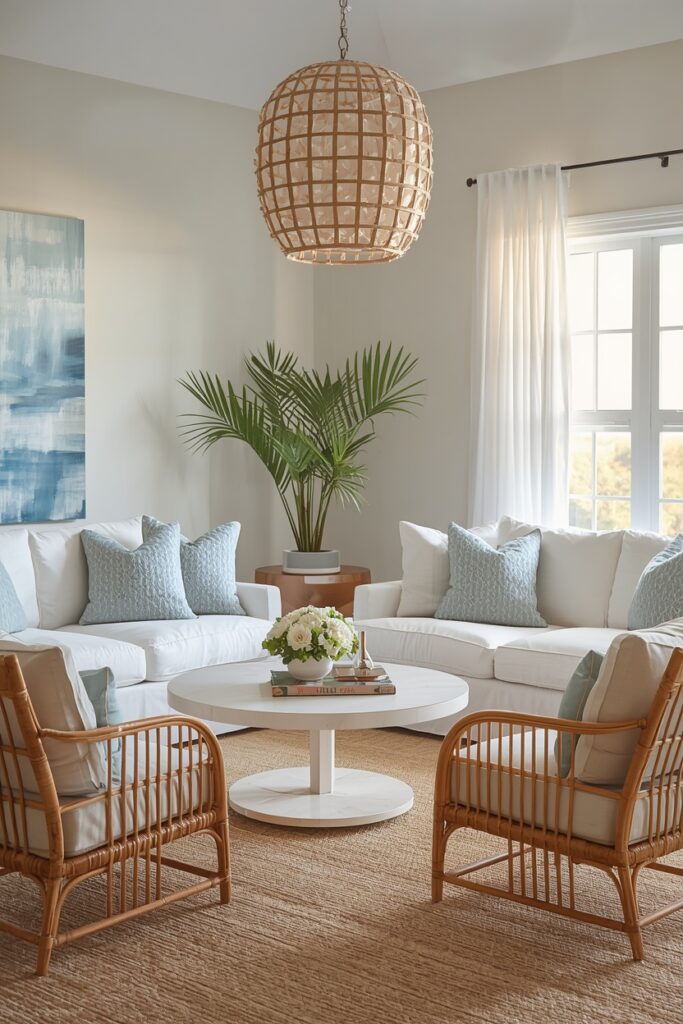
Coastal in a lounge works best when you think tonal rather than themed — watery blues, warm whites, sandy neutrals, and natural rattan rather than seashells and anchors. The sofa is a slipcovered style in white or natural linen, and the accent chairs are rattan with cream cushions. The rug is a natural jute or sisal, and the coffee table is a round rattan-wrapped or bleached-wood piece. Blue enters through throw pillows in a range from pale sky to soft denim, and through a single piece of blue-toned artwork. A capiz-shell pendant or a woven drum shade provides the overhead light. Walls stay in the warmest white available, and curtains are lightweight cotton or linen in white. This scheme suits open-plan rooms that connect to outdoor living or a view, extending the natural light and the outdoor palette indoors.
8. Earthy Lounge With Terracotta and Raw Timber
Terracotta walls paired with raw-timber furniture create a lounge that radiates warmth at every hour. The sofa is a deep, generous shape in natural linen or heavy cotton, and the coffee table is a thick slab of reclaimed timber on sturdy legs — the more character in the grain, the better. A pair of terracotta planters holding tall greenery — a bird of paradise or rubber tree — flanks the window. The rug is a flat-weave in cream and warm brown, and accent pillows mix cream, rust, and sage on the sofa. A large woven pendant light overhead and a pair of iron-toned table lamps provide the layered lighting.
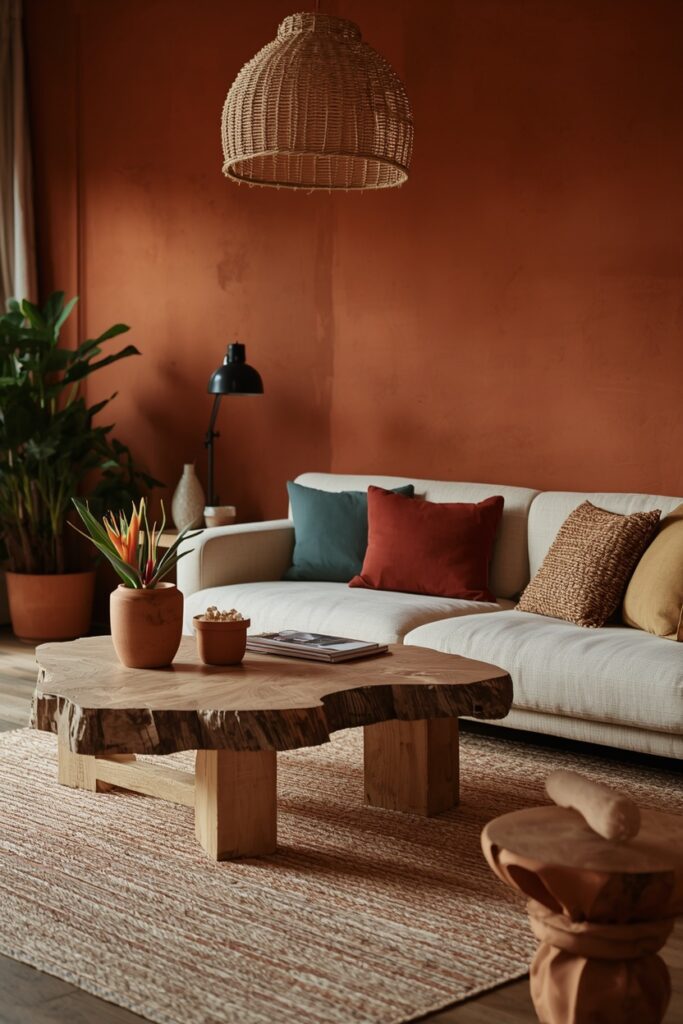
Keep artwork earthy — botanical prints, landscape photography, or abstract pieces in the same warm family. This room reads best in spaces with good natural light, as terracotta can absorb a significant amount of brightness in dim rooms.
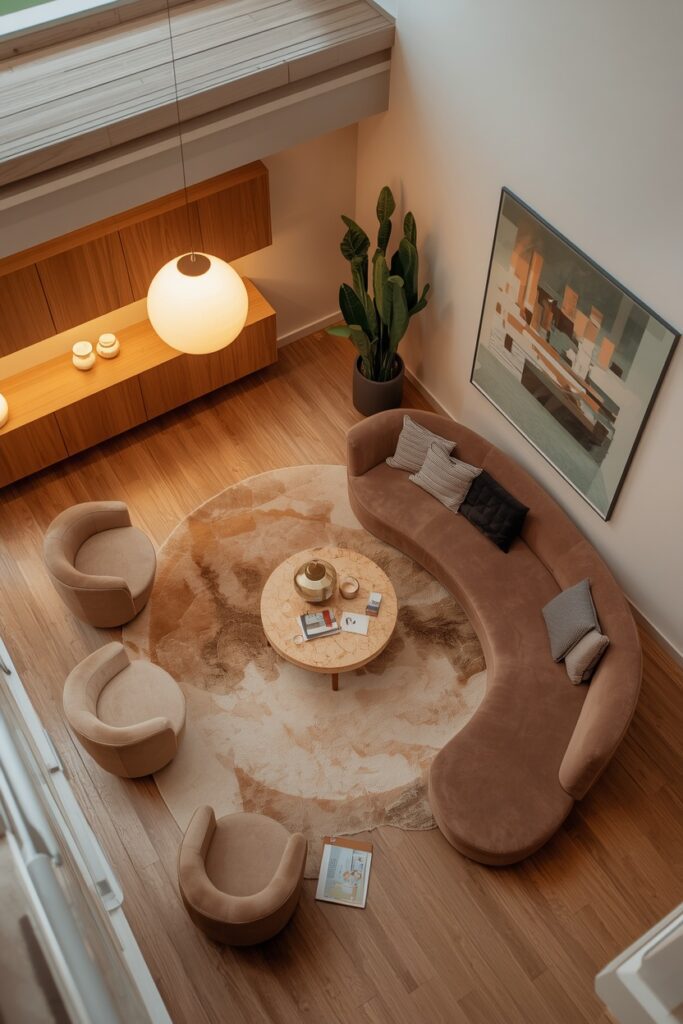
9. Contemporary Lounge With Curved Furniture
Curved sofas, round coffee tables, and arched shelving have moved from trend to fixture in contemporary interiors — and they suit lounge rooms especially well because they improve circulation flow and soften hard architectural lines. The centrepiece is a curved or kidney-shaped sofa in a solid tone like taupe, soft olive, or warm gray, positioned away from the wall to let its shape read from all angles. A large round marble or travertine coffee table sits inside the curve. Accent chairs are barrel-shaped with swivel bases. The rug echoes the curves — an irregular organic shape in a neutral wool.
Walls stay clean and minimal, with one large piece of art as the focal point. Lighting should be sculptural: a globe pendant or a curved arc lamp. The trade-off with curved pieces is space — they take up more visual and physical room than angular furniture, so this scheme suits lounges over about 20 square metres.
10. Dark and Moody Lounge in Deep Green
Deep green on every wall turns a lounge into a jewel box — the kind of room that draws people in and keeps them lingering. Choose a green with a blue undertone for sophistication or a yellow undertone for more warmth, and apply it in a matte or eggshell sheen. The sofa is a substantial shape in charcoal or cognac leather, and the coffee table is dark wood or black marble.
Brass accents are essential: a brass floor lamp, brass picture frames, brass handles on a dark-stained sideboard. The rug should be large and deep-toned — a dark Persian-style or a solid deep pile in charcoal. Bedding in the throw pillow area introduces relief: cream, gold, and soft blush soften the heaviness.
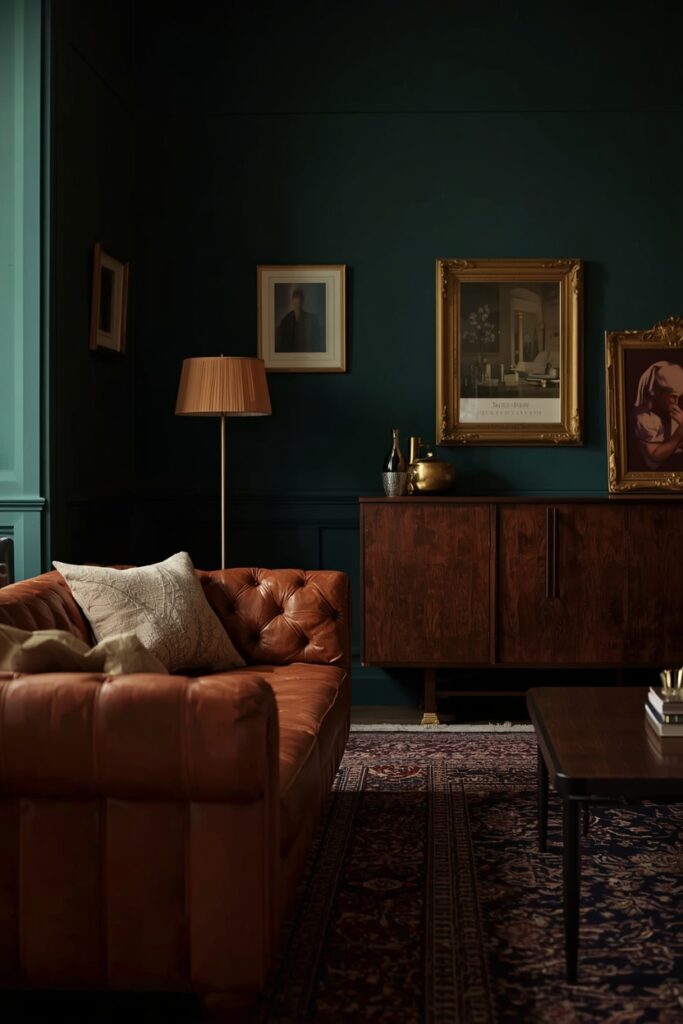
This scheme demands good artificial lighting because the dark walls absorb daylight aggressively; budget for at least four light sources spread around the room.
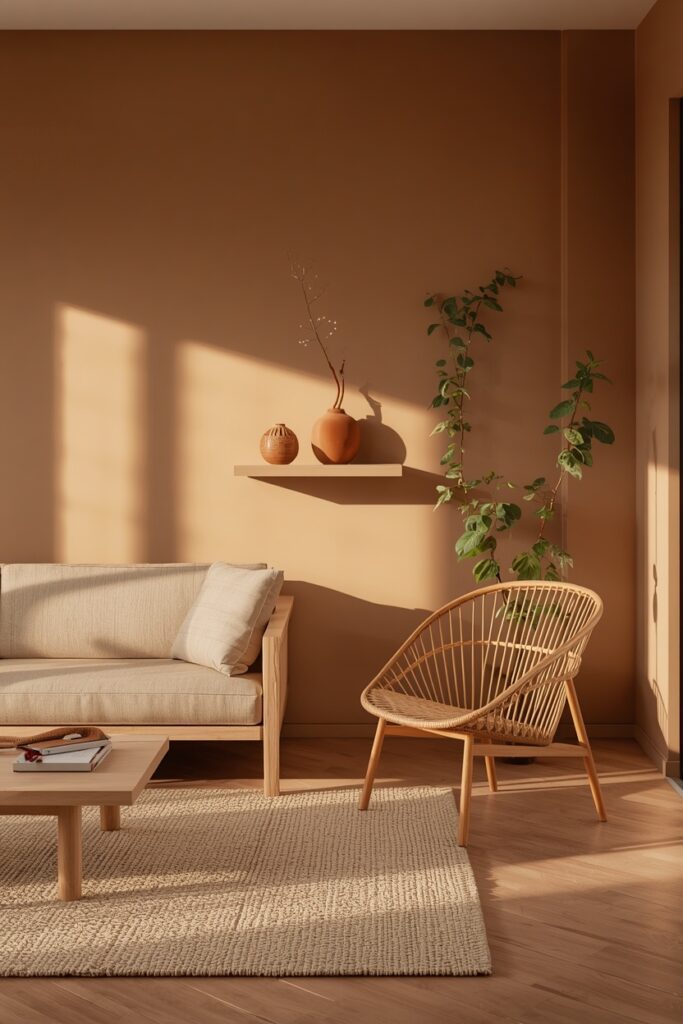
11. Japandi Lounge With Clean Lines
Japandi strips a lounge to its essentials and adds warmth through natural materials. The sofa is a low-profile piece in a warm neutral — oatmeal, stone, or pale mushroom — and the coffee table is a simple wooden slab or a low rectangular piece in light ash. The rug is a hand-woven wool in cream or soft gray, oversized so it defines the seating zone clearly. One accent chair — a curved wooden-frame piece with a linen cushion — sits at an angle. Shelving is minimal: a single floating shelf in light wood holding a ceramic vase and a trailing plant. Walls are a warm putty or pale stone rather than pure white. The pendant is a rice-paper globe or a linen drum in natural tones. This room lives through restraint — every item earns its place, and empty space is treated as a design element rather than something to fill.
12. Vintage-Inspired Lounge With Velvet and Antiques
A vintage-inspired lounge achieves richness through patina and character rather than matching sets. The sofa is a velvet piece in a deep tone — hunter green, midnight blue, or wine — chosen for its generous roll-arm shape. The coffee table is a salvaged trunk, a brass-and-glass piece, or an antique wooden table with turned legs. Accent chairs are mismatched: one wingback in a complementary fabric, one smaller wooden chair with an upholstered seat. A vintage Persian or Turkish rug anchors the arrangement, its faded tones adding history.
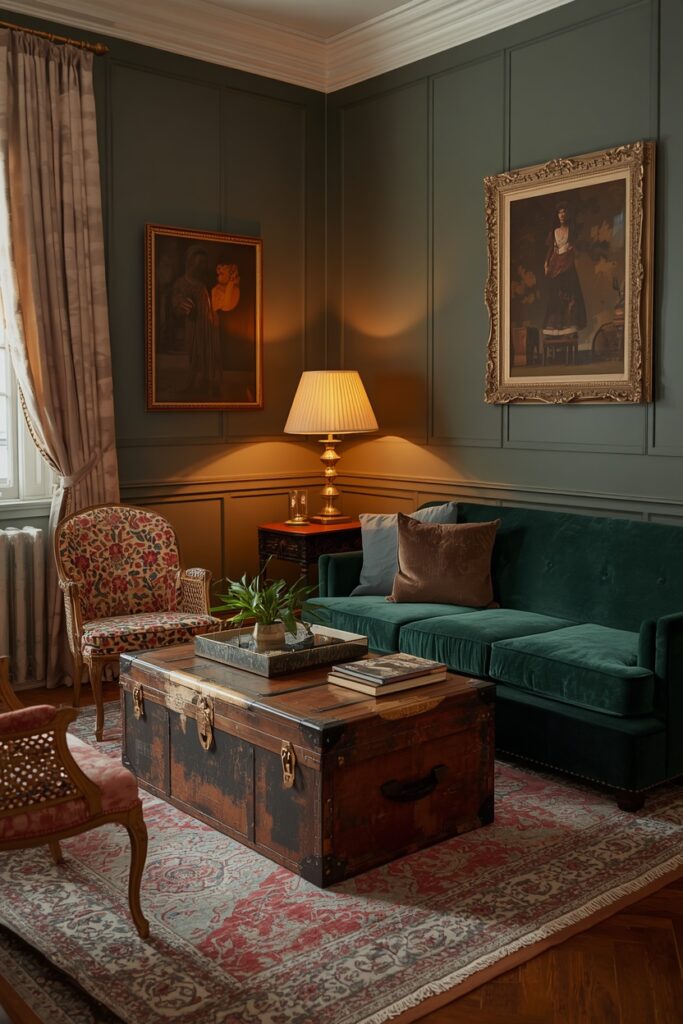
Lighting mixes eras: a table lamp with a pleated silk shade, a modern floor lamp with a brass finish. The walls display collected artwork in ornate frames. This room builds character over time and suits thrifters who enjoy the hunt; trying to source everything new in a vintage style usually looks forced.
13. Warm Industrial Lounge With Concrete and Leather
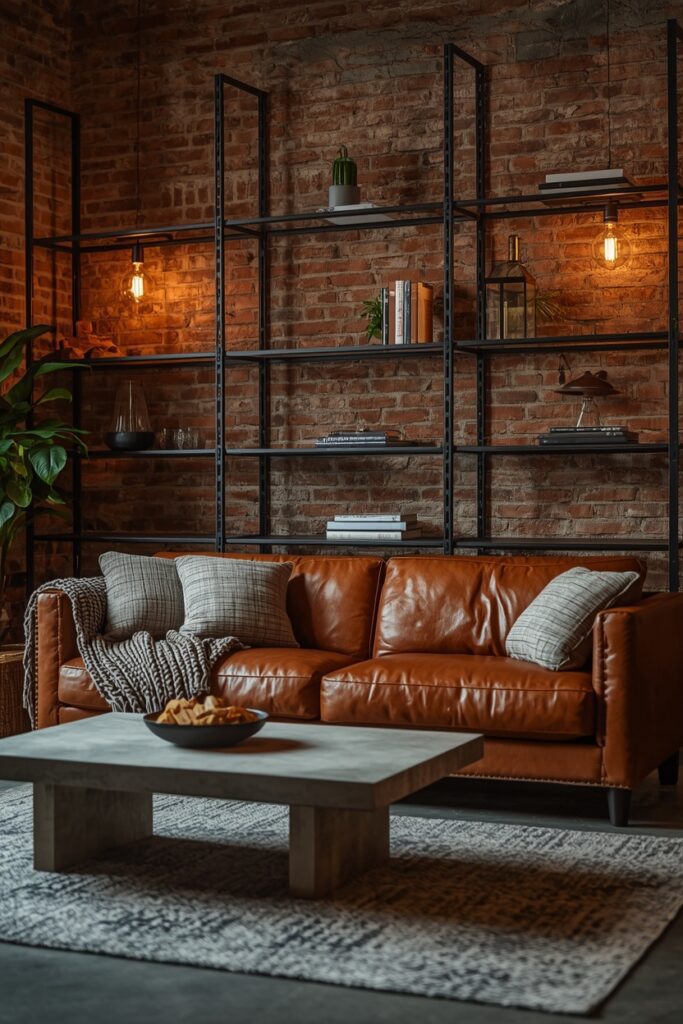
Industrial does not have to mean cold — the warm version balances raw materials with soft textures. The sofa is a deep cognac or tan leather with visible stitching and a slightly worn quality. The coffee table is a concrete slab on steel legs or a reclaimed-wood plank on an iron base. Walls are either exposed brick (original or veneer) or a warm concrete-effect paint. A large flat-weave rug in heathered gray or warm brown softens the floor. Shelving is open metal with reclaimed-wood shelves, styled with books, plants, and vintage objects.
Lighting is key: Edison-style pendants on a black cord, a brass desk lamp repurposed as a side-table light, and a matte-black floor lamp. Add softness through a chunky knit throw and linen cushions in warm neutrals. The trick is balancing roughly 60 percent hard materials with 40 percent soft textiles so the room stays inviting.
14. Maximalist Lounge Decor With Bold Pattern Mixing
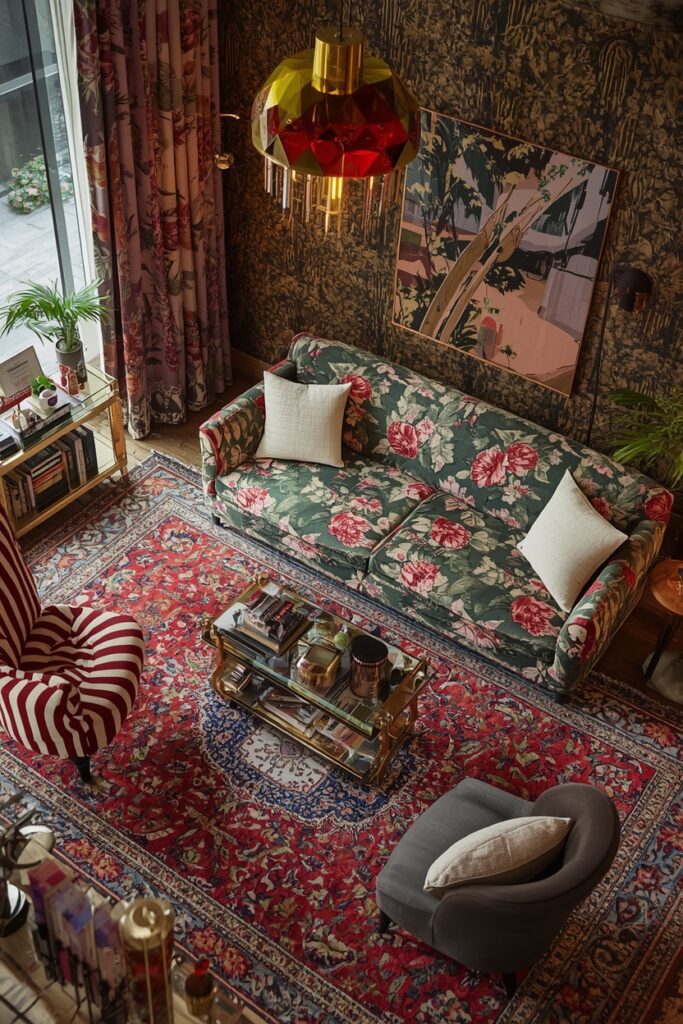
Maximalism does not mean random — it means confident layering with a shared colour thread. Choose three to four colours that appear across every patterned piece: a large-scale floral on the sofa, a geometric on the accent chairs, a stripe on the curtains, and a botanical on the throw pillows. The rug is either a bold Persian-style or a solid deep colour that grounds the patterns above.
Walls can be bold too — a rich wallpaper on one feature wall or a saturated paint colour on all four. A brass or gold drinks cart, a stack of oversized art books, and a collection of ceramics on a sideboard fill the room with objects that reward a second look. Lighting should be statement-worthy: a large coloured-glass pendant or a sculptural brass chandelier.
The trade-off is decision fatigue — this room requires a clear vision upfront, because adding randomly to a maximalist space quickly crosses into clutter.
15. Transitional Lounge With Classic Lines and Modern Materials
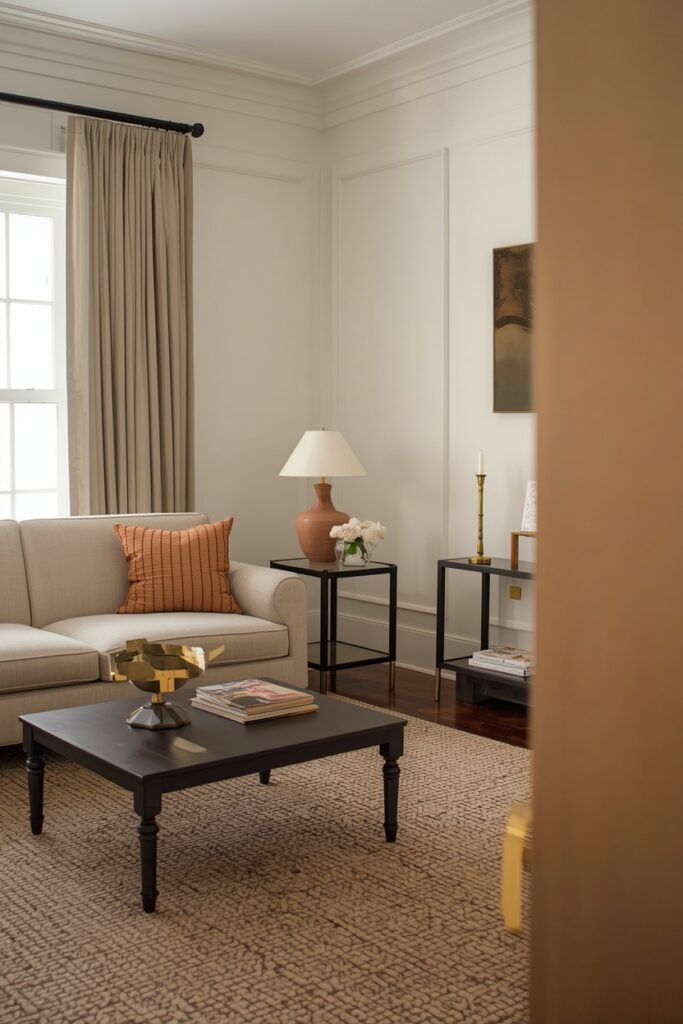
Transitional bridges traditional proportions with modern surfaces: a sofa with a classic roll arm but in a performance-fabric rather than chintz, a coffee table with turned legs but in matte-black steel rather than mahogany, curtains with a pinch-pleat heading but in a contemporary linen rather than a damask. Walls stay neutral — warm white, pale greige, or soft stone — and the rug is an oversized hand-knotted wool in a subtle pattern. Metallic accents mix warm and cool: brushed brass on one lamp, brushed nickel on another. A pair of matching side tables flank the sofa, and a console table behind it holds a lamp and a small tray. This style suits resale-minded homeowners because it reads neither dated nor trendy, and it adapts as tastes evolve. The colour accent stays small — one or two pillow tones and a single piece of art.
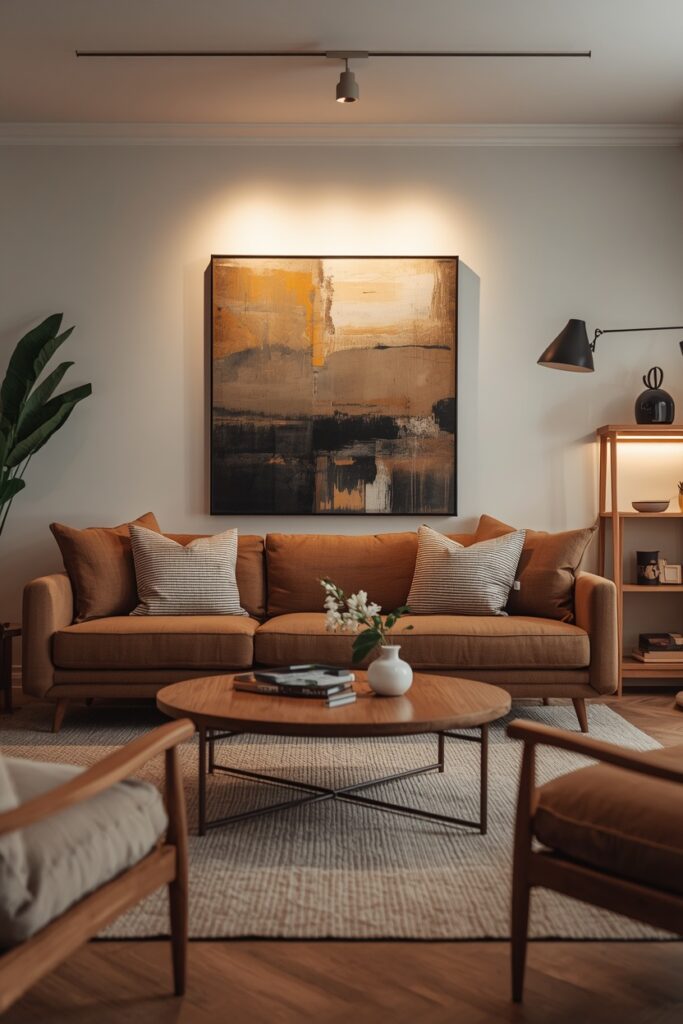
16. Art-Centric Lounge With Oversized Statement Piece
One oversized piece of art — at least 120 × 90 cm, ideally larger — transforms a lounge from decorated to distinctive. Mount it on the wall behind the sofa or on the largest unbroken wall, hung so the centre sits at eye level (roughly 150 cm from the floor). Let the art dictate the room’s accent colours: pull two or three tones from the piece and echo them in throw pillows, the rug, and one lamp shade. The rest of the room stays deliberately understated — a solid-colour sofa, simple wooden furniture, a natural rug — so the artwork leads. Lighting matters: install a picture light above the frame or position a floor lamp so it washes the wall without creating glare on the surface.
Avoid placing art opposite a window for the same reason. This approach makes the lounge memorable with a single investment rather than a room full of competing objects.
17. Lounge With Built-In Shelving and Banquette
Built-in shelving flanking a window or fireplace adds architecture and storage in one move. Frame the shelving from floor to ceiling, roughly 35–40 cm deep, and paint it the same colour as the walls for a seamless look — or a shade darker for subtle contrast. Below the window or between the shelving units, a built-in banquette with a cushioned seat and bolster pillows creates a reading and lounging zone separate from the main sofa. The sofa should face the banquette across a coffee table so conversations flow naturally.
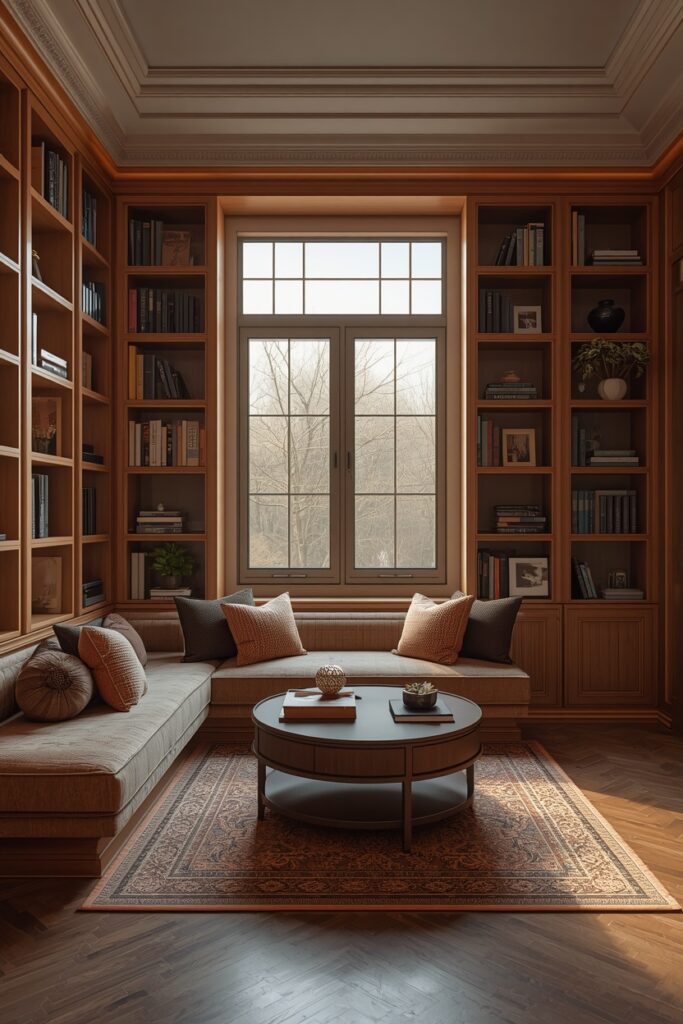
Style the shelves with a mix of books, plants, ceramics, and one or two small framed photos — leave roughly 30 percent of shelf space empty so the display breathes. This is a renovation-level project — expect to budget for a carpenter — but the return in both function and visual impact is substantial, especially in lounge rooms that lack architectural features.
18. Black-and-Tan Modern Lounge
Black and tan delivers high contrast with the warmth of natural tones. The sofa is a tan or camel performance linen, and the coffee table is a black steel-and-glass piece. Walls go in warm tan on three sides with one accent wall in matte black behind the media unit or shelving. A black-and-cream striped rug anchors the seating area, and throw pillows alternate between black linen and cream wool.
Lighting is all black hardware — a black arc floor lamp, black metal pendant, and black sconces — which reads bold against the tan walls. One open shelving unit in black metal with light wood shelves holds books and objects. A single cognac leather accent chair ties the warm and dark tones together.
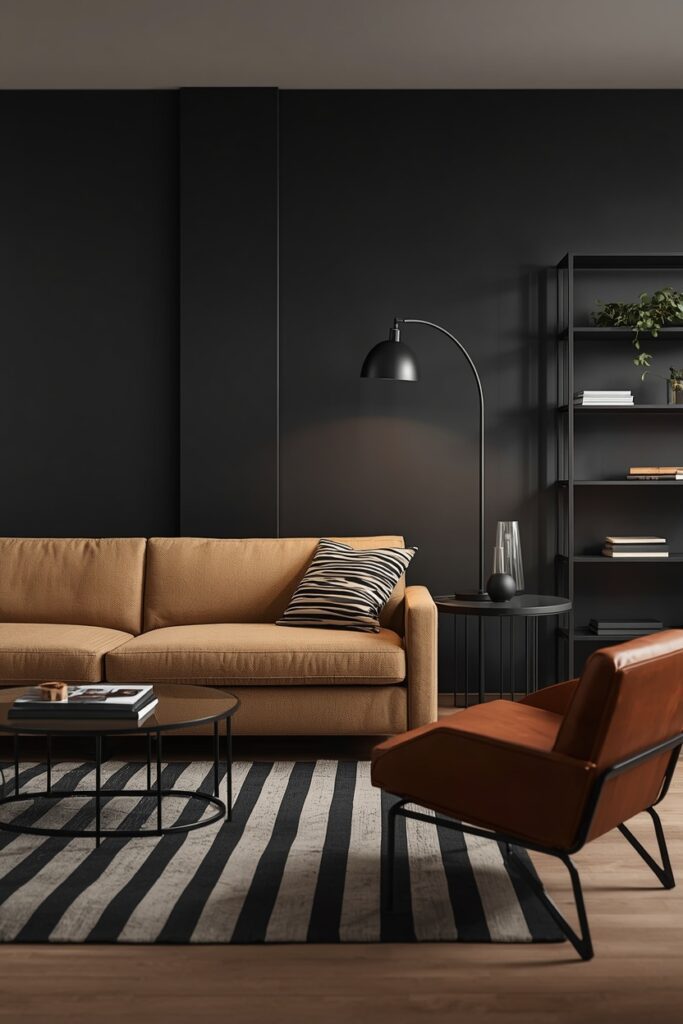
Keep decor minimal and graphic: one large black-and-white photograph, one terracotta vase, one trailing plant. The 70-30 rule applies — tan at 70 percent, black at 30 percent — to prevent the room from tipping too heavy.
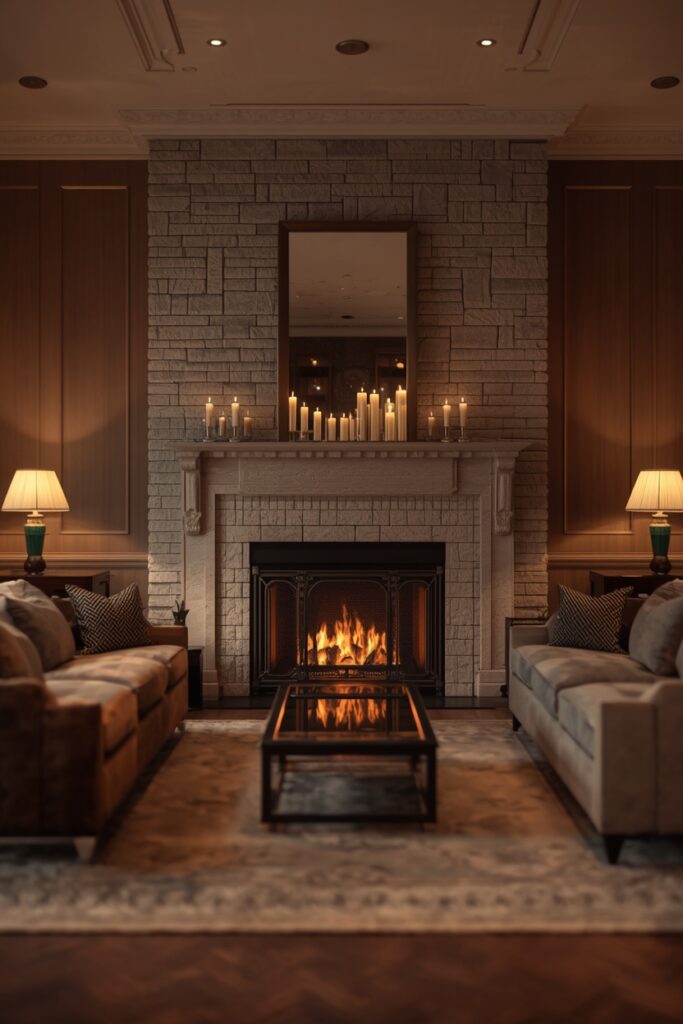
19. Lounge With Fireplace as Focal Point
A fireplace — real or electric insert — anchors a lounge in a way that no piece of furniture can. Arrange the sofa facing the hearth, with two accent chairs flanking it to create a conversational grouping. The mantle should be styled simply: one large piece of art or a round mirror, one vase, and one candle cluster. If the surround is original brick or stone, let it stay; if it is outdated tile, a slim-profile stone veneer or a coat of lime wash can update it without a full rebuild. The rug sits centred between the fireplace and the seating, and the coffee table should be low enough that the fire stays visible from the sofa. Side tables hold lamps set to 2700K warm white for the non-fireplace evenings. One practical consideration: if using an electric insert, choose one with a realistic flame setting and install it at a viewing height that works from the sofa — mounting it too high forces an uncomfortable neck angle.
20. Collected Global Lounge Decor Ideas
A collected global lounge draws inspiration from multiple cultures without appropriating any single one — the thread is natural materials, handmade craft, and warm earthy tones rather than a specific region. The sofa is a neutral base in natural linen or undyed cotton. Layer a Moroccan beni ourain rug with a smaller Indian dhurrie, and scatter cushions in African mudcloth, Peruvian alpaca, and Japanese sashiko patches. The coffee table is a carved wooden piece or a brass tray on a folding stand. A collection of handmade ceramics from different origins lines a floating shelf, and a macramé wall hanging or a woven textile art piece adds the wall interest.
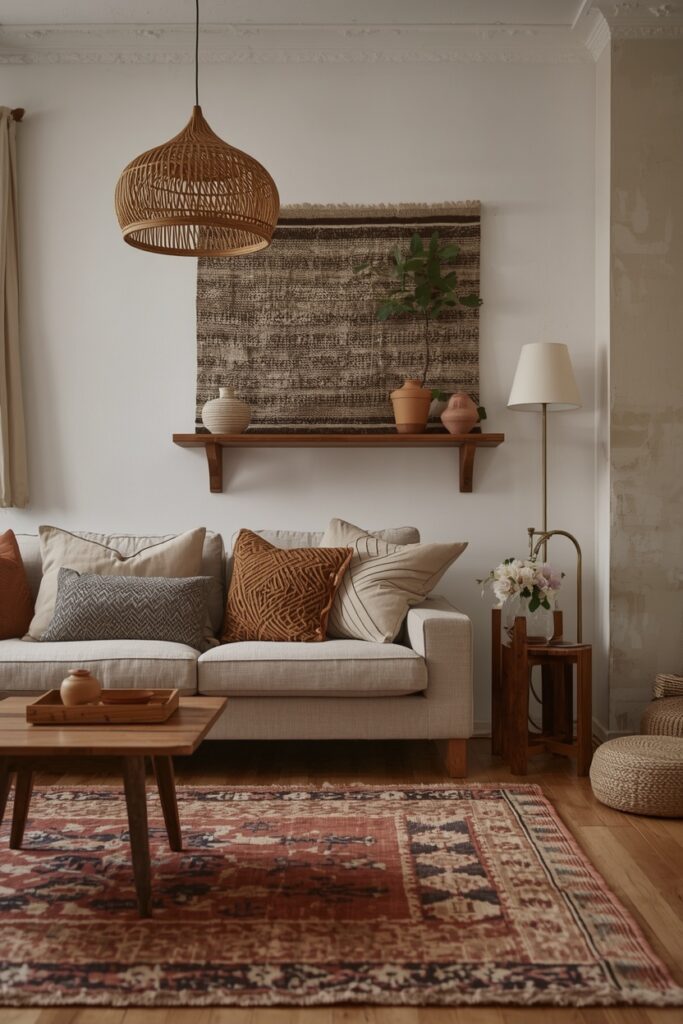
This room should look gathered, not purchased — pieces collected over years and trips. Lighting is warm and low: rattan pendants, hand-thrown ceramic lamps, and candles in brass holders. The beauty of this approach is that it grows richer over time as new objects join the conversation.
Where I’d Start if I Only Did Three Things
If I only did three things, I would start by choosing a sofa in a colour or material I genuinely love rather than a safe neutral I will grow bored of — the sofa is the largest visual surface in the room and it sets everything else. Second, I would buy a rug at least 30 cm wider than I think I need; an undersized rug is the most common layout mistake in any lounge. Third, I would add a floor lamp and a table lamp rather than relying on a single overhead fixture, because two points of warm light at 2700K turn a lounge from a daytime room into an evening one.
Frequently Asked Questions
What lounge decor ideas make a room look more expensive without a big budget?
Three moves create the most impact per dollar. Replace overhead lighting with a statement pendant or a pair of matching table lamps on the side tables. Add a large rug that extends beyond the sofa — an oversized jute or flat-weave in a neutral tone runs well under budget. And swap out generic throw pillows for three or four in quality fabrics like linen, velvet, or wool in a coordinated palette.
How do I arrange furniture in an open-plan lounge?
Define the lounge zone with a rug that sits entirely within the seating area. Float the sofa away from walls rather than pushing it against them — even 20 cm of breathing room changes the room dynamics. Use a console table behind the sofa to create a visual back boundary, and position accent chairs at an angle to the sofa to form a conversational U or L shape rather than a straight line.
How many light sources does a lounge need?
A well-lit lounge needs at least three to four sources: one ambient (pendant or recessed), two task (table lamps or reading lights), and one accent (LED strip behind shelving, picture light, or candle cluster). Wire each source to a separate switch or smart plug so you can layer them depending on the time of day and activity.
Should a lounge rug go under the sofa or just in front of it?
The front legs of every major seat should sit on the rug — this ties the furniture grouping together visually. A rug that floats in front of the sofa without connecting to it reads like an afterthought. For a standard three-seater sofa, a 240 by 300 cm rug is the minimum size to achieve proper coverage with chairs positioned at the sides.
Final Thoughts
The strongest lounge decor ideas treat the room as a connected system — sofa, rug, lighting, and accessories all pulling from the same palette and material family. Pick one of these 20 schemes, adapt the dimensions to your floor plan, and build outward from the sofa. A lounge that holds together visually is not about spending more; it is about choosing fewer pieces that share a clear direction.