
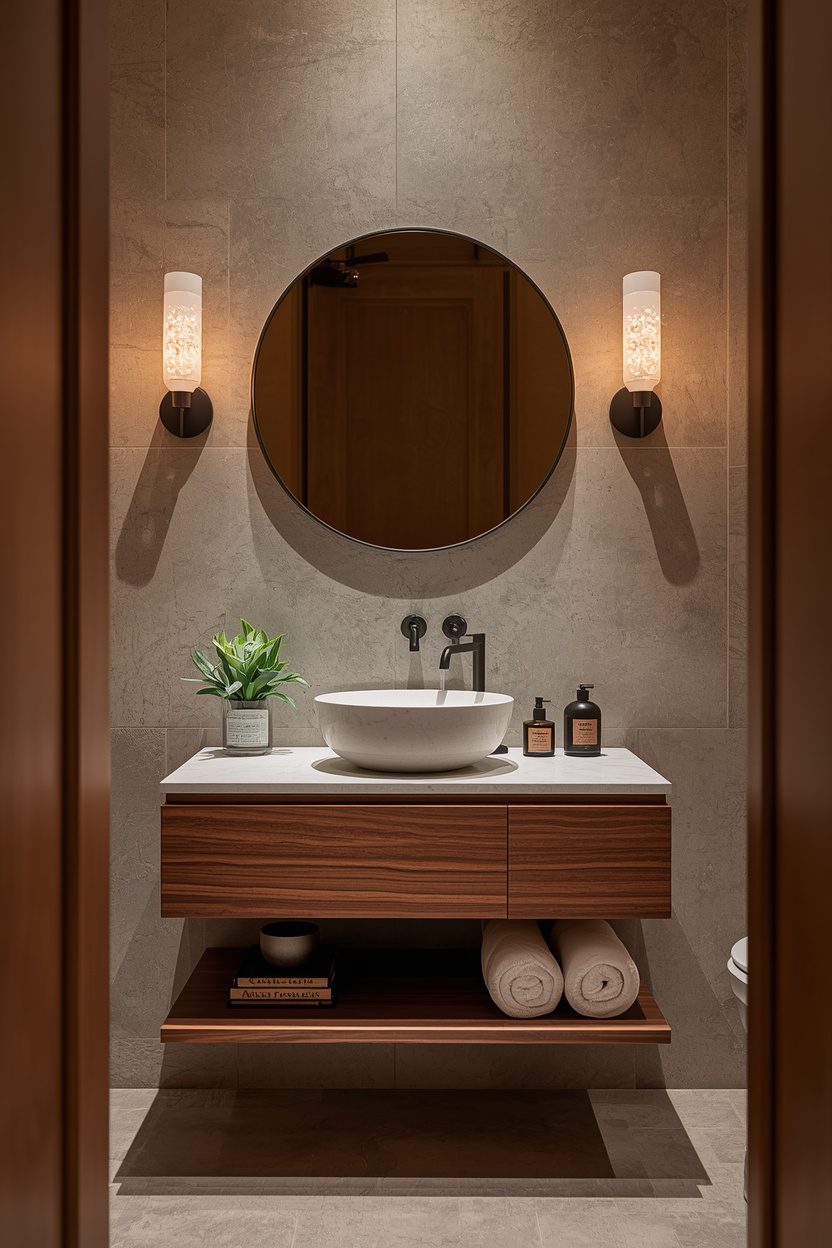
The vanity is the piece your eye finds first in any bathroom — it sits at eye level, it anchors the mirror and lighting above it, and it determines whether the room reads as designed or default. And yet most bathroom vanity ideas stop at showing you a pretty cabinet without mentioning the countertop thickness, the sink type, the ideal mounting height, or whether the material survives a humid bathroom for more than three years.
Each of the 16 ideas below is a complete vanity scheme: the cabinet style and material, the countertop and sink pairing, the mirror shape, the lighting recommendation, and the hardware finish. I have included honest trade-offs — because solid wood in a bathroom is not the same proposition as solid wood in a kitchen, and a vessel sink is a very different daily experience from an undermount.
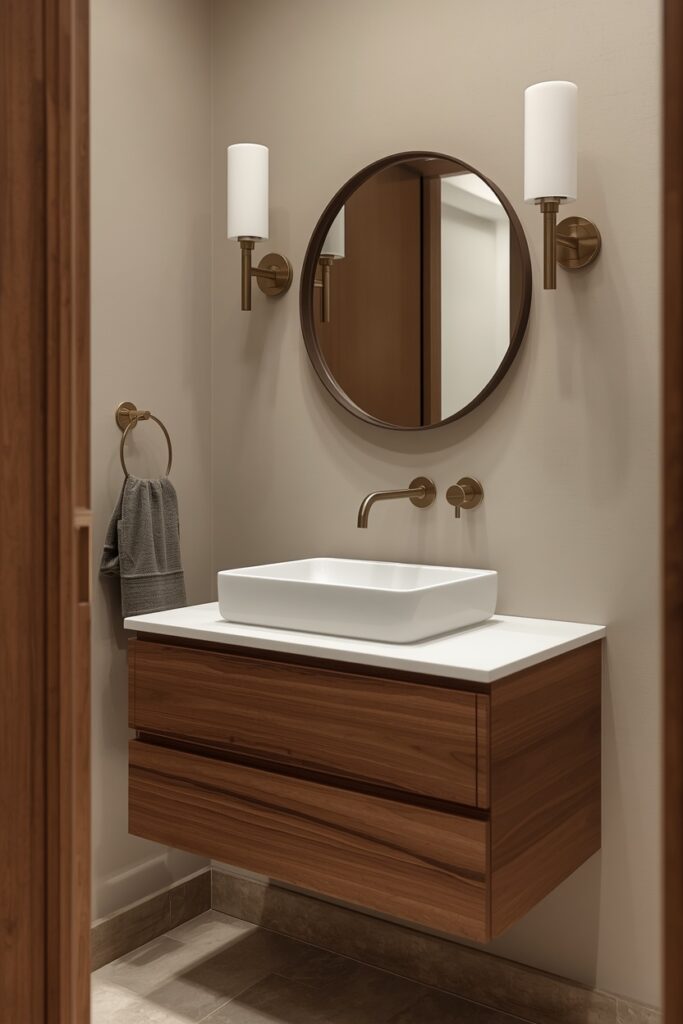
1. Floating Walnut Vanity With Undermount Sink
A wall-mounted walnut vanity — 80 to 120 cm wide, floating 15–20 cm off the floor — is the most reliable way to make a bathroom look larger while adding genuine material warmth. The walnut should be sealed with a polyurethane or marine-grade coating to resist humidity; unsealed or wax-coated walnut will warp and discolour in a wet bathroom within two years. The countertop is a thin-profile white quartz or solid surface (20 mm thick for a sleek line) with an undermount rectangular sink that keeps the surface clean and continuous. A round mirror (60 cm diameter) above and a pair of brass wall sconces flanking it provide the task lighting. Hardware should be minimal — brass or matte black finger pulls — to let the wood grain stay the focus. This vanity suits modern, transitional, and Scandinavian bathrooms and is the strongest single upgrade for a standard builder-grade bathroom.
2. Vintage Dresser Converted to Vanity
Repurposing a vintage dresser — a mid-century sideboard, an antique washstand, or a Victorian chest of drawers — as a bathroom vanity gives the room character that no factory-made cabinet can match. The conversion requires cutting the top for a sink (vessel or undermount), sealing the interior and exterior with a waterproof seal, and routing plumbing through the back panel. The charm is in the imperfection: mismatched drawer pulls, aged patina, and the proportions of furniture rather than cabinetry. Pair with a wall-mounted faucet (which avoids drilling additional holes in the vintage top) and a simple mirror in a complementary frame. One honest caveat: vintage dressers are not designed for wet environments, and even a good seal needs maintenance.
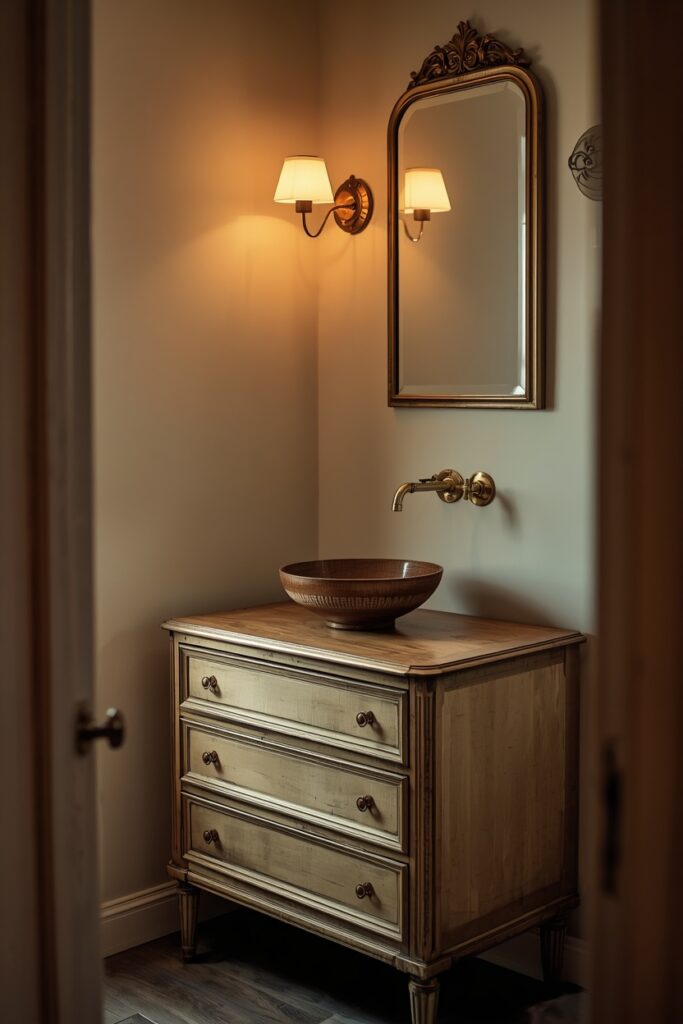
Wipe standing water promptly, ventilate the bathroom well, and expect to re-seal the top surface every two to three years. This is a project for someone who values character over convenience.
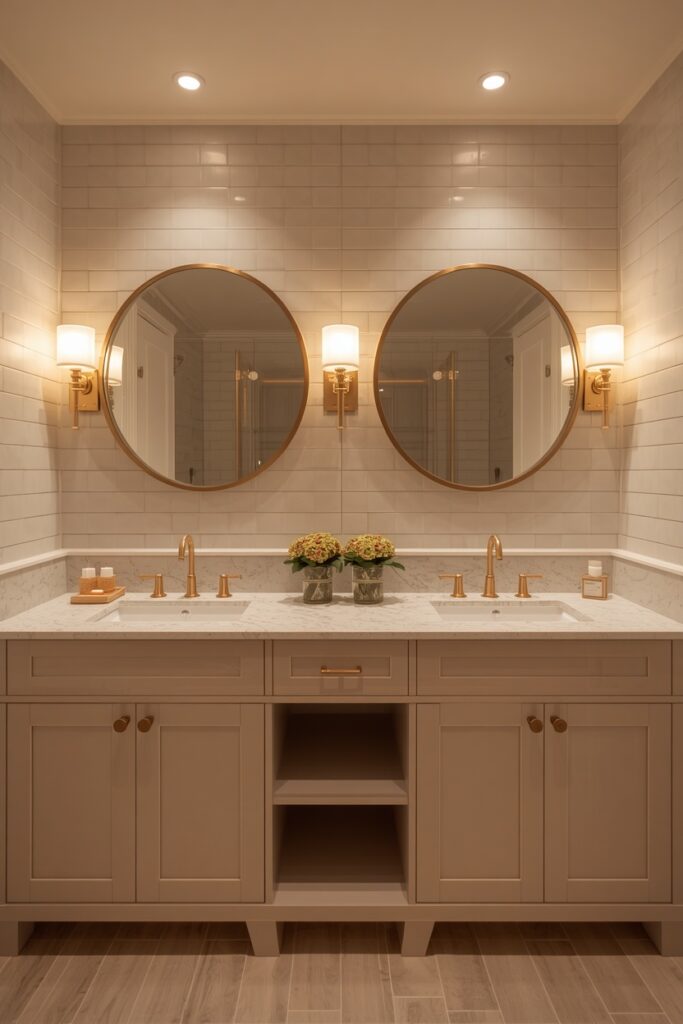
3. Double Vanity for Shared Bathrooms
A double vanity — two sinks, two mirrors, and ideally two separate storage zones — is the most functional upgrade for a shared primary bathroom. The minimum width for a comfortable double vanity is 150 cm (two 60 cm basins with a 30 cm gap between), though 180 cm or wider is ideal. Each sink should have its own mirror (matching style, symmetrically placed) and its own lighting (a sconce on each side of each mirror, or a single sconce between the two mirrors with an LED mirror for each). Storage should be divided: separate drawers or cabinets beneath each sink so neither person’s items encroach on the other’s space. The countertop runs continuously across both sinks for a unified look — quartz, marble, or concrete are the common choices.
A double vanity requires a wider bathroom wall (at least 200 cm with clearance on each side), so measure carefully before committing. The plumbing scope doubles as well: two drain lines, two supply sets.
4. Concrete Vanity Top for Industrial Bathrooms
A poured or precast concrete vanity top — either a slab with an undermount sink or a custom piece with an integrated basin moulded in — brings raw, sculptural presence to an industrial-style bathroom. The concrete should be at least 40 mm thick for visual weight and sealed with a penetrating sealer rated for wet environments. A smooth troweled surface in mid-gray is the most versatile; an exposed-aggregate treatment adds texture.
The base can be a simple open metal frame in black steel (a shelf below holds folded towels and a basket), or a set of dark-stained plywood drawers. Pair with a wall-mounted industrial faucet in matte black and a rectangular mirror in a thin black frame. One maintenance note: concrete countertops can develop hairline cracks over time — these are cosmetic rather than structural, but they concern some homeowners.
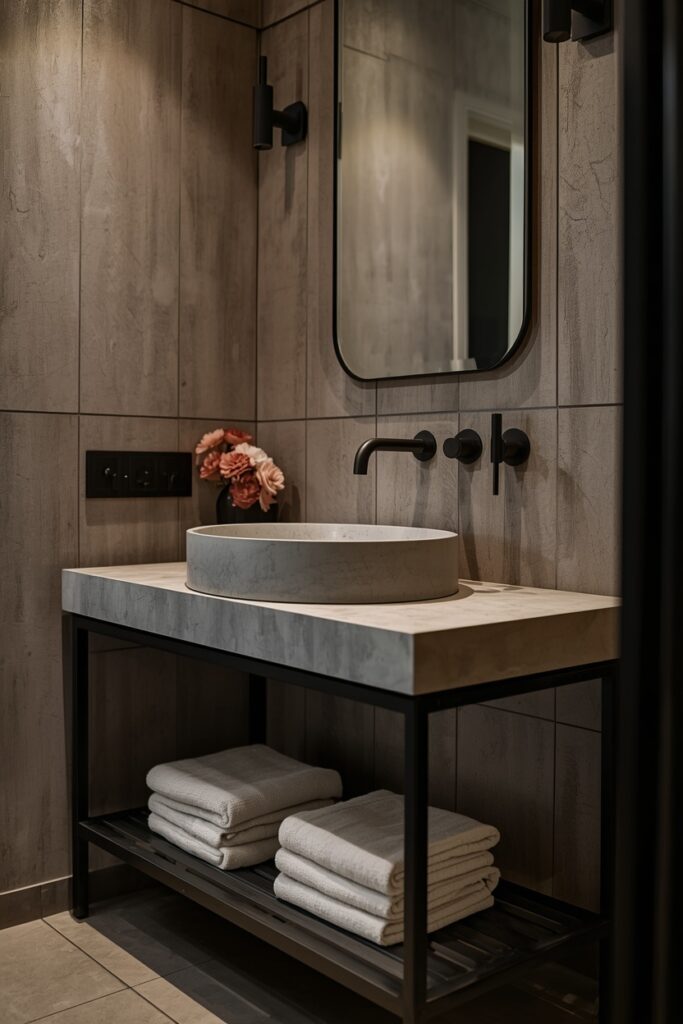
Applying a flexible sealer helps, but if you need a crack-free surface, quartz or solid surface is the better material choice.
5. Bathroom Vanity Ideas With Vessel Sink Statement
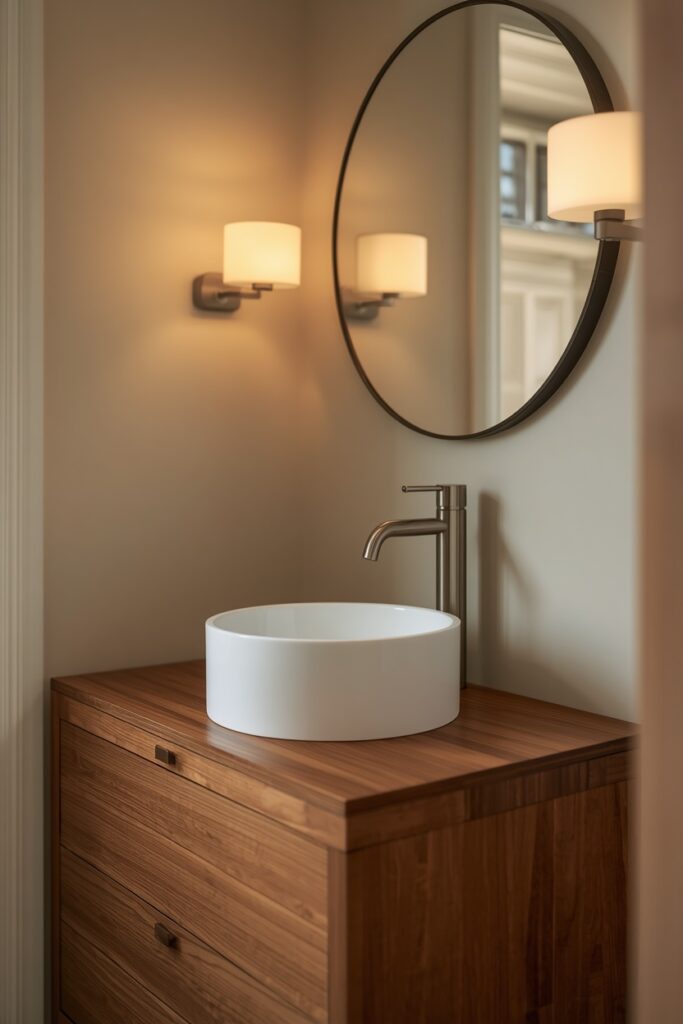
A vessel sink — a basin sitting on top of the countertop rather than sunk into it — turns the sink itself into a sculptural focal point. Vessels come in ceramic, stone, glass, and hammered metal, each offering a distinct aesthetic. A round white ceramic vessel on a walnut vanity reads clean and modern; a grey stone vessel on a concrete top reads raw and earthy; a hammered copper vessel on a dark-stained vanity reads rich and warm. The countertop needs a drain hole but no sink cutout, which preserves the full surface area. The faucet should be a tall single-lever or wall-mounted style that clears the vessel rim with room to spare — measure the vessel height before selecting the faucet. One trade-off: vessel sinks sit higher than undermount, so the overall countertop-to-rim height may be uncomfortable for children or shorter users. Adjust the vanity mounting height downward if needed so the rim sits at about 85 cm from the floor.
6. All-White Vanity for Clean Bathrooms
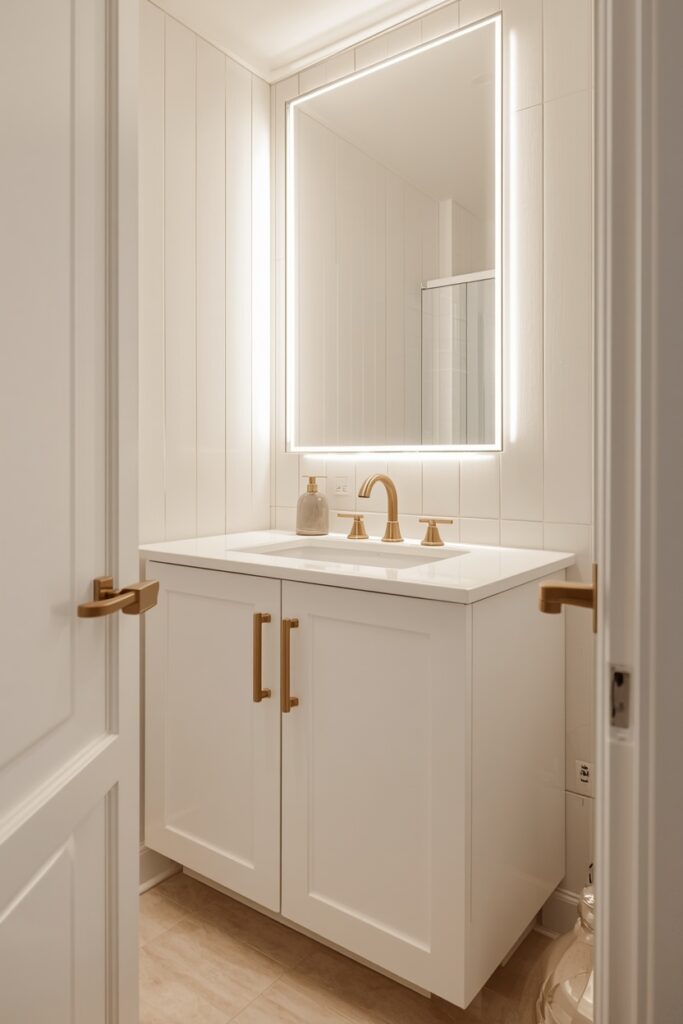
An all-white vanity — white cabinet, white quartz or solid-surface top, white undermount sink — creates the cleanest, most light-reflective base in a bathroom. It suits any tile colour on the walls and floor and serves as a blank canvas for hardware accents (brass, matte black, or chrome all pop against white). Choose a cabinet in a matte or semi-gloss lacquer rather than a textured paint, as the smooth surface shows water spots less and cleans more easily. Shaker-profile doors add detail without competing with the surrounding design; flat-panel doors read more contemporary.
A frameless LED mirror above the vanity adds task lighting without a visible fixture, keeping the white-on-white aesthetic continuous. One practical note: white cabinets in a bathroom need a durable coating — polyurethane or catalysed lacquer — because moisture, toothpaste, and cosmetics create staining opportunities that a standard paint cannot resist long-term.
7. Open-Shelf Vanity for a Light Look
An open-shelf vanity — a countertop on legs or brackets with one or two open shelves below, no doors or drawers — creates a visual lightness that closed cabinets cannot match. The exposed floor and visible back wall make the bathroom read larger. Style the shelves with rolled towels in a uniform colour, two or three woven baskets for toiletries, and one small plant. The countertop material is the design statement: marble, concrete, or a thick butcher block sealed for wet use. The sink can be an undermount or a vessel — both work on an open-shelf base.
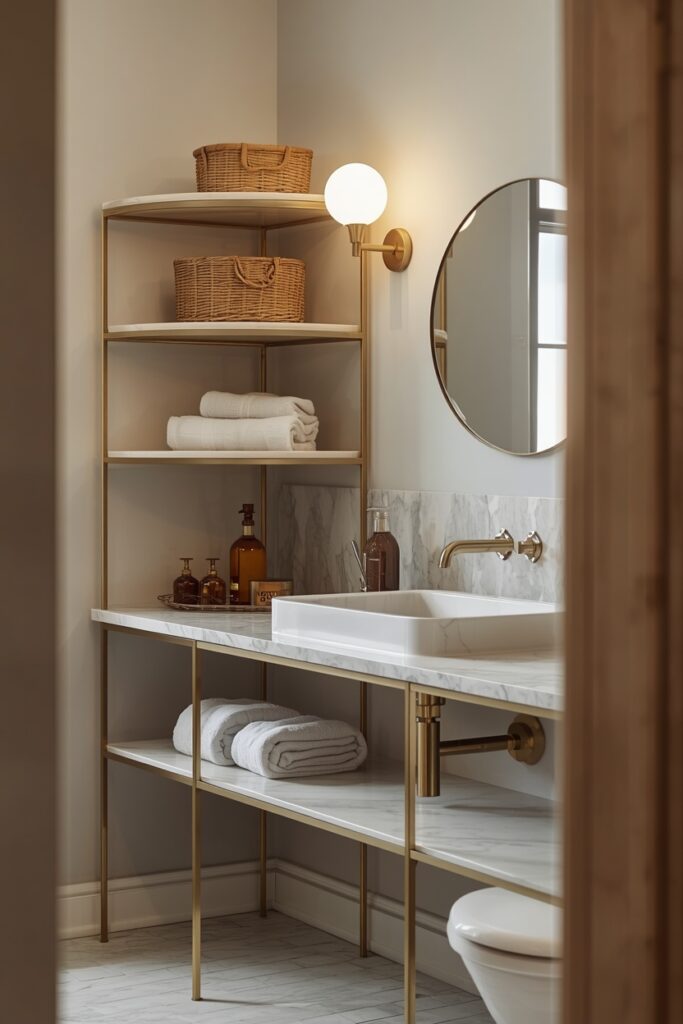
Plumbing is visible, so choose a trap and supply lines in a matching tone (chrome, brass, or matte black) that reads purposeful rather than exposed. The trade-off is storage: everything is on display, so clutter shows immediately. This vanity suits guest bathrooms and powder rooms where the daily toiletry load is light, or primary bathrooms where a separate medicine cabinet provides the hidden storage.
8. Black Vanity for Bold Bathrooms
A matte black vanity — cabinet, hardware, and sometimes the faucet — creates a graphic anchor in a bathroom that would otherwise read neutral and forgettable. Pair it with light-coloured walls and floor tile (white, pale stone, or soft gray) so the vanity pops as a deliberate statement. The countertop should provide contrast: white quartz, honed white marble, or a light concrete create the sharpest visual pairing.
A round mirror with a thin black frame or a frameless mirror keeps the upper zone clean. Brass or gold hardware on a black cabinet adds warmth; black-on-black hardware reads ultra-modern but can disappear visually. One advantage of black cabinetry: it hides water marks, toothpaste splashes, and cosmetic stains far better than any white surface.
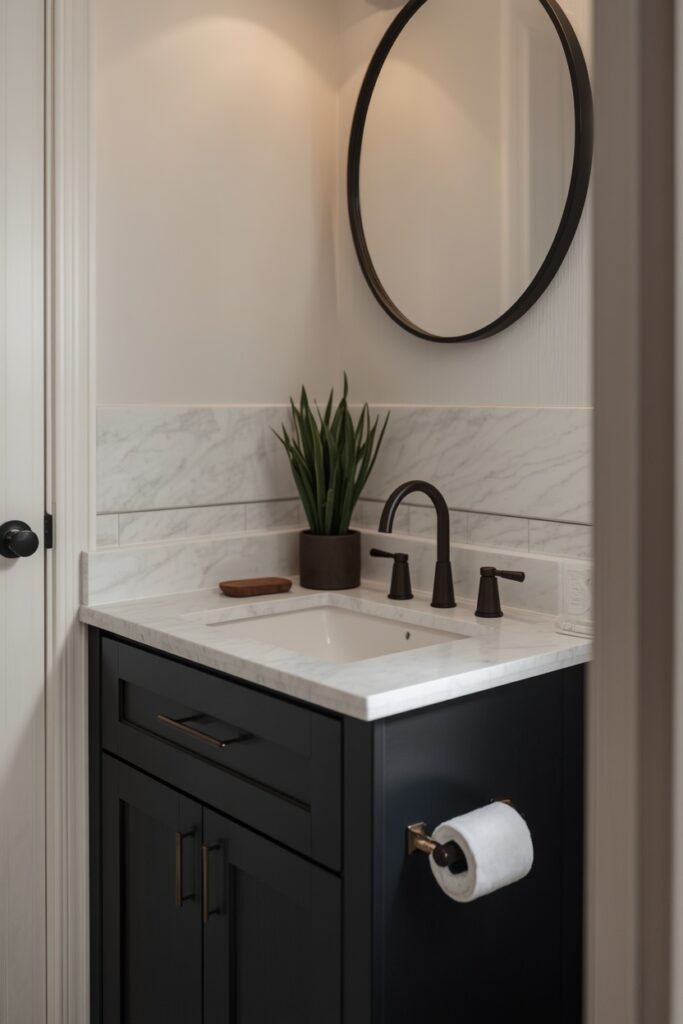
A matte black powder-coated or catalysed lacquer coating is the most durable option for a bathroom environment.
9. Pedestal Sink for Small Bathrooms
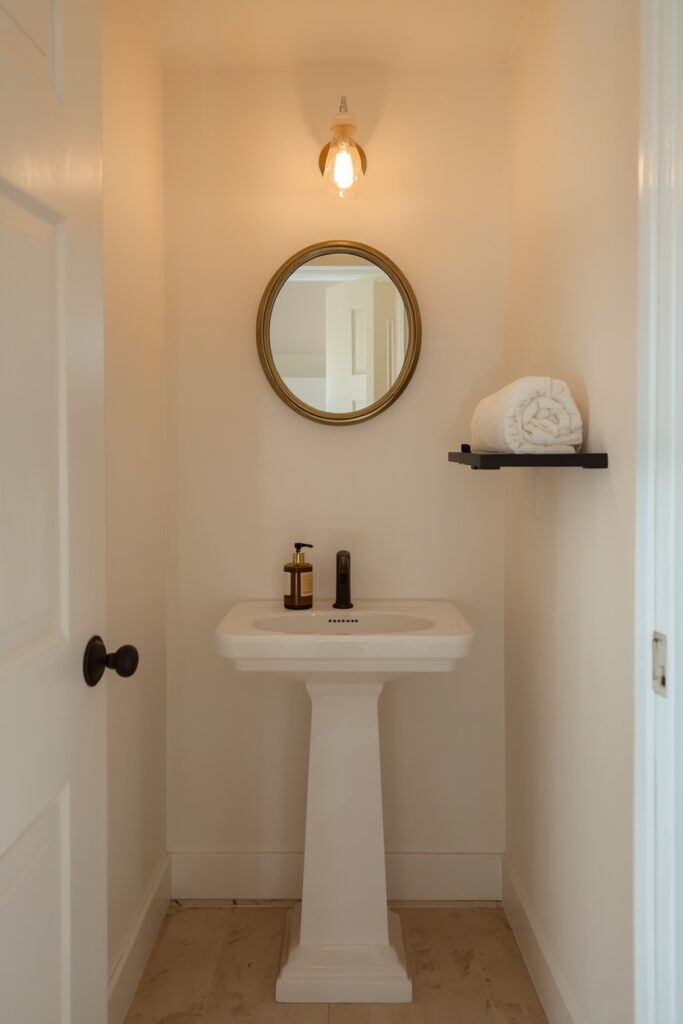
A pedestal sink — a wall-mounted basin on a freestanding ceramic column — provides the smallest possible vanity footprint, making it the go-to option for powder rooms and ultra-compact bathrooms under 2 square metres. The pedestal hides the plumbing inside the column while leaving the floor on both sides completely open. Choose a pedestal with a generous basin (at least 50 cm wide) so it is usable for handwashing and light grooming. A small round mirror above and a single wall sconce complete the setup. The trade-off is storage: a pedestal sink has zero counter space and zero cabinet space, so wall-mounted accessories (soap dish, toothbrush holder) and a mirrored medicine cabinet are essential companions. Pair with a small floating shelf beside the pedestal for a hand towel and one decorative object. This setup reads classic and clean — it suits traditional, transitional, and cottage-style bathrooms.
10. Teak Vanity for Spa-Style Bathrooms
Teak is one of the few woods genuinely suited to wet bathroom environments — its natural oils resist moisture, mould, and warping without requiring the heavy-duty sealing that walnut or oak demand. A teak vanity with a slat-front design or a smooth cabinet front brings a resort-spa character to a bathroom. Choose a honey-toned or golden teak rather than a bleached or whitewashed version to preserve the natural warmth. The countertop should contrast: white marble, light quartz, or a pale solid-surface creates a clean pairing. A round or oval mirror in a natural frame, a pair of rattan sconces or warm brass fixtures, and white towels complete the spa aesthetic.
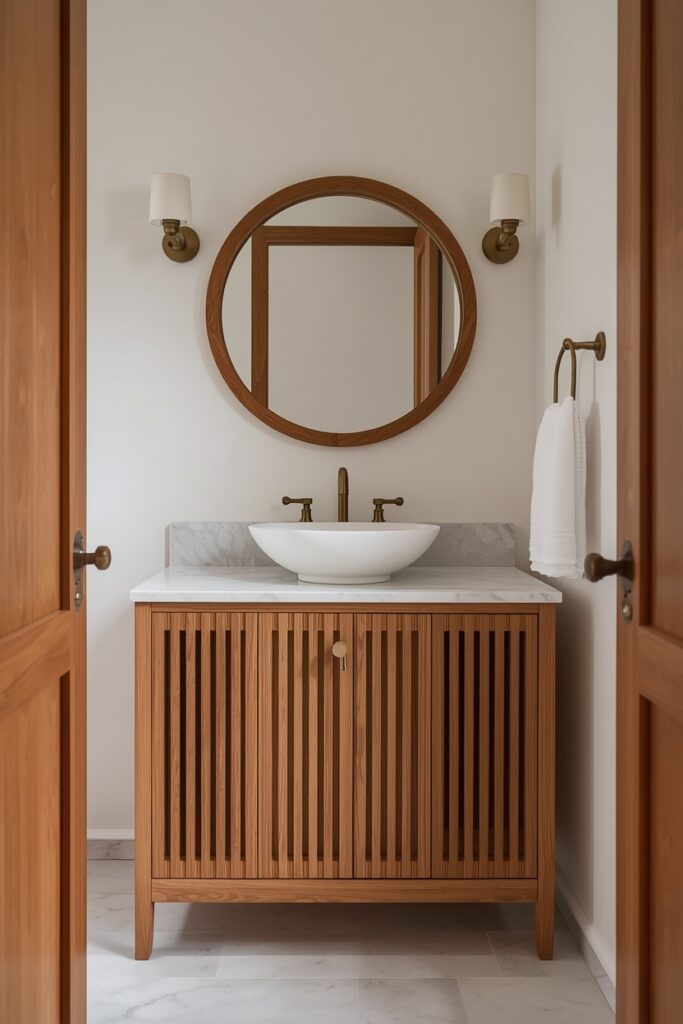
One maintenance note: teak develops a silver-grey patina over time if left unsealed — some people prefer this aged look, while others prefer to maintain the golden tone with periodic teak oil application. Both approaches are valid.
11. Bathroom Vanity Ideas With Integrated LED Mirror
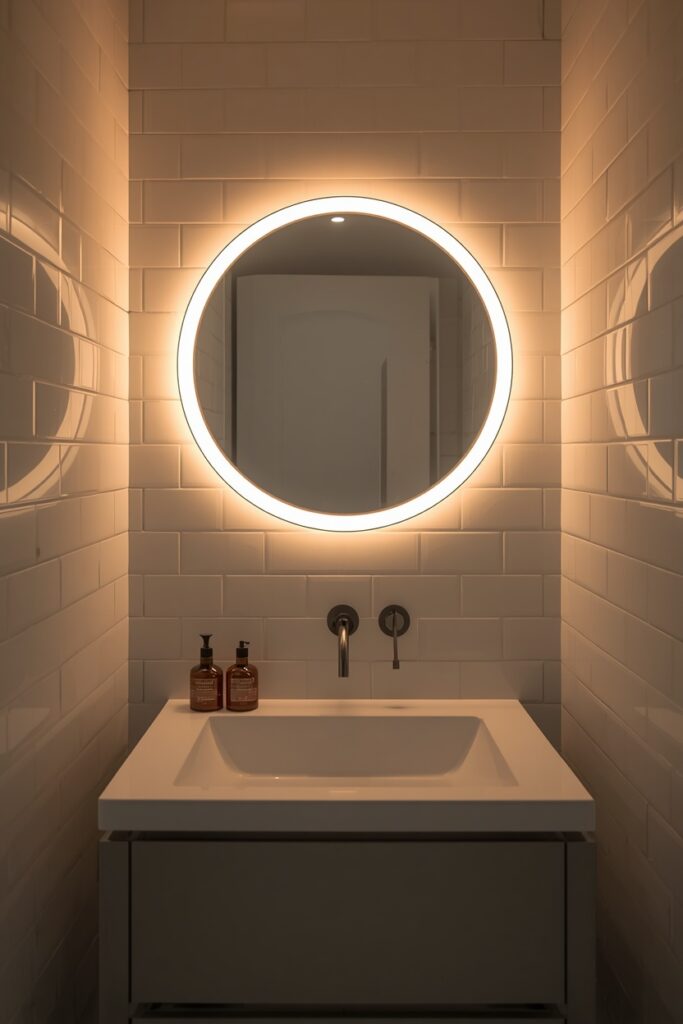
An LED mirror — a mirror with integrated LED lighting around the perimeter or behind the glass — replaces both the standard mirror and the separate light fixture, simplifying the vanity wall into two elements: vanity and mirror. The LED should emit light at 3000–4000K for accurate grooming colour rendition. Choose a model with a built-in demister pad so the mirror stays clear after hot showers. Round LED mirrors (60–80 cm diameter) suit single vanities; rectangular LED mirrors (80–120 cm wide) suit double vanities. The light output is even and shadow-free, which makes it superior to overhead fixtures that cast shadows under the brow and chin.
Pair with a simple vanity — the LED mirror provides enough visual interest above — and minimal hardware. This upgrade suits both small and large bathrooms and is one of the strongest single investments for a modern bathroom refresh.
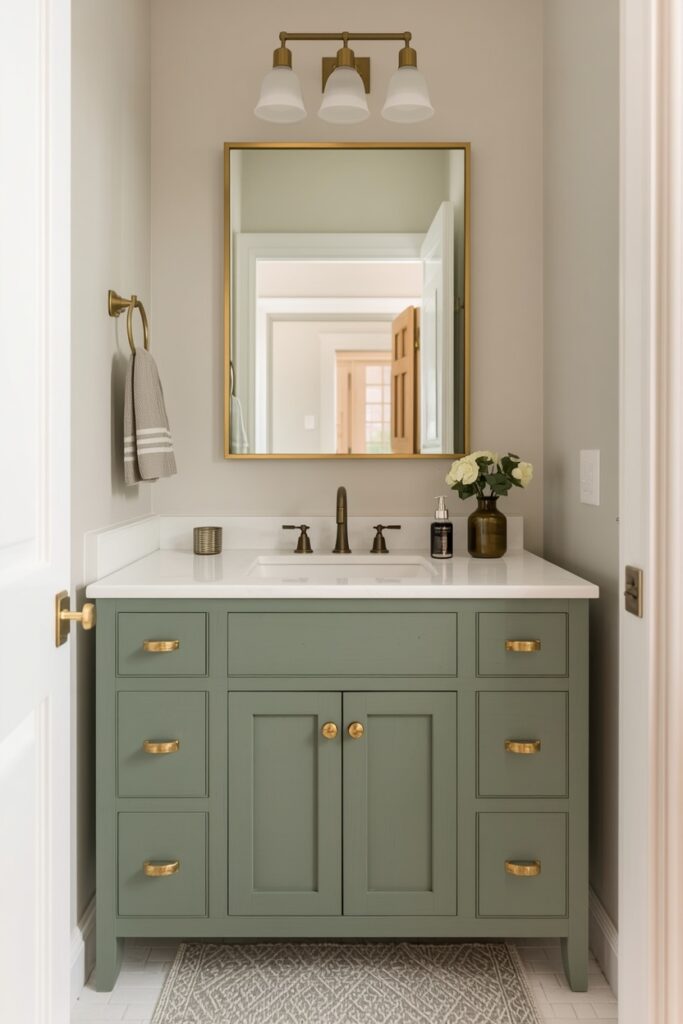
12. Sage Green Vanity for Earthy Bathrooms
A vanity painted in sage green — matte or semi-gloss — gives a bathroom a calm, organic accent without the commitment of tiling the walls in colour. Choose a sage with a gray undertone for a modern read or a yellow undertone for a warmer, more traditional look. The countertop should be a warm white quartz, honed marble, or a light-toned solid surface so the green reads as an accent rather than a dominant colour.
Pair with brass or matte gold hardware, which picks up the warm undertone in the green. The mirror should be in a natural wood or thin brass frame, and lighting in warm white (2700K) maintains the earthy tone. Keep the wall tile and floor neutral — warm white or pale stone — so the vanity carries the colour story alone.
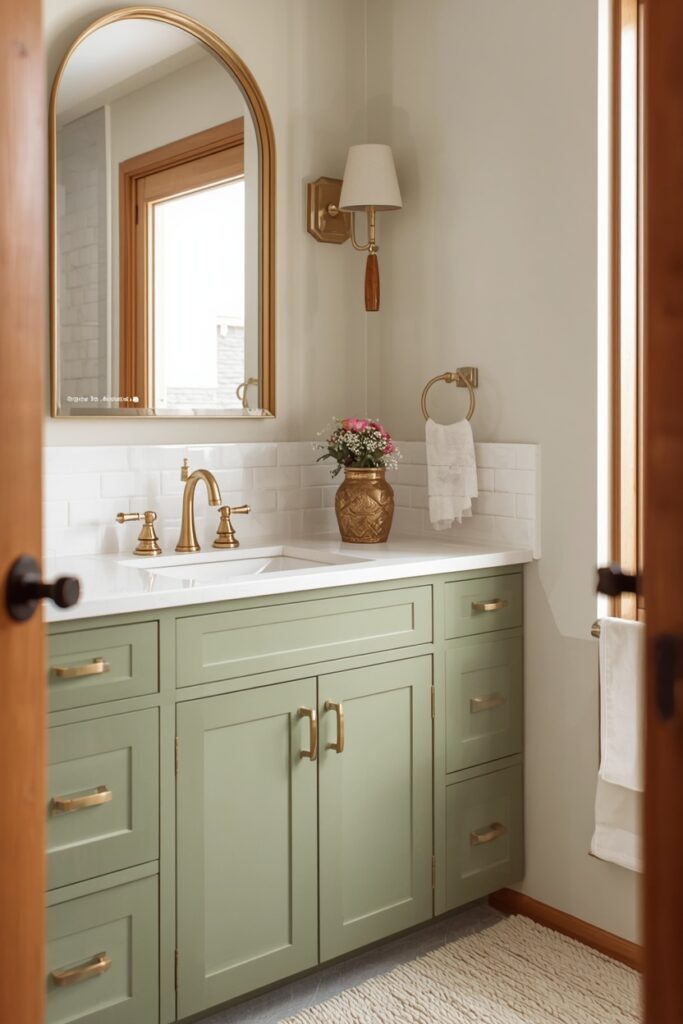
This is a strong resale-friendly choice because the colour can be changed with a repaint, unlike coloured tile which is permanent.
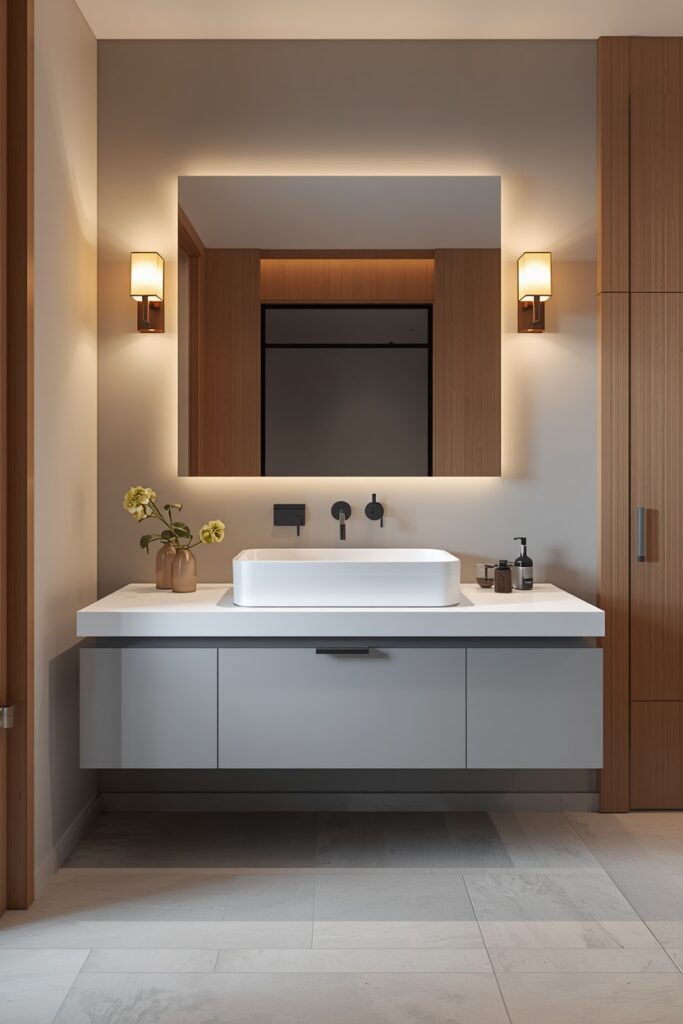
13. Stone-Top Vanity With Integrated Basin
An integrated basin — where the countertop and sink are carved or moulded from a single piece of material — creates the cleanest vanity surface because there is no seam between the basin rim and the countertop. Materials include solid surface (Corian or equivalent), cast concrete, natural stone, and high-end ceramic. The seamless construction eliminates the crevice around undermount sinks where mould and grime accumulate, making it the most hygienic vanity option. The basin shape can be rectangular, round, or gently sloped — the slope style creates a shallow trough that drains to one end. Choose a colour that complements the bathroom tile: white or warm gray solid surface for most settings, or a dark charcoal for bold bathrooms. One trade-off: repairs to an integrated basin are difficult because the basin and top are one piece — a crack or chip often means replacing the entire unit rather than just a component.
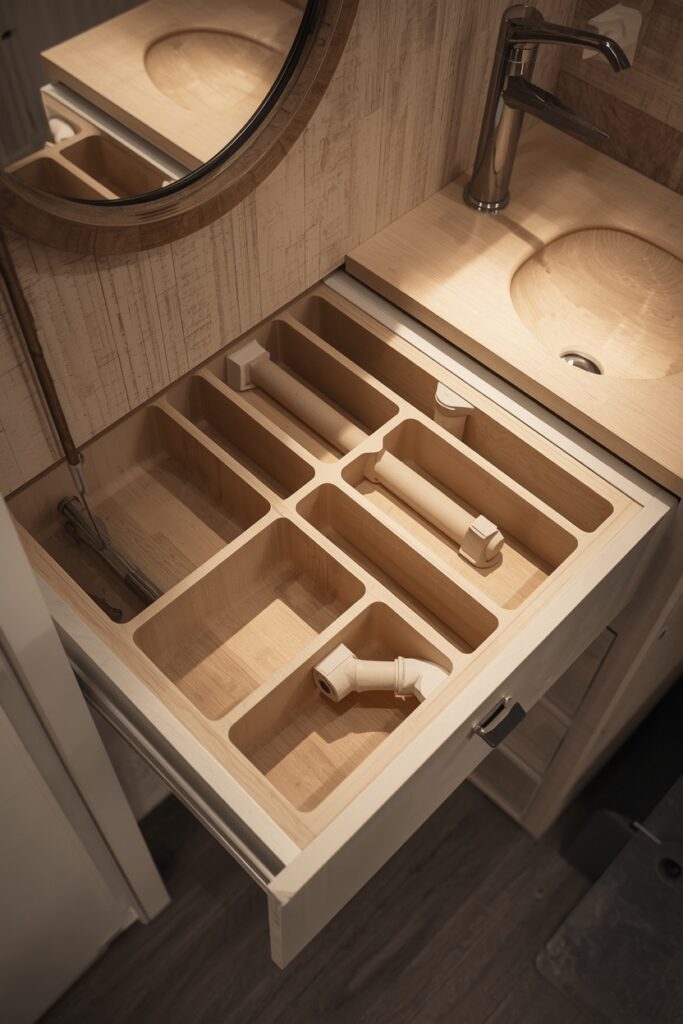
14. Vanity With Full-Width Drawer Storage
A vanity with a single full-width drawer beneath the sink — rather than two doors — provides organised storage that is easier to access and easier to keep tidy. The drawer should be fitted with a U-shaped cutout around the drain pipe, with dividers inside for toiletries, grooming tools, and cleaning supplies. A soft-close mechanism is standard on quality drawer units and prevents the daily slam that wears out hardware. For maximum capacity, choose a vanity at least 80 cm wide with a drawer depth of 40 cm. The drawer front can match the cabinet style: flat-panel for modern, shaker for transitional, or a textured wood front for organic bathrooms.
This storage format beats the traditional two-door cabinet because you can see the entire drawer contents at a glance rather than reaching into a dark cabinet behind the plumbing. Pair with a slim countertop (20 mm) to maximise the internal drawer height.
15. Marble-Wrapped Vanity for Luxury Bathrooms
Wrapping the vanity — top, front panel, and sides — in the same marble used on the bathroom walls or floor creates a monolithic, luxury look that reads as architecture rather than furniture. Bookmatched marble panels on the front and sides continue the veining pattern from the countertop downward, creating a seamless stone volume. This treatment works best on a simple rectangular vanity with no visible hardware — push-to-open drawers maintain the unbroken stone surface.
The sink is undermount so the marble top stays continuous. Pair with wall-mounted faucets to preserve the clean surface line. This is a high-cost, professional-fabrication project — the stone panels must be precisely cut and seam-matched — but the result is a vanity that elevates the entire bathroom.
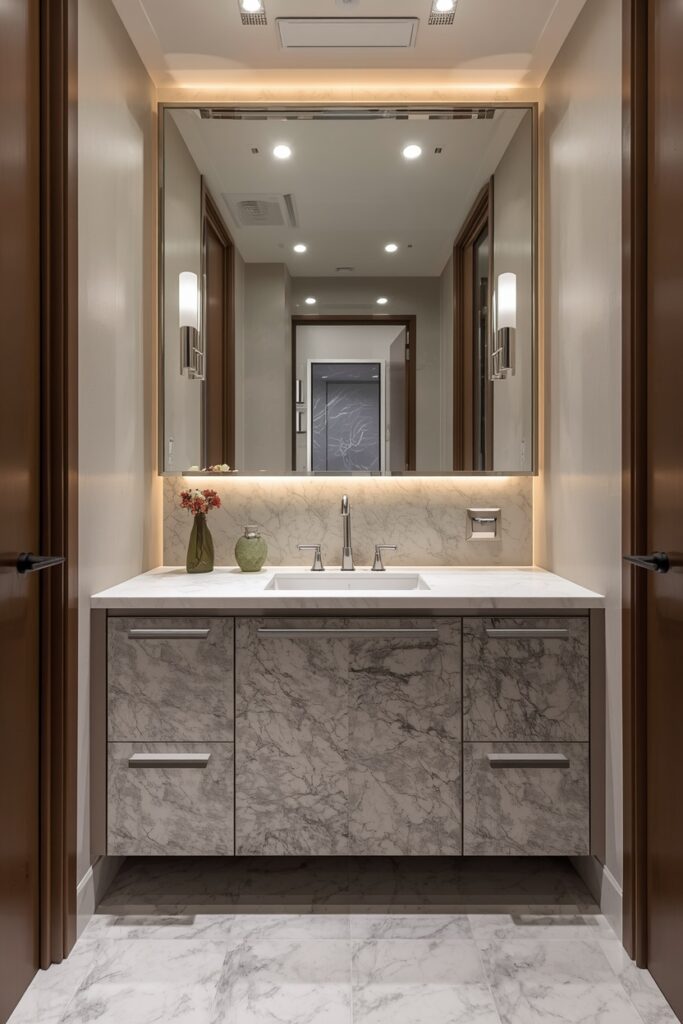
A frameless mirror and recessed ceiling downlights keep the aesthetic minimal and let the marble do all the work.
16. Budget-Friendly Bathroom Vanity Ideas With Paint Refresh
The fastest and cheapest vanity upgrade is painting the existing cabinet — and the result, when done correctly, rivals a replacement. Sand the cabinet surface lightly, clean with a degreaser, apply a bonding primer rated for glossy surfaces, and then two coats of a semi-gloss or satin cabinet paint in your chosen colour. Popular choices: matte white for a clean refresh, sage green for an earthy accent, navy for depth, or matte black for drama. Swap the hardware at the same time — new pulls or knobs in brass, matte black, or brushed nickel complete the transformation for under a tenth of a new vanity’s cost. Replace the mirror if the frame is dated, or paint the frame to match the new hardware colour.
This approach suits rental-adjacent budgets and anyone who wants a bathroom refresh without the demolition, plumbing, and timeline of a full vanity replacement. One rule: use a paint rated for bathrooms (moisture-resistant and mildew-resistant formula) and allow full cure time (usually 7 to 14 days) before exposing the cabinet to daily humidity.
Where I’d Start if I Only Did Three Things
If I only did three things, I would start by choosing the vanity mounting style — floating or floor-standing — because that decision defines how the bathroom reads spatially. Second, I would match the countertop material to the daily use: quartz for zero maintenance, marble for beauty with upkeep, and solid surface for a seamless integrated basin. Third, I would install the mirror and lighting as a coordinated pair — not separately — because the vanity, mirror, and light fixture are one visual unit, and mismatched proportions or styles between them undermine all three.
Frequently Asked Questions
What bathroom vanity ideas suit a small bathroom?
A floating vanity (60–80 cm wide) in a light colour with a thin-profile countertop creates the most space-efficient setup. Pair it with a round mirror rather than a wide rectangular one, and use wall-mounted sconces rather than a vanity light bar to keep the wall profile slim. An open-shelf vanity also reads lighter than a closed cabinet in a tight space.
What is the best countertop material for a bathroom vanity?
Engineered quartz is the most practical: it is non-porous, stain-resistant, and available in a wide range of colours and patterns. Natural marble is the most visually striking but requires regular sealing. Solid surface (Corian or equivalent) allows integrated basins with no seams. Concrete is distinctive but porous without proper sealing.
What height should a bathroom vanity be mounted at?
Standard vanity height is 80–85 cm from the floor to the countertop rim. Comfort height (90 cm) suits taller adults and reduces bending. If a vessel sink sits on top, lower the vanity by the vessel height so the rim lands at 85 cm. For floating vanities, the mounting height is adjustable, so choose based on the primary user’s comfort.
How do I choose between undermount and vessel sinks?
Undermount sinks create a clean countertop surface and are easier to wipe clean — they suit daily-use primary bathrooms. Vessel sinks sit on top and add sculptural interest — they suit guest bathrooms and powder rooms where the visual impact outweighs the higher splash risk. Vessels also raise the effective countertop height, which may require lowering the vanity.
Final Thoughts
The strongest bathroom vanity ideas treat the vanity, countertop, sink, mirror, and lighting as one coordinated unit rather than five separate purchases. Choose the cabinet style that suits your bathroom’s size and character, match the countertop to your maintenance tolerance, and install the mirror and lighting as a pair. A vanity designed as a complete scheme — not a cabinet with a mirror hung above it — transforms the bathroom from functional to intentional.