
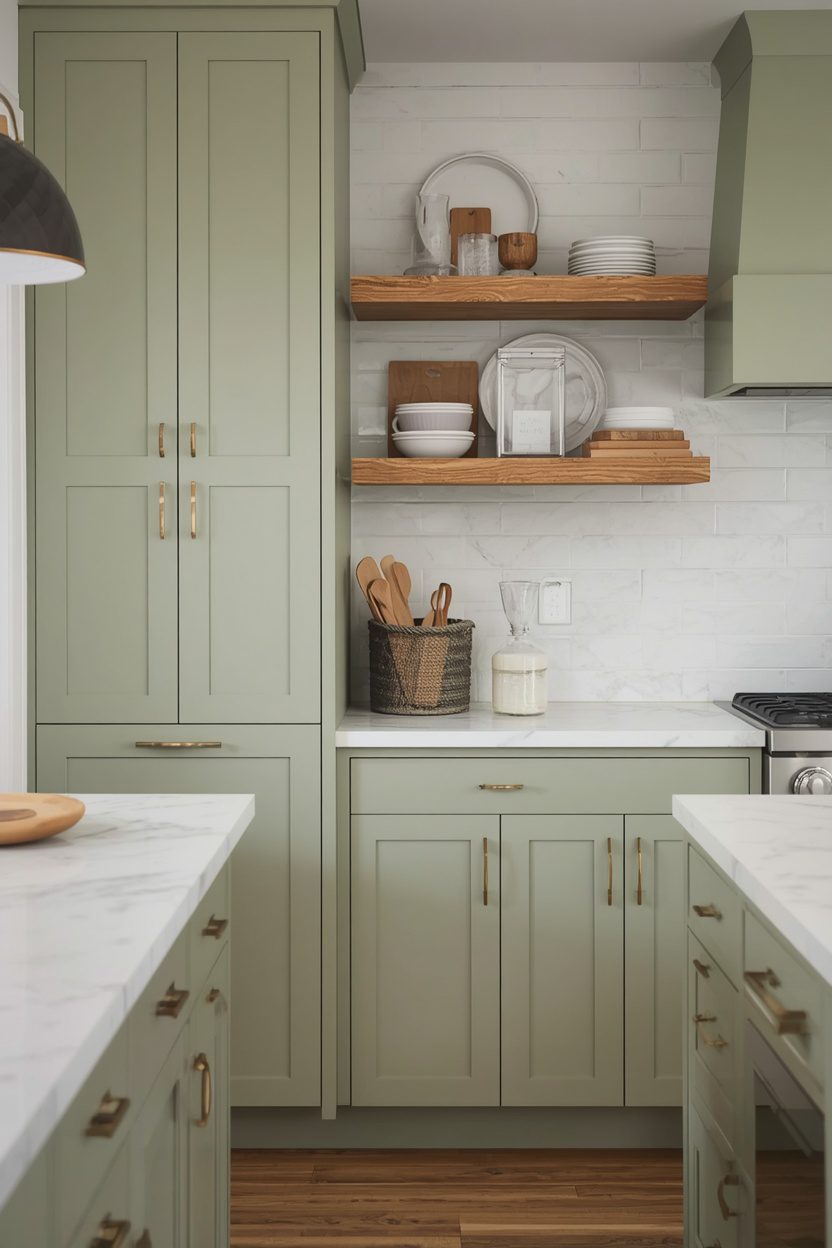
Cabinets cover more visual surface in a kitchen than any other element — roughly 40 to 50 percent of what your eye takes in — which means the cabinet decision determines whether the entire room reads as designed or default. The best kitchen cabinet ideas go beyond picking a colour: they coordinate the door profile, the hardware, the interior organisation, and the relationship between the uppers and lowers into a single coherent system.
Each of the 17 ideas below specifies the door style, the recommended colour with paint-brand picks where relevant, the hardware pairing, and the countertop and backsplash combinations that complement it. I have included real trade-offs — because a flat-panel door shows fingerprints more than a shaker, and a two-tone layout demands precision from the installer that a single-colour run does not.
1. Classic White Shaker Cabinets With Brass Hardware
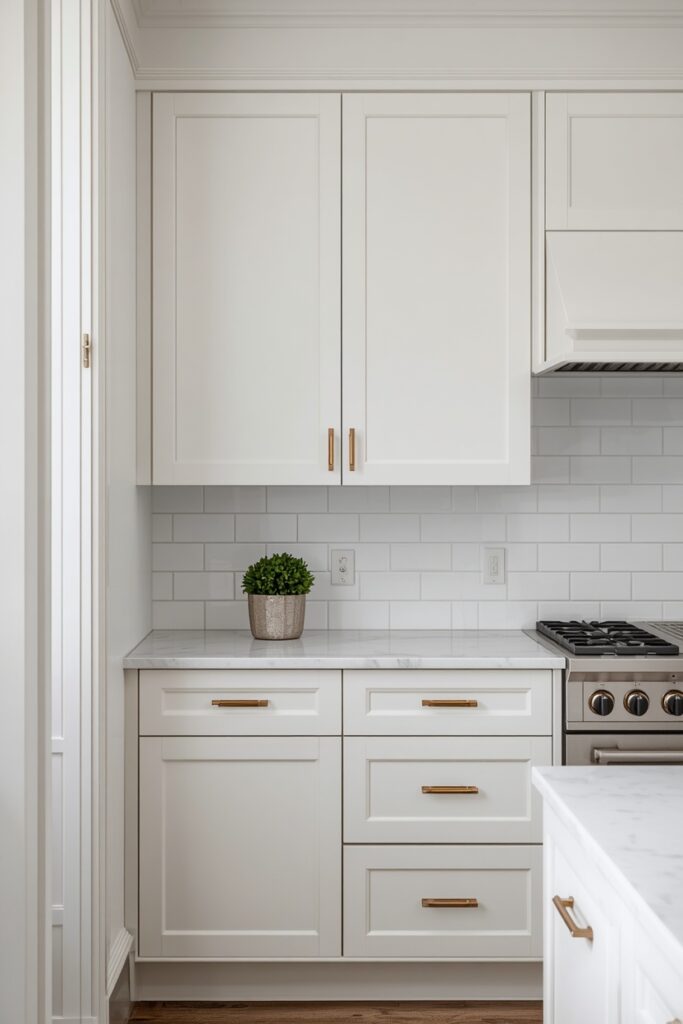
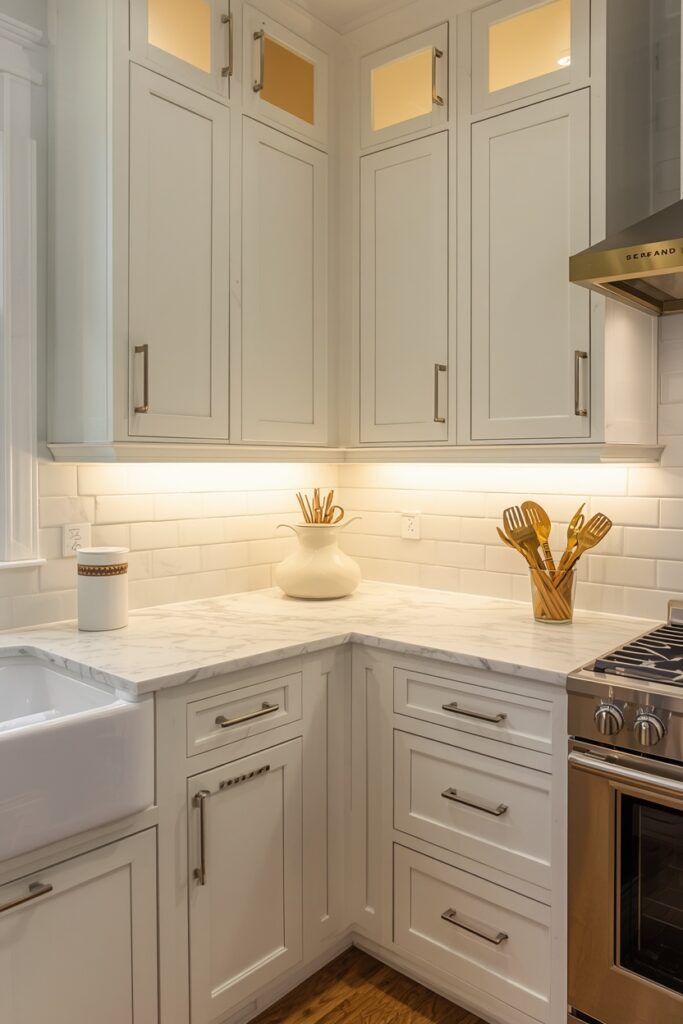
The white shaker — a five-piece door with a flat centre panel and a slim rail-and-stile frame — remains the most popular cabinet in residential kitchens because it bridges traditional and modern and pairs with every countertop material. Choose a warm white (Benjamin Moore White Dove OC-17 or Sherwin-Williams Alabaster SW 7008) rather than a stark blue-white, and apply a semi-gloss or satin lacquer for durability and easy wipe-down. Hardware in brushed brass or unlacquered brass adds warmth without competing. Pair with a marble or quartz countertop in a warm vein pattern and a simple white subway or zellige backsplash.
The interiors should be fitted with soft-close hinges and full-extension drawer slides — two upgrades that cost little at installation and define the daily experience. White shaker cabinets photograph well for resale but show grease and fingerprints more than darker colours, so plan for weekly wipe-downs around handles.
2. Sage Green Cabinets for Organic Warmth
Sage green on kitchen cabinets reads fresh without the boldness of emerald or the timidity of mint — it sits in the confident middle ground. Choose a sage with a gray undertone for a modern read (Sherwin-Williams Evergreen Fog SW 9130) or a yellow undertone for a warmer, more traditional look (Benjamin Moore Sage Wisdom 2138-40). Apply it to the lowers and keep the uppers in warm white for a lighter kitchen, or go sage on all cabinets for a fully committed look.
Hardware in brushed brass or matte gold picks up the warm undertone beautifully; avoid chrome, which cools the palette. Pair with a warm white quartz or honed marble countertop and a backsplash in warm white subway or zellige tile. Natural wood open shelving in oak or walnut replacing two or three upper cabinets extends the organic thread.
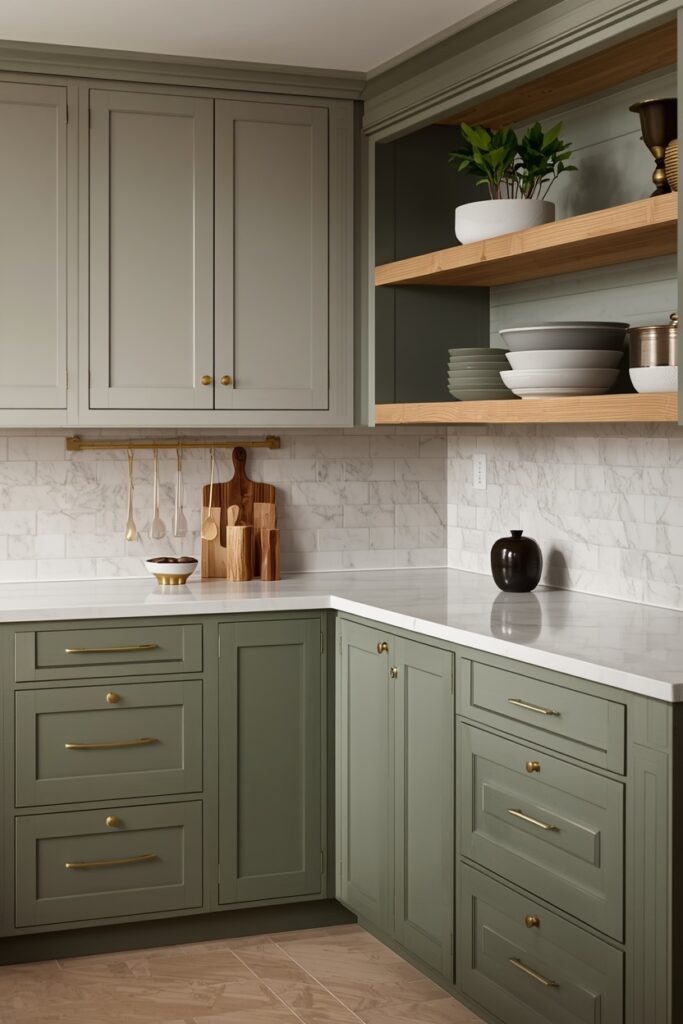
Sage shifts between warm and cool depending on the light, so test a painted sample on the actual cabinet door under both daylight and 2700K evening light.
3. Flat-Panel Modern Cabinets in Matte White
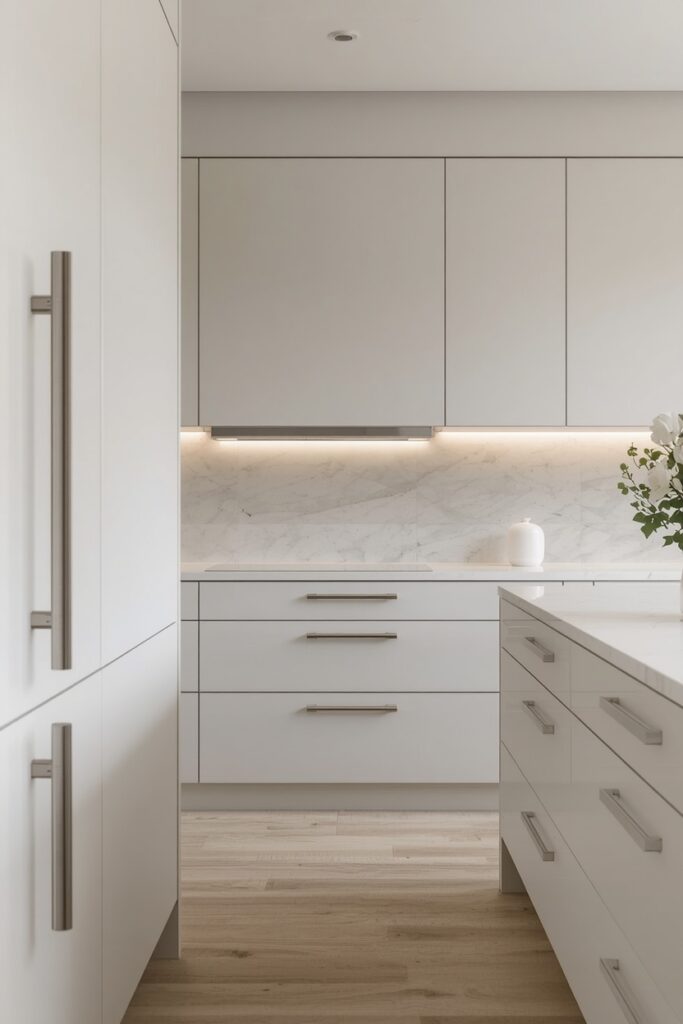
Flat-panel (slab) doors — no frame, no raised or recessed centre — give a kitchen the cleanest, most contemporary read. In matte white, they disappear into the wall and let the countertop, backsplash, and hardware carry the design. Choose a matte or soft-touch lacquer that resists fingerprints better than a high-gloss surface. Hardware should be minimal: slim bar pulls in brushed nickel or matte black, or push-to-open mechanisms that eliminate visible hardware entirely. Pair with a waterfall quartz or concrete-look countertop and a large-format porcelain backsplash for a seamless, groutless aesthetic. Flat-panel doors show every smudge and water mark because there is no texture to break up the surface — this is the honest trade-off for the clean look. Integrated handles (a J-pull or a routed finger grip along the top edge) offer a middle ground: no visible hardware but easier opening than push-to-open.
4. Navy Blue Cabinets for Rich Depth
Navy blue cabinets bring gravitas and depth without the maintenance challenges of black. Apply navy on the lower cabinets and island, keeping uppers in warm white or replacing them with open shelving in natural wood. Choose a navy with a slight warm undertone (Benjamin Moore Hale Navy HC-154 or Sherwin-Williams Naval SW 6244) so the colour glows under warm kitchen lighting rather than reading cold. Hardware in brushed brass or polished nickel creates a crisp nautical contrast. The countertop should be light — white marble, pale quartz, or butcher block — to balance the dark lowers.
A white or light-coloured backsplash keeps the upper zone bright. Navy hides fingerprints and cooking splatter better than white, which is a genuine daily advantage. Use a satin or semi-gloss sheen for easy cleaning, and apply a primer rated for glossy surfaces if painting over existing cabinets.
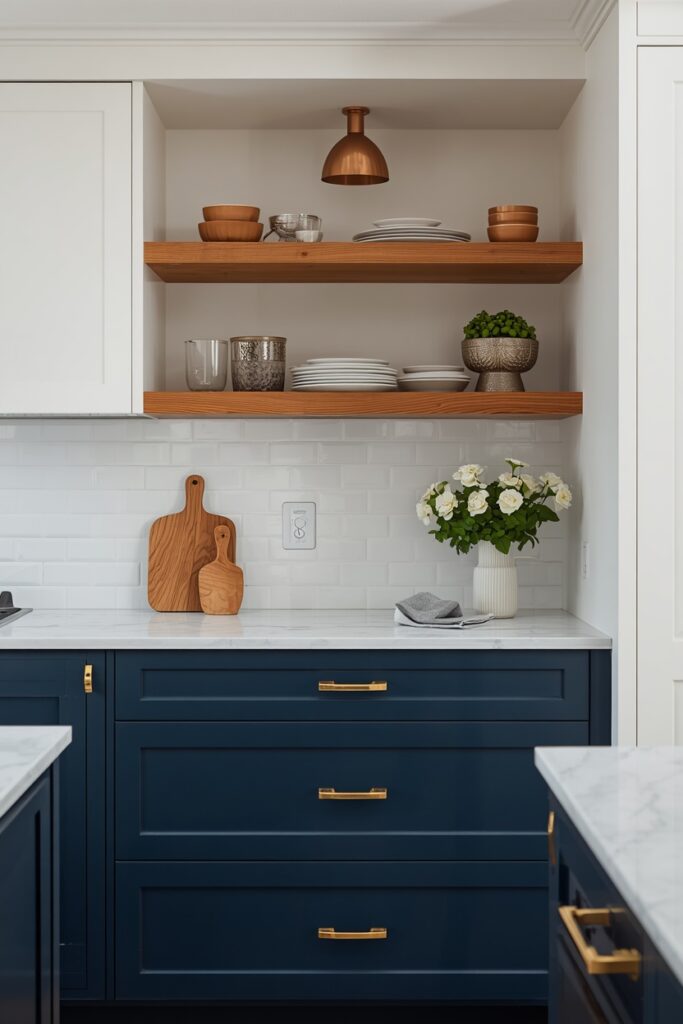
5. Two-Tone Kitchen Cabinet Ideas With Contrasting Island
A two-tone kitchen — one colour on the perimeter cabinets and a contrasting colour or material on the island — gives the island a furniture-like presence and prevents the room from reading monotone. Popular pairings include white perimeter with navy island, warm gray perimeter with sage green island, and light oak perimeter with matte black island. The countertop should bridge the two zones: a marble or quartz slab whose veining contains tones from both cabinet colours. Hardware can match across both zones (same metal, same pull style) to unify the palette, or vary subtly (brass on one, black on the other) for deliberate contrast.
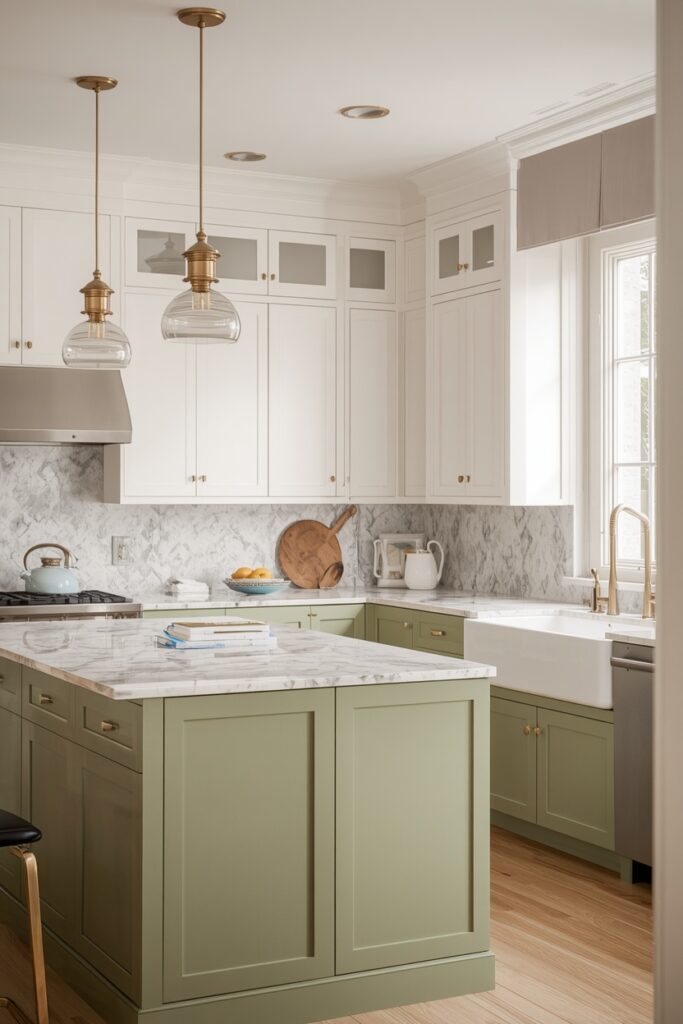
The key to making two-tone look designed rather than indecisive is limiting the kitchen to exactly two cabinet colours — a third colour on the range hood or the pantry door tips into visual noise. This approach is one of the strongest resale strategies because it looks custom without full-custom cost.
6. Natural Wood Cabinets in Warm Oak
Natural wood cabinets — unstained or clear-coated to show the grain — bring organic warmth that no painted surface can replicate. White oak is the current favourite for its tight, straight grain and warm honey tone, but rift-cut walnut, maple, and ash all serve the same role. Choose a slab door or a simple shaker profile so the wood grain remains the focal element. Pair with a white or light stone countertop and a warm white backsplash to keep the room bright while letting the wood lead.
Hardware should be minimal and warm-toned: slim brass bar pulls or leather tab pulls. The ceiling and walls stay white or a pale neutral so the cabinets pop as the room’s defining surface.
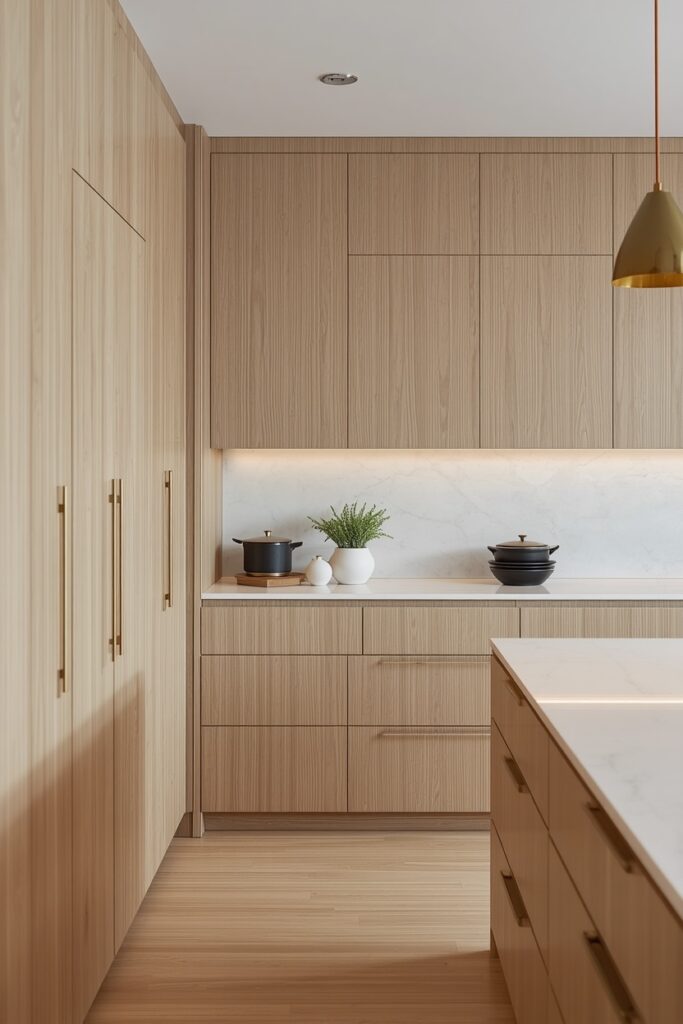
One maintenance note: natural wood cabinets show water marks and grease more readily than painted surfaces, so apply a durable clear coat (polyurethane or catalysed lacquer) and wipe splashes promptly. Avoid placing unprotected wood cabinets directly above or beside the cooktop without adequate ventilation.
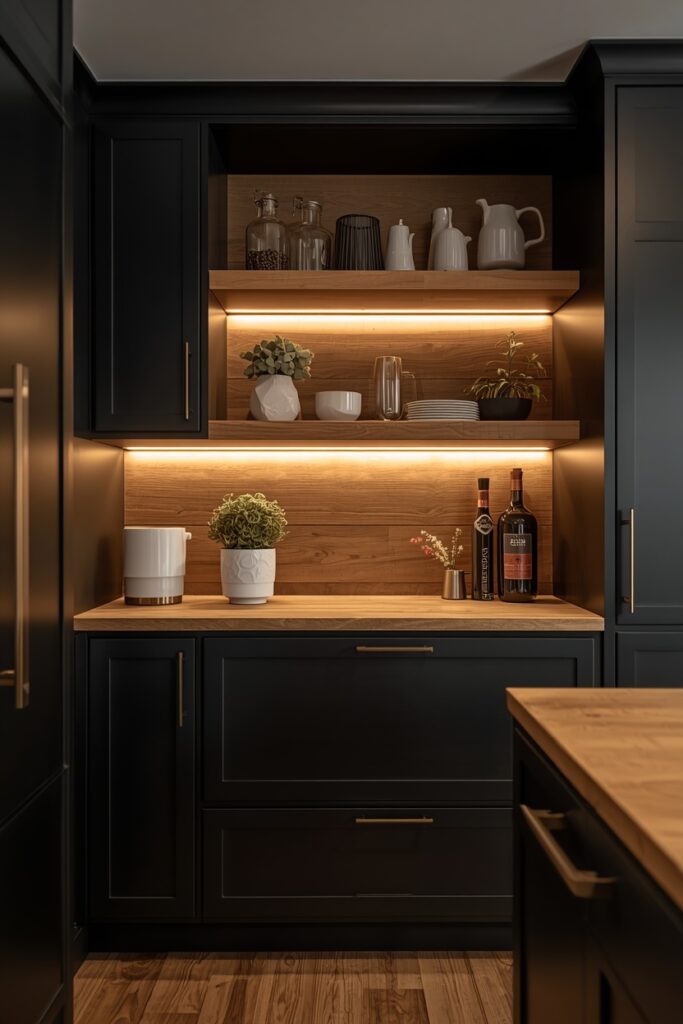
7. Matte Black Cabinets for Bold Kitchens
Matte black cabinets command attention and pair surprisingly well with warm materials — butcher block, brass, warm oak open shelving — that prevent the darkness from turning cold. Apply matte black on all cabinets for maximum drama, or limit it to lowers and the island with warm white uppers for balance. Choose a true matte or soft-touch lacquer rather than a satin, because the flat sheen absorbs light evenly and avoids the reflective hot spots that satin creates. Hardware in brushed brass or warm gold provides essential metallic relief. The countertop should contrast: white marble, light quartz, or warm butcher block. Under-cabinet LED strips are critical — they wash the countertop with working light that the dark cabinets above would otherwise absorb. Matte black shows dust and fingerprints as chalky smudges, so clean with a microfibre cloth and a gentle cleaner rather than a spray-and-wipe approach.
8. Glass-Front Upper Cabinets for Display
Replacing two or three upper cabinet doors with glass-front panels turns storage into display and lightens the visual weight of a wall of cabinetry. Choose clear glass for a clean look or a reeded (fluted) glass for texture that partially obscures the contents. The frame should match the surrounding cabinet doors — shaker frame with glass centre panel, or a slim metal frame for modern flat-panel kitchens. Light the interior of glass-front cabinets with a small LED puck light or an LED strip along the top interior edge to create a warm glow, especially in the evening. Style the visible shelves with edited collections: matching glassware, stacked white ceramics, or a few cookbooks.
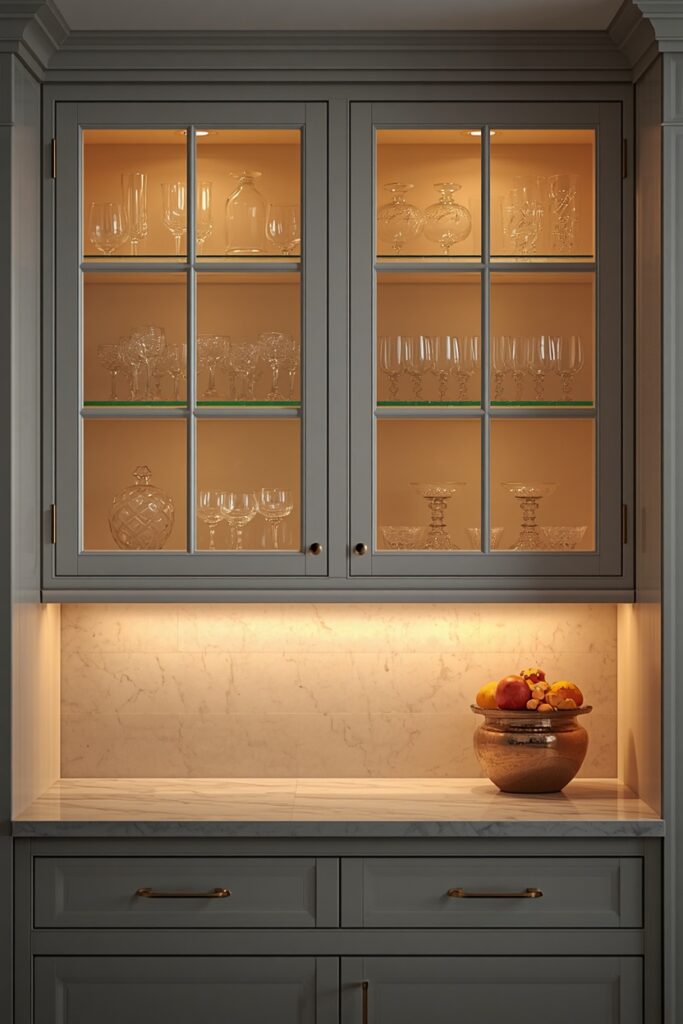
Avoid glass fronts on cabinets that hold cluttered everyday items — the display effect only succeeds when the contents are curated. Reserve glass panels for one or two cabinet pairs that flank a window or range hood, rather than across the entire upper run.
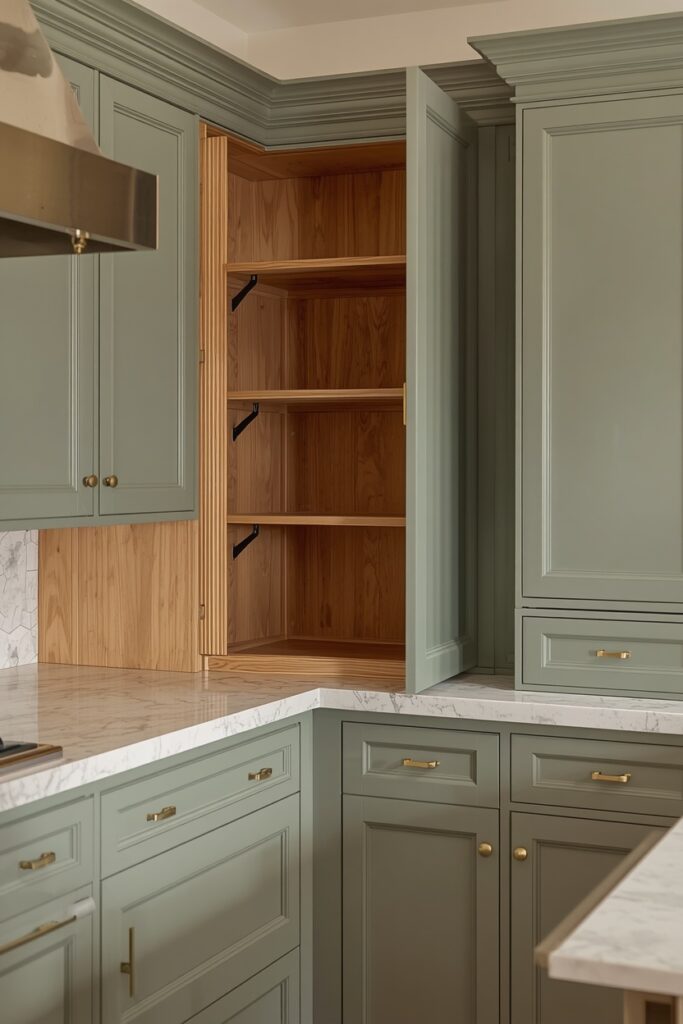
9. Painted Cabinets With Exposed Wood Interior
Painting the cabinet exteriors in a solid colour while leaving the interior surfaces — shelf edges, cabinet backs, drawer boxes — in exposed natural wood creates a two-material layering that reads designed rather than cost-cut. The exterior paint provides the clean, coordinated look the kitchen needs, while the wood interior adds warmth and character every time a door opens. This treatment suits shaker and traditional door profiles especially well. The wood should be a light tone — white oak, birch, or maple — sealed with a clear coat for durability. Hardware in a complementary metal ties the exterior colour to the warm interior.
The paint colour can be anything from white to sage to navy; the exposed-wood interior elevates it from standard to distinctive. One practical note: this is easier to specify on custom or semi-custom cabinets than on stock ones — ask the cabinet maker to leave interior surfaces uncoated during the painting process.
10. Charcoal Gray Cabinets for Sophisticated Neutral
Charcoal gray sits between black and light gray — dark enough to anchor a kitchen with sophistication, but light enough to avoid the light-absorption problems of full black. Choose a charcoal with a warm brown or taupe undertone (Sherwin-Williams Urbane Bronze SW 7048 or Benjamin Moore Kendall Charcoal HC-166) so the cabinet reads warm under 2700K kitchen lighting. Apply in a satin or semi-gloss sheen for easy cleaning.
Hardware in brushed brass, matte gold, or polished nickel all pair well — charcoal is one of the most hardware-flexible colours. The countertop can match the warmth (butcher block, warm-veined marble) or contrast (bright white quartz). A warm white or pale gray backsplash keeps the upper zone light.
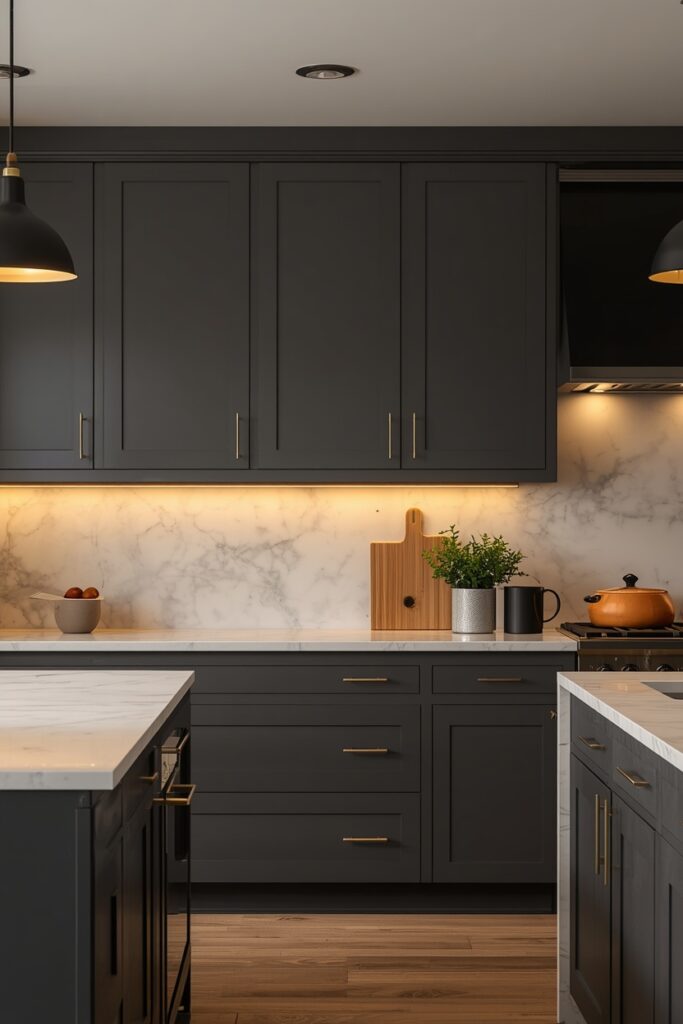
This colour hides daily wear, grease, and fingerprints better than both white and matte black, making it the practical middle ground for busy kitchens.
11. Kitchen Cabinet Ideas With Open Shelving Mix
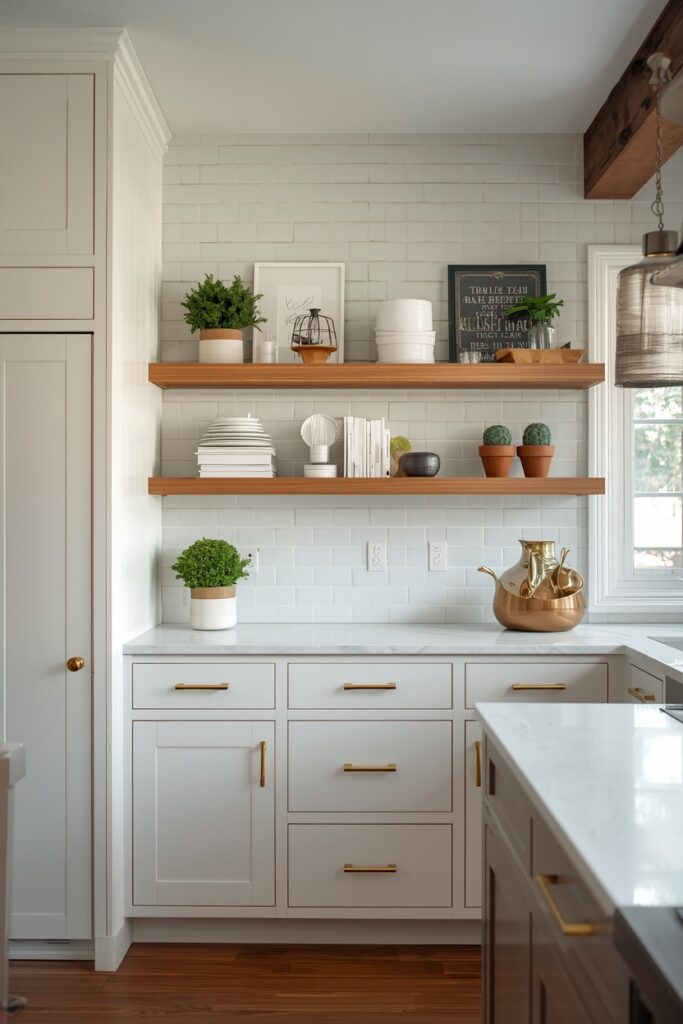
Replacing some upper cabinets with open shelves — typically the section flanking a window or above the sink — opens the kitchen visually and breaks up a potentially monotonous wall of cabinetry. Use floating shelves in a material that complements the cabinets: natural oak against white cabinets, walnut against sage or navy, or matte black metal brackets against charcoal. Mount two or three shelves per section, spaced 30 cm apart, and style with a curated mix of everyday items (mugs, bowls, oil bottles) and decorative objects (a plant, a ceramic vase, a cookbook). The remaining upper cabinets stay closed for practical storage. This mixed approach gives you the openness of full open shelving without sacrificing the hidden storage that upper cabinets provide. One honest trade-off: open shelves collect kitchen grease and dust faster than closed cabinets, so plan to wipe them down weekly and wash displayed items every few weeks.
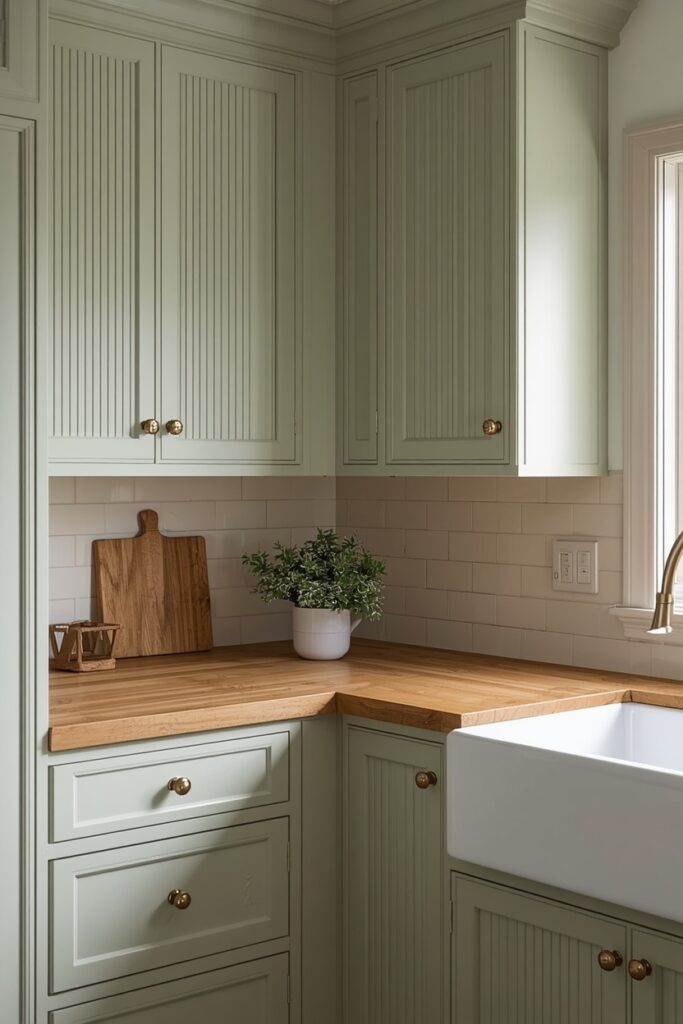
12. Beadboard Cabinet Doors for Cottage Kitchens
Beadboard — vertical grooved panelling inset into a cabinet door frame — adds texture and a cottage character that flat or raised panels cannot replicate. Choose a beadboard door with a shaker-style outer frame for a clean cottage look, and paint it in warm white, pale blue, or soft sage. The grooves catch under-cabinet light and create gentle shadow lines that add depth without visual noise. Pair with ceramic or porcelain knobs in white or a complementary colour, and a butcher-block or honed-stone countertop. A farmhouse sink sits naturally in this kitchen.
The backsplash can extend the beadboard treatment — vertical beadboard panels behind the sink and range — for a fully wrapped cottage effect. Seal beadboard panels with a semi-gloss paint to allow grease and moisture wipe-down. One limitation: the grooves collect grease and require a brush rather than a flat cloth for deep cleaning, so avoid beadboard directly above the cooktop if possible.
13. Warm Terracotta Cabinet Colour
Terracotta on kitchen cabinets brings a Mediterranean warmth that pairs with brass hardware, natural stone countertops, and warm-wood accents. Choose a muted terracotta — more clay than orange — with a brown undertone (Sherwin-Williams Cavern Clay SW 7701 or Benjamin Moore Potters Clay 1221). Apply it on the lowers or the island, keeping uppers in warm white or replacing them with open wood shelving. The countertop should be a warm neutral — honed cream limestone, warm white quartz, or butcher block — to avoid competing with the cabinet colour.
Hardware in aged brass or oil-rubbed bronze matches the earthy palette. A simple cream or warm white backsplash lets the terracotta lead.
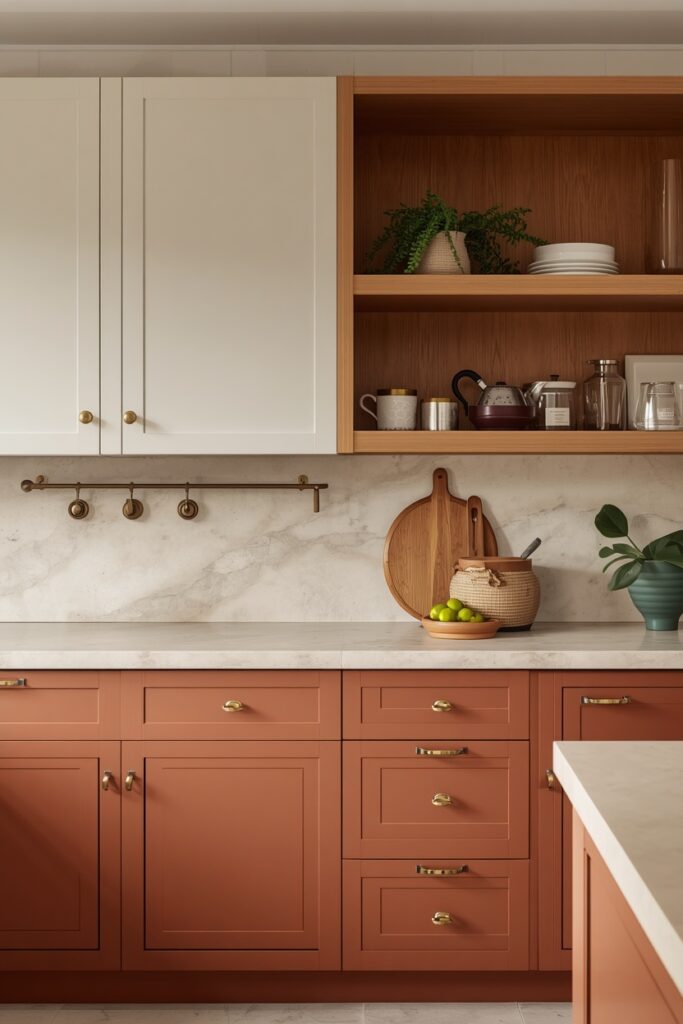
Under warm 2700K lighting, terracotta cabinets glow with a baked warmth that cooler colours cannot replicate. Test the paint under your actual kitchen lighting before committing, because terracotta shifts dramatically between daylight and artificial light.
14. Cabinets With Integrated Appliance Panels
Panel-ready appliances — refrigerators, dishwashers, and sometimes microwaves — covered in matching cabinet panels create a seamless, furniture-like kitchen where no appliance breaks the cabinetry line. The panels are custom-cut from the same door material and mounted to the appliance front with manufacturer-supplied brackets. This treatment suits flat-panel and shaker kitchens equally and is the standard approach in high-end kitchen design. The result is a kitchen that reads as a continuous run of cabinetry with no stainless-steel or black-appliance interruptions. Budget for the panel-ready appliance upgrade over standard models, plus the custom panel fabrication.
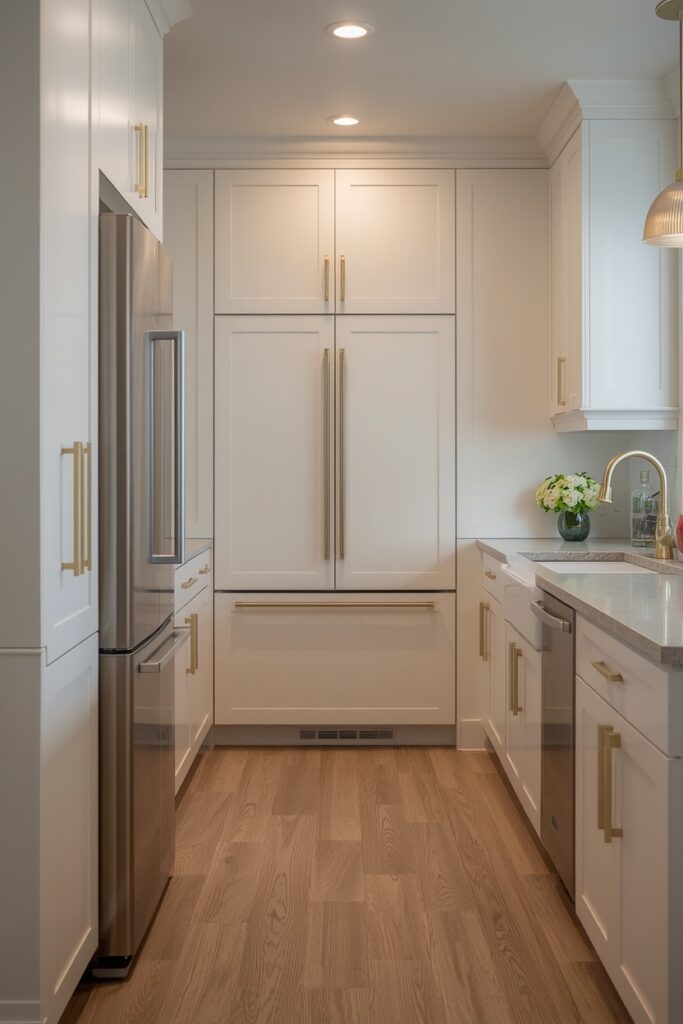
The visual payoff is significant — an integrated kitchen looks like a designed room rather than a collection of boxes. One practical note: panel-ready refrigerators are typically shallower than freestanding models (counter-depth), so verify the interior capacity meets your household needs before committing.
15. Cabinets With Interior Drawer Organisers
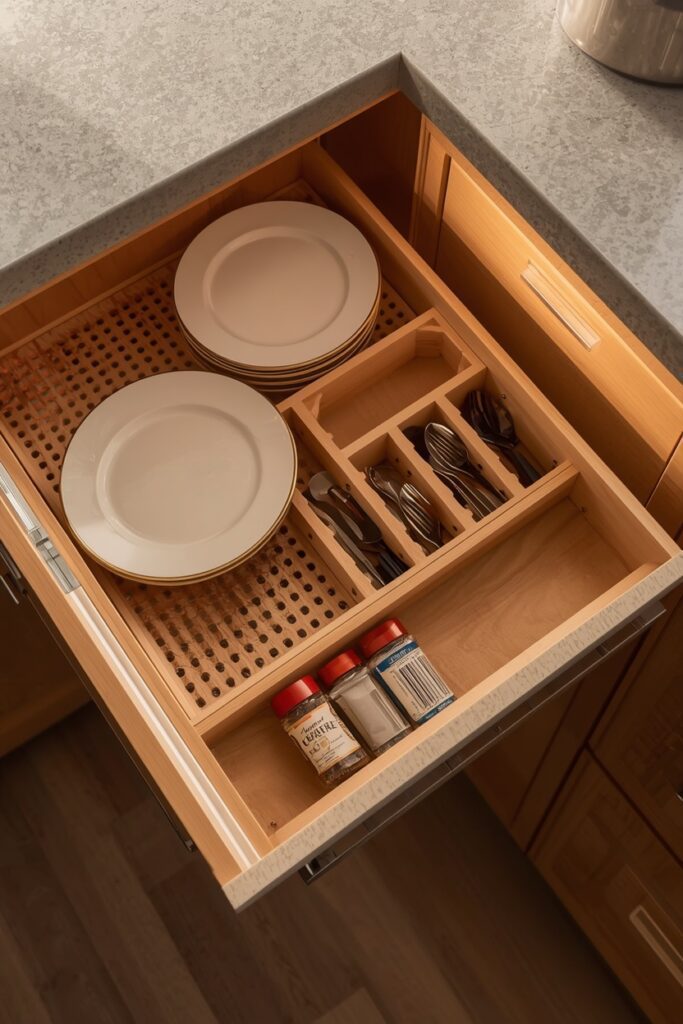
The inside of a cabinet matters as much as the outside — and fitted drawer organisers turn chaotic storage into a system that saves time every day. Specify peg-board drawer inserts for plate and pan storage (adjustable pegs hold items upright), custom dividers for utensil drawers, pull-out spice racks inside narrow cabinets, and pull-out waste bins concealed behind a cabinet door. For deep lower cabinets, lazy-susan turntables or pull-out wire baskets make the back of the cabinet accessible without crawling. These organisers are available from cabinet manufacturers as add-ons or from third-party companies like Rev-A-Shelf and Blum — they fit standard cabinet widths. The investment is small relative to the cabinet cost, but the daily impact is outsized. A well-organised drawer system reduces clutter on the countertop because everything has a designated home. Retrofit organisers can be added to existing cabinets without replacing the cabinets themselves.
16. Fluted or Reeded Cabinet Doors for Texture
Fluted cabinet doors — flat panels with vertical grooves routed into the surface — add dimensional texture that catches light and shadow in a way smooth doors cannot. The grooves run from top to bottom of the door panel, creating a ribbed effect that reads contemporary and tactile. Apply them selectively: an island front, a pantry door pair, or the panels flanking the range hood. Pair fluted doors with smooth flat-panel doors on the remaining cabinets so the texture reads as a deliberate accent rather than an all-over treatment. Paint them in the same colour as the surrounding cabinets for a tone-on-tone effect, or leave them in natural wood for material contrast.
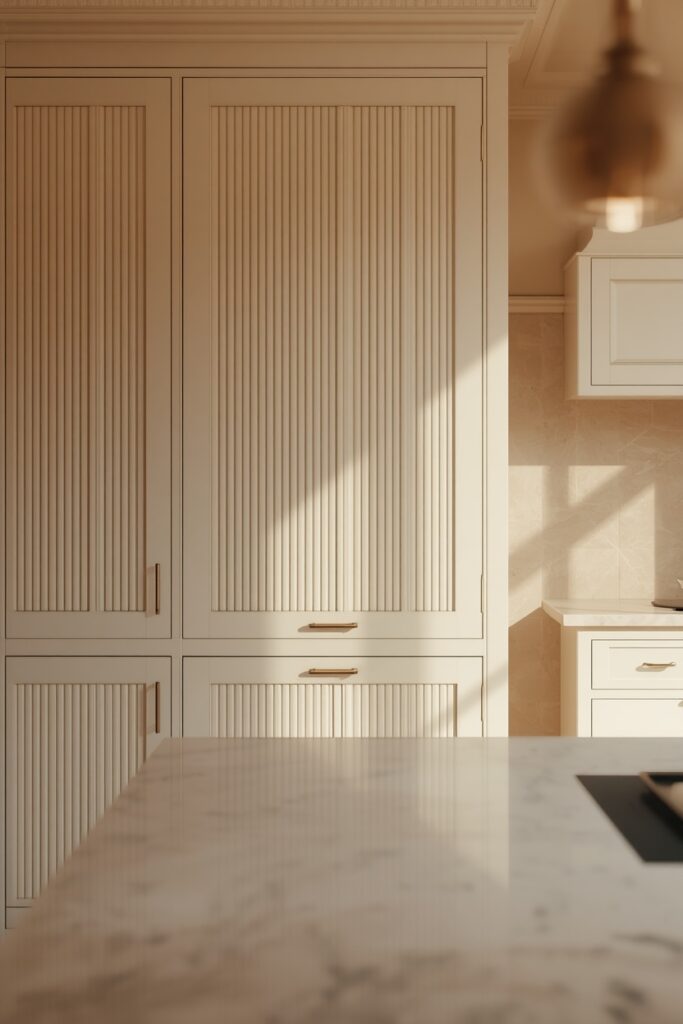
Hardware should be minimal — slim bar pulls or push-to-open — so the grooves stay the focus. Fluted panels are typically a custom or semi-custom option, so confirm availability with your cabinet maker before specifying them in the design.
17. Budget Kitchen Cabinet Ideas With a Paint Refresh
Painting existing cabinets is the most cost-effective kitchen transformation — a fraction of the price of new cabinetry with a dramatic visual payoff when executed properly. The process: remove doors and hardware, clean all surfaces with a degreaser (TSP or a dedicated cabinet cleaner), sand lightly with 150-grit to scuff the old coating, apply a bonding primer rated for glossy surfaces, then two coats of a cabinet-grade paint in a semi-gloss or satin sheen. Use a foam roller for flat surfaces and a good-quality brush for edges and panel details. Popular colour choices: warm white for a clean refresh, sage green for an earthy accent, or charcoal for a sophisticated upgrade. Swap the hardware at the same time — new pulls or knobs in brass, matte black, or brushed nickel complete the transformation.
Allow full cure time (7–14 days depending on the paint) before rehanging doors and loading with heavy items. This approach suits anyone who wants a kitchen refresh without the demolition, timeline, and plumbing disruption of a full remodel.
Where I’d Start if I Only Did Three Things
If I only did three things, I would start by choosing the door profile — shaker for versatility, flat-panel for modern, beadboard for cottage — because the door shape defines the kitchen’s style more than the colour. Second, I would swap the hardware on every door and drawer, choosing one metal and one pull style that carries across the entire kitchen, because mismatched hardware is the most common visual disruptor in a cabinet layout. Third, I would add soft-close hinges and full-extension drawer slides to every cabinet — these two mechanical upgrades cost little and transform the daily feel of the kitchen from builder-grade to quality.
Frequently Asked Questions
What kitchen cabinet ideas give the biggest visual change on a budget?
Painting existing cabinets in a new colour and swapping hardware delivers the highest impact per dollar. A full paint job with new pulls in brass or matte black can change the entire kitchen character for under 10 percent of the cost of new cabinetry. Add under-cabinet LED lighting for a third upgrade that costs little and transforms the workspace.
Should upper and lower kitchen cabinets be the same colour?
They can be, but a two-tone approach — darker or coloured lowers with lighter uppers — adds visual interest and makes the upper zone read lighter and more open. If you go two-tone, use the same hardware across both zones to unify the palette, and choose a countertop that bridges the two colours.
What cabinet colour hides dirt and fingerprints best?
Mid-tone colours in a satin or semi-gloss sheen hide daily wear best. Charcoal gray, warm greige, and sage green all conceal fingerprints, grease, and water marks better than either white or matte black. A satin sheen cleans more easily than matte without the reflective glare of high-gloss.
How do I choose between shaker and flat-panel cabinet doors?
Shaker doors suit traditional, transitional, farmhouse, and cottage kitchens — the frame-and-panel construction adds visual texture and hides minor imperfections. Flat-panel (slab) doors suit modern, contemporary, and minimalist kitchens — they read cleaner but show every mark and require more precise alignment during installation.
Final Thoughts
The strongest kitchen cabinet ideas coordinate the door profile, the colour, the hardware, and the interior organisation into one system rather than choosing each in isolation. Start with the door style that matches your kitchen’s character, pick a colour that responds well to your lighting, and choose hardware in one metal that carries across every door and drawer. A kitchen where the cabinets look and function as a unified design is the single most impactful renovation you can make.