
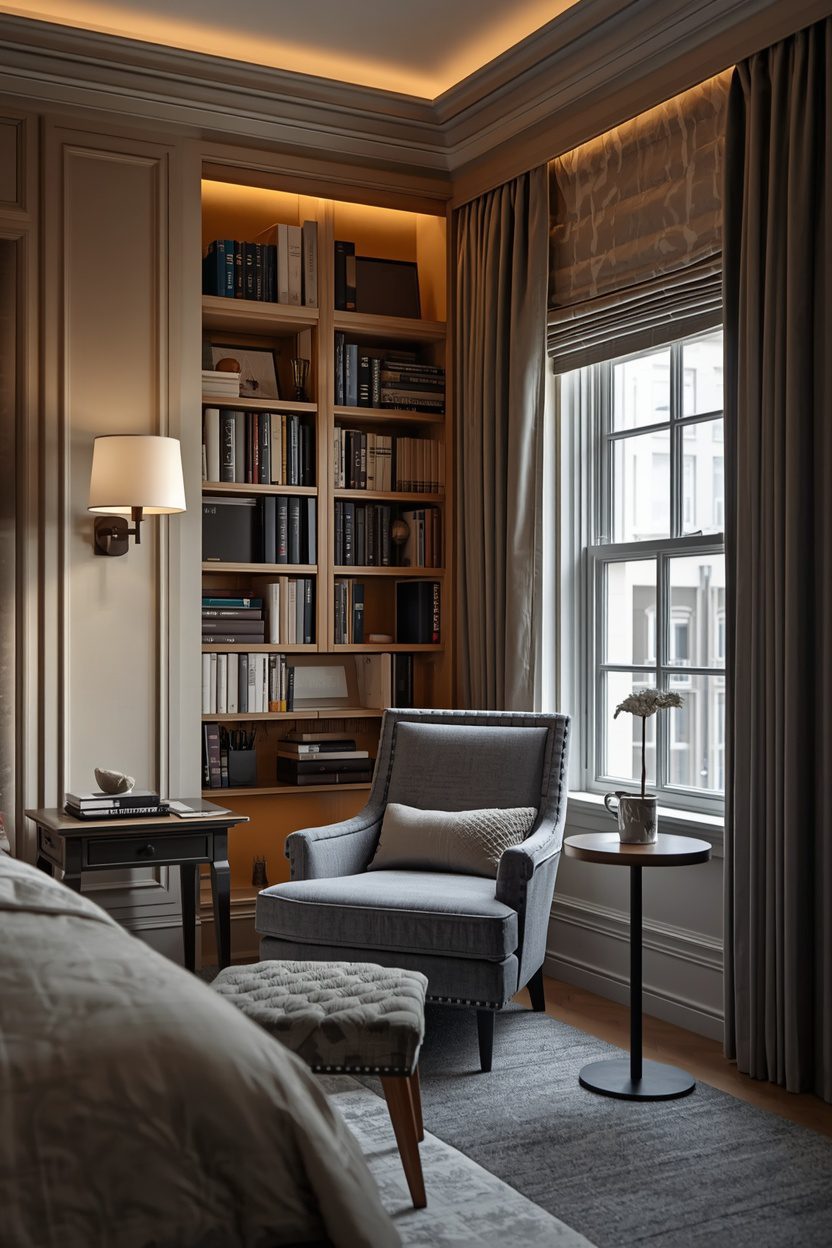
The biggest mistake people make with a master bedroom is treating it like any other room with a bigger bed. A primary suite has the square footage and the privacy to support zones — a sleeping area, a reading corner, a dressing space — and the best master bedroom ideas take advantage of that layered potential. What follows are 18 complete room designs, each with a distinct palette, material direction, and layout strategy.
Some of these require a generous footprint, while others adapt comfortably to a standard 4 × 5 metre room. I have flagged where ceiling height or natural light matters, and I have included trade-offs where certain materials or layouts demand more maintenance than they might suggest at first glance. Treat each idea as a starting blueprint and adjust the proportions to your space.
1. Warm White Suite With Walnut Accents
Warm white walls — think a shade with a slight honey or wheat undertone — paired with walnut furniture create a suite that reads calm without going cold. The bed frame is solid walnut or walnut-veneer with a slatted headboard, flanked by matching two-drawer nightstands. A walnut-framed full-length mirror leans against the wall near the closet entry, pulling the timber thread through the room.
Bedding stays in ivory and soft stone tones, layered with a lightweight wool throw. Position a bouclé-upholstered accent chair near the window with a small side table and reading lamp — this gives you a true second zone.
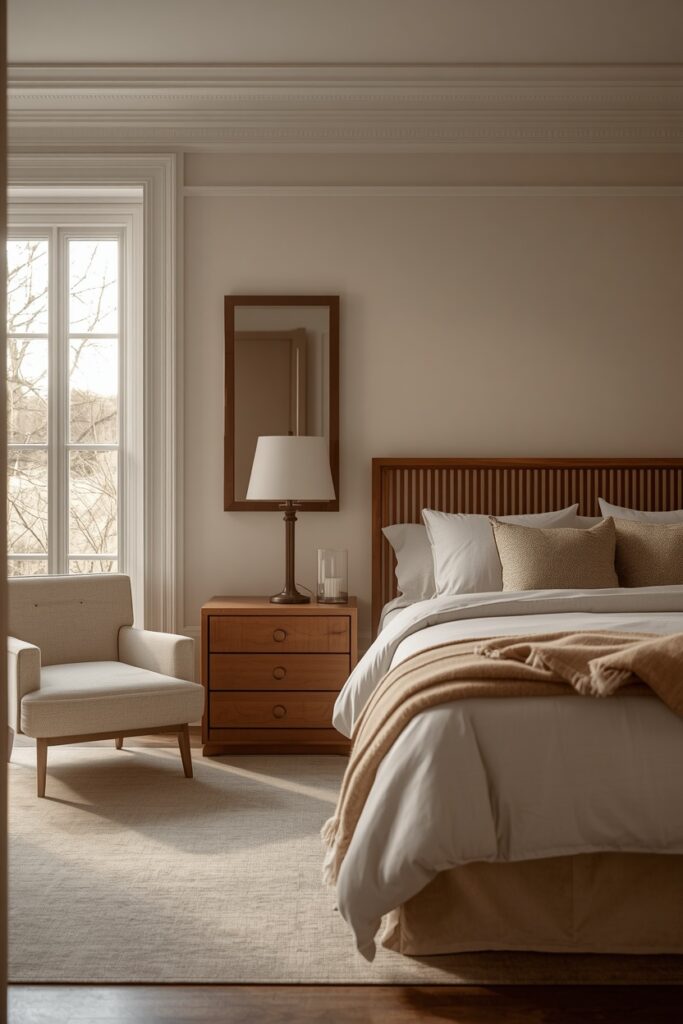
Keep overhead lighting recessed and dimmable, supplementing with two ceramic table lamps at the bedside set to 2700K.
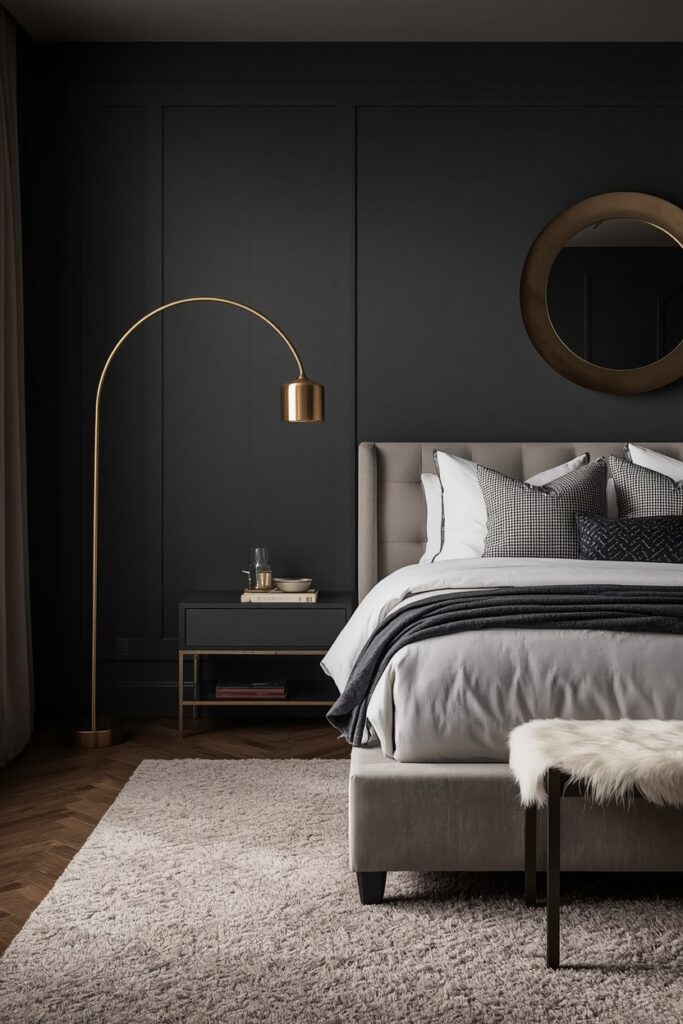
2. Charcoal and Brass Modern Suite
Dark charcoal walls absorb light and sound, creating a cocoon effect that suits a primary bedroom perfectly. Brass is the metal of choice here — a brushed brass arc floor lamp, brass-rimmed oval mirror, and brass drawer pulls on a dark-stained oak dresser. The bed is an upholstered platform in charcoal performance linen, dressed in crisp white sheets and a charcoal duvet so the contrast sits right at the pillow line. A cream shearling bench at the foot doubles as a dressing seat. Install a pair of adjustable brass wall sconces on either side of the bed — they free up nightstand space and add directional reading light. One practical note: charcoal walls show scuff marks more than lighter tones, so opt for a washable matte or eggshell paint rather than a dead flat.
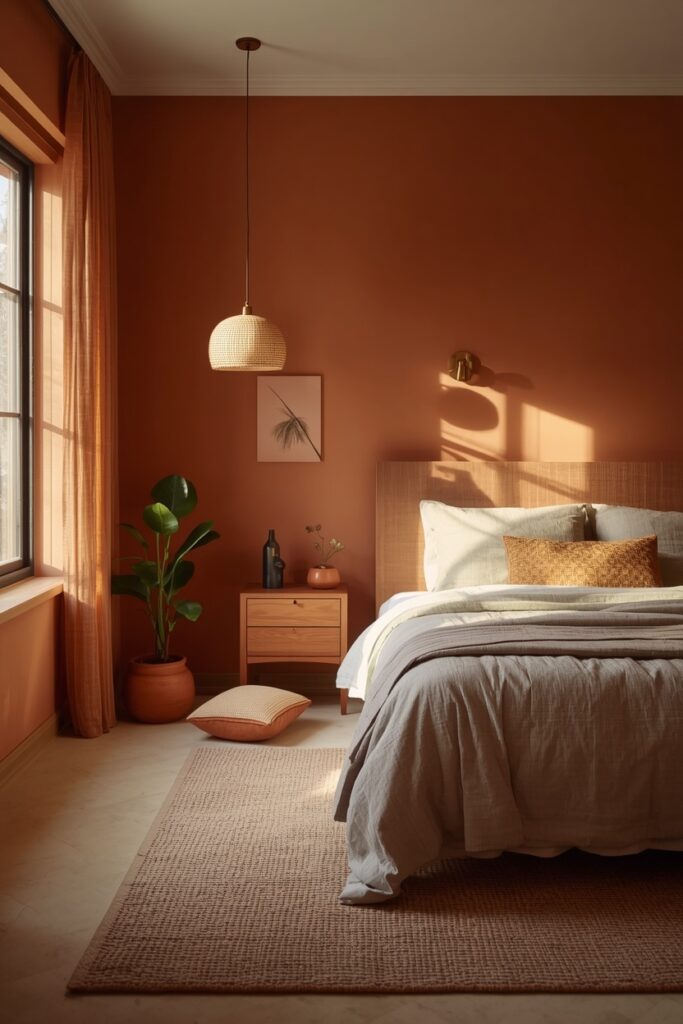
3. Earthy Clay and Linen Retreat
Clay-toned walls — a warm pinkish brown — set the temperature for this grounded, organic room. The bed frame is a low oak platform with visible grain, dressed in a rumpled linen duvet in undyed flax. Nightstands are simple: solid wood stools or slim-profile tables with open shelves. A large terracotta pot holding a tall fiddle-leaf fig anchors one corner, while a hand-loomed jute rug covers most of the floor. The reading zone here is a floor cushion arrangement against the wall with a low bookshelf — casual and warm.
Curtains are unlined linen in a shade close to the wall colour, puddling 3–5 cm on the floor. Install a single large rattan pendant centred over the bed, paired with brass plug-in sconces at each side for layered light control.
4. Monochromatic Gray With Textural Depth
A single colour family only avoids monotony when every surface brings a different texture. Start with pale gray walls in a flat or matte sheen, a mid-gray upholstered headboard in a chunky weave, slate-gray linen bedding, and a darker charcoal wool rug. The nightstand should introduce a different material — pale marble top on a black steel frame, or a concrete cylinder.
A knit throw in the lightest gray drapes across the bed, and a pair of smoked-glass table lamps add another textural layer. This room needs strong natural light during the day; in a north-facing room or one with small windows, the grays will read flat.
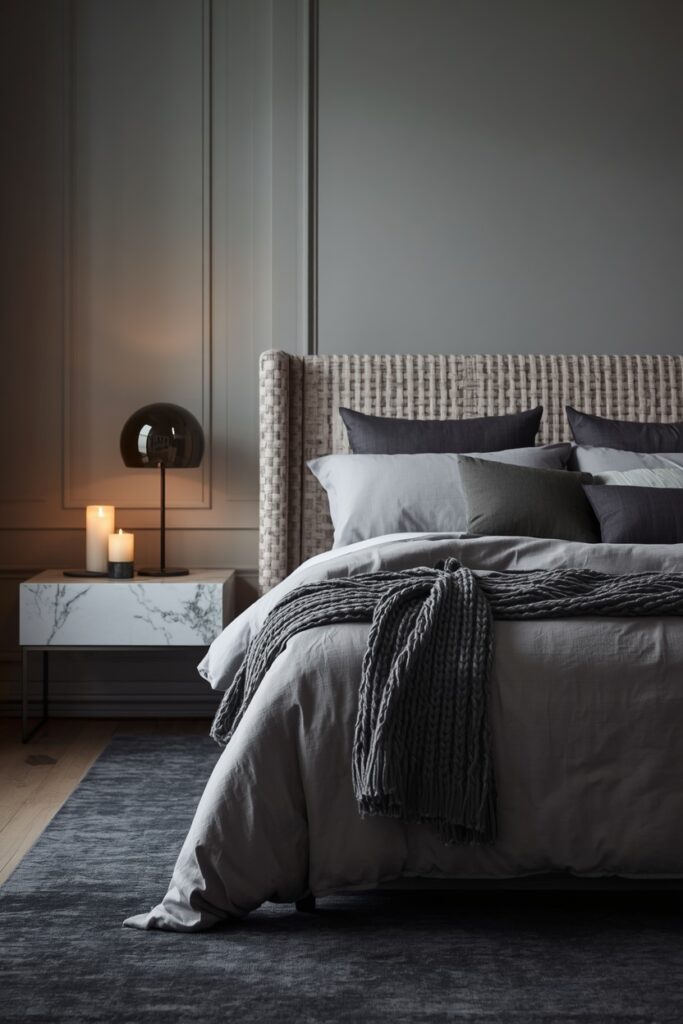
Counter that with mirror placement on the wall opposite the primary window and generous artificial light on dimmers.
5. Master Bedroom Ideas in a Classic Navy Palette
Navy anchors a primary suite with authority without the maintenance demands of pure black walls. Apply it on the wall behind the bed and keep the remaining three walls in a warm cream. The bed frame should be substantial — a tall upholstered headboard in navy or a carved wooden frame in dark walnut — dressed in white sateen sheets with a navy and ivory striped coverlet. Brass or polished nickel hardware works equally well here; choose one metal and carry it across lamps, drawer pulls, and curtain rods. A pair of matching table lamps in white ceramic with fabric shades keeps the bedside crisp.
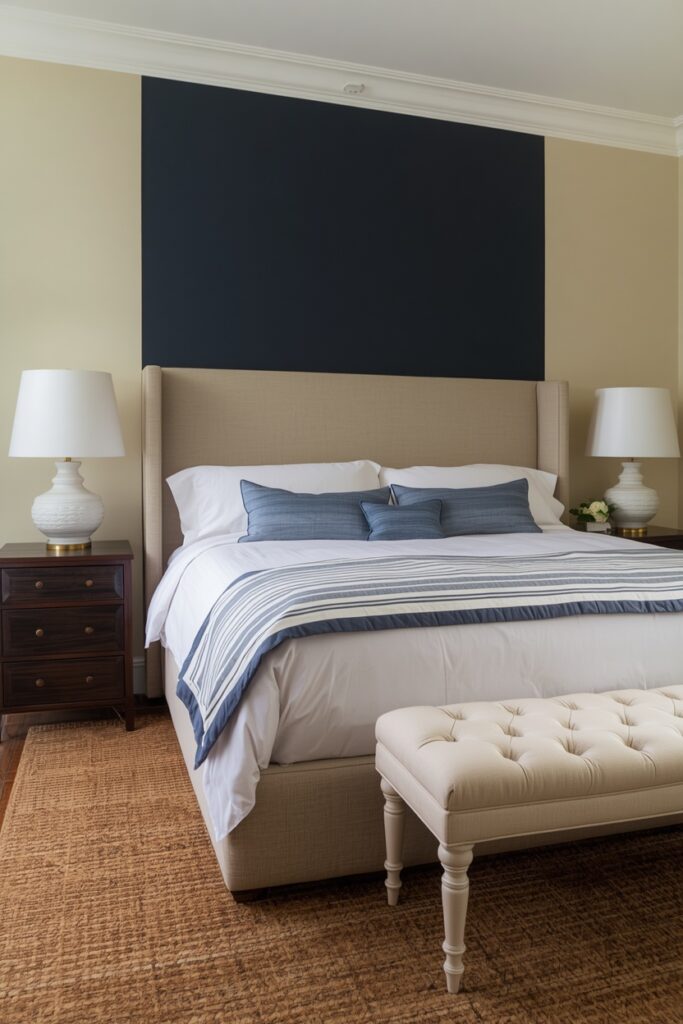
Add a tufted bench in a cream fabric at the foot and a jute or sisal rug underneath for natural warmth. Navy shows dust less than charcoal and less than white — it is the practical sweet spot for a room you want to read both dressed-up and low-maintenance.
6. Scandinavian Light Oak and White Suite
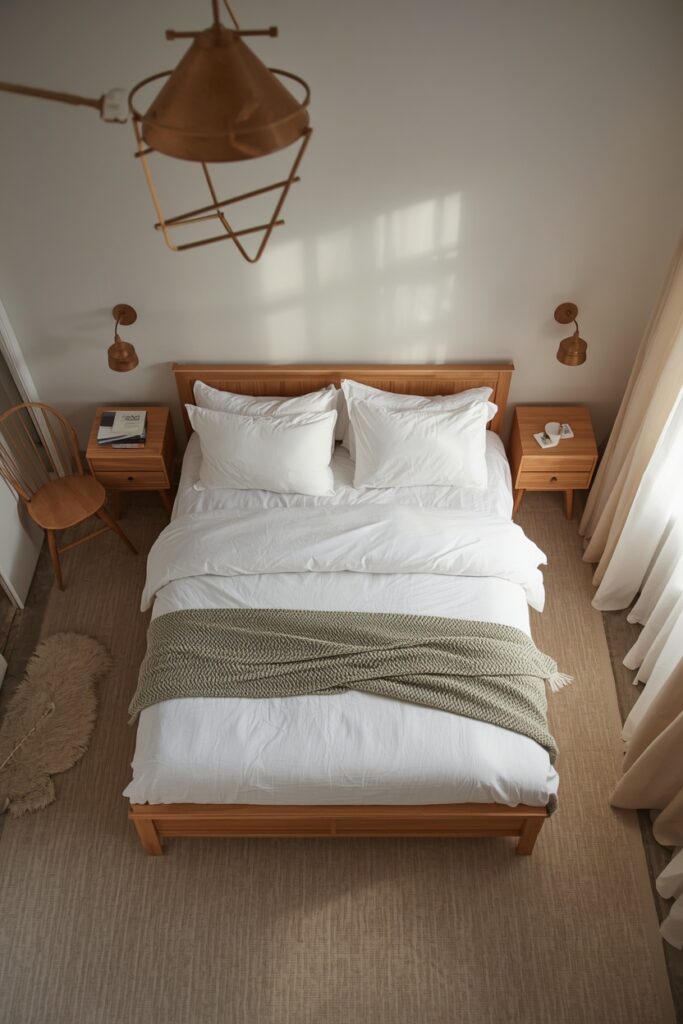
Light oak and white create a primary bedroom that wakes up bright and calm. The bed is a simple oak frame with clean square lines, no visible hardware. Bedding is all white — cotton percale for that crisp hotel texture — with a single pale gray or soft sage knit throw folded at the foot. Nightstands are wall-mounted oak shelves with a small lip, leaving the floor open for easy cleaning. A sheepskin rug drapes over a wooden Windsor-style chair in the corner, forming the reading zone with a slim floor lamp behind it. Walls are a pure warm white, and curtains are the sheerest possible linen to maximise daylight. Storage lives behind a simple white curtain rod or inside a built-in wardrobe with flat oak-fronted doors. The trade-off is visual interest — this room depends on beautiful objects and good light, and it can look sparse in winter or a north-facing room.
7. Romantic Suite With Canopy Draping
A canopy does not require a four-poster bed — ceiling-mounted curtain tracks or simple hooks with sheer fabric panels achieve the same effect at a fraction of the cost. Install two tracks running parallel on either side of the bed, 15–20 cm from the ceiling, and hang floor-length voile panels in ivory or blush. The bed itself should be upholstered in a soft fabric — velvet, heavy linen, or chenille — in a muted tone like dusty rose, soft mauve, or warm taupe. Layer the bedding with a sateen sheet, a lightweight quilted coverlet, and at least four pillows of varied size.
Image prompt:
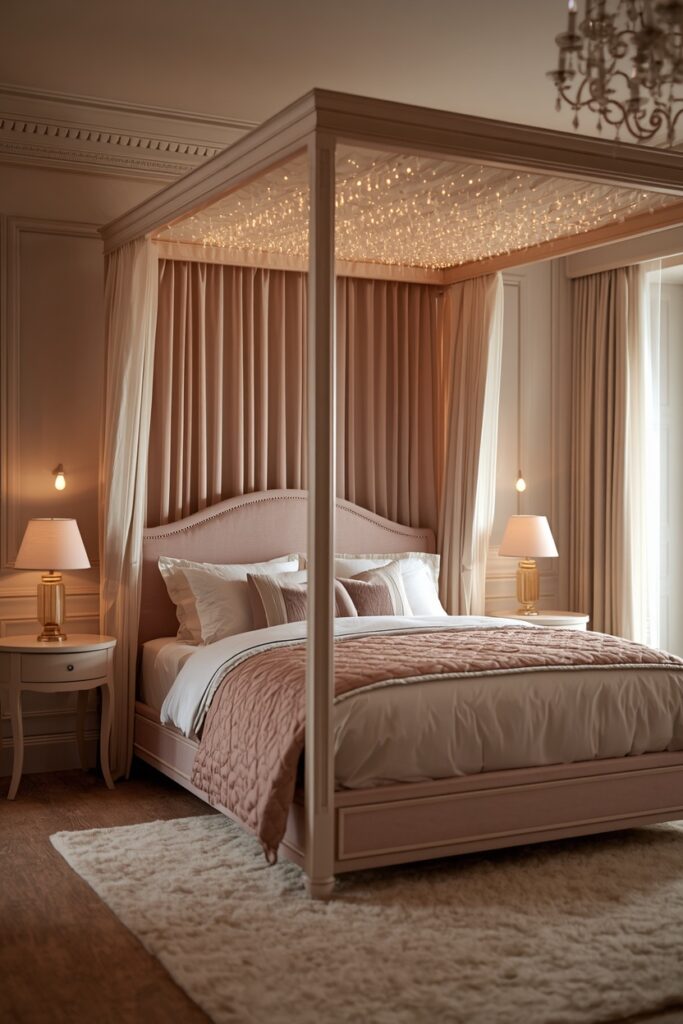
Lighting is critical: use dimmable wall sconces with fabric shades and add a small strand of warm-white micro-LED lights woven through one canopy panel for a gentle shimmer. The floor gets a deep-pile rug in a cream or soft pink, and nightstands should be petite — round tables with slender legs — to keep the proportions airy.
8. Modern Farmhouse Primary Suite
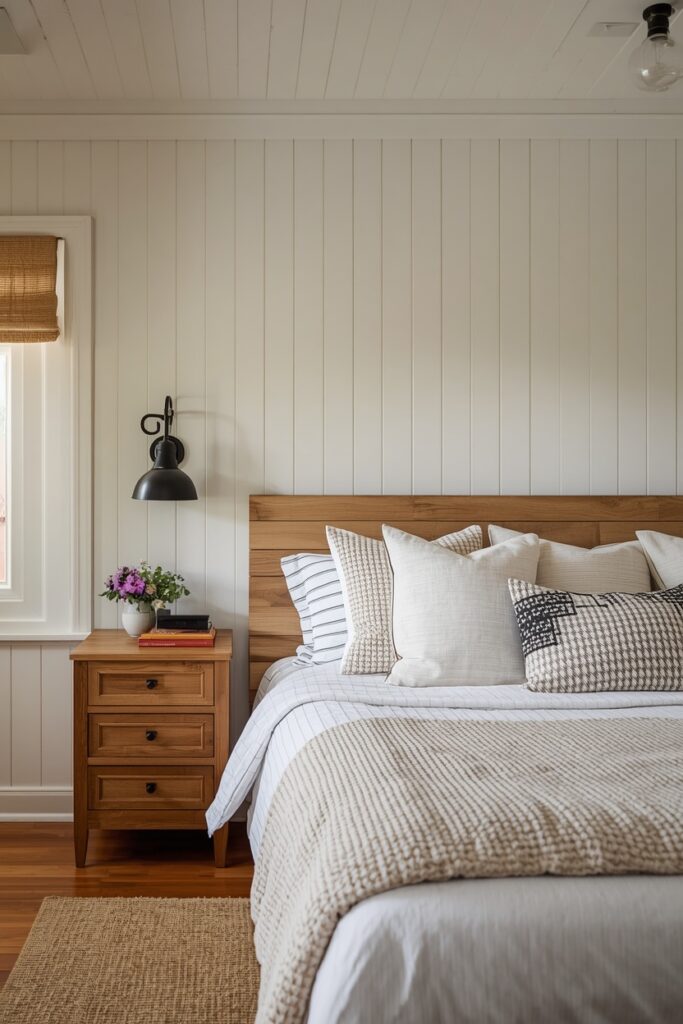
Modern farmhouse keeps the warmth of traditional farmhouse but drops the clutter and the rooster motifs. The headboard wall gets a vertical shiplap treatment in warm white, and the bed frame is a reclaimed-wood or rustic-oak piece with visible joinery. Bedding is a mix of waffle-weave cotton and a simple ticking-stripe pillow pair. On one side of the bed, place a vintage-look nightstand with iron hardware; on the other, a slim modern table in a matching wood tone. A large woven pendant light overhead replaces the typical fan-and-light combo, and a pair of iron-toned wall sconces handles bedside reading light.
The rug is a large natural-fibre weave — jute or seagrass — and the window treatment is a simple Roman shade in a textured linen. Keep surfaces sparse: one plant, one ceramic vase, one stack of books.
9. Luxe Minimalist Suite in Taupe and Cream
This suite proves that minimal does not mean cold — it just means every piece has to earn its place. Walls are a warm taupe with a slight purple undertone, and the bed frame is a low-profile upholstered platform in heavy cream linen. The headboard extends the full width of the wall and rises about 120 cm for visual scale. Bedding is a single-tone cream duvet with a cashmere throw in a tone that sits between the wall and bed colour.
Nightstands are floating marble-top shelves mounted at mattress height, holding only a sculptural lamp and nothing else. The rug is a large hand-tufted wool in soft ivory.
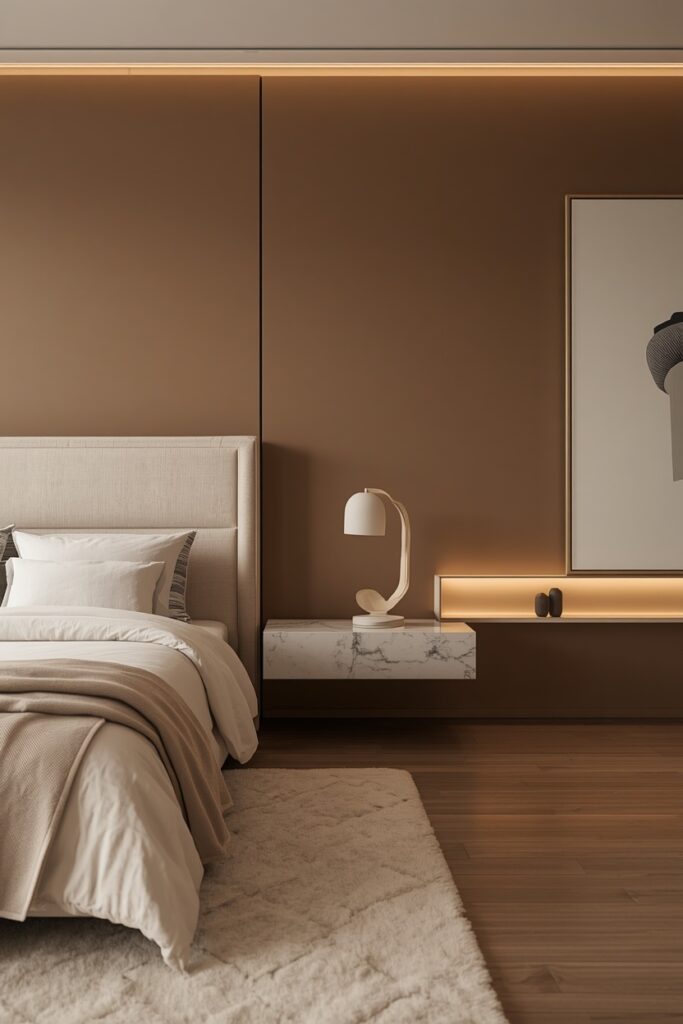
A single statement artwork — oversized, abstract, and muted — hangs centred above the headboard. What makes this scheme luxurious is restraint paired with quality: cheap materials exposed this bare will disappoint, so allocate budget to fewer but better pieces.
10. Sage Green and Natural Timber Suite
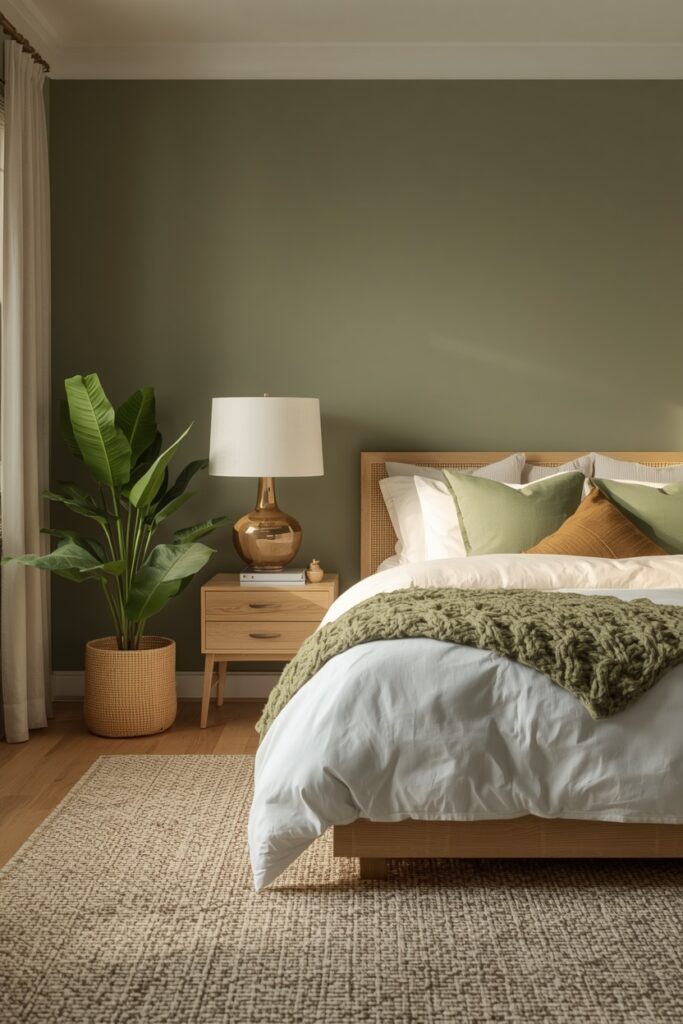
Sage green has the rare ability to shift warm or cool depending on the light, which makes it forgiving across room orientations. Paint all four walls in a mid-tone sage and bring in natural timber — ash, maple, or pale oak — for the bed frame, nightstands, and a simple bench at the foot. Bedding is white with sage accent pillows and a mossy green throw in a chunky knit. A tall potted plant — a bird of paradise or rubber tree — anchors the corner and echoes the wall colour with living material. The rug should be a flat-weave in cream and soft green, and the window treatment is a woven wood blind that filters rather than blocks light. Overhead lighting is a linen drum shade in ivory, and each bedside gets a ceramic lamp with a mossy glaze. This room breathes — it reads restful without drama, which is exactly what a primary retreat should do.
11. Coastal Luxury Suite With Textural Whites
Coastal luxury steps away from the blue-and-white cliché and builds the beach reference through texture alone. Every surface is white or off-white, but each is a different material: a slipcovered linen headboard, a waffle-cotton duvet, a chunky cable-knit throw, a woven rattan nightstand, a sisal rug, and sheer cotton curtains. The visual interest comes from the interplay of rough and smooth, matte and sheen, open weave and tight knit. One piece breaks the white: a driftwood or bleached-teak bench at the foot of the bed, or a pair of woven seagrass baskets flanking the dresser. Lighting is a large capiz-shell or white beaded chandelier centred over the bed.
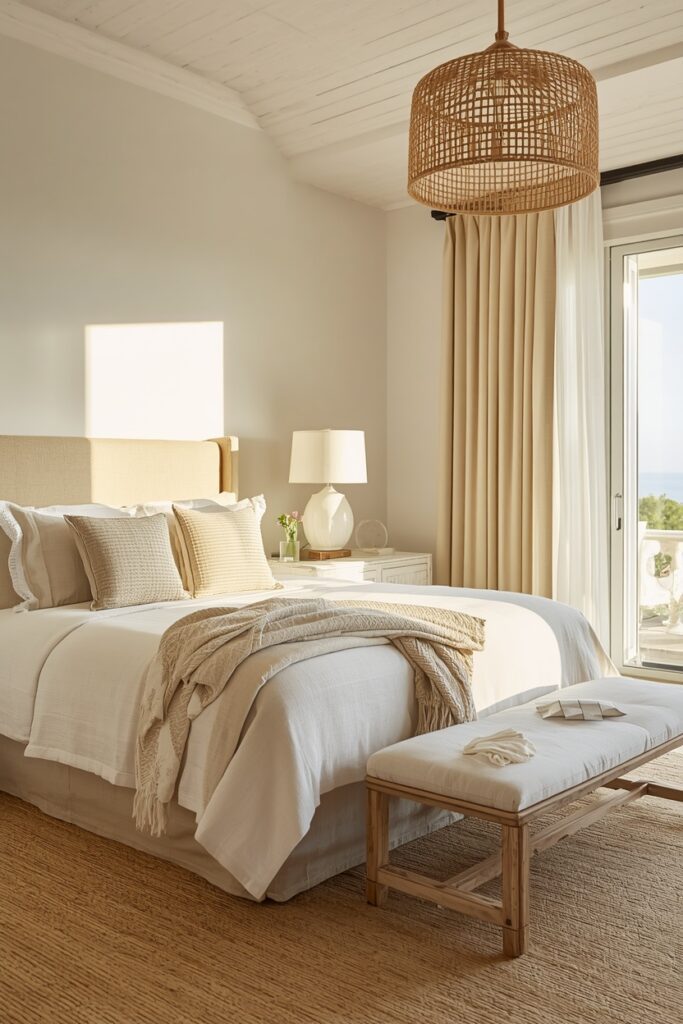
The walls stay in the warmest possible white — almost a pale sand — to avoid the clinical look that blue-white paint creates in strong sunlight. This scheme demands regular laundering because every mark shows immediately.
12. Bold Master Bedroom Decor in Black and Tan
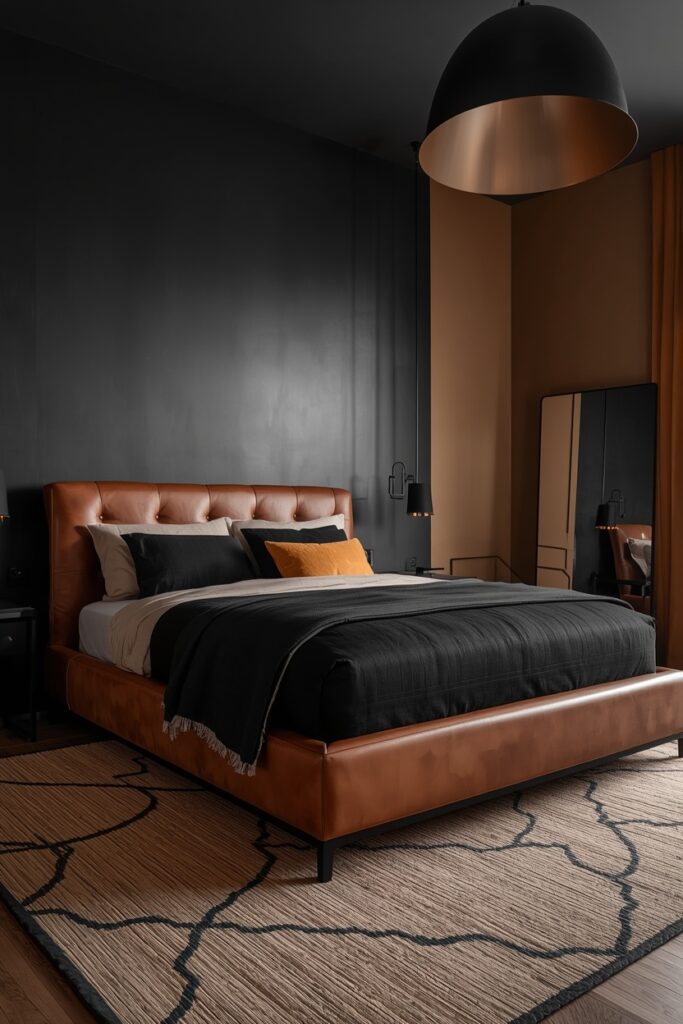
Black and tan is a high-contrast palette that delivers modern drama without relying on colour. The focal wall behind the bed goes in matte black, and the other three walls stay in a warm tan or camel. The bed frame is upholstered in a tan or cognac leather (genuine or high-quality vegan), and bedding is a mix of black and cream with a tan woven throw. A pair of oversized black pendant lights hang on either side of the bed instead of sconces, providing a sculptural statement. Nightstands are black metal with open shelving. The rug is a large flatweave in a graphic black-and-cream pattern — stripes, checks, or abstract geometric.
A tall black-framed rectangular mirror leans against the tan wall opposite the bed. This palette commands attention, but the tan tones keep it from tipping into stark austerity. Balance the black carefully — it should cover no more than about 30 percent of the visual plane.
13. Traditional Suite With Upholstered Walls
Upholstered walls — fabric stretched over batting and mounted on panels — add a level of tactile luxury and sound dampening that paint cannot match. For a primary suite, choose a heavy linen or wool-blend in a muted neutral: warm greige, soft stone, or pale taupe. The bed should be a traditionally styled piece with a tall padded headboard that blends into the wall treatment, creating one continuous visual surface. Bedding stays in tonal harmony — cream, ivory, and the lightest shade of the wall colour — with a silk or sateen coverlet for sheen.
Nightstands are classic wooden tables with curved legs, holding porcelain lamps with pleated shades. Install picture lighting above a pair of framed prints or paintings, and add a small console table with a three-panel mirror for a vanity station.
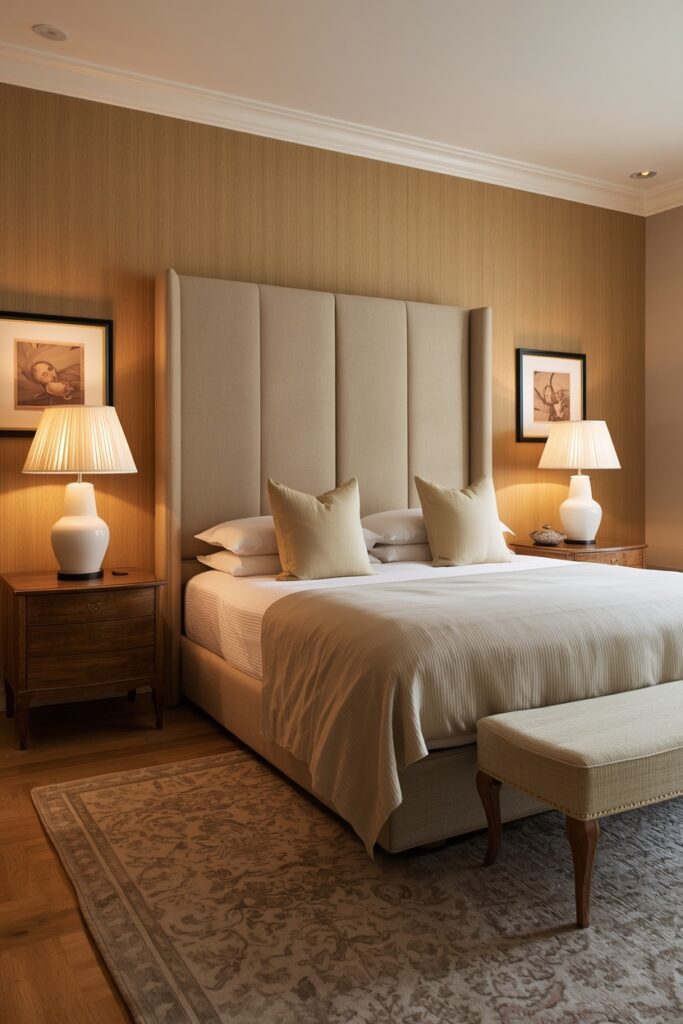
The carpet or rug should be deep pile in a complementary tone. Expect a higher installation cost and some difficulty hanging art — pre-plan hook locations before the panels go up.
14. Desert Modern Primary Suite
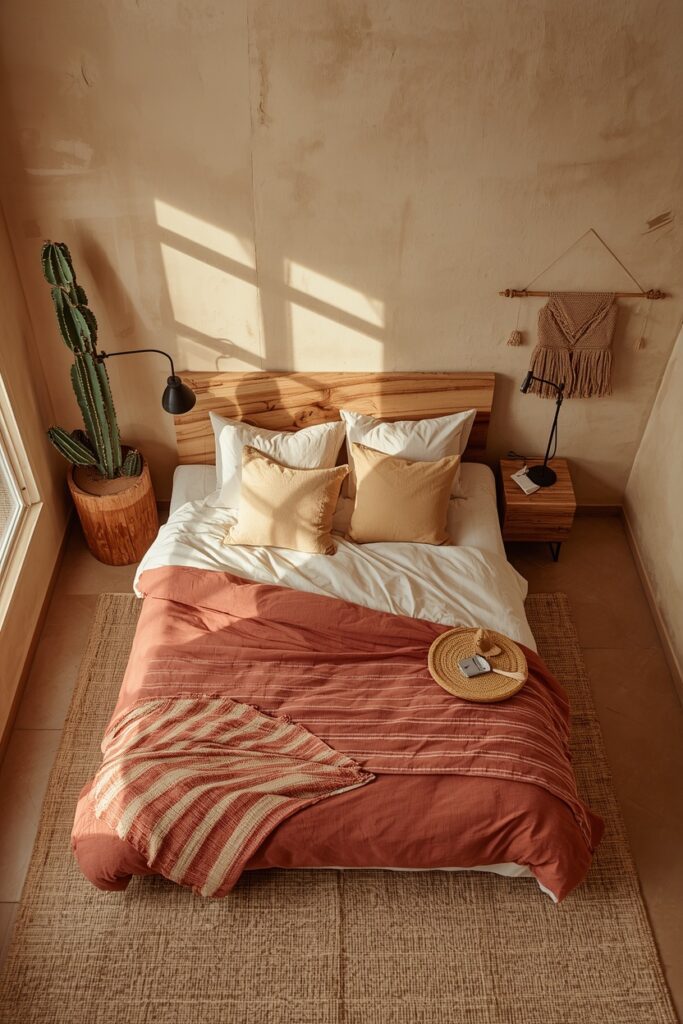
Desert modern borrows its palette from sun-baked landscapes: dusty pinks, warm sands, burnt sienna, and the deep green of desert succulents. Walls go in a pale sand or warm plaster tone, and the bed frame is a chunky wooden piece — either raw-edged live-edge timber or a thick reclaimed-wood headboard. Bedding mixes a terracotta linen duvet with cream sheets and a woven striped throw in peach and rust. A tall cactus or cluster of succulents in a terracotta planter anchors one corner, and a black iron floor lamp provides the angular contrast the room needs. Nightstands should be simple — a stump table or a cylindrical concrete piece — and the rug is a vintage-look flatweave in faded pinks and browns. Hang a single large woven wall hanging or a framed desert landscape photograph above the bed. The charm of this style sits in its imperfection — hand-shaped surfaces, irregular weaves, and raw materials read better than anything polished.
15. Masculine Suite With Dark Leather and Wood
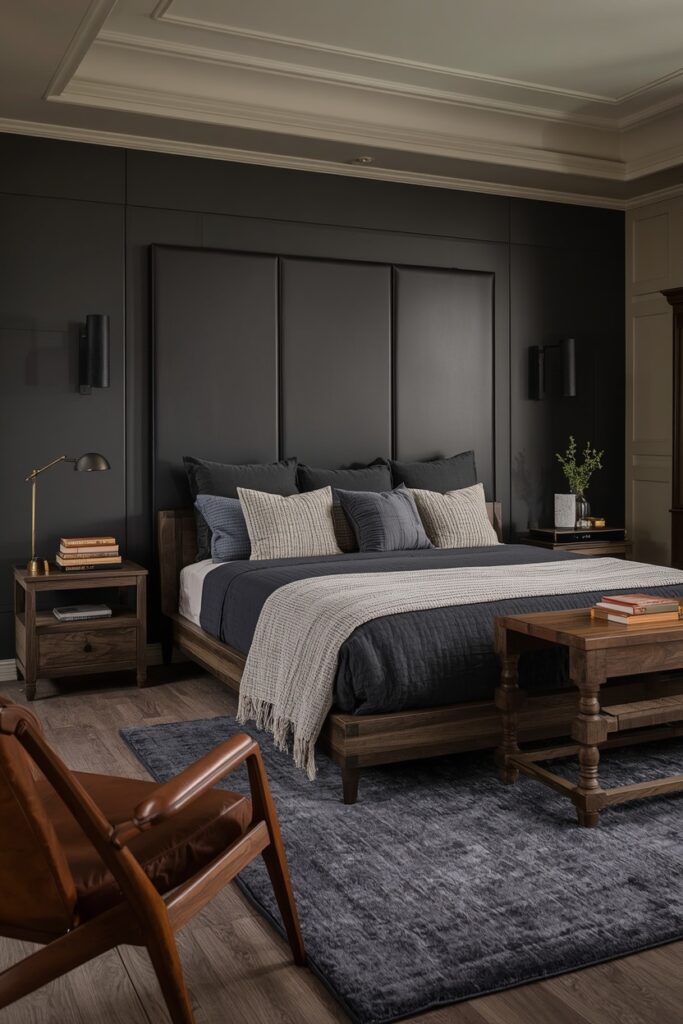
Dark leather and heavy timber give a primary bedroom a library-like gravity without requiring a shelf of first editions. The headboard is a wide leather panel — full-grain in dark brown or cognac — mounted flat against the wall and flanked by wall sconces in matte black or oil-rubbed bronze. The bed frame is a dark-stained oak or walnut platform, kept low. Bedding goes in charcoal, slate, and ivory — no patterns, just solid tones with textural variety (a flannel sheet, a cotton percale case, a wool throw). Nightstands should be solid: square wooden pieces with one drawer and an open shelf below.
A leather-and-wood accent chair in the corner paired with a brass-stem reading lamp completes the zone. The rug is a deep pile in a solid charcoal or heathered dark brown. Avoid going too dark on the walls — keep them in a medium warm gray or greige so the furniture creates the darkness, not the architecture.
16. Transitional Suite With Soft Blue Accents
Transitional style bridges traditional detail with modern restraint, and soft blue provides the colour accent without competing with the furniture. Walls stay in a warm off-white or pale greige, and the bed frame is an upholstered style with a clean, gently curved headboard in a soft blue performance fabric. Bedding layers white, ivory, and one blue patterned pillow pair — keep the blue accent to roughly 20 percent of the visual surface. Nightstands are classic wood tables with tapered legs and a single drawer, painted in a warm medium brown. A pair of white ceramic gourd lamps with linen shades anchor the bedside.
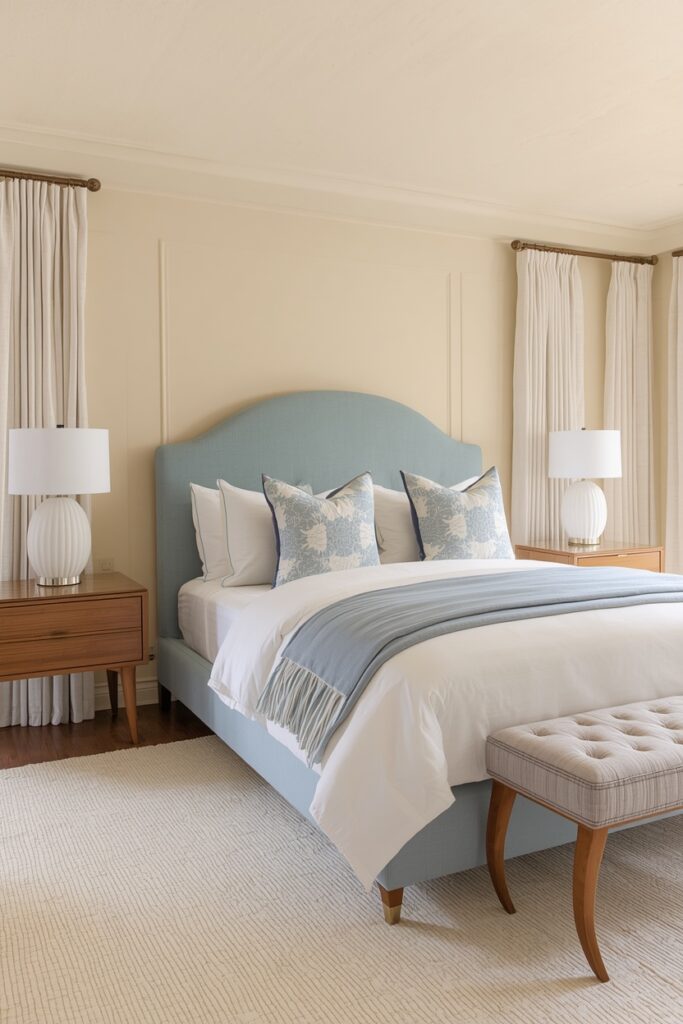
The rug is an oversized neutral — a hand-knotted wool in ivory with a subtle border pattern. Curtains are full-length panels in a heavier linen, pinch-pleat heading, in a colour that matches the lightest element in the room. This is a safe, polished scheme that suits resale-minded homeowners without sacrificing character.
17. Jewel-Toned Velvet Primary Retreat
Velvet absorbs light in a way that no other fabric can, and in a jewel tone — emerald, sapphire, amethyst — it turns a primary bedroom into an enveloping sanctuary. Start with a full wall of rich emerald green paint behind the bed, then anchor it with a channel-tufted velvet headboard in a complementary jewel shade or the same green. Bedding alternates between a cream sateen base and a deep-toned velvet coverlet folded at the two-thirds mark.
Gold is the metallic here: a gold-frame round mirror, gold-trimmed ceiling pendant, and gold drawer handles on a lacquered black dresser. Nightstands should be dark — black lacquer or deep-stained mahogany — to maintain the drama. A plush rug in ivory or champagne gives the feet relief from all the visual weight above.
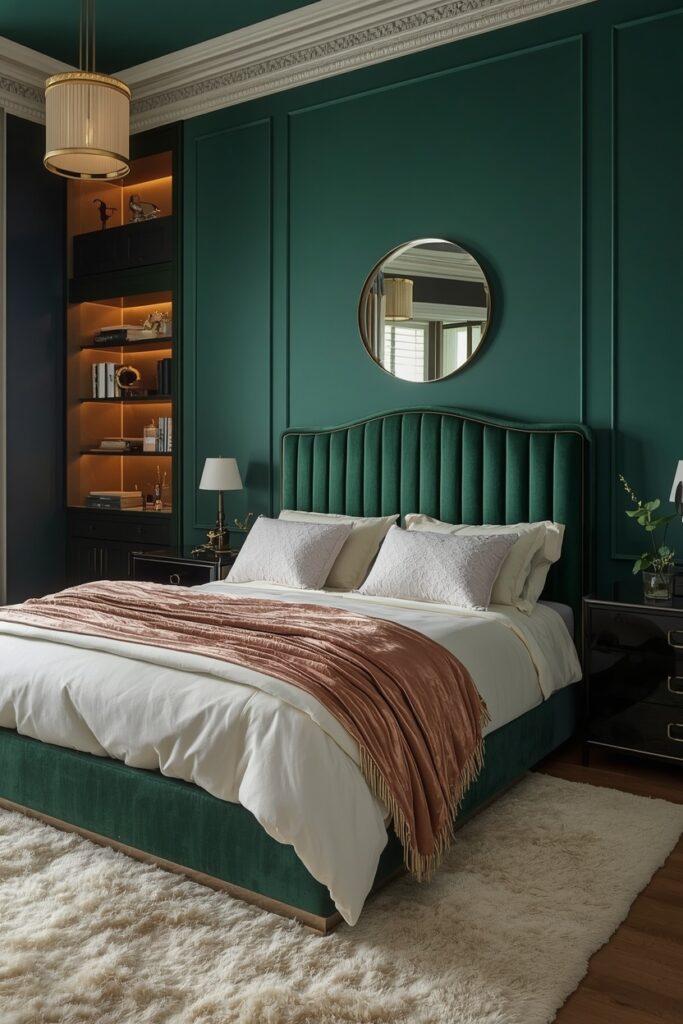
One caveat: velvet shows crush marks and watermarks readily, so treat upholstery with a fabric protectant at installation and blot spills immediately.
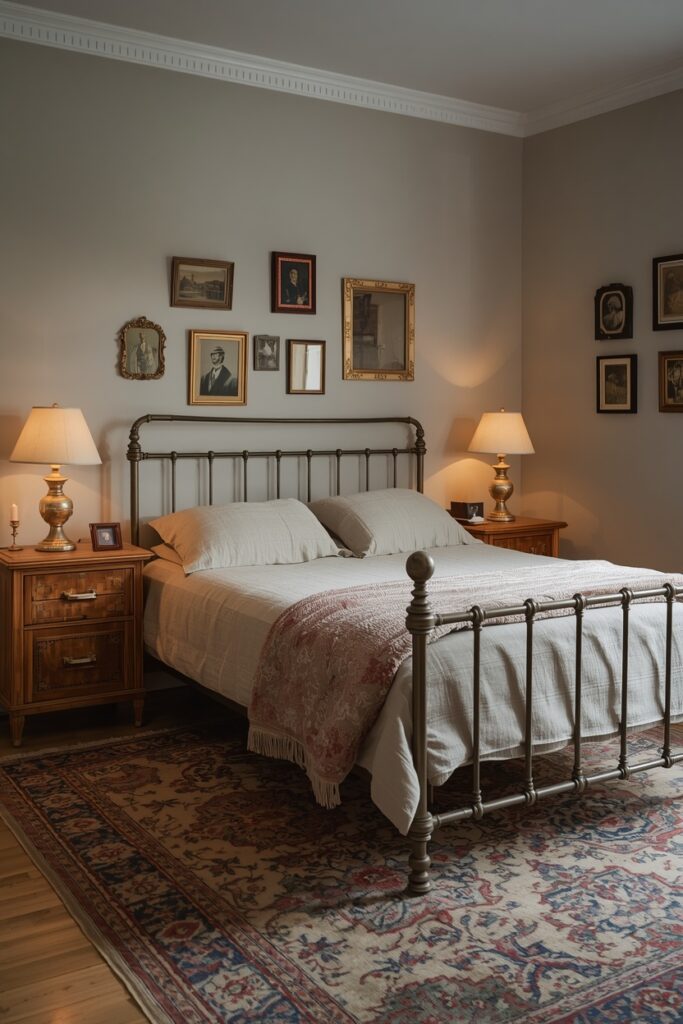
18. Collected-Look Master Bedroom Ideas With Vintage Finds
A collected room takes time to build — and that is its charm. The bed frame is a secondhand find: an antique iron frame, a salvaged wooden headboard, or a vintage brass bed polished back to life. Nightstands are deliberately mismatched — one might be a painted wooden stool, the other a small vintage suitcase stacked on a metal frame. Bedding is layered and imperfect: a linen duvet in a soft, slightly faded colour, mixed-era pillowcases, and a vintage quilt folded at the foot. A pair of salvaged sconces or rewired vintage table lamps handle the bedside light — check the wiring and have it certified before daily use. The walls display a loose salon-style gallery of thrifted frames, small mirrors, and textile swatches. A worn Persian or kilim rug on the floor ties the palette together. This room rewards patience over budget — the best pieces appear one at a time over months, not in a single shopping trip.
Where I’d Start if I Only Did Three Things
If I only did three things, I would start by defining the sleeping zone with a headboard that extends beyond the bed frame — either upholstered or a wall treatment — so the bed reads as architecture, not just furniture. Second, I would carve out even a small secondary zone: a chair, a side table, and a lamp in one corner turns a bedroom into a suite. Third, I would install dimmable layered lighting — two bedside fixtures plus one ambient source overhead — because no single light setting suits both 7 AM and 11 PM in a room you spend this much time in.
Frequently Asked Questions
What master bedroom ideas work in a room under 15 square metres?
Prioritise a low-profile bed frame and wall-mounted nightstands to keep floor space visible. Skip the accent chair and use a slim bench at the foot instead. Light, warm wall colours expand the room optically, and one oversized artwork creates a focal point without taking floor area.
How do I create a separate reading zone in my primary suite?
Position a compact armchair or upholstered stool near the strongest light source — usually a window — and pair it with a slim floor lamp and a small side table. Even a 90 × 90 cm footprint is enough. The key is separating it visually from the bed area with a change in rug or a slight furniture angle.
What lighting layers should a primary bedroom have?
Three layers is the standard: ambient (overhead pendant or recessed cans on a dimmer), task (adjustable bedside sconces or lamps for reading), and accent (LED strip behind a headboard, picture light above art, or a candle cluster). Wiring all three to separate switches or a smart system gives you full control over mood at every hour.
Should the primary bedroom rug match the rest of the house?
It does not need to match, but it should not clash. If your common areas use warm tones, continue warm tones in the bedroom rug and shift the pattern or texture. A bedroom rug can be softer and deeper pile than what you use in high-traffic zones since it bears less foot traffic.
Final Thoughts
Strong master bedroom ideas do more than look polished — they support how you actually move through the space, from waking to winding down. Pick one of these 18 designs as your anchor, adapt the dimensions to your room, and phase the build if budget requires it. A primary suite should not be the last room you renovate — it is the room you spend the most private hours in, and it deserves the same intentional planning you give to the spaces your guests see.