
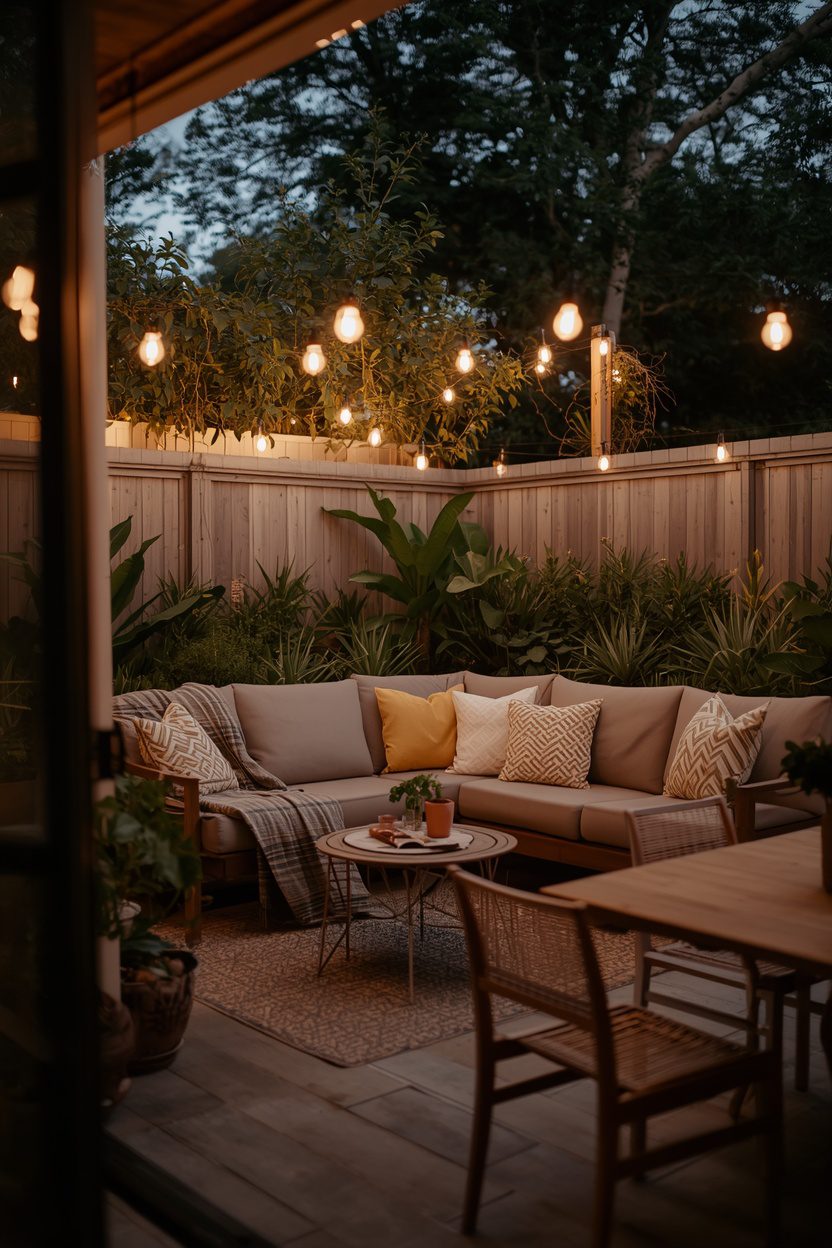
A patio without intention is just concrete with chairs on it. The difference between that and an outdoor room people actually gather in comes down to zones, materials, and lighting — the same principles that make an indoor room work, adapted for weather and sky. These 14 patio decor ideas treat the space as a genuine extension of your home rather than an afterthought you furnish with whatever survived last winter.
Each idea below specifies furniture materials rated for outdoor use, layout dimensions for common patio sizes, and the lighting that makes the space usable after sunset. I have flagged which ideas suit covered patios, uncovered patios, and which demand weather protection for the furniture to last. Pick the idea that matches your climate and patio footprint, and adapt the proportions as needed.
1. Outdoor Lounge Zone With Sectional Sofa
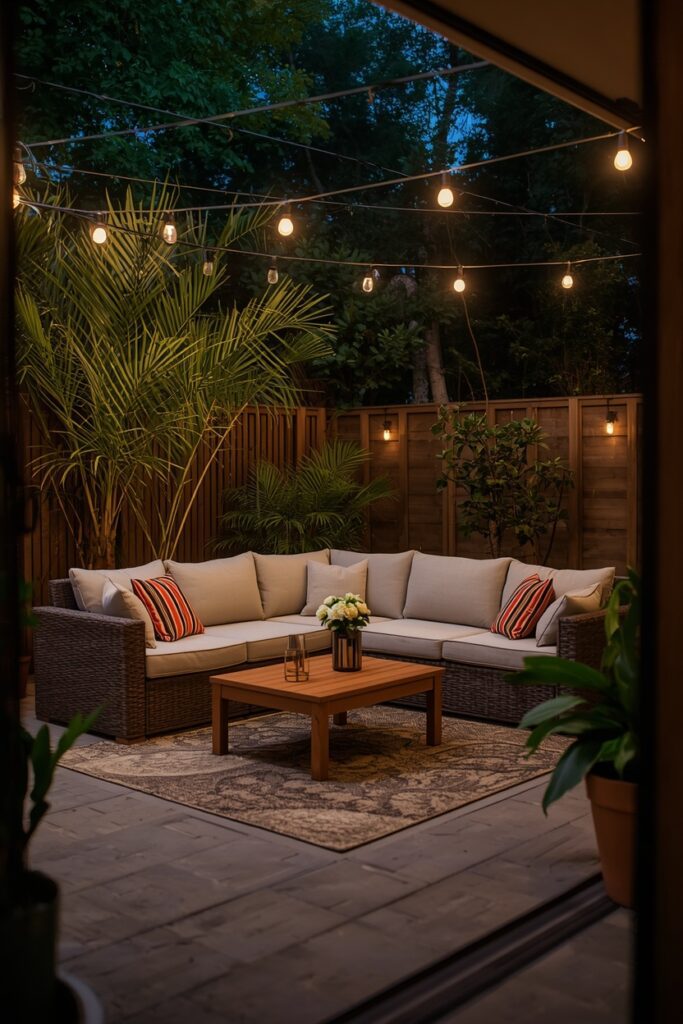
A weather-resistant sectional — L-shaped or U-shaped — creates the same conversational seating outdoors that a living room sofa provides indoors. Choose a frame in powder-coated aluminium, all-weather wicker, or teak, with cushions in Sunbrella or solution-dyed acrylic fabric that resists UV fading and moisture. Size the sectional to fit your patio with at least 90 cm of clearance around it for circulation. A low coffee table in matching material anchors the centre — teak, concrete, or powder-coated metal. An outdoor rug (polypropylene) defines the zone and softens the hardscape. String lights overhead or a pair of outdoor lanterns on the coffee table provide the evening light. This setup suits covered or partially covered patios; uncovered patios need furniture covers or indoor storage during extended wet season
2. Outdoor Dining With Teak Table and Benches
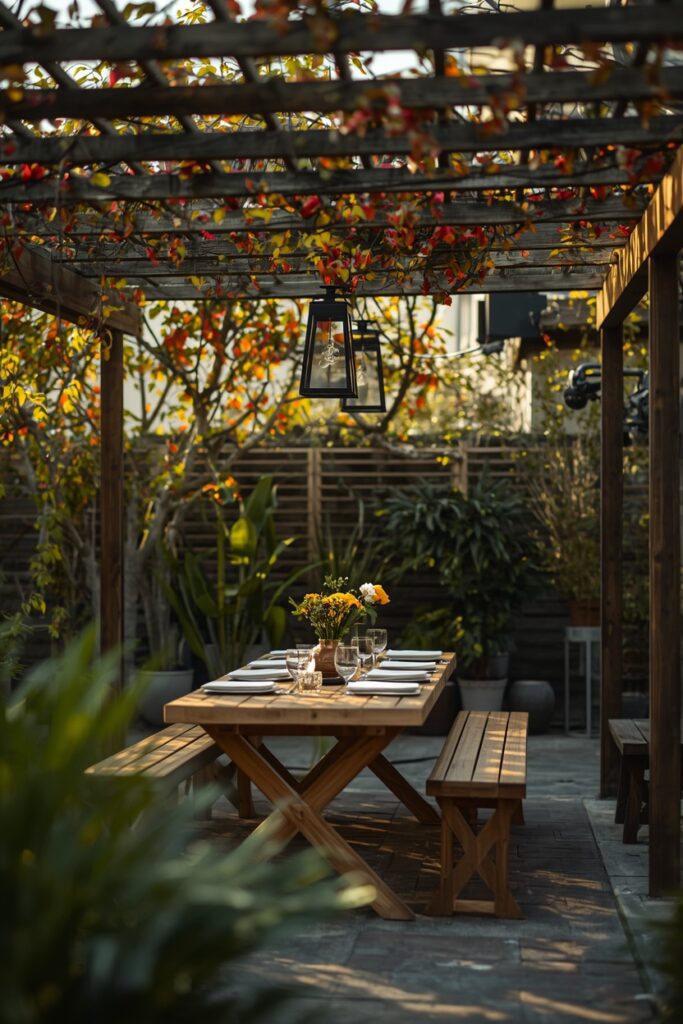
A teak dining table — 180 × 90 cm for six seats — with matching teak benches creates a patio dining zone that weathers gracefully and requires minimal maintenance. Teak’s natural oils resist moisture, rot, and insects, and the wood develops a silvery patina over time if left unsealed (or maintains its golden tone with annual teak oil application). Benches save space compared to individual chairs and seat more people per linear metre. A large outdoor pendant or a pair of lanterns hung from a pergola beam 80 cm above the table provide dining-level light.
Position the table so it benefits from late-afternoon shade — direct midday sun on a dining table makes meals uncomfortable. A teak table can stay outdoors year-round in most climates, but store or cover the cushions (if using seat pads) during wet seasons.
3. Fire Pit Gathering Zone
A fire pit — built-in stone, a portable steel bowl, or a gas-fed insert — creates a natural gathering point that extends patio use into cool evenings and cooler seasons. Position the fire pit at the centre of a circular or semi-circular seating arrangement, with chairs or a curved bench at least 120 cm from the flame edge. Choose seating that tolerates occasional spark exposure: metal-framed chairs with removable cushions are safest. Surround the fire pit area with gravel, stone pavers, or non-combustible tile rather than wood decking. A portable fire pit should sit on a heat-resistant pad to protect the surface beneath it.
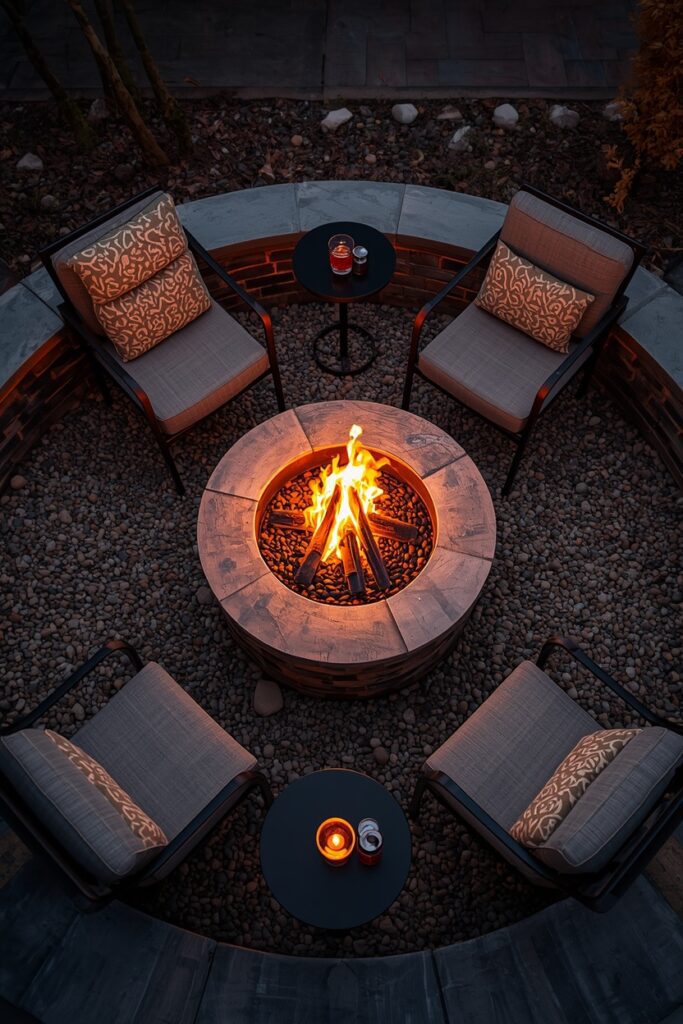
The fire pit replaces the need for a pendant or lantern — the flames provide the evening ambiance. A small side table at each seat holds drinks. One safety note: check local fire regulations before installing a permanent or gas-fed fire pit, and keep a fire extinguisher or bucket of sand accessible.
4. Patio Decor Ideas With Pergola and Climbing Plants
A pergola — freestanding or attached to the house — gives a patio architectural definition and provides a structure for climbing plants that create living shade over time. Build or install a pergola sized to cover the primary seating or dining zone, with beams spaced closely enough to cast dappled shade at midday. Train a climbing plant — jasmine, wisteria, grape vine, or bougainvillea depending on climate — up the posts and along the beams.
Within two to three growing seasons, the plant canopy provides natural shade that a fabric cover cannot replicate. Hang string lights between the beams for evening use, and mount a retractable shade cloth on one side for additional sun protection. The furniture beneath the pergola can be any weather-resistant style — the pergola frames it and creates a defined room within the larger patio.
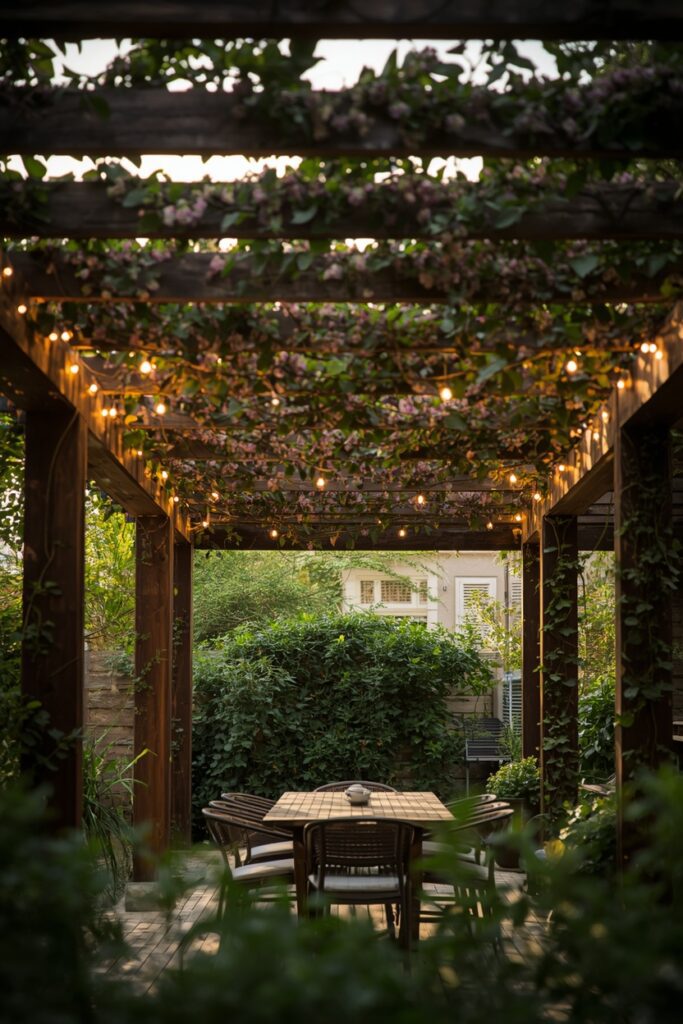
One maintenance note: climbing plants require annual pruning and occasional beam checks to ensure the growth does not damage the structure.
5. Modern Minimalist Patio With Concrete Furniture
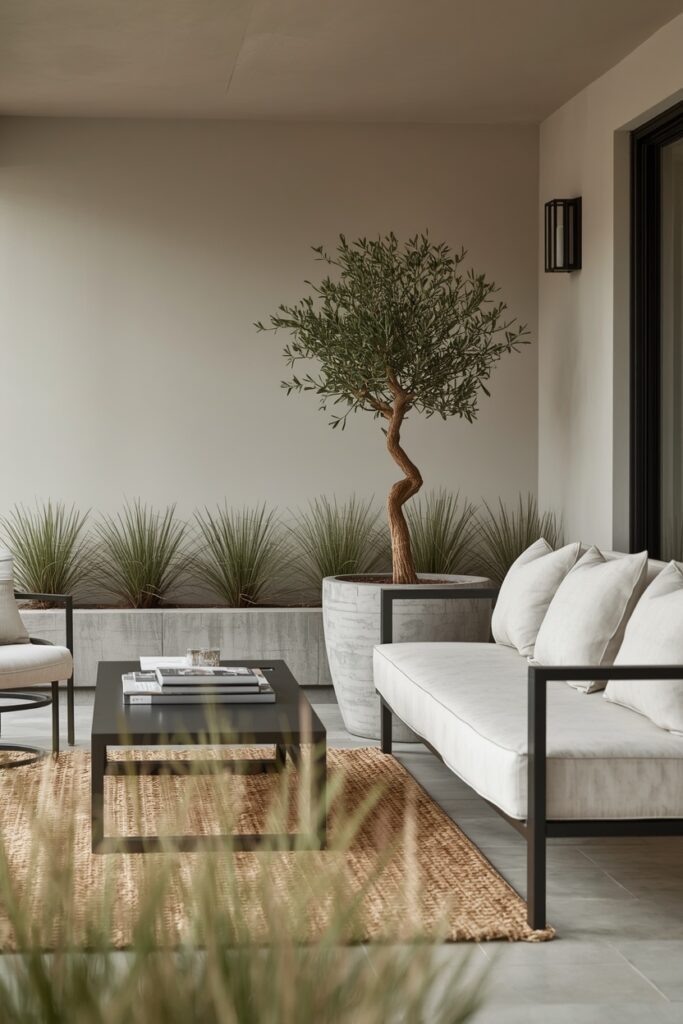
Concrete furniture — a poured or precast bench, a concrete coffee table, and a concrete planter — gives a patio a modern, sculptural quality that requires zero maintenance and stays put in wind. The raw gray surface pairs with black metal accents, white outdoor cushions, and architectural plants like agave, ornamental grasses, or a single olive tree. The palette stays neutral: gray concrete, white textiles, black metal, green plants. A slim black metal outdoor sofa frame with white Sunbrella cushions provides the comfortable seating that concrete alone does not. An outdoor rug in a natural weave defines the lounge zone. Lighting is a pair of modern outdoor sconces on the house wall or a slim floor-standing LED lantern. This setup suits urban patios, rooftop terraces, and contemporary homes where the outdoor space should extend the interior’s clean-lined aesthetic. Concrete absorbs heat in direct sun, so position seating furniture where afternoon shade is available.
6. Bohemian Patio With Layered Textiles
A bohemian patio layers pattern, texture, and colour the same way an indoor boho room does — with the critical difference that every textile must be outdoor-rated. Start with a polypropylene outdoor rug in a bold pattern (geometric, kilim-inspired, or medallion) and layer outdoor floor cushions and poufs in Sunbrella fabrics with earthy tones: terracotta, ochre, olive, and cream. A low wooden table — teak, acacia, or reclaimed wood — sits at the centre. Macramé plant hangers with trailing pothos or ivy hang from a pergola beam or ceiling hook. Lanterns in brass or black iron — LED candle versions for flame safety — cluster around the seating.
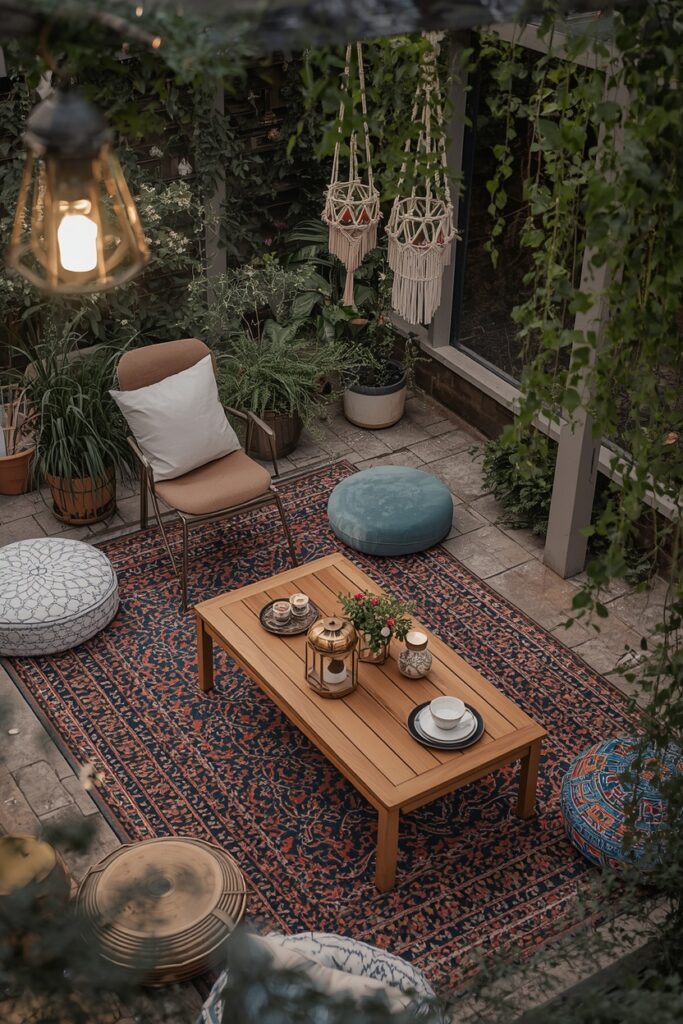
This look is portable and renter-friendly: everything moves with you. The trade-off is weather exposure — outdoor-rated textiles resist moisture and UV, but they last longest when stored or covered during extended rain periods.
7. Patio With Outdoor Kitchen Station
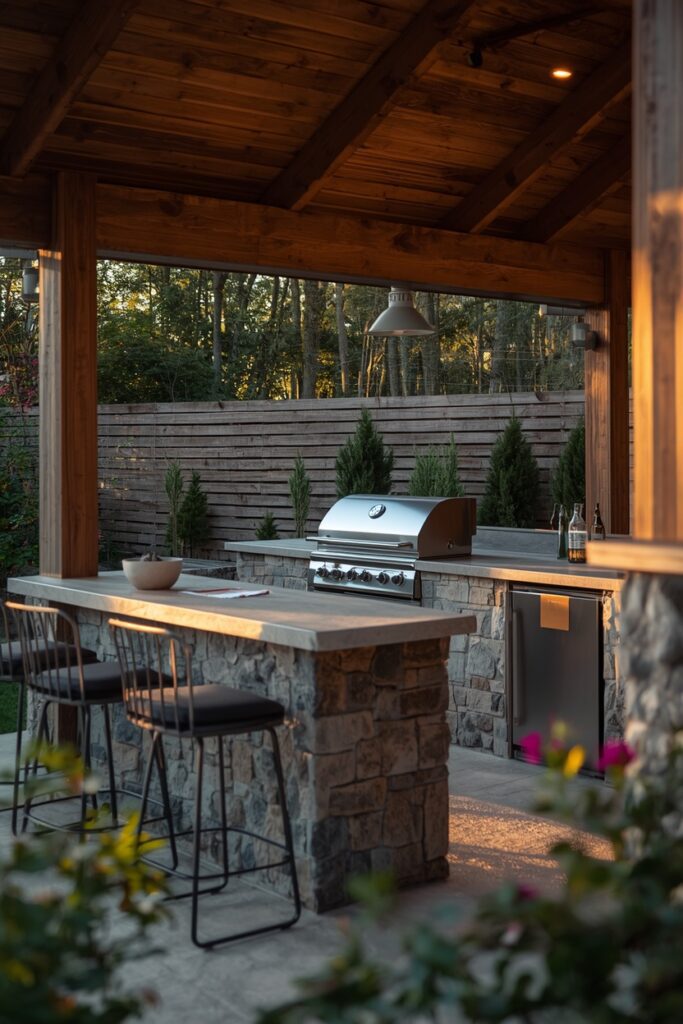
An outdoor kitchen — a built-in grill, a prep counter, and a small sink — turns the patio into a cooking and entertaining destination rather than just a seating area. The minimum setup is a grill (gas or charcoal) built into a masonry or stainless-steel island with a stone or concrete countertop, 60 cm of prep space on each side, and a lower shelf for tools and supplies. A bar-height counter on the guest-facing side with two or three stools creates a social zone where guests interact with the cook. The counter material should be weather-resistant: granite, bluestone, concrete, or porcelain slab. Plumbing for a sink requires a water supply and drain line, which adds to the installation scope but eliminates trips to the indoor kitchen.
A built-in undercounter fridge for beverages completes the station. This is a renovation-level project, but the return is a patio that hosts dinners without the cook disappearing indoors for every course.
8. Shade Sail Patio for Sun Protection
A shade sail — a tensioned fabric canopy stretched between mounting points — provides sun protection over a patio without the cost and permanence of a pergola or roof structure. Mount the sail using stainless-steel eye bolts on the house wall and freestanding steel posts set in concrete at the outer corners. A triangular or rectangular sail in a UV-resistant HDPE fabric blocks 90–95 percent of UV while allowing airflow.
Neutral colours (sand, charcoal, white) look best and block the most heat; lighter colours transmit more light beneath. Position the sail at a slight angle so rainwater runs off rather than pooling in the centre — a 15–20 degree pitch is standard. Beneath the sail, arrange weather-resistant furniture for the primary use (dining or lounging).
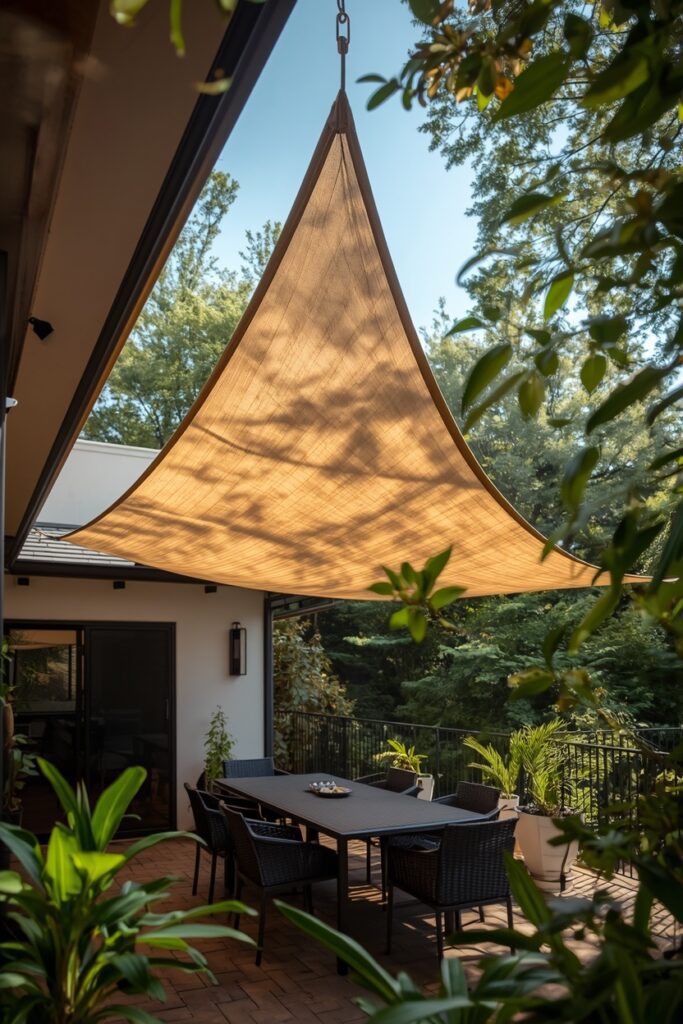
Remove the sail during storm season or in climates with heavy snow loads, as wind and weight can tear the fabric and stress the mounting points.
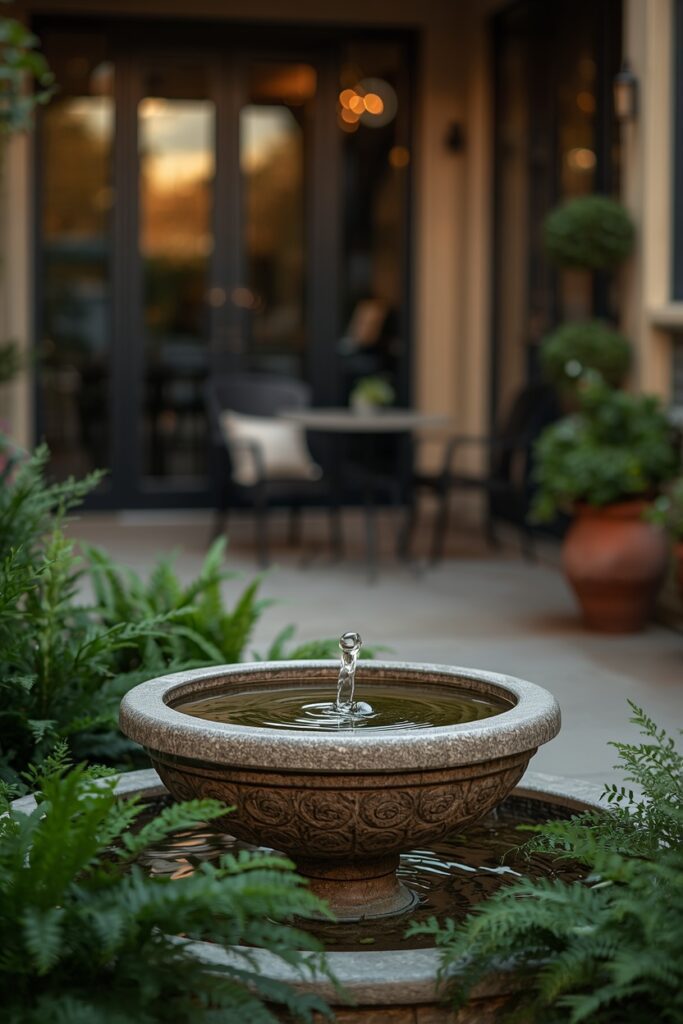
9. Patio Decor Ideas With a Water Feature
A water feature — a small fountain, a wall-mounted spout, or a self-contained basin — adds ambient sound to a patio that masks street noise and creates a calming backdrop for outdoor relaxation. Choose a self-contained recirculating fountain in stone, concrete, or ceramic that plugs into an outdoor power outlet — no plumbing connection needed. Position it near the seating zone but not so close that splash reaches the furniture. The sound should be audible from the seating area without drowning out conversation. A simple bowl fountain with a gentle bubble or a wall-mounted lion-head spout into a basin are classic options. Surround the feature with plants — ferns, hostas, or ornamental grasses — to create a garden-like micro-environment. One maintenance note: clean the pump filter monthly and top up the water regularly in hot weather to prevent the pump from running dry.
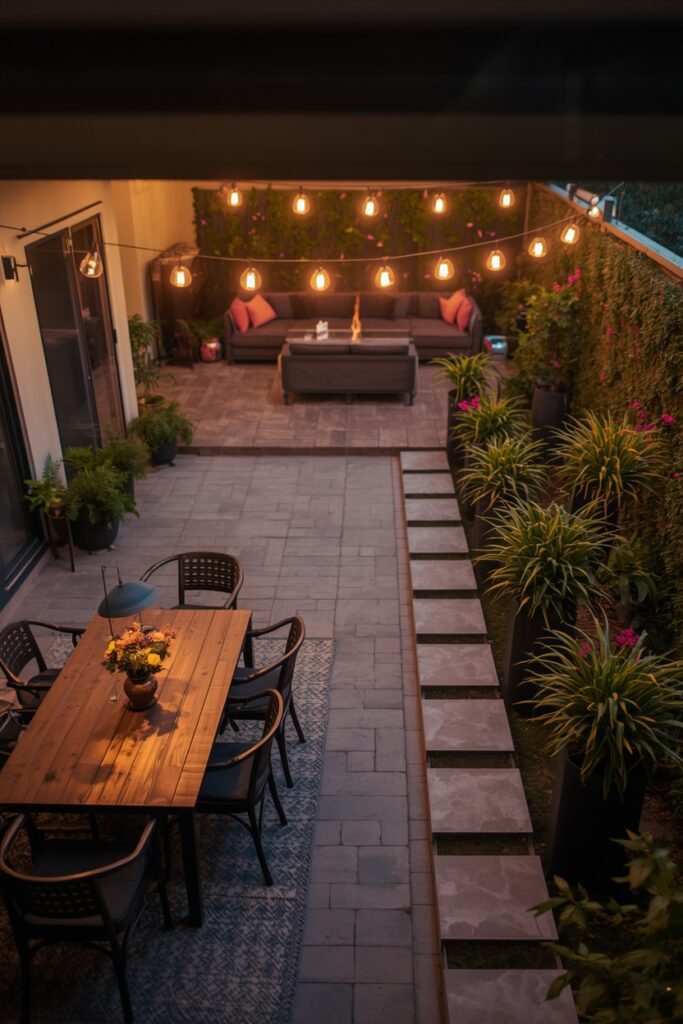
10. Multi-Zone Patio With Dining and Lounge Areas
A larger patio (20 square metres or more) benefits from two distinct zones — a dining area and a lounge area — separated visually by a rug change, a planter row, or a slight level difference. Position the dining table closer to the kitchen door for easy serving, and the lounge zone further out toward the garden for relaxation. Each zone gets its own lighting: a pendant or lantern above the dining table, and string lights or a floor lamp at the lounge. A row of tall planters with ornamental grasses or a low hedge between the zones creates a soft boundary without blocking sightlines.
The furniture materials should share a family — both in teak, both in powder-coated aluminium, or a mix that shares one colour — so the patio reads as one designed space with two functions rather than two unrelated setups pushed together.
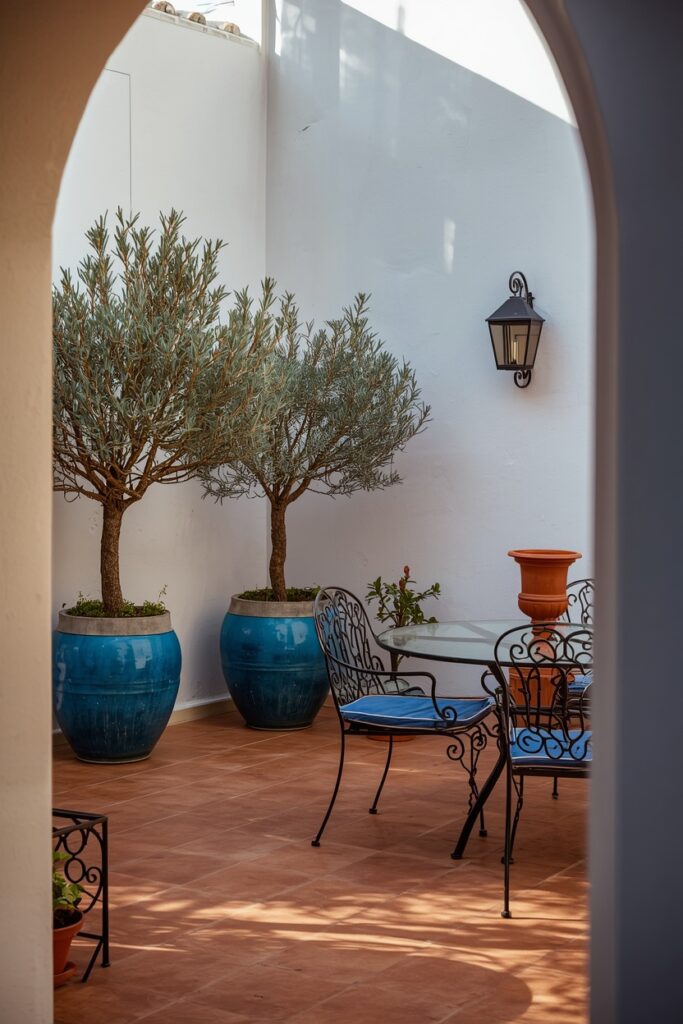
11. Mediterranean Patio With Terracotta and Blue
A Mediterranean patio draws its palette from the coast — warm terracotta, whitewashed surfaces, and accents of deep blue — and its texture from handmade materials. Use terracotta tiles or pavers on the floor, a whitewashed or lime-washed wall as the backdrop, and blue ceramic pots holding olive trees, lavender, and rosemary. Furniture is simple: a wrought-iron or painted-metal dining set with tiled or ceramic tabletop, and wooden folding chairs with blue cushions.
A large terracotta urn in one corner serves as both a planter and a sculptural anchor. Lighting is a wrought-iron lantern hung from a bracket or a cluster of pillar candles in glass hurricanes. This style suits warm, dry climates where the terracotta stays warm underfoot and the plants thrive.
In cooler or wetter climates, seal the terracotta pavers for frost resistance and choose lavender varieties rated for your hardiness zone.
12. Compact Patio With Bistro Set and Vertical Garden
A small patio — 3 × 3 metres or less — reaches its full potential with a bistro set (round table, two folding chairs) and a vertical garden on one wall. The bistro set takes minimal floor space and folds flat when stored. The vertical garden — wall-mounted felt pockets, stacked planters, or a trellis with climbing plants — turns the wall into a living feature that adds colour and privacy without consuming floor area. An outdoor rug beneath the bistro set defines the zone. Lighting is a single string of warm-white LED bulbs strung along the wall edge or the fence line.
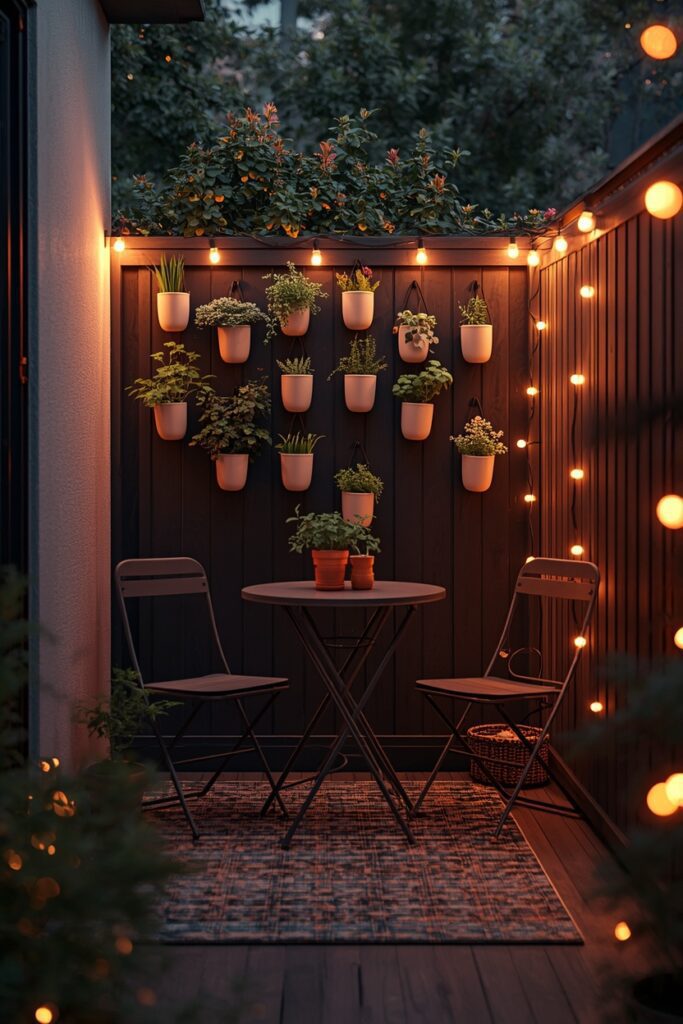
Keep the palette to three colours: the green of the plants, one neutral (cream, sand, or gray), and one accent (the chair colour or a pot colour). This setup suits urban patios, courtyard gardens, and ground-floor apartment outdoor spaces where every centimetre matters.
13. Patio With Daybed for Outdoor Lounging
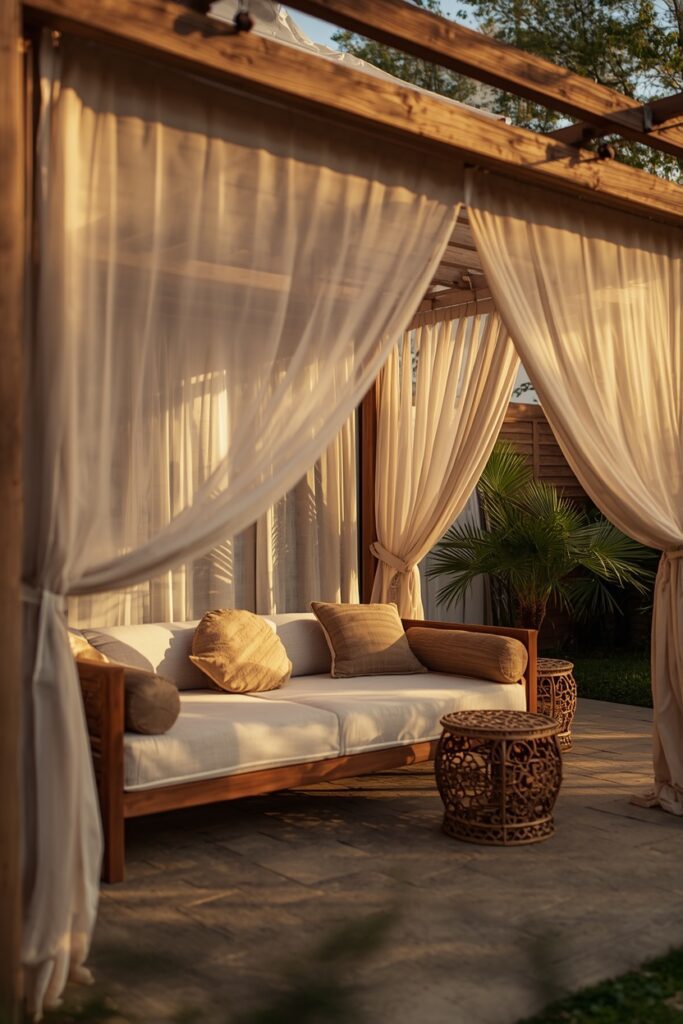
An outdoor daybed — a wide, low platform with a mattress-style cushion — transforms a patio into a resort-style lounge. Choose a frame in teak, powder-coated aluminium, or all-weather wicker, with a cushion at least 180 × 90 cm (large enough to lie on fully). Position it in the shadiest part of the patio, ideally under a pergola, shade sail, or large umbrella. Dress it with outdoor bolster pillows and a lightweight throw. A canopy or sheer curtain on a rod above the daybed adds privacy and wind protection. A low side table holds a drink and a book. This setup suits patios used primarily for relaxation rather than dining — the daybed replaces the sofa as the primary seating. The cushion must be outdoor-rated fabric with quick-dry foam fill; bring it inside or use a waterproof cover during extended rain periods.
14. Year-Round Patio Decor Ideas With Seasonal Layers
A patio designed for year-round use has a permanent furniture base and swappable seasonal layers — the same strategy the balcony article recommended, scaled up for a larger space. The permanent base is weather-proof furniture — aluminium-frame or all-weather wicker — that stays out in all conditions. In spring and summer, add bright cushion covers, flowering potted plants, and a lightweight outdoor rug. In autumn, swap to warm-toned throws, muted cushion covers, and potted chrysanthemums or ornamental cabbage. In winter, layer sheepskins over the seats, add an outdoor heater or fire pit, switch to evergreen plants (boxwood, rosemary, dwarf spruce), and use pillar candles in glass hurricanes for warmth.
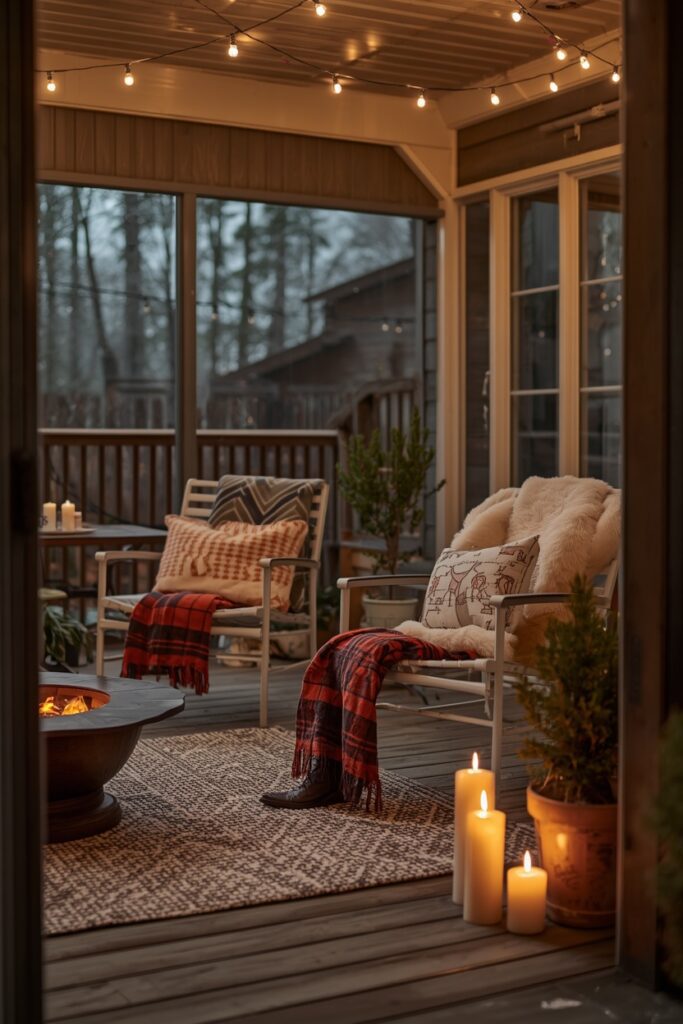
String lights stay year-round — warm white LEDs on a timer provide consistent ambient light in every season. The seasonal swaps are low-cost (cushion covers, throws, seasonal plants) and keep the patio feeling fresh and relevant all year.
Where I’d Start if I Only Did Three Things
If I only did three things, I would start by defining one clear zone — either dining or lounging, not both scattered loosely — because a patio with a focused purpose reads as a room while a patio with scattered chairs reads as storage. Second, I would install string lights or a lantern, because outdoor space without evening light is outdoor space that gets abandoned after 7 PM. Third, I would add one large potted plant or a planter grouping, because greenery is the element that bridges the indoors and outdoors and makes the patio look alive rather than furnished.
Frequently Asked Questions
What patio decor ideas work for renters?
Portable furniture (folding chairs, stackable stools, rolling carts), outdoor rugs, and string lights on adhesive hooks all install without permanent alterations. Potted plants in lightweight containers are easy to move. Avoid built-in features, drilled mounting points, and heavy permanent planters. Everything should pack up when you move.
What patio furniture material lasts longest outdoors?
Teak, powder-coated aluminium, and marine-grade stainless steel are the most durable outdoor furniture materials. Teak weathers naturally and lasts decades. Aluminium resists rust entirely. All-weather wicker (synthetic resin over aluminium frame) is the next-best option but degrades after 8–10 years in harsh sun. Avoid untreated iron and natural wicker.
How do I protect patio furniture in winter?
Use fitted furniture covers rated for outdoor use — they should be breathable to prevent mould buildup underneath. Store cushions and textiles indoors or in a waterproof deck box. Teak and aluminium can stay uncovered year-round. Bring lighter items (poufs, lanterns, rugs) indoors during heavy weather. Clean and dry everything before covering or storing.
How do I light a patio without wiring?
Solar-powered string lights, battery-operated LED lanterns, and rechargeable LED candles provide ambient light without electrical wiring. For brighter task light, a solar-powered spotlight aimed at the dining or cooking zone pairs naturally. Plug-in string lights with an outdoor extension cord from an interior outlet are the simplest option for patios near the house.
Final Thoughts
Strong patio decor ideas treat the outdoor space as a designed room — with zones, a coordinated palette, weather-appropriate materials, and lighting that makes it usable after sunset. Define one primary zone (dining or lounging), invest in furniture that tolerates your climate, and add the lights and plants that turn concrete into a living space. A patio designed with the same care you give indoor rooms adds genuine square metres to your home and a daily quality-of-life return that few interior renovations can match.