
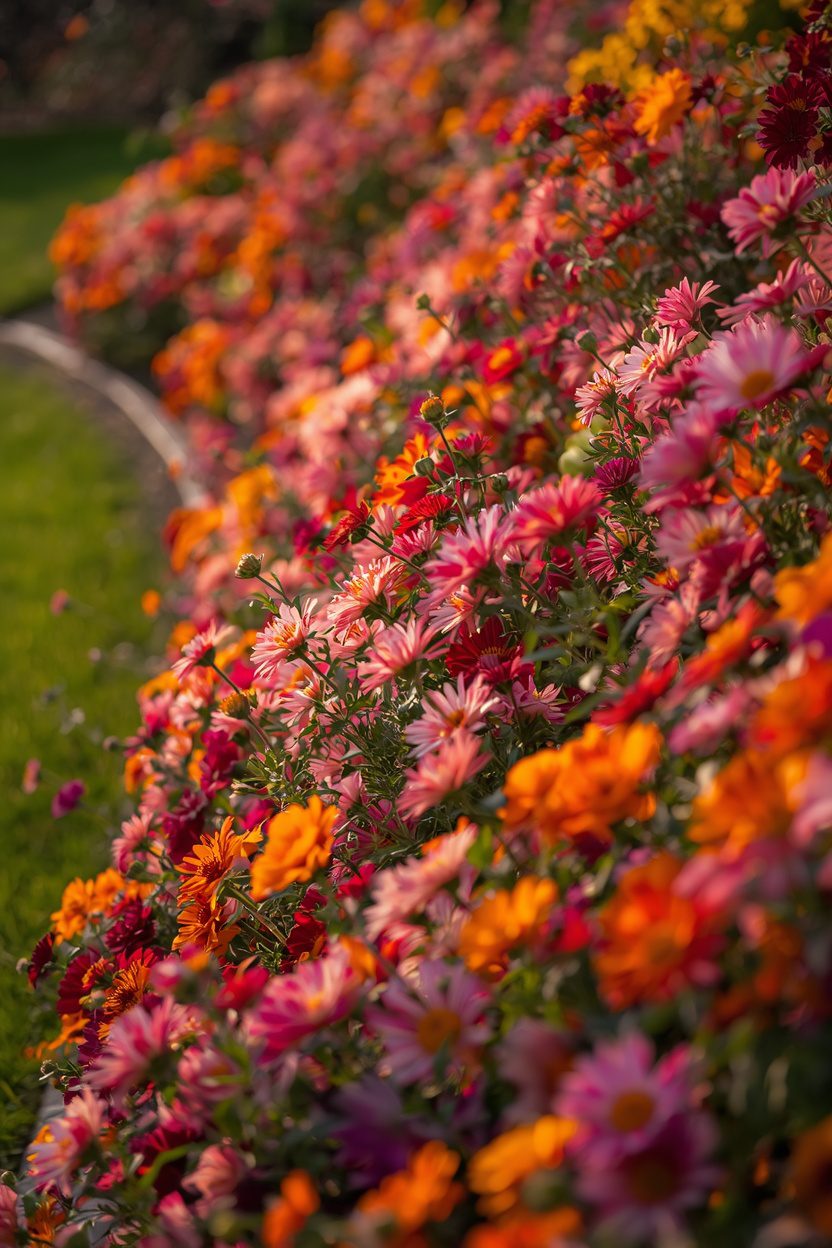
A flower garden that steals the show is not just a collection of pretty plants — it is a designed composition where colour, height, texture, and bloom timing work together so the display peaks in waves from spring through autumn. Most flower garden advice hands you a list of beautiful flowers and leaves you to figure out the arrangement; these 19 flower garden designs give you the complete plan — the palette, the key plants, the bloom succession, and the layout — so you can recreate the whole scheme rather than guessing.
Each design below specifies the colour story, the star plants, how to layer them by height, and how to sequence the blooms so something is always flowering. I have noted the sun and soil conditions each design needs and flagged the maintenance level honestly — because a low-care gravel garden and a high-performance cutting garden demand very different commitments. Match the design to your conditions, your colour taste, and the time you can give it.
1. Classic English Cottage Border
The quintessential cottage border layers soft, romantic blooms in a joyful, abundant mix that reads relaxed rather than rigid. The palette is soft and varied — pinks, purples, blues, and whites with touches of soft yellow. Layer by height: tall hollyhocks, delphiniums, and foxgloves at the back; roses, peonies, and phlox in the middle; and catmint, lady’s mantle, geraniums, and pinks spilling over the front edge. Sequence the blooms so the border peaks in waves — bulbs and aquilegia in spring, roses and delphiniums in early summer, phlox and echinacea in late summer. Plant densely so the flowers knit together and self-seeders fill the gaps.
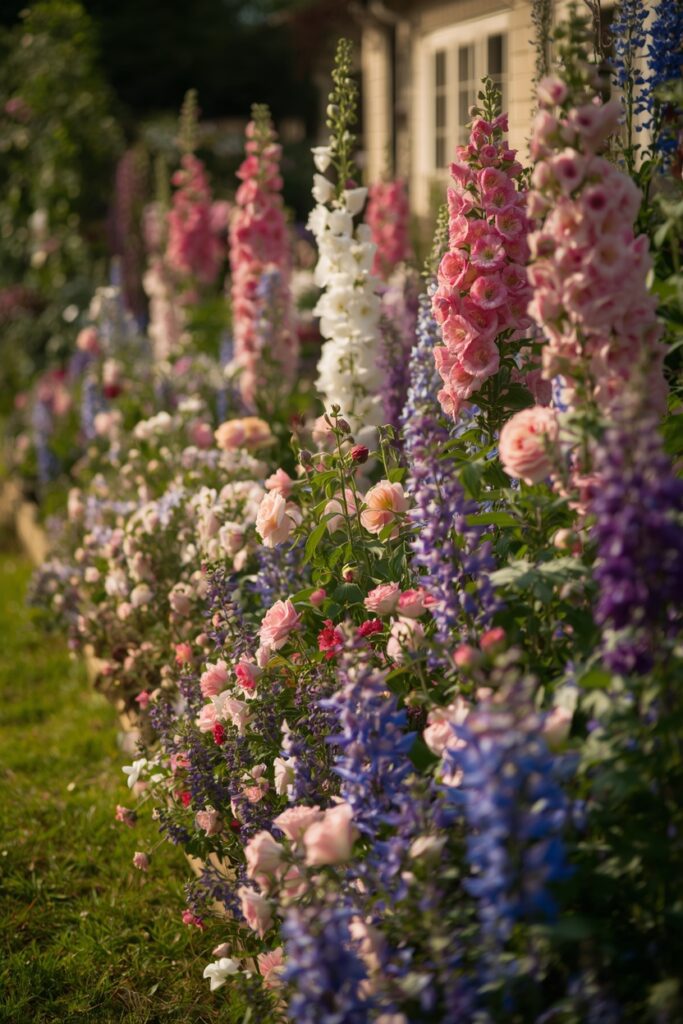
This design needs full sun to part shade and fertile, well-drained soil. It is a moderate-to-high maintenance scheme — deadheading, staking tall plants, and dividing perennials keep it at its best — but the romantic, abundant result is the most beloved of all flower garden styles.
2. Hot Colour Tropical-Style Border
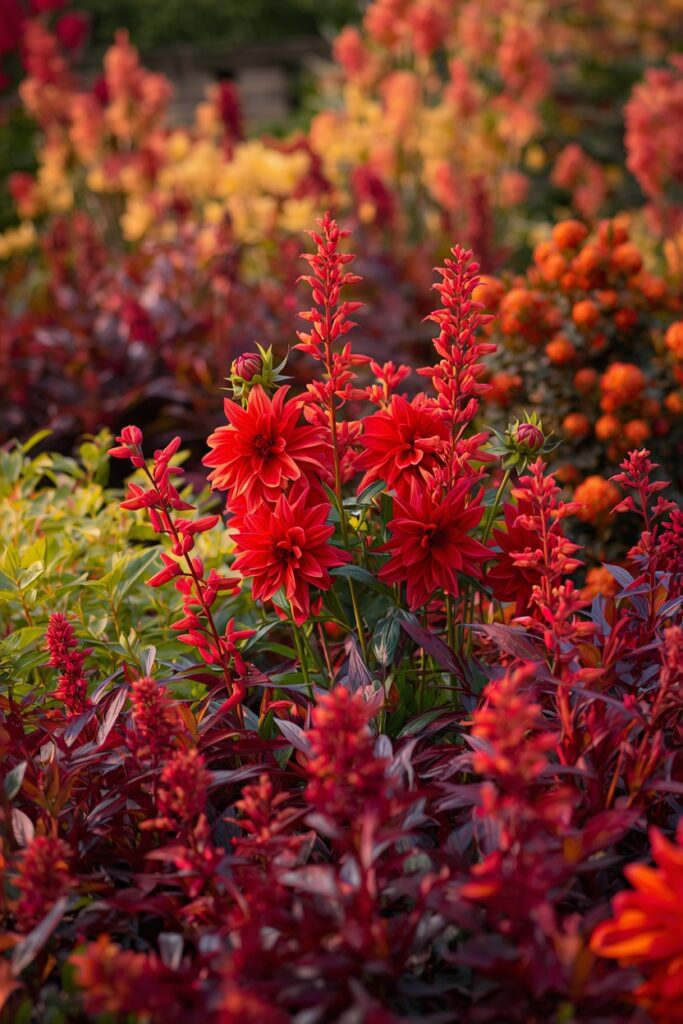
A hot border blazes with the fiery end of the spectrum — reds, oranges, hot pinks, and golden yellows — for a bold, energetic display that reads exotic and dramatic. The palette is saturated and warm, built for maximum impact. Star plants include dahlias (especially rich reds and oranges), crocosmia, red hot pokers (kniphofia), heleniums, rudbeckia, cannas, and salvias, layered with the dark foliage of dahlias and cannas for contrast. Add ornamental grasses for movement and airy texture between the bold blooms. This design peaks in mid-to-late summer when the hot colours are at their most intense, glowing especially at golden hour.
It needs full sun and fertile, moisture-retentive soil. The maintenance is moderate to high — dahlias and cannas need lifting or protecting over winter in cold climates, and regular deadheading keeps the display going. The reward is a border that pulses with energy and stops visitors in their tracks.
3. Cool Pastel Colour Scheme
A cool pastel border creates a calm, refined, dreamy display in the soft end of the spectrum — pale pinks, lavenders, soft blues, and whites with silver foliage. The restrained palette reads refined and serene, and the pale colours glow beautifully in the soft light of morning and evening. Star plants include lavender, catmint, salvia, pale roses, alliums, delphiniums in soft blues, and white cosmos, threaded with the silver foliage of artemisia, lamb’s ear, and eryngium for a cooling shimmer.
The pastels recede visually, making the border feel spacious and tranquil. This design needs full sun and well-drained soil — many of the silver-foliage plants that unify the scheme prefer dry, poor soil. It is a moderate-maintenance scheme.
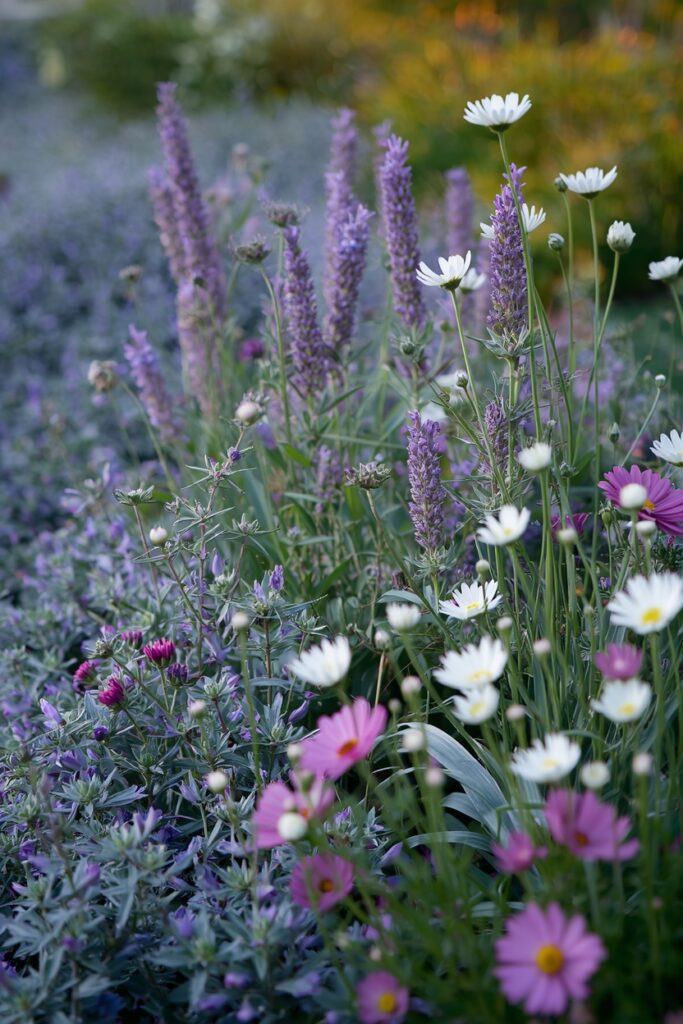
The cool pastel palette suits gardens designed for relaxation and reflection, and it pairs beautifully with a seating area where the soft colours can be enjoyed up close in the evening.
4. White Moon Garden
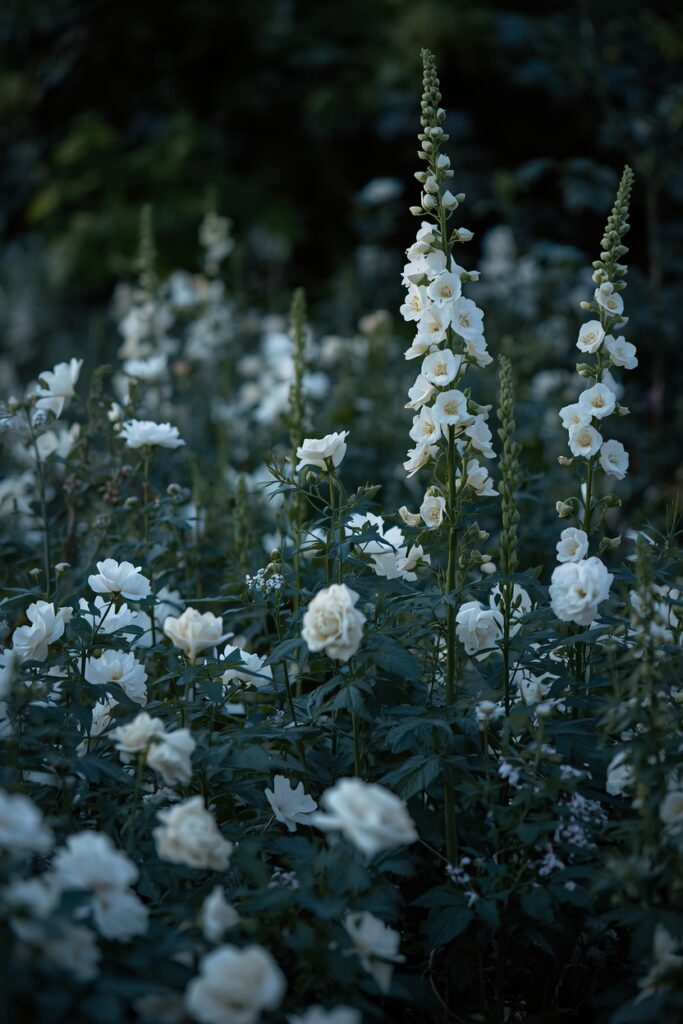
A white garden — planted entirely in white and cream flowers with silver and green foliage — creates a serene, luminous display that comes alive at dusk, when the white blooms glow in the fading light and moonlight. This is the garden to plant near a seating area used in the evening. Star plants include white roses, white cosmos, white foxgloves, white phlox, gaura, nicotiana (which releases fragrance at night), and white alliums, unified by silver foliage (artemisia, lamb’s ear) and structural green (box, ferns). Include night-scented plants — nicotiana, jasmine, night-scented stock — so the garden engages scent as well as sight after dark. This design suits full sun to part shade and well-drained soil, and it is a moderate-maintenance scheme. The white garden is the most atmospheric of all flower garden designs, transforming from a crisp, elegant daytime border into a glowing, fragrant, ethereal space as the light fades.
5. Flower Garden Designs for a Dedicated Cutting Garden
A cutting garden is designed for production rather than display — rows of flowers grown specifically to be cut for indoor arrangements, so you never feel guilty snipping blooms from the ornamental borders. Plant in accessible rows or blocks (like a vegetable garden) for easy picking and maintenance. Star performers for cutting include dahlias, sweet peas, cosmos, zinnias, snapdragons, cornflowers, and sunflowers — chosen for long stems, long vase life, and prolific, repeat blooming. Include foliage and filler plants (ammi, grasses, eucalyptus) for arranging. Sow in succession every few weeks for a continuous supply from early summer to first frost.
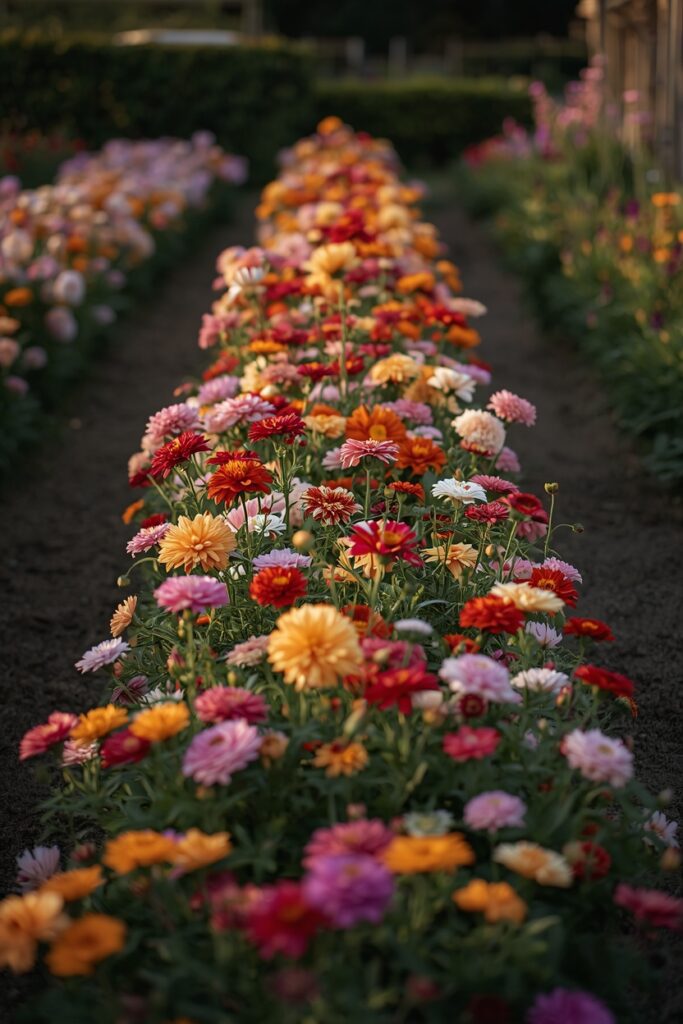
This design needs full sun and fertile, well-watered soil. It is a moderate-to-high maintenance scheme — regular sowing, feeding, and cutting keep production high (and cutting actually encourages more blooms). A cutting garden suits anyone who loves fresh flowers indoors and wants a productive, generous garden that gives all season long.
6. Pollinator and Wildlife Planting
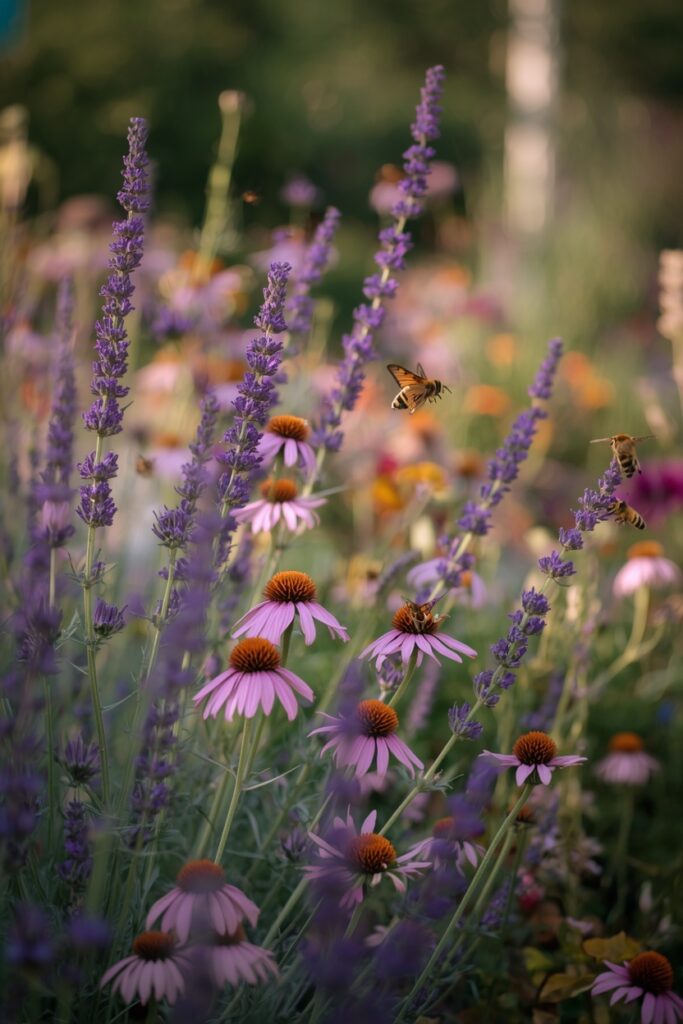
A pollinator garden is designed to attract and support bees, butterflies, hoverflies, and other beneficial insects with nectar- and pollen-rich flowers, creating a garden that hums with life while looking beautiful. Choose single-flowered (not double) varieties, which offer accessible nectar, and plant in generous drifts so pollinators can forage efficiently. Star plants include lavender, echinacea, verbena bonariensis, salvias, catmint, scabious, single dahlias, sedum, and native wildflowers, sequenced so nectar is available from early spring (crocus, pulmonaria) through late autumn (sedum, asters). Avoid pesticides entirely. This design suits full sun and works in most soils.
It is a low-to-moderate maintenance scheme — many pollinator plants are tough and self-sufficient. The pollinator garden delivers on two fronts: a beautiful, colourful, dynamic display and a genuine ecological benefit, supporting the insects that gardens and food crops depend on. Leave seed heads standing over winter for birds and overwintering insects.
7. Prairie-Style Naturalistic Planting
Prairie-style planting — inspired by North American grasslands and popularised by designers like Piet Oudolf — combines perennials and ornamental grasses in naturalistic drifts that read wild, airy, and dynamic through every season. The palette is warm and muted: rust, gold, purple, and soft pink, with the tawny tones of grasses threading through. Star plants include echinacea, rudbeckia, echinops, eryngium, sedum, monarda, and salvias, interwoven with ornamental grasses (miscanthus, panicum, molinia, stipa) that provide movement, texture, and winter structure.
Plant in large intermingled drifts rather than blocks for the naturalistic effect. This design peaks in late summer and autumn and holds beautiful structure through winter when the seed heads and grasses catch frost and low light. It needs full sun and well-drained soil, and it is a low-maintenance scheme — cut everything back once in late winter.
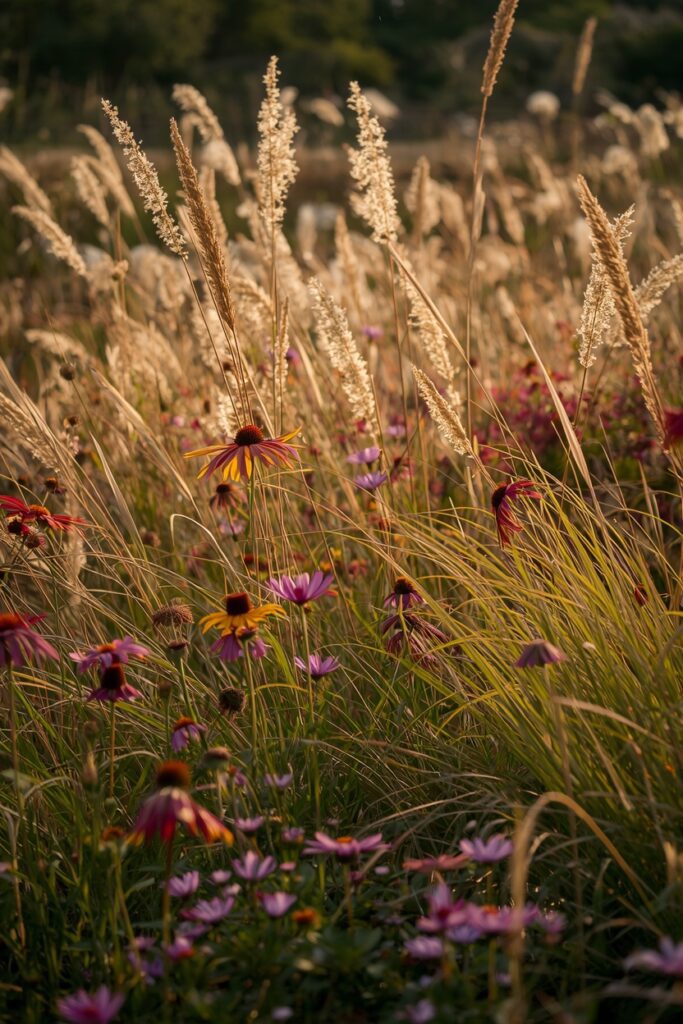
Prairie planting suits contemporary and naturalistic gardens and delivers four-season interest with minimal input.
8. Monochromatic Single-Colour Border
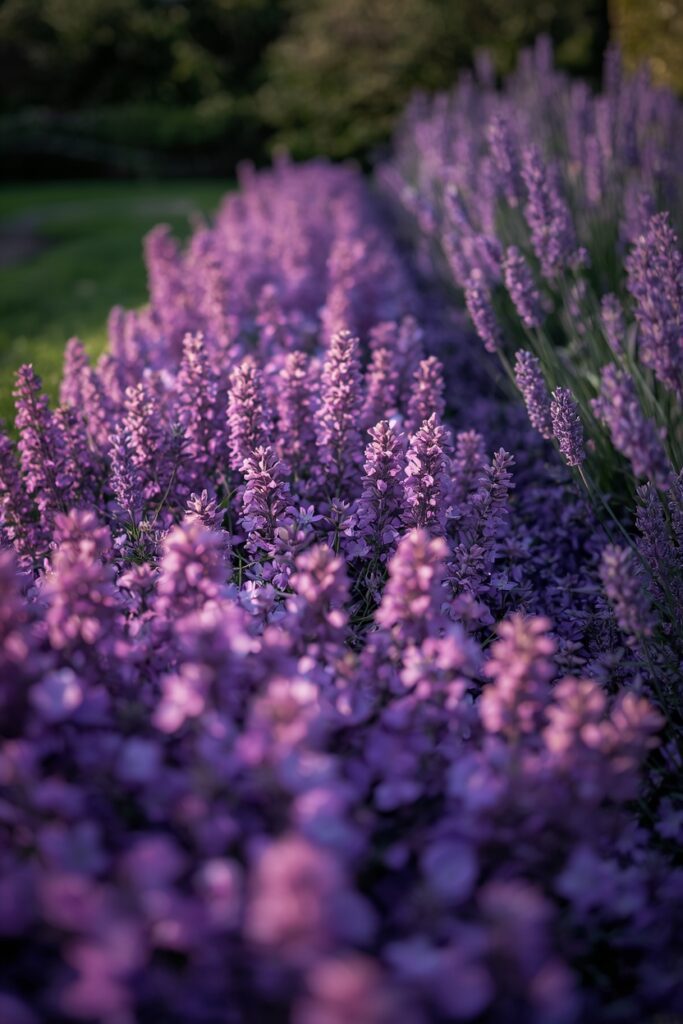
A single-colour border — an entire bed planted in shades of one colour — creates a bold, sophisticated statement that reads as a deliberate design decision rather than a random mix. A purple border layers deep purple salvias, alliums, lavender, catmint, verbena, and purple-leaved heuchera; a pink border layers roses, phlox, echinacea, cosmos, and pink dahlias; a yellow border layers rudbeckia, achillea, coreopsis, and sunflowers. The trick is using every shade and tint of the chosen colour — from palest tint to deepest saturation — plus varied foliage and flower shapes to keep the single colour from reading flat. This design suits full sun and most soils, with maintenance varying by plant choice. The monochromatic border is a striking, gallery-like approach that demonstrates real design confidence — it turns colour restraint into the whole point, and the result is far more sophisticated than a rainbow mix.
9. Spring Bulb Spectacular
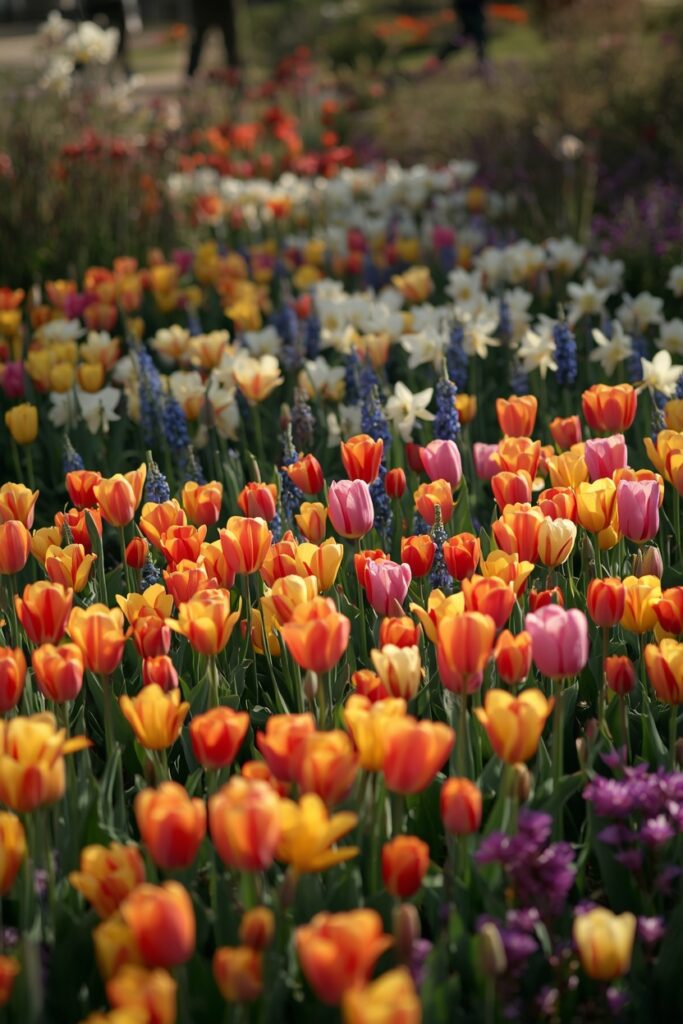
A spring bulb display delivers the first big colour of the gardening year, when tulips, daffodils, alliums, and hyacinths burst into bloom after the long winter. Plant bulbs in generous drifts in autumn for a spring show — layer bulbs at different depths in the same hole (the ‘bulb lasagne’ technique) so early, mid, and late-season bulbs bloom in succession from the same spot. Star combinations include tulips underplanted with grape hyacinths, daffodils naturalised in grass, and tall alliums rising above emerging perennials. Choose a colour scheme — hot reds and oranges, cool purples and whites, or a joyful mix — and plant enough to make a real impact (bulbs read best in groups of at least a dozen). This design suits full sun to part shade and well-drained soil.
It is low maintenance — plant once in autumn and enjoy the spring show, though tulips often perform best treated as annuals and replanted each year. The spring bulb display fills the gap before perennials get going and lifts the whole garden out of winter.
10. Mediterranean Gravel Border
A Mediterranean gravel garden combines drought-tolerant, sun-loving flowers planted through a deep gravel mulch, creating a low-water, low-maintenance display with a warm, sun-baked character. The gravel suppresses weeds, retains moisture at the roots, and provides the sharp drainage these plants need. Star plants include lavender, santolina, cistus, euphorbia, alliums, verbascum, salvias, and ornamental grasses, chosen for their tolerance of heat, drought, and poor soil. The silver and gray foliage of many Mediterranean plants unifies the scheme and thrives in the reflected heat of the gravel. Self-seeders (verbascum, eryngium, poppies) wander through the gravel for a naturalistic effect.
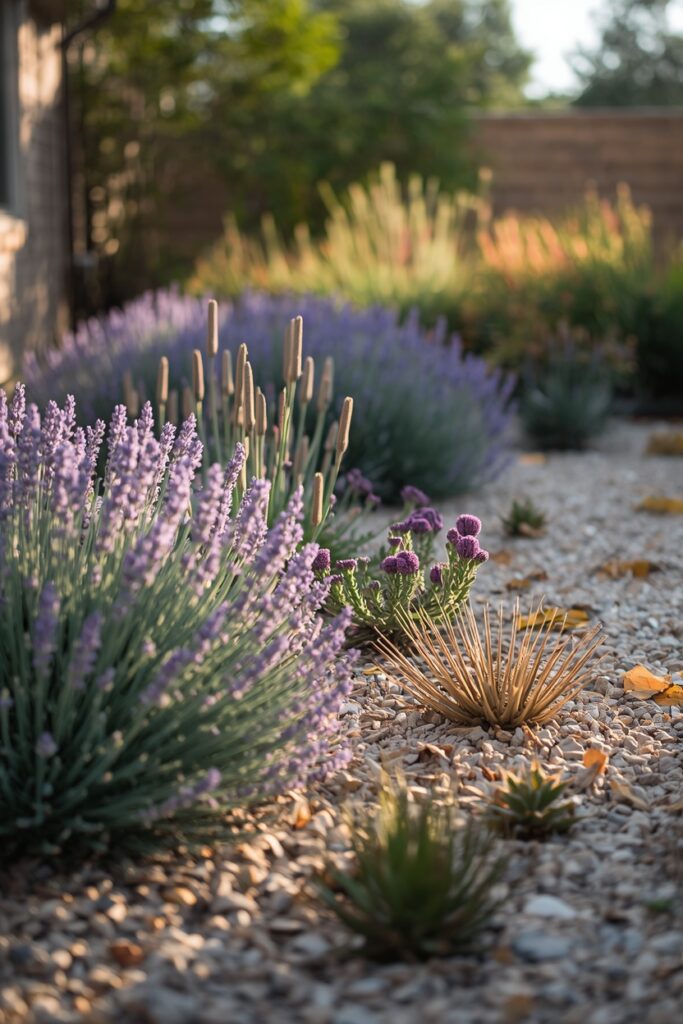
This design needs full sun and free-draining soil — it fails in heavy, wet ground. It is a very low-maintenance scheme once established, needing little watering or feeding. The Mediterranean gravel garden suits hot, dry sites, water-conscious gardeners, and anyone who wants a beautiful flowering display with minimal ongoing input.
11. Flower Garden Designs With Layered Bloom Succession
A succession-planted border is designed so that something is always in bloom from early spring to first frost, with the display moving through waves of colour as the season progresses. This is the most technically satisfying flower garden design — it requires planning the bloom calendar so that as one group fades, another takes over. Start with spring bulbs and early perennials (hellebores, pulmonaria, aquilegia), move into early-summer stars (peonies, roses, delphiniums, alliums), transition to mid-summer performers (echinacea, phlox, salvias, dahlias), and finish with late-season colour (asters, sedum, rudbeckia, grasses).
Interplant so the fading foliage of earlier bloomers is hidden by the emerging growth of later ones. This design needs full sun and fertile soil and is a moderate-maintenance scheme.
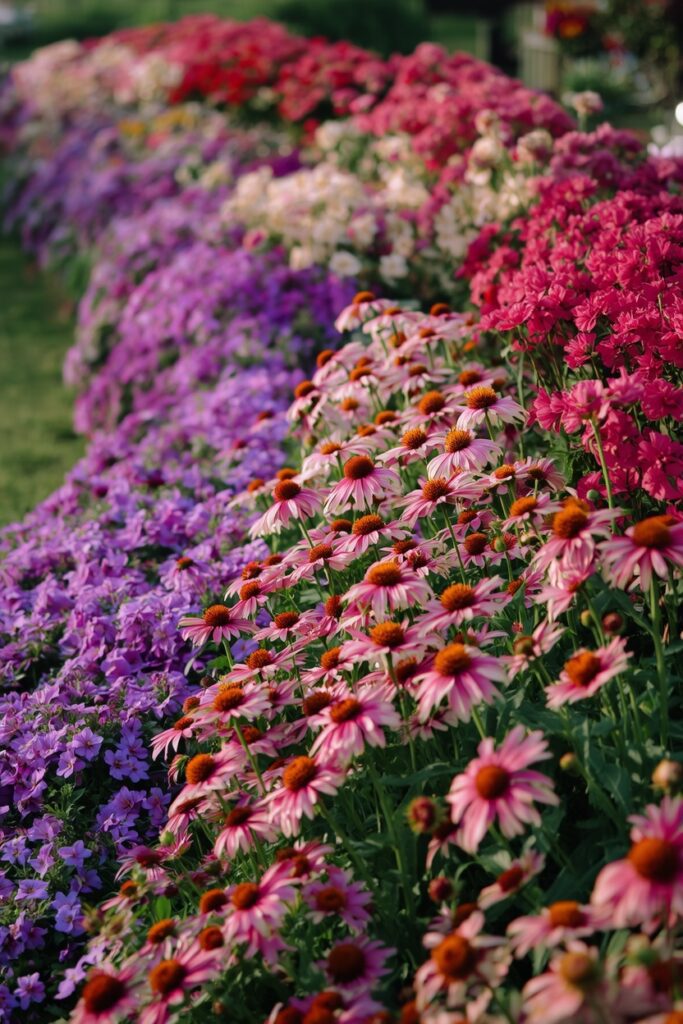
The reward is a border that never has a dull moment — a continuously evolving display that looks intentional and abundant from the first bulb to the last aster.
12. Shade-Loving Flower Border
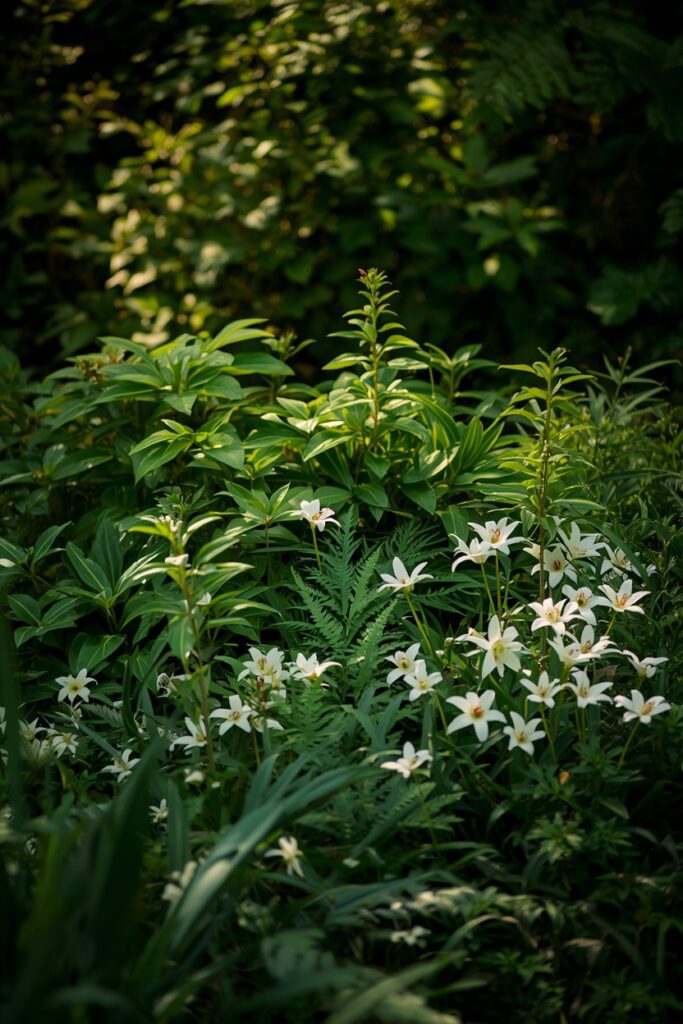
A shade border proves that a garden under trees or on the north side of a building can be just as beautiful as a sunny one — with the right plants. Shade planting relies more on foliage texture and form, punctuated by the flowers that thrive out of direct sun. Star plants include hostas (for bold foliage), ferns, astilbe (feathery flower plumes), hellebores (winter and early spring flowers), foxgloves, brunnera, heuchera, and Japanese anemones for late-season blooms. The palette tends toward cool whites, soft pinks, purples, and the many shades of green, which read fresh and luminous in shade. Layer by height and contrast leaf shapes — broad hosta leaves against feathery ferns and astilbe. This design suits part to full shade and moisture-retentive soil, and it is a low-to-moderate maintenance scheme. The shade border transforms a difficult, often-neglected area into a cool, lush, tranquil retreat — proof that shade is an opportunity, not a limitation.
13. Rose Garden With Companion Underplanting
A dedicated rose garden — roses underplanted with companions that hide their bare legs and extend the season — creates the most romantic and fragrant of all flower garden designs. Choose repeat-flowering roses (English roses, floribundas, or hybrid teas) for the longest display, in a colour scheme that suits your taste — soft pinks and whites for romance, or bold reds and oranges for drama. Underplant with catmint, lavender, hardy geraniums, and alliums, which flower with the roses, cover the bare stems, and (in the case of alliums and lavender) may help deter pests. Add structure with box edging or obelisks for climbing roses. This design needs full sun, fertile soil, and good air circulation to reduce disease.
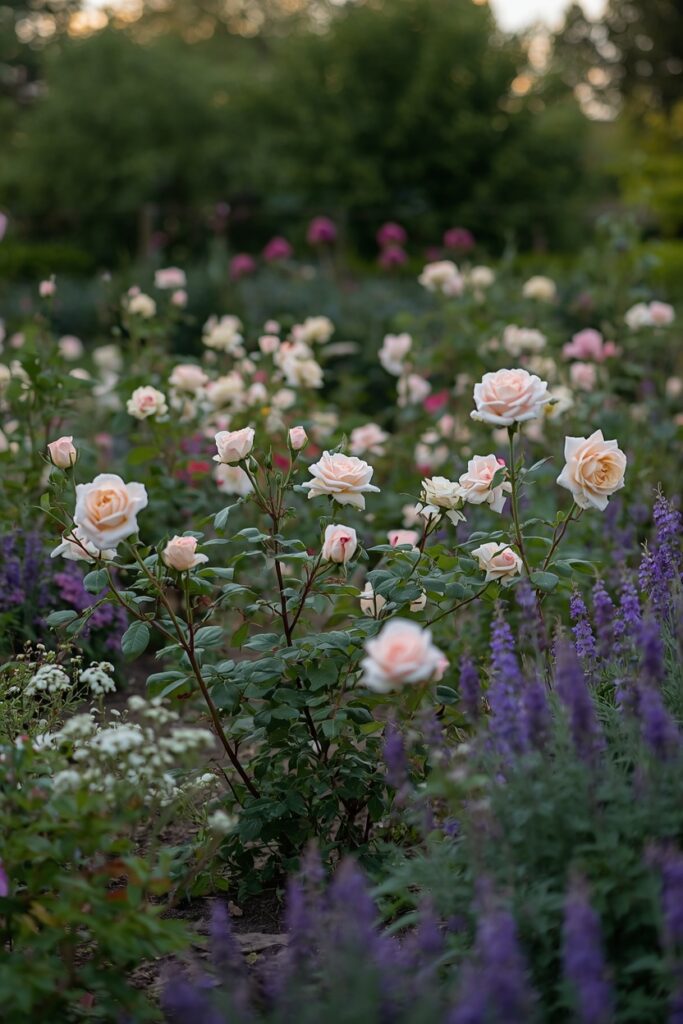
It is a moderate-to-high maintenance scheme — roses need feeding, deadheading, and annual pruning — but the fragrance and romance of a well-planted rose garden are unmatched. The companion underplanting is what transforms a stiff rose bed into a soft, abundant, cottage-inspired display.
14. Wildflower Meadow Planting
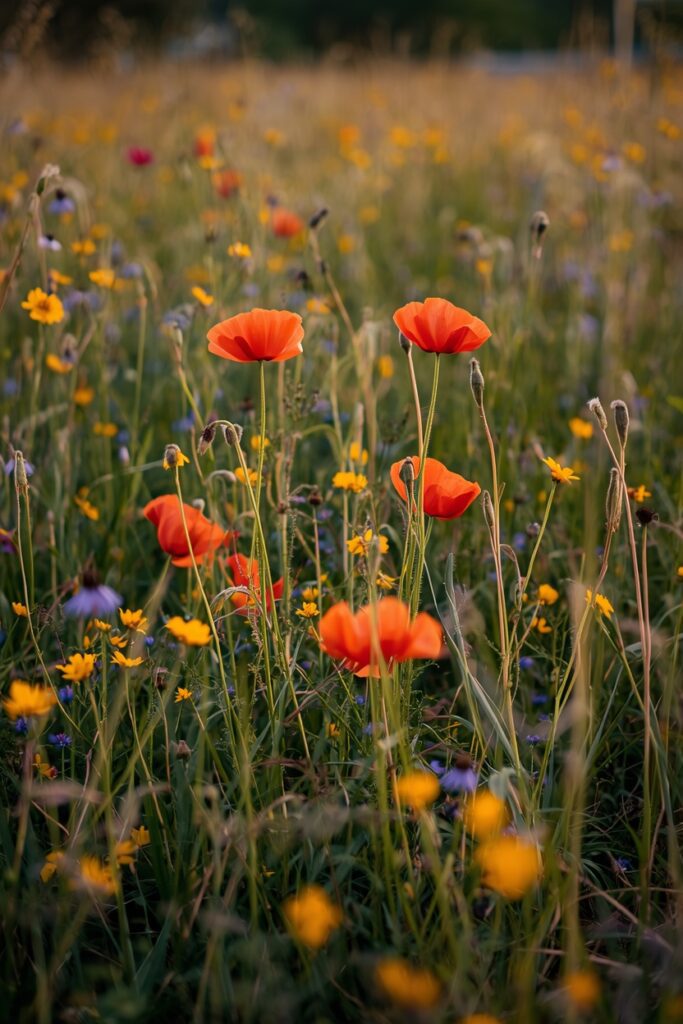
A wildflower meadow — native annual and perennial wildflowers grown in grass or a dedicated bed — creates a naturalistic, ecologically rich display that reads as a slice of the countryside brought into the garden. For quick colour, sow annual meadow mixes (cornflowers, poppies, corn marigolds, corncockle) which bloom in the first summer. For a lasting meadow, establish perennial wildflowers (ox-eye daisy, knapweed, scabious, yarrow) in low-fertility soil with fine grasses. The key to a successful meadow is low fertility — rich soil produces lush grass that outcompetes the flowers, so remove clippings and avoid feeding. Cut the meadow once in late summer after the flowers have set seed.
This design suits full sun and works best in poor soil. It is very low maintenance — one cut a year — and delivers huge ecological benefit, supporting pollinators, birds, and small mammals. The wildflower meadow suits larger gardens, awkward slopes, and anyone who wants a beautiful, buzzing, low-input alternative to mown lawn.
15. Vertical Planting on Walls and Trellises
A vertical flower garden uses walls, fences, trellises, and obelisks to grow climbing and wall-trained flowers, adding height, colour, and abundance to gardens where ground space is limited. Star climbers include clematis (in every colour and with a long season across different varieties), climbing and rambling roses, sweet peas (fragrant and prolific), honeysuckle (scented), jasmine, and wisteria for a spectacular spring display. Combine climbers to extend the season — an early clematis with a summer rose, for example, sharing the same support.
Add wall-mounted planters and hanging baskets for trailing flowers (trailing petunias, lobelia, nasturtiums) to fill the vertical plane. This design suits the aspect of each wall (choose sun-lovers for south walls, shade-tolerant climbers for north walls) and varies in maintenance by plant.
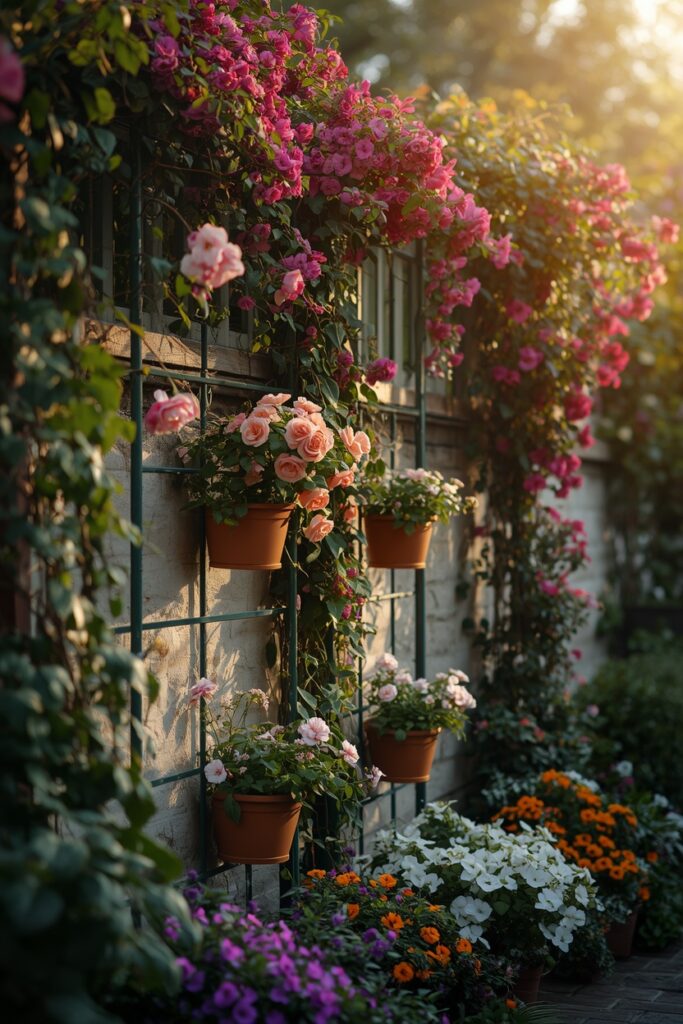
The vertical flower garden is essential for small gardens and courtyards, where growing upward multiplies the flowering area far beyond the ground footprint.
16. Container Blooms for Patios
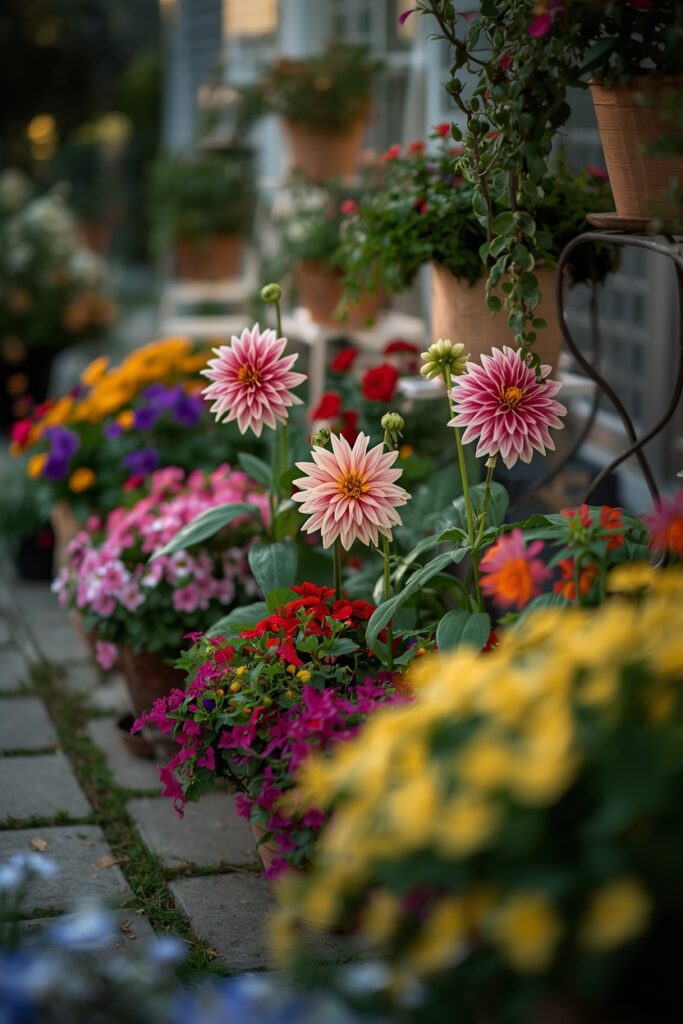
A container flower garden proves that you do not need open ground to grow a spectacular flowering display — pots, troughs, and planters grouped on a patio, deck, or courtyard can be as colourful and abundant as any border. Group containers of varying heights and sizes for visual impact, and plant each with the classic ‘thriller, filler, spiller’ formula: a tall focal plant (dahlia, canna, salvia), mid-height filling flowers (petunias, geraniums, cosmos), and trailing plants spilling over the edge (trailing lobelia, bacopa, ivy). Choose a coordinated colour scheme across the grouping so the containers read as one designed display. Use good-quality potting compost, feed regularly (containers exhaust nutrients fast), and water daily in hot weather — the biggest limitation of container gardening is the constant watering. This design suits any sunny patio or balcony and is a high-maintenance scheme (mainly watering), but the flexibility to move, rearrange, and refresh the display with the seasons is unmatched.
17. Colour-Wheel Complementary Border
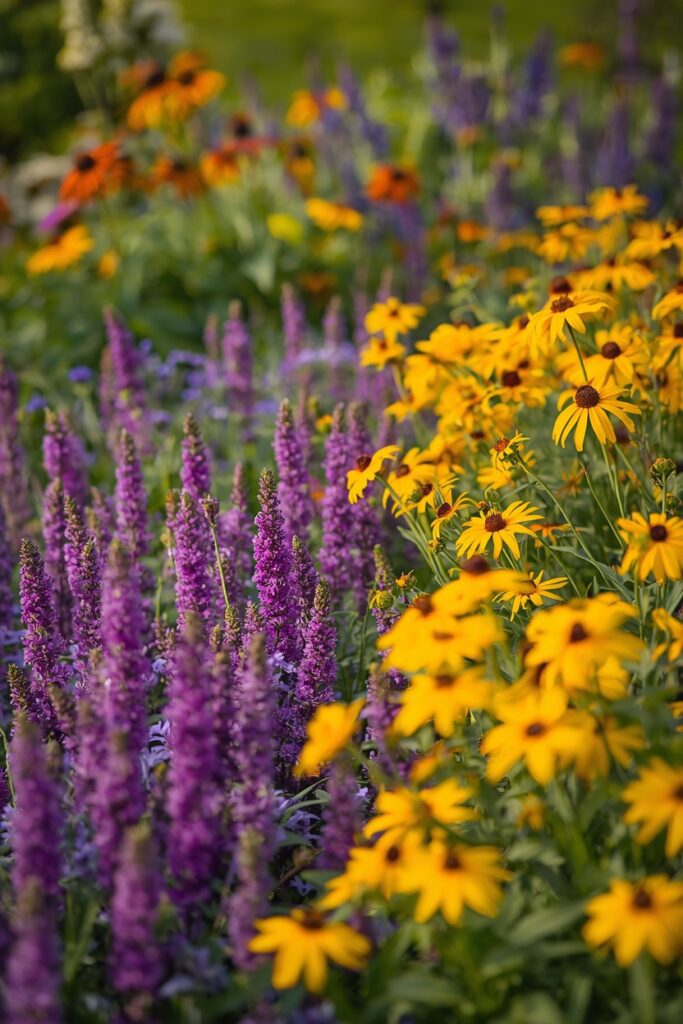
A complementary colour border uses colours from opposite sides of the colour wheel — purple with yellow, blue with orange, or red with green — for a vibrant, high-energy display where each colour makes the other appear more intense. The classic combination is purple and yellow: purple salvias, alliums, and lavender against yellow rudbeckia, achillea, and coreopsis, with each colour amplifying the other. Blue and orange (blue delphiniums against orange crocosmia and geum) creates a similarly electric contrast. The key is balancing the two colours roughly equally and repeating them along the border so the eye reads a rhythm.
This design demonstrates colour theory in action and needs full sun and fertile soil, with moderate maintenance. The complementary border is bolder and more energetic than a harmonious single-family scheme — it vibrates with contrast and suits gardeners who want maximum colour impact and enjoy the science of why certain combinations sing.
18. Fragrant Blooms Near Seating
A fragrant garden is designed around scent as much as sight, positioning the most perfumed flowers near seating areas, paths, and doorways where their fragrance can be enjoyed up close. Star fragrant plants include roses (choose varieties bred for scent), lavender, sweet peas, jasmine, honeysuckle, night-scented stock, nicotiana, lily of the valley, and phlox. Layer the fragrance across the day and season — some plants (roses, lavender) are most fragrant in warm daytime sun, while others (nicotiana, night-scented stock, jasmine) release their scent in the evening, perfuming a garden used after dark.
Plant fragrant climbers over an arbour or pergola above a seating area so the scent surrounds you. This design suits full sun to part shade depending on the plants, with moderate maintenance.
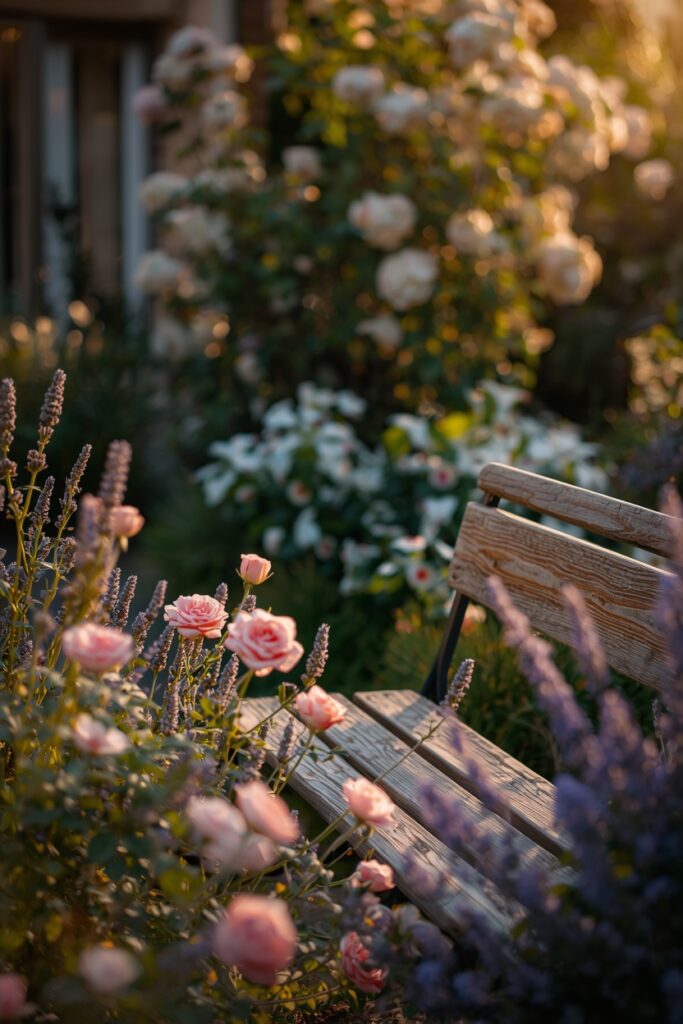
The fragrant garden engages an extra sense that visual-only gardens miss — the scent of warm roses or evening jasmine turns a seating area into a multi-sensory retreat and creates powerful, memory-forming associations.
19. Flower Garden Designs for Year-Round Interest
The most accomplished flower garden design delivers interest in every season — not just a summer peak — through careful plant selection across the whole year. Spring brings bulbs (snowdrops, crocus, tulips, daffodils) and early perennials (hellebores, pulmonaria); summer brings the main flowering flush (roses, delphiniums, echinacea, dahlias); autumn brings late bloomers (asters, sedum, Japanese anemones) and the fiery tones of turning foliage and grasses; and winter brings structure from seed heads, evergreen foliage, colourful stems (dogwood), and early flowers (winter jasmine, hellebores, snowdrops). The key is planning for each season rather than concentrating everything in summer, and leaving seed heads and grasses standing over winter for structure and wildlife.
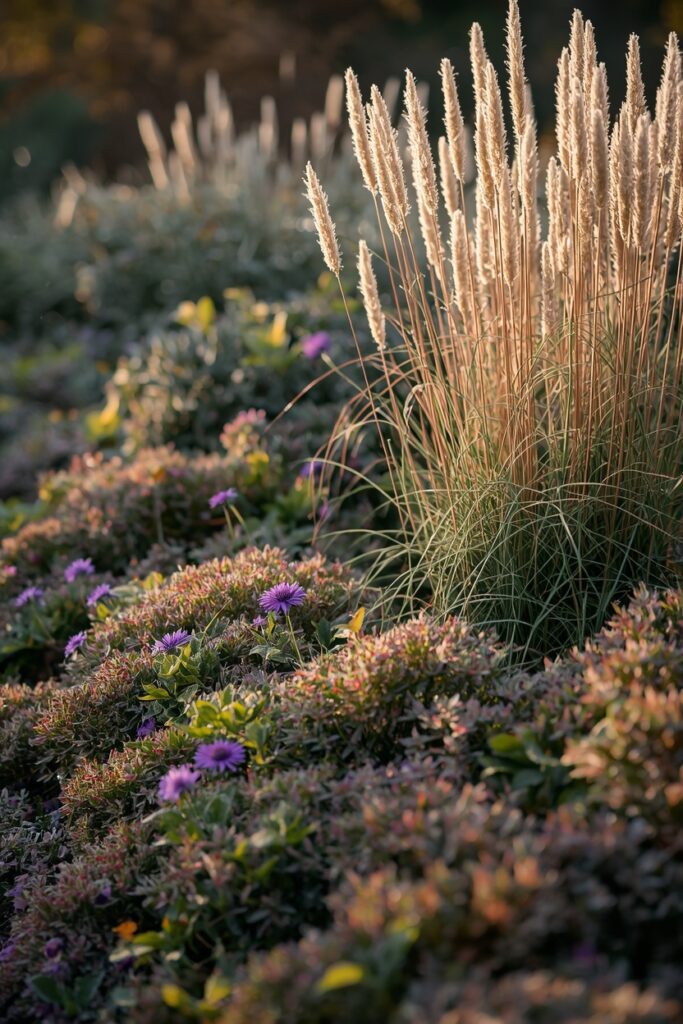
This design suits full sun to part shade and fertile soil, with maintenance concentrated in a single late-winter cut-back. A year-round flower garden rewards you every time you look out the window, in January as much as July — the mark of a truly complete design.
Where I’d Start if I Only Did Three Things
If I only did three things, I would start by choosing a colour scheme and sticking to it — a limited palette (cool pastels, hot colours, or a single colour) reads far more designed and impactful than a random rainbow mix. Second, I would plant in layers by height — tall plants at the back, mid-height in the middle, low and trailing at the front — and in generous drifts of at least three to five of each plant, because single scattered plants read as spotty while drifts read as abundant. Third, I would plan for bloom succession so something flowers in every season, choosing a few plants for spring, summer, autumn, and winter interest rather than concentrating everything in a single summer peak.
Frequently Asked Questions
What flower garden designs are best for beginners?
A pollinator garden or a Mediterranean gravel garden are the most forgiving for beginners — both use tough, self-sufficient plants that tolerate a range of conditions and need minimal fussing. Start with a limited colour palette and reliable, long-flowering perennials like echinacea, salvia, catmint, and rudbeckia. Plant in drifts, mulch well, and let the plants establish before adding more.
How do I keep my flower garden blooming all season?
Plan for bloom succession: choose plants that flower at different times — spring bulbs and hellebores, early-summer roses and delphiniums, mid-summer echinacea and dahlias, and late-season asters and sedum — so as one group fades, another takes over. Deadhead regularly to encourage repeat flowering, and interplant so fading foliage is hidden by emerging growth.
What flowers work in a shady garden?
Shade-tolerant flowers include hellebores, foxgloves, astilbe, Japanese anemones, brunnera, and hardy geraniums, combined with foliage plants like hostas and ferns for texture. The palette tends toward cool whites, soft pinks, and purples, which read luminous in shade. Focus on foliage form and texture punctuated by these shade-loving blooms.
How do I choose a colour scheme for a flower garden?
Limit yourself to a defined palette rather than mixing every colour: cool pastels (pinks, blues, lavenders) for a calm elegant look; hot colours (reds, oranges, yellows) for bold energy; a single colour in all its shades for sophistication; or complementary opposites (purple and yellow) for vibrant contrast. A restrained palette always reads more designed than a random rainbow mix.
Final Thoughts
The flower garden designs that truly steal the show are not the ones with the most flowers — they are the ones with a clear colour story, layered heights, generous drifts, and blooms sequenced so the display peaks in waves across the seasons. Choose the design that suits your light, soil, and colour taste, plant in bold groups rather than scattered singles, and plan for succession so there is always something in flower. A flower garden designed with these principles becomes the feature that stops every visitor in their tracks.