
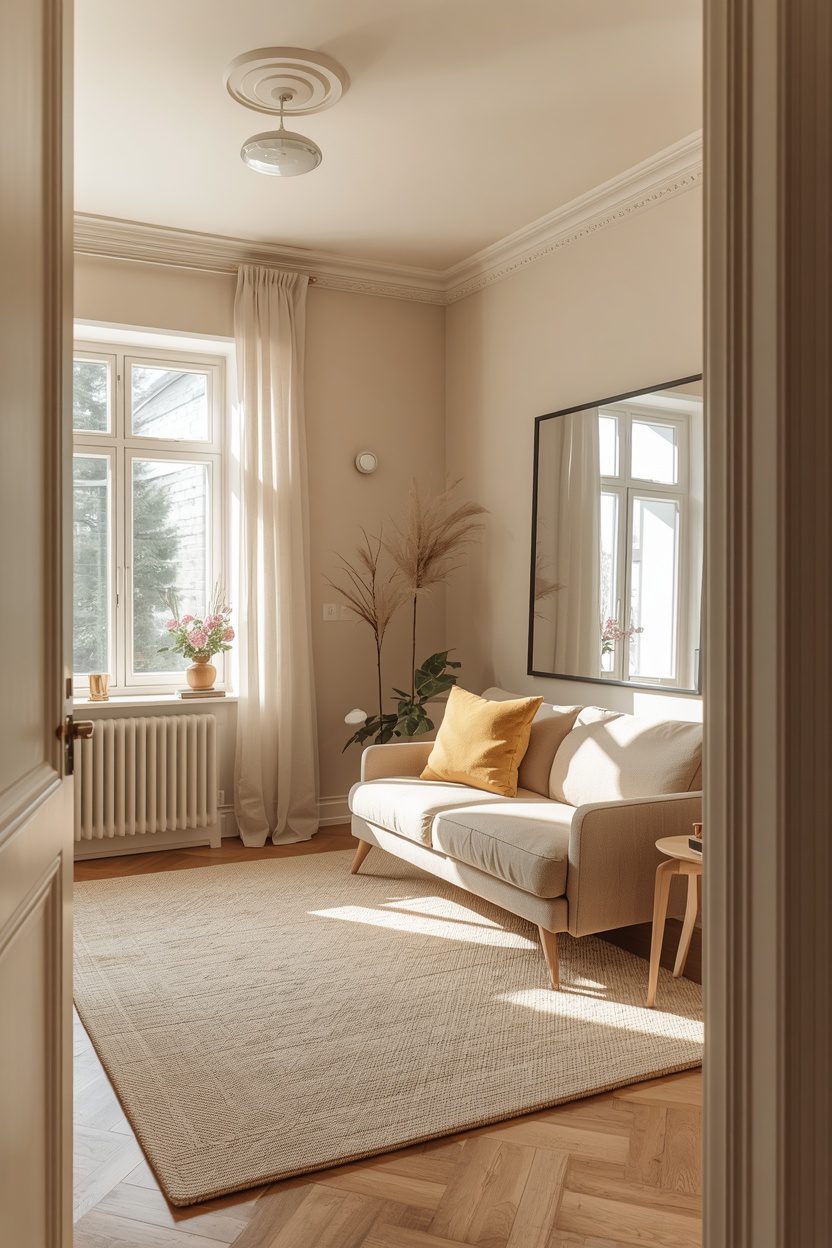
Colour is the most powerful and affordable tool you have for transforming a small living room. The right paint can make a cramped space feel open, while the wrong one can close it in fast.
The old rule that small rooms must be white is only half the story. Light, undertone, and how a colour reflects daylight matter far more than simply choosing the palest shade you can find.
These 18 small living room color ideas cover everything from airy neutrals to bold, cozy darks, with the LRV ratings and undertone tips you need to choose with confidence. Each one is built to help a small room feel its best.
1. Go Light and Airy With Soft Whites
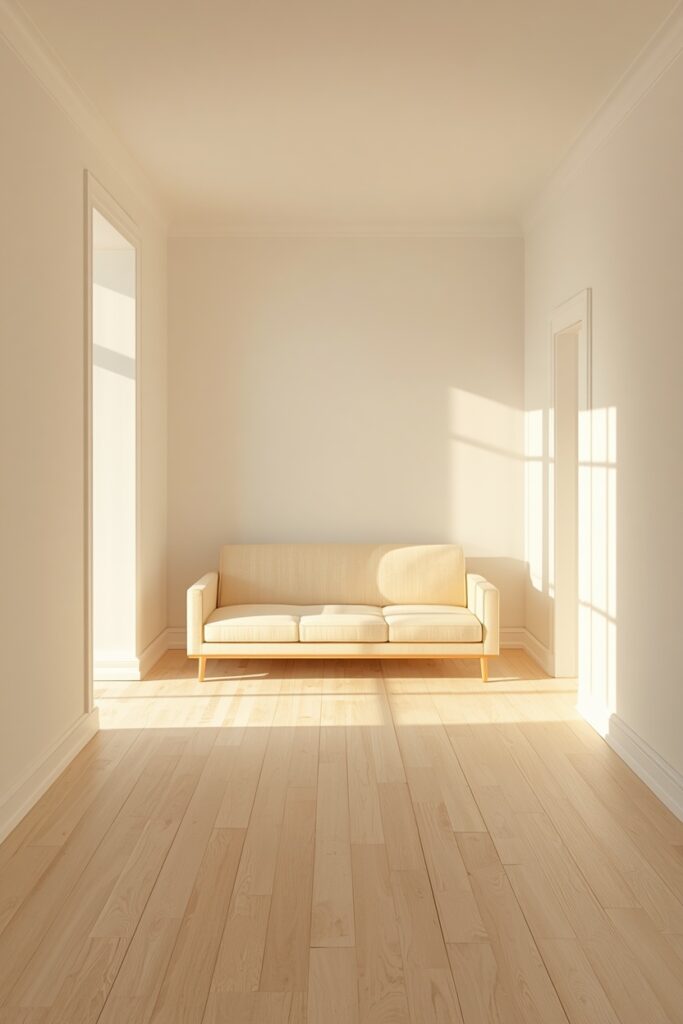
Soft whites remain the go-to for small rooms because they reflect the most light and recede from the eye, pushing the walls outward. The key is choosing a warm white rather than a stark, cold one.
Look for whites with a Light Reflectance Value above 80, such as Benjamin Moore White Dove or Sherwin-Williams Alabaster. A warm undertone keeps the room feeling cozy rather than clinical.
Pair a warm white wall with warm wood and soft textiles so the space feels inviting. Avoid pure brilliant white, which can feel flat and harsh in a small living room with limited light.
2. Try Warm Greige for Cozy Neutrality
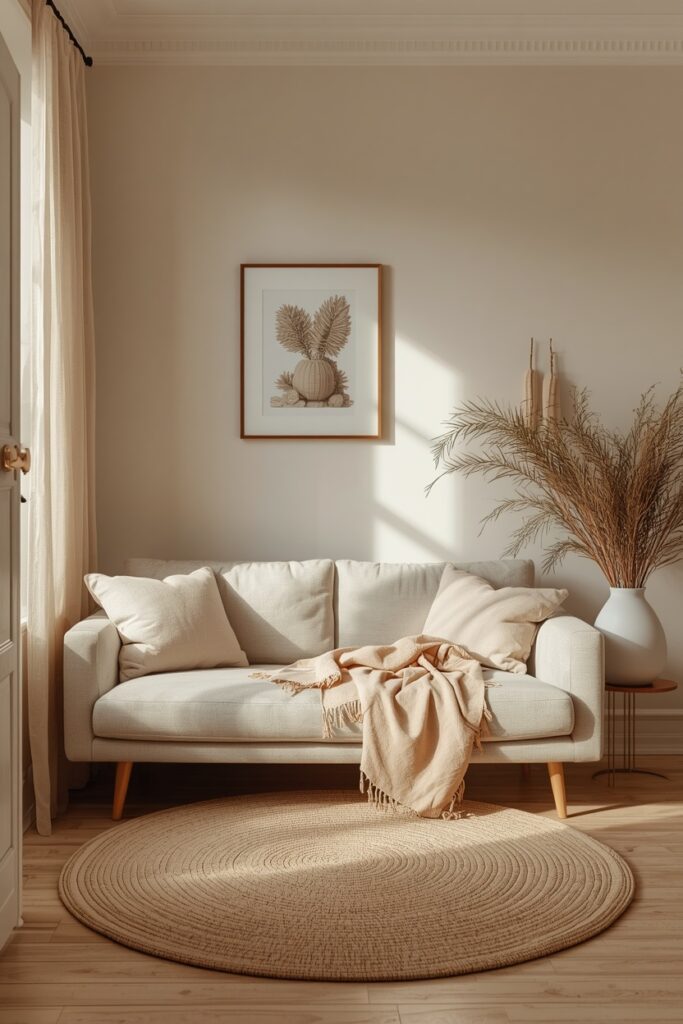
Greige, the blend of grey and beige, gives a small room warmth and depth without sacrificing brightness. It is the perfect middle ground for those who find pure white too stark.
Choose a greige with a warm undertone and an LRV in the 60s, such as Sherwin-Williams Agreeable Gray. This keeps the room light while adding a soft, sophisticated base.
Greige pairs effortlessly with almost any accent colour and with both warm and cool woods. That flexibility makes it one of the safest, most forgiving choices for a small living room.
3. Colour-Drench in a Single Soft Tone
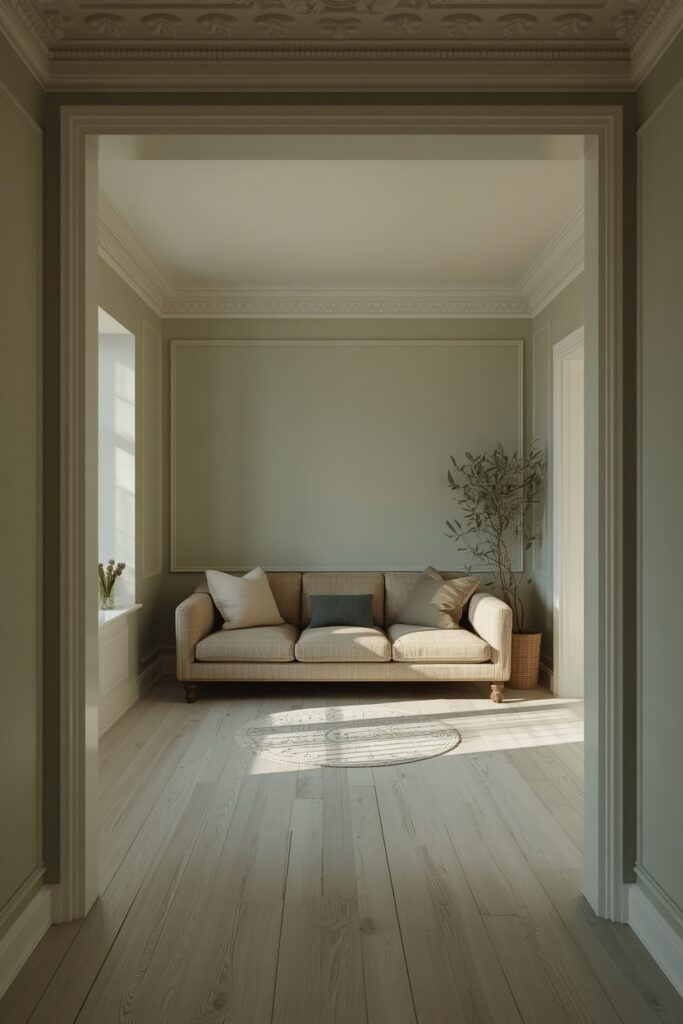
Colour-drenching, painting the walls, trim, and ceiling in one shade, is a designer favourite for small spaces. By erasing the visual lines where surfaces meet, it tricks the eye into reading the room as bigger.
Choose a soft, light tone such as a pale sage, blush, or muted blue for a calm, enveloping effect. Keeping the whole envelope one colour removes the choppy contrast that can shrink a small room.
Use the same colour in different finishes, eggshell on walls and a slightly tougher finish on trim, so surfaces are protected while the seamless look holds. The result feels intentional and surprisingly spacious.
4. Open Up With Soft Sage Green
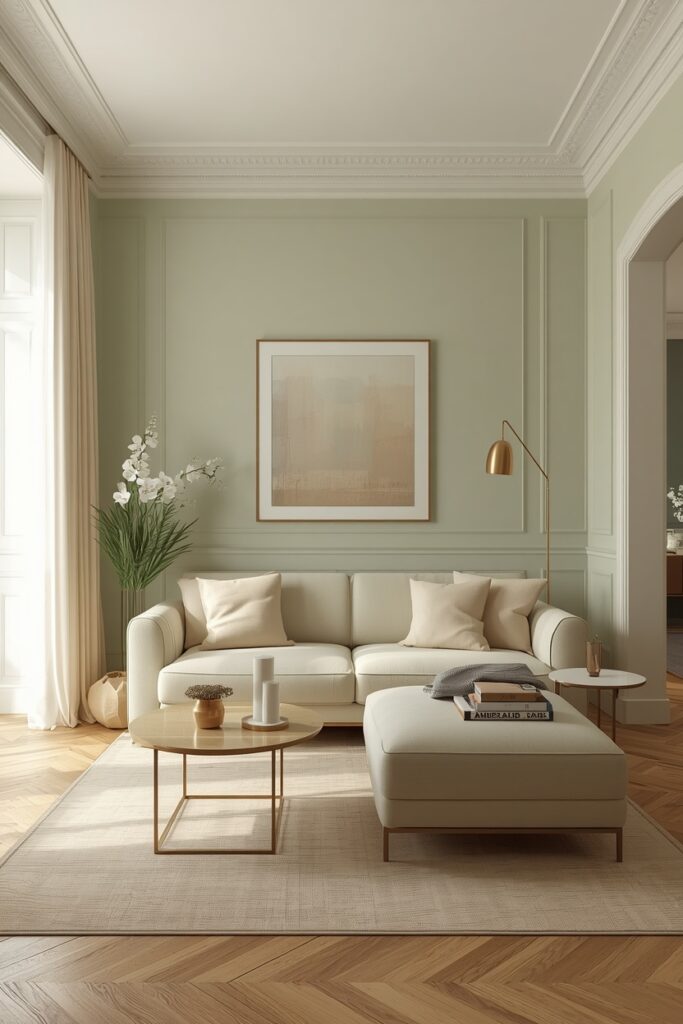
Soft sage green brings a fresh, nature-inspired calm to a small living room while staying light enough to keep it airy. Its muted, dusty quality reads as a soothing neutral rather than a bold colour.
Pick a sage with a higher LRV, ideally above 40, so it reflects plenty of light. Sherwin-Williams Evergreen Fog and Benjamin Moore October Mist are reliable, room-opening choices.
Sage pairs beautifully with warm whites, natural wood, and brass, all of which reinforce its airy, organic feel. The combination keeps a small room feeling bright, current, and welcoming.
5. Choose a Pale Blue for Airy Calm
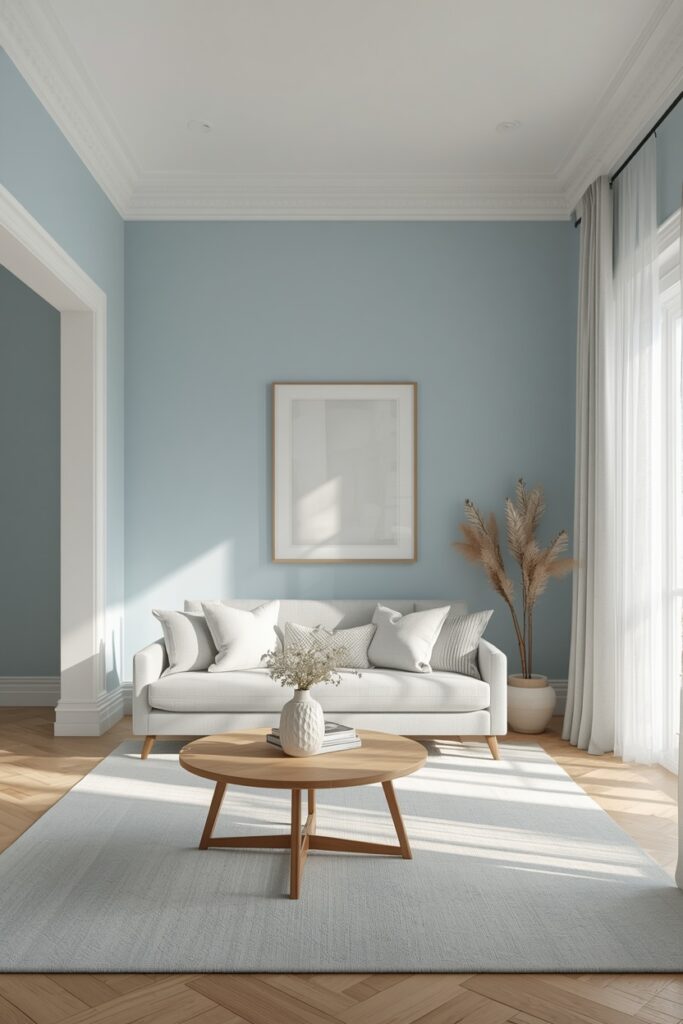
Pale blue has a naturally receding, sky-like quality that makes walls feel further away. It brings a serene, airy calm that suits small living rooms that get decent natural light.
Favour soft, slightly grey-toned blues with a high LRV over bright or saturated ones. These gentle shades feel like a neutral and avoid the chilly, cold effect a strong blue can create.
Warm up a blue room with wood tones, brass, and cream textiles so it never feels cold. The mix of cool walls and warm accents keeps a small room balanced and inviting.
6. Embrace Moody Dark Walls
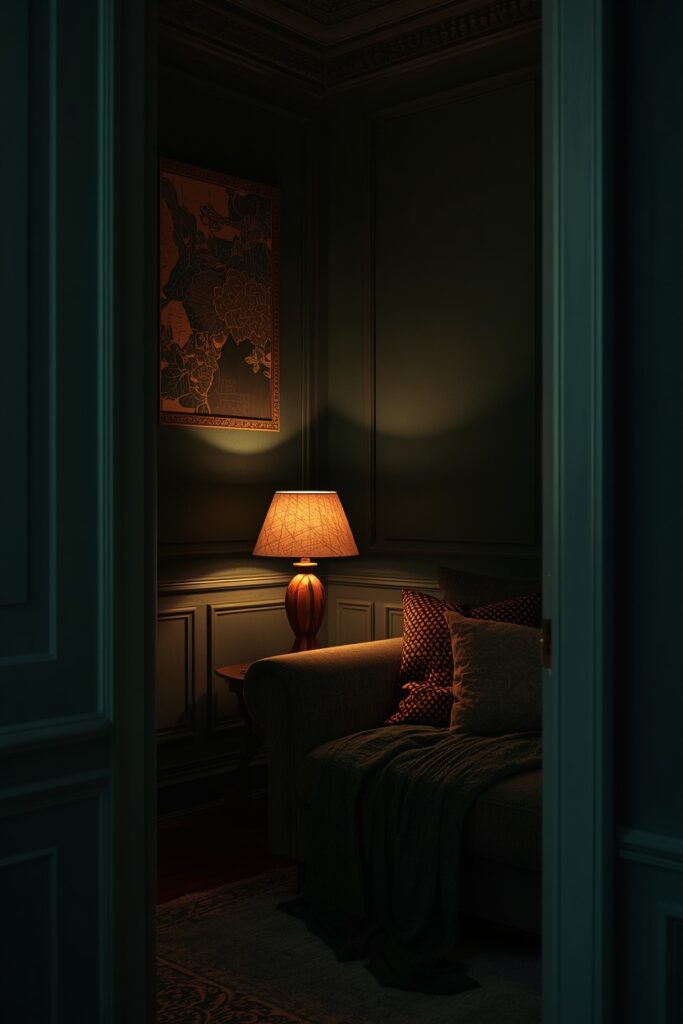
It sounds counterintuitive, but a deep, moody colour can work brilliantly in a small living room. Rather than fighting the small size, dark walls lean into it, creating a cocooning, intimate jewel-box effect.
Dark colours blur the edges of a room in low light, making the boundaries hard to read and the space feel larger and more mysterious. Deep navy, charcoal, forest green, and chocolate brown all excel here.
Commit fully for the best result: paint the trim and ceiling in the same dark shade and layer in warm lighting and rich textures. A half-hearted dark accent wall rarely achieves the same magic.
7. Paint the Trim to Match the Walls
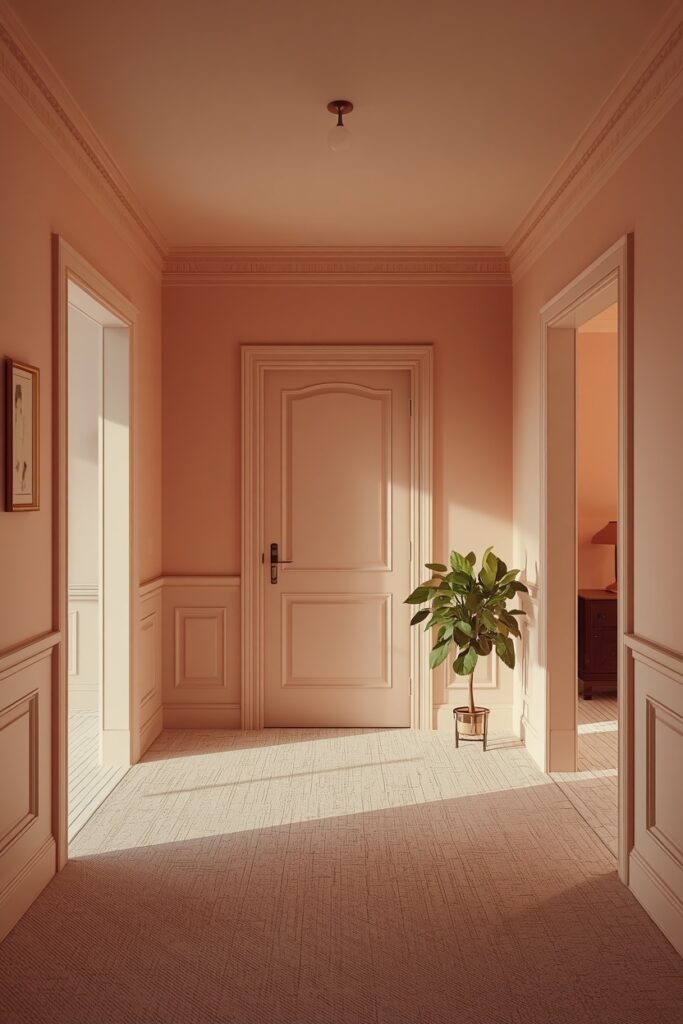
Painting trim, skirting, and doors the same colour as the walls is a simple trick that makes a small room feel bigger. Removing the contrast lets the eye travel uninterrupted across each surface.
Contrasting white trim chops a wall into sections and visually shrinks it, while matching trim creates a smooth, continuous envelope. The effect is subtle but genuinely expands the sense of space.
Use a slightly more durable finish on the trim than the walls so it stands up to scuffs while still matching in colour. This keeps the seamless look practical for everyday living.
8. Add a Soft Blush or Warm Pink
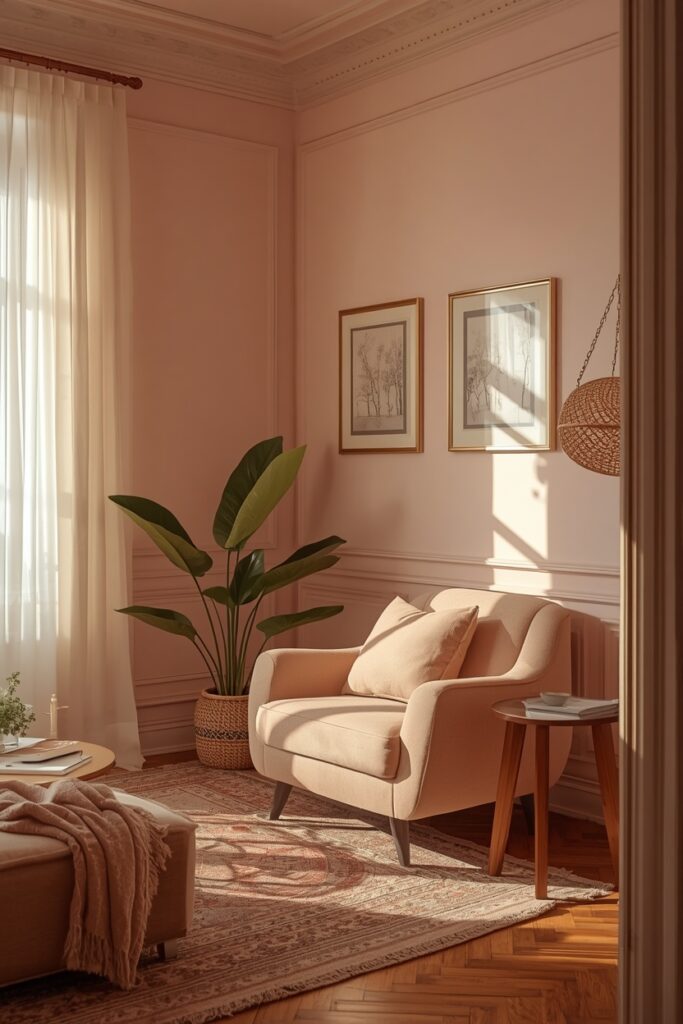
A soft blush or warm pink brings subtle warmth and a flattering glow to a small living room. At low saturation it behaves like a warm neutral, not a bold statement colour.
Choose a muted, earthy blush with a touch of beige rather than a sweet bubblegum pink. These grown-up shades feel sophisticated and pair surprisingly well with greens, browns, and warm woods.
Blush walls flatter skin tones and create a welcoming, cozy atmosphere in north-facing rooms that can otherwise feel cool. Keep accents warm and natural to reinforce the effect.
9. Use Receding Greens and Blues
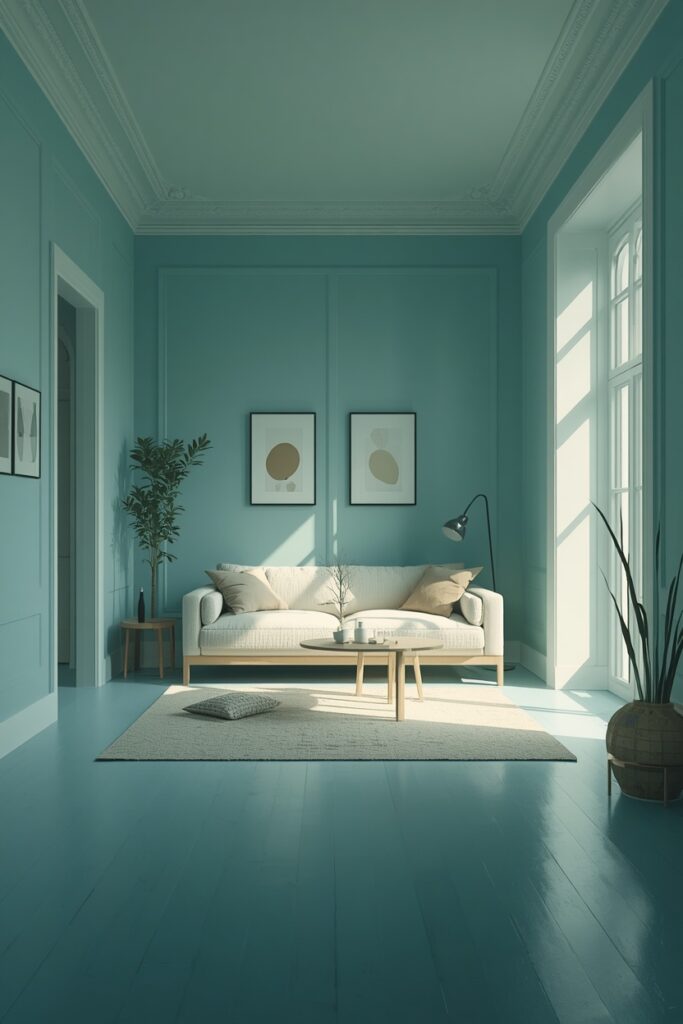
Cool colours like soft blues and greens naturally appear to recede, making walls feel further away than they are. This optical effect is a quiet ally in a small living room.
Stick to soft, light versions of these cool tones so they open the room rather than darkening it. A muted blue-green or a pale eucalyptus keeps the receding effect while staying bright.
Because cool walls can feel chilly, balance them with warm wood, soft lighting, and cosy textiles. The contrast of cool walls and warm accents creates a room that feels both spacious and welcoming.
10. Paint the Ceiling to Add Height
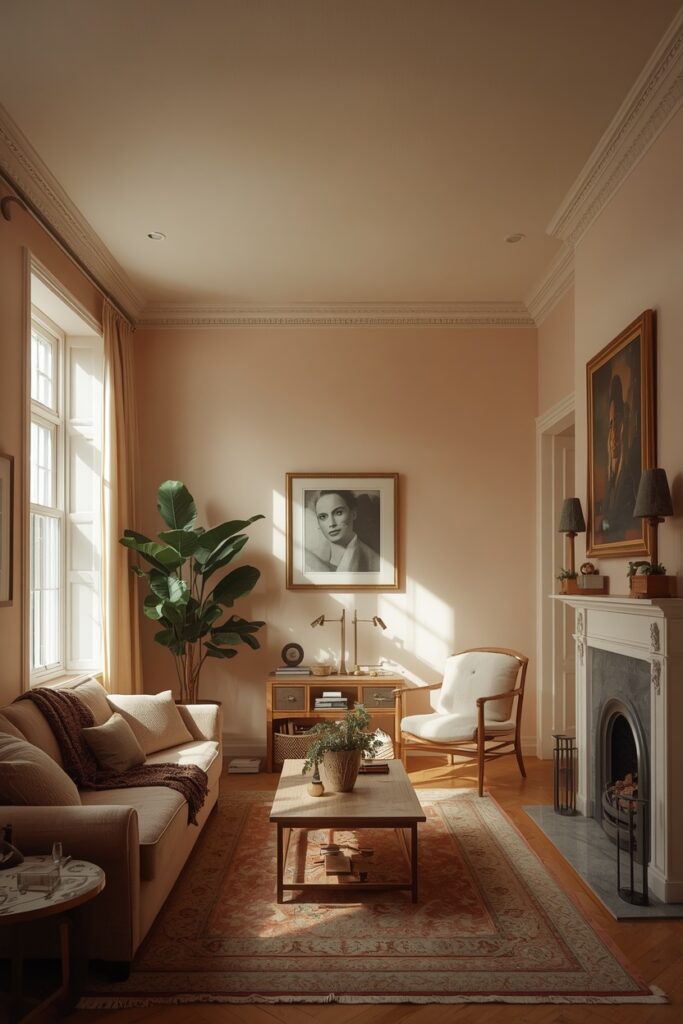
The ceiling is the most overlooked surface in a small room, yet it has huge influence over how tall the space feels. The right ceiling treatment can add precious visual height.
For maximum height, paint the ceiling a touch lighter than the walls, or continue the wall colour straight up for a seamless, lofty effect. A bright white ceiling can also lift a darker room.
Avoid a heavy, dark ceiling in a room with low ceilings, as it can press down and feel oppressive. Match the ceiling treatment to your goal: lighter to lift, matching to expand.
Best Paint Colours for Small Living Rooms
| Shade | Brand | Approx. LRV | Effect |
|---|---|---|---|
| White Dove OC-17 | Benjamin Moore | 85 | Soft, warm brightness |
| Agreeable Gray SW 7029 | Sherwin-Williams | 60 | Cozy warm neutral |
| October Mist 1495 | Benjamin Moore | 48 | Airy, calming sage |
| Hale Navy HC-154 | Benjamin Moore | 6 | Moody, cocooning depth |
| First Light 2102-70 | Benjamin Moore | 75 | Soft, warm blush |
| ⚠️ Important WarningNever choose a paint colour from a tiny chip or a phone screen alone.Paint shifts dramatically with the light in your specific room, looking warmer, cooler, or duller than the swatch suggests.Always test large samples on more than one wall and view them in morning daylight and at night under your own bulbs.Undertones are especially deceptive in small, low-light rooms, where a colour can turn unexpectedly grey, green, or pink. |
11. Choose a Warm Neutral With Wood Tones
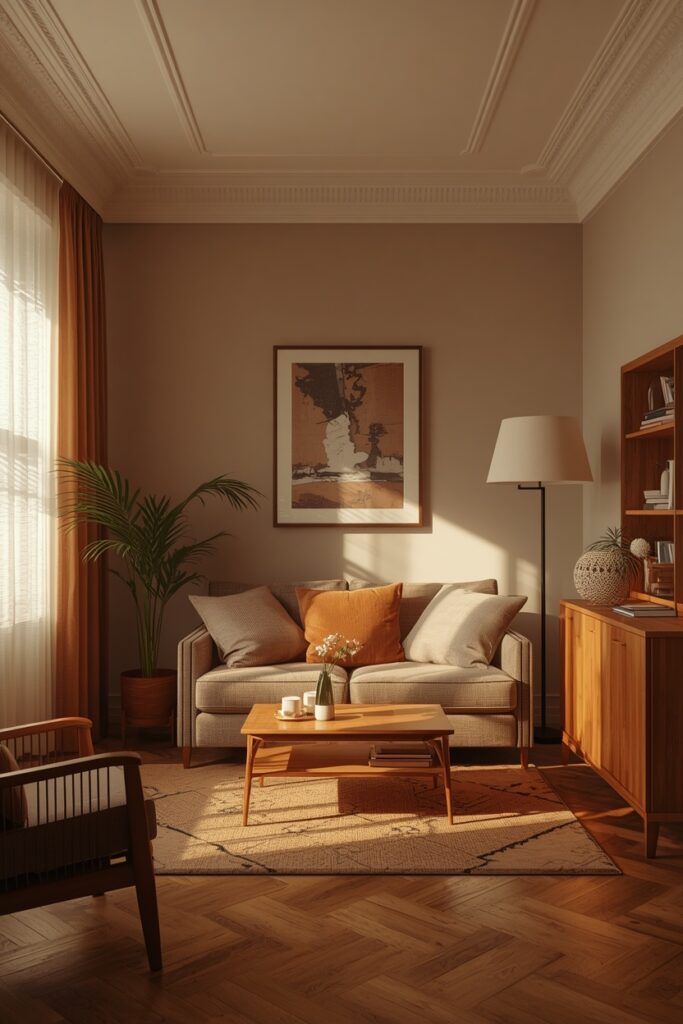
Warm neutrals like taupe, soft tan, and warm beige create a grounded, inviting base that flatters small living rooms. They feel cosier than cool greys while still keeping the space light.
These earthy neutrals pair naturally with wood tones, which is ideal if your room already has wood floors or furniture. The shared warmth ties everything together for a harmonious, calming look.
Add depth through texture rather than contrast in a tonal neutral scheme. Linen, boucle, jute, and wood keep the room interesting without the choppy contrast that can shrink a small space.
12. Layer Tonal Shades of One Colour
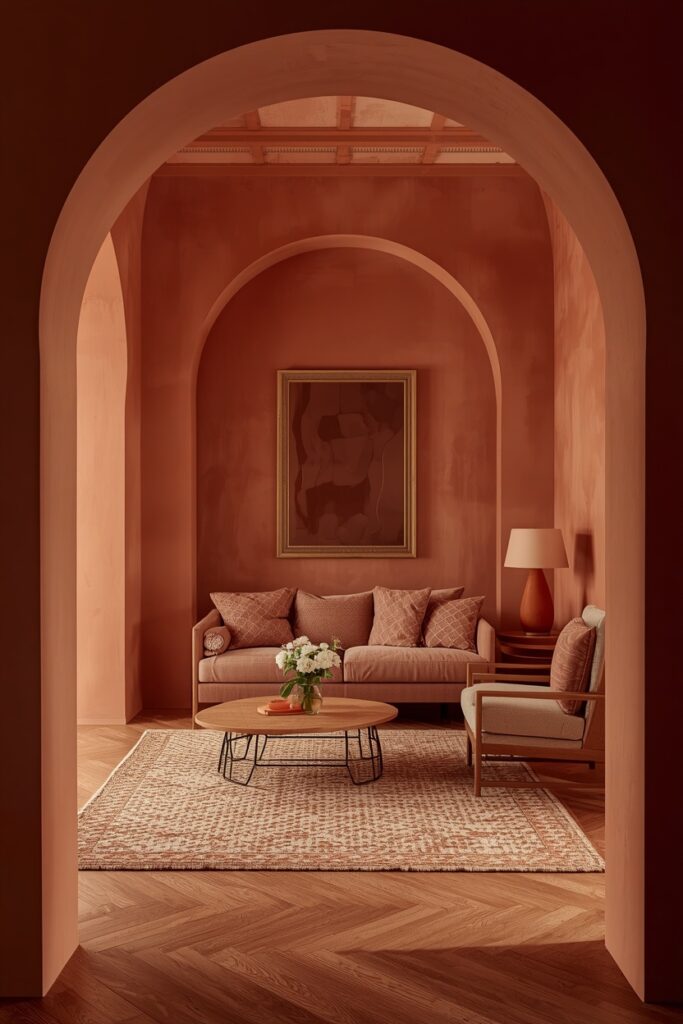
A tonal, monochromatic scheme uses several shades of one colour to add richness and depth without busy contrast. This approach makes a small room feel layered and considered rather than flat.
Choose one colour you love and build with lighter and deeper versions of it across the walls, textiles, and accents. The subtle gradation keeps the eye moving while the single hue keeps things calm.
Because there is no jarring contrast, tonal schemes feel expansive and serene in small spaces. Vary texture and finish to keep a one-colour room from ever feeling monotonous.
13. Add One Carefully Placed Accent Wall
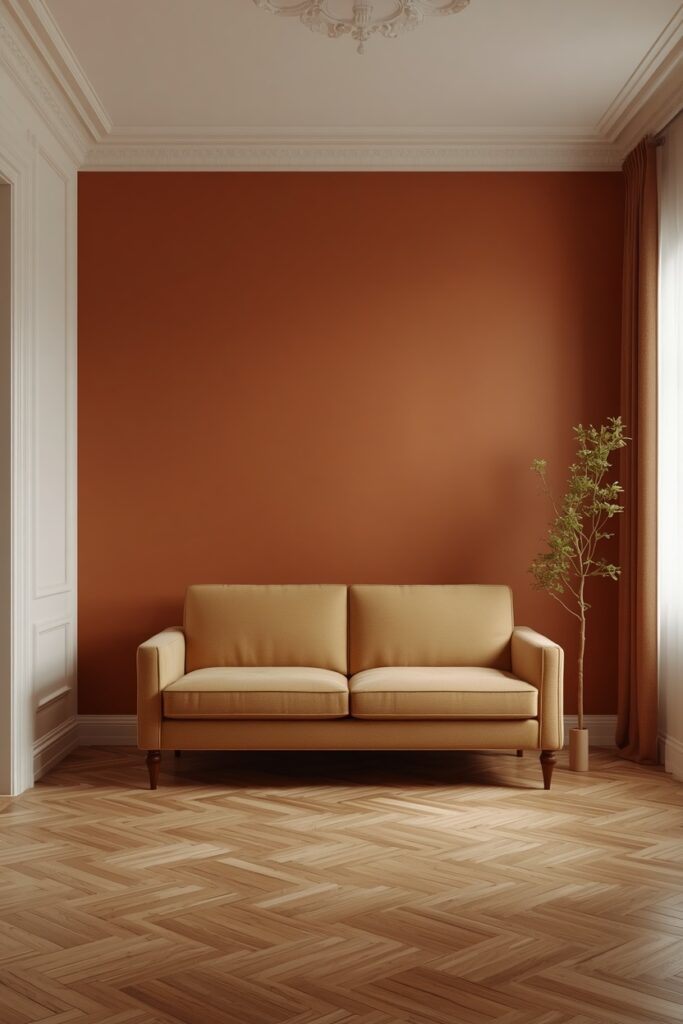
A single accent wall can add depth and a focal point to a small living room when used thoughtfully. The trick is choosing the right wall and the right colour so it adds interest without closing the room in.
Paint the wall that naturally draws the eye, often behind the sofa or a media unit, and keep the others light. A deeper warm tone here creates depth, drawing the eye in rather than pushing it back.
Avoid accenting a wall that breaks up the room awkwardly or sits in shadow. A well-placed accent adds dimension, while a poorly placed one can make a small room feel chopped up and smaller.
14. Pick High-LRV Colours to Reflect Light
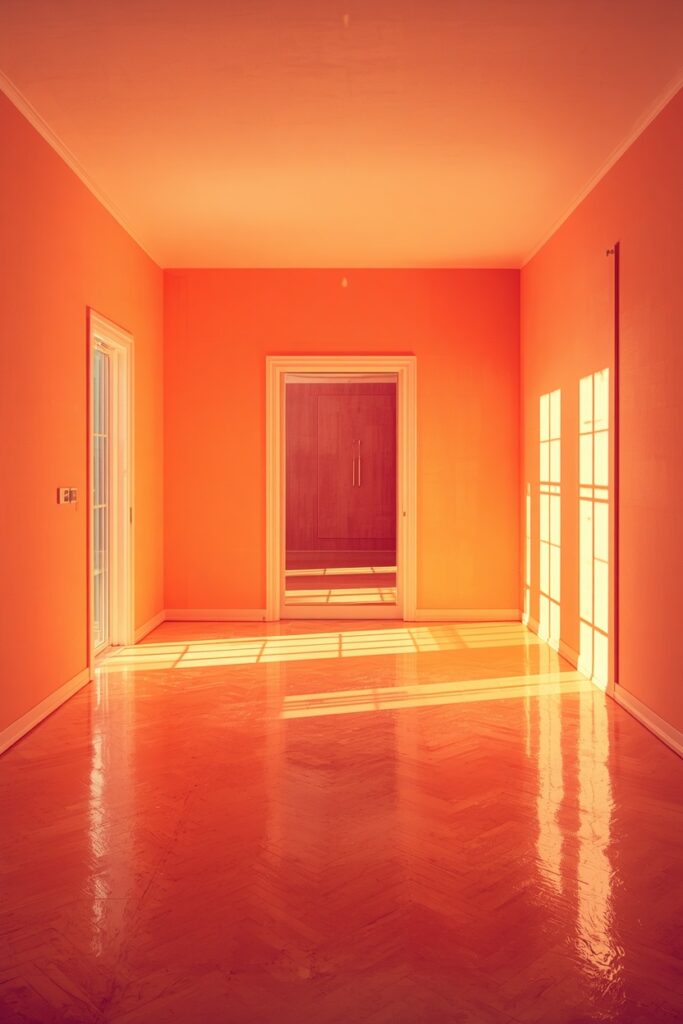
Light Reflectance Value, or LRV, is the single most useful number when choosing paint for a small room. It measures how much light a colour reflects on a scale from 0 to 100, and higher means brighter.
For a small living room that maximises light, favour colours with an LRV above 60, and ideally above 70 if natural light is limited. These reflective shades keep the space feeling open and luminous.
Pair high-LRV walls with a mirror opposite the window to multiply the effect. Bouncing daylight deeper into the room is one of the most reliable ways to make a small space feel larger.
15. Try Soft Terracotta or Warm Clay
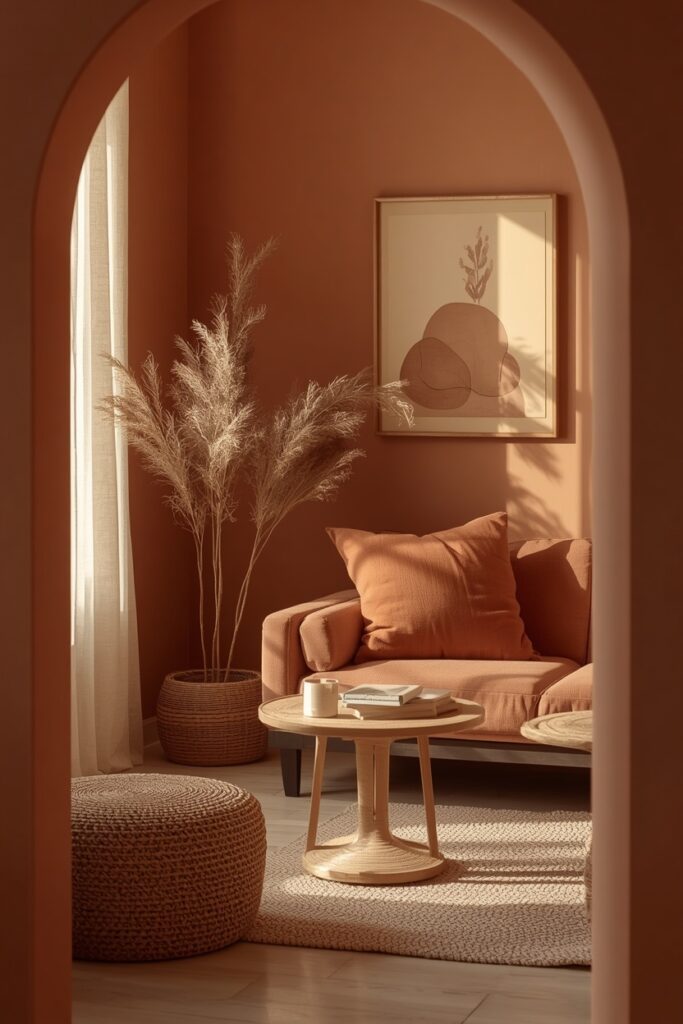
Soft terracotta and warm clay tones bring earthy, sun-baked warmth to a small living room. At a muted, dusty saturation they feel cosy and characterful without overwhelming a compact space.
Choose a softened, greyed terracotta rather than a bright orange so the colour stays sophisticated. These warm earth tones glow beautifully in warm 2700K light and suit rooms with limited sun.
Pair terracotta with cream, rattan, and plenty of greenery for a relaxed, inviting scheme. The natural materials echo the earthy wall colour and keep the small room feeling warm and current.
16. Get Cool Greys Right
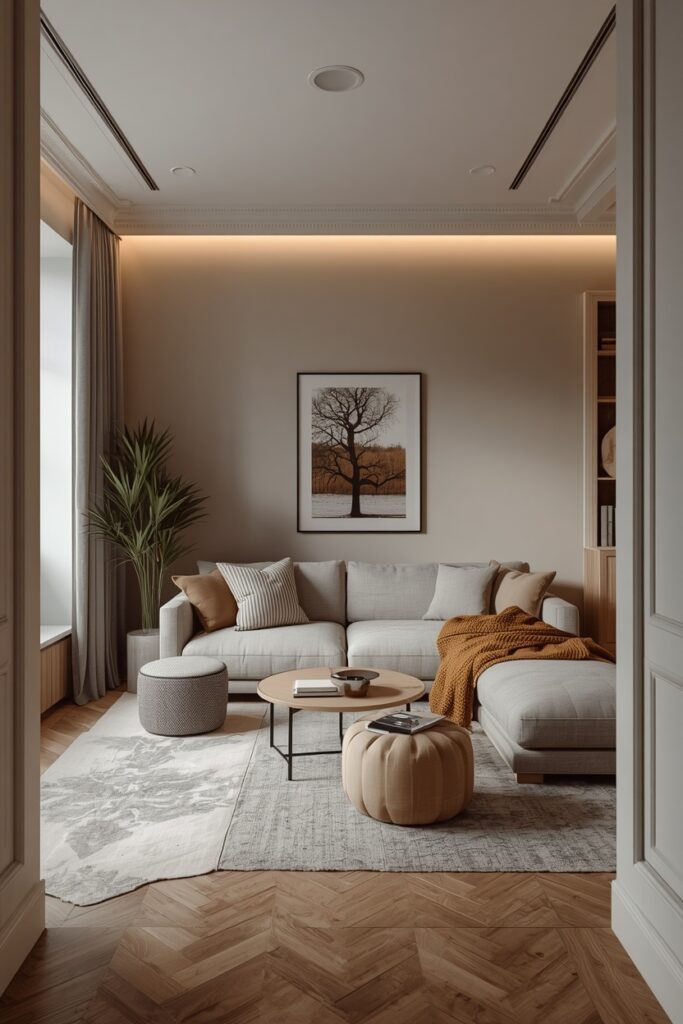
Grey remains popular for small living rooms, but it needs care to avoid feeling cold and flat. The secret is choosing a grey with a warm undertone and balancing it with plenty of warmth.
Steer toward greiges and warm greys rather than cool, blue-based ones, which can feel chilly in low light. Check the undertone in your own room, as greys are notorious for shifting blue, green, or purple.
Always warm a grey scheme with wood tones, brass, and cosy textiles. Layering in warmth stops a grey small living room from feeling like a cold, characterless box.
17. Add Interest With Two-Tone Walls

Two-tone walls add architectural interest to a plain small room and can be used to manipulate its proportions. Splitting the wall horizontally draws the eye and breaks up a flat surface.
For more height, keep the lower portion a soft deeper tone and the upper two-thirds lighter, with the break around 60 inches up. To make a tall, narrow room feel cosier, reverse the proportions.
Keep both tones soft and related so the contrast adds interest without shrinking the room. A gentle two-tone scheme feels considered and custom, lifting an ordinary small living room.
18. Test Undertones in Your Own Light
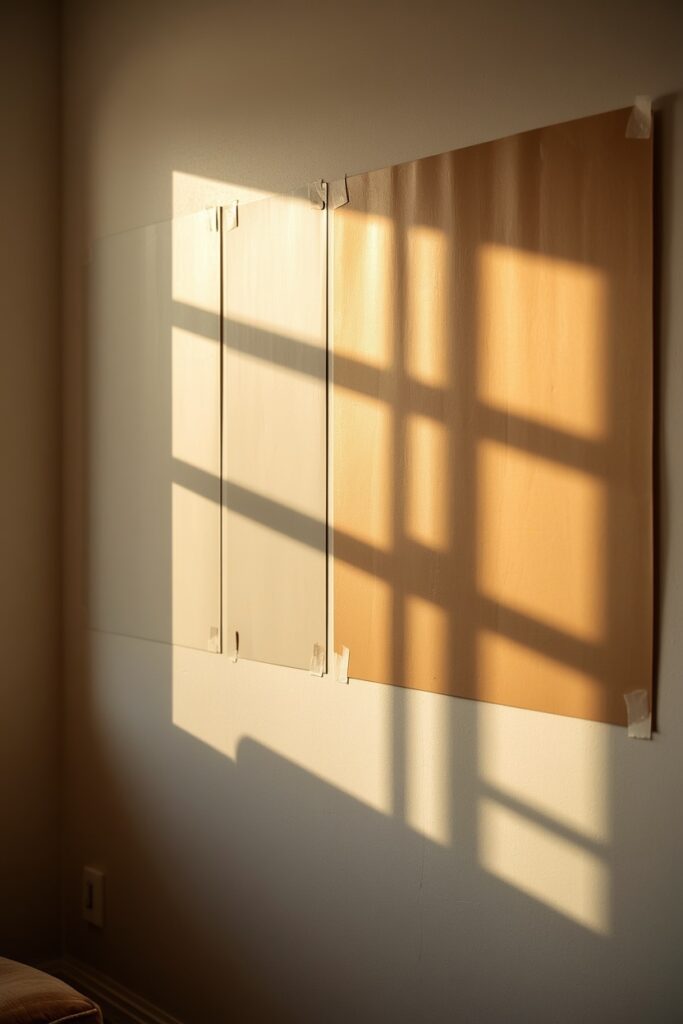
The most important colour idea of all is to test before you commit. Every colour behaves differently in your specific room, and undertones are especially unpredictable in small, low-light spaces.
Paint large swatches, or use peel-and-stick samples, on at least two walls and live with them for a few days. Watch how each shade shifts from bright morning light to warm evening lamplight.
Pay close attention to undertones that emerge in shadow, where a colour can suddenly read grey, green, or pink. Confirming the colour looks right at every time of day prevents an expensive repaint.
LRV Quick Guide for Small Living Rooms
| LRV Range | Light Reflected | Best Use in a Small Room |
|---|---|---|
| 80 to 100 | Very high | Bright whites to maximise light |
| 60 to 79 | High | Light, airy everyday colours |
| 40 to 59 | Medium | Soft sages and warm neutrals |
| 20 to 39 | Low | Cozy mid-tones with good light |
| 0 to 19 | Very low | Moody, cocooning jewel-box looks |
| ⭐ Pro TipBuy peel-and-stick paint samples instead of small pots and stick them on different walls around the room.Move them near the window, into the darkest corner, and beside the sofa to see how the colour changes.Check every shortlisted shade both in daylight and at night under your actual bulbs before deciding.This quick, low-cost test is the single best way to avoid a disappointing result in a small room. |
| 📌 Important NoteThere is no single best colour for a small living room; the right choice depends on your light, your style, and the mood you want.Light colours maximise brightness, while deep, moody shades can create a cosy, cocooning effect that also disguises the room’s size.Focus on undertone, LRV, and how the colour feels in your space rather than following any one rigid rule. |
Your Small Living Room Colour Checklist
Use this checklist before you pick up a paintbrush:
- Decide your goal first: maximise light or create a cosy, moody feel.
- Check the LRV, favouring above 60 for a brighter small room.
- Confirm the undertone is warm and consistent with your furnishings.
- Consider colour-drenching or matching trim to expand the space.
- Use a mirror opposite the window to amplify reflected light.
- Balance cool colours with warm wood, brass, and textiles.
- Test large samples on two walls in day and evening light.
Frequently Asked Questions
What colours make a small living room look bigger?
Light colours with a high LRV, such as soft warm whites, greige, pale sage, and light blue, reflect the most light and make walls recede. Colour-drenching one soft tone across walls, trim, and ceiling also makes a small room feel more open.
Can you use dark colours in a small living room?
Yes. Deep, moody colours can make a small room feel intimate and cocooning by blurring its edges in low light. For the best effect, commit fully by painting trim and ceiling to match, and layer in warm lighting and rich textures.
What is LRV and why does it matter for small rooms?
LRV, or Light Reflectance Value, measures how much light a colour reflects on a scale of 0 to 100. In a small room it matters because higher-LRV colours bounce more light around, helping the space feel brighter and larger.
Should I paint the trim and walls the same colour?
In a small living room, matching the trim to the walls is often a smart move. Removing the contrast creates a seamless, continuous surface that makes the room feel taller and wider than white trim would.
What is the best neutral for a small living room?
A warm greige such as Sherwin-Williams Agreeable Gray is one of the most reliable neutrals for a small living room. It keeps the space light and bright while adding warmth, and it pairs with almost any accent colour and wood tone.
Final Thoughts
Choosing colour for a small living room is less about following the old white-only rule and more about understanding light, undertone, and LRV. With those in hand, far more colours are open to you than you might expect.
Whether you go light and airy to maximise brightness or deep and moody for a cosy jewel-box, the principles stay the same: mind the undertone, balance cool with warm, and let the room’s light guide you.
Above all, test your shortlist properly in your own space before committing. A little patience with samples is what turns a good colour choice into the one that makes your small living room feel just right.