
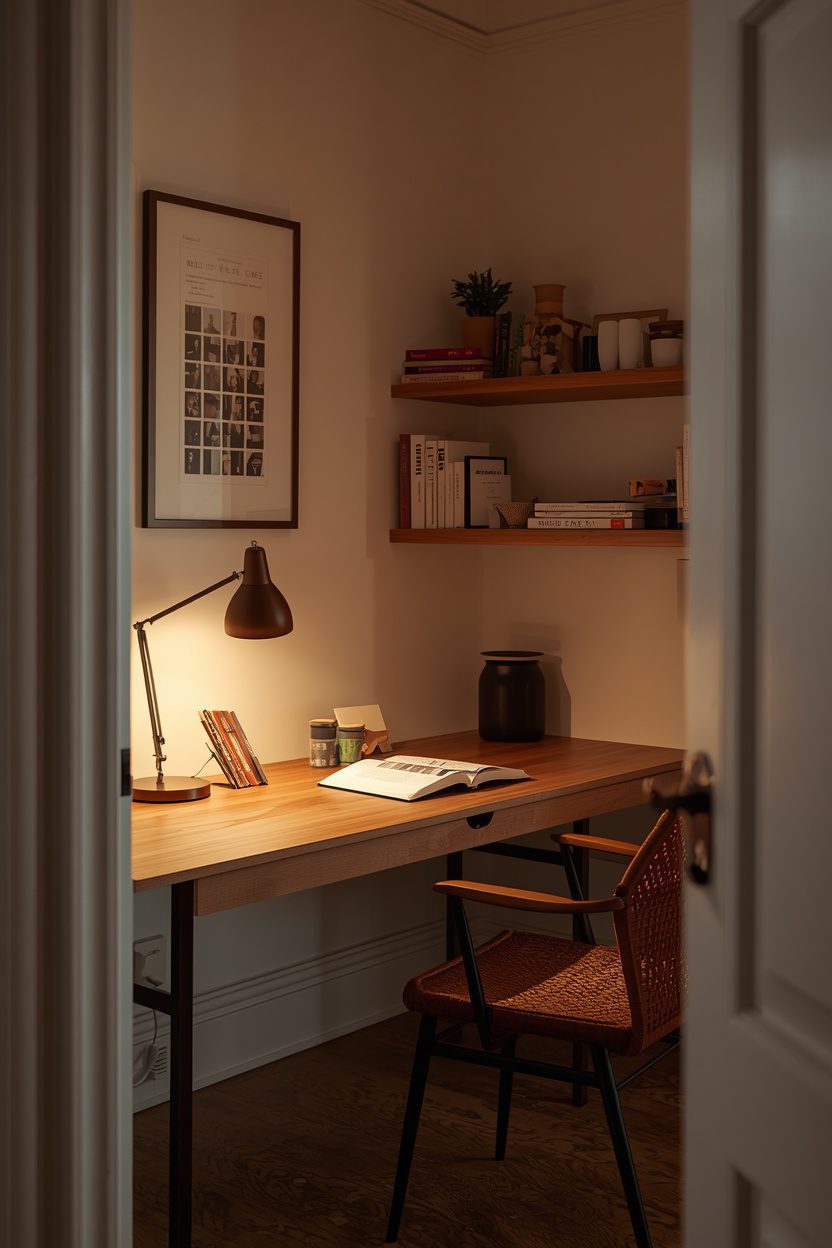
The most common mistake in a home office is designing for appearance first and discovering three months later that the lighting gives you headaches, the chair destroys your lower back, and the desk faces the wrong direction for video calls. These 15 home office ideas reverse that order: each design starts with the functional requirements — light quality, desk depth, monitor placement, acoustics — and then dresses them in materials and palettes that make the space genuinely inviting.
Some of these ideas suit a dedicated room; others carve a workspace from a bedroom corner, a closet, or a hallway nook. I have specified desk dimensions, chair types, and lighting recommendations in each idea because those three elements determine whether a home office actually gets used or slowly becomes a storage surface.
1. Warm Walnut Desk With Layered Lighting
A solid walnut or walnut-veneer desk (minimum 120 × 60 cm for a single monitor, 150 × 70 cm for dual) anchors this office with material warmth that no white laminate can match. Position the desk perpendicular to the window so natural light falls on the workspace from the side rather than creating glare on the screen. Layer the lighting: a desk lamp with a 4000K cool-white bulb for task work, an ambient ceiling or floor lamp at 2700K for the room background, and a bias light (LED strip on the monitor back) to reduce eye strain during evening sessions. A leather or fabric desk pad defines the writing zone and protects the wood surface.
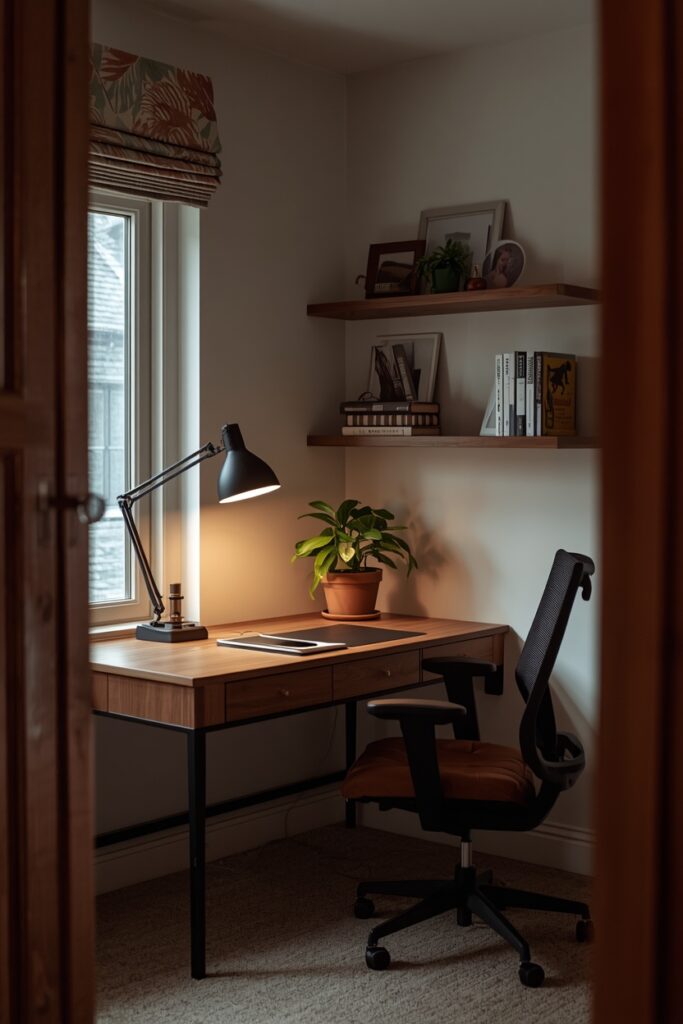
A single floating shelf above the desk at eye level holds two or three reference books and a small plant. The chair should be an ergonomic task chair with adjustable lumbar — do not choose a dining chair, no matter how handsome it looks.
2. Minimalist White Workspace
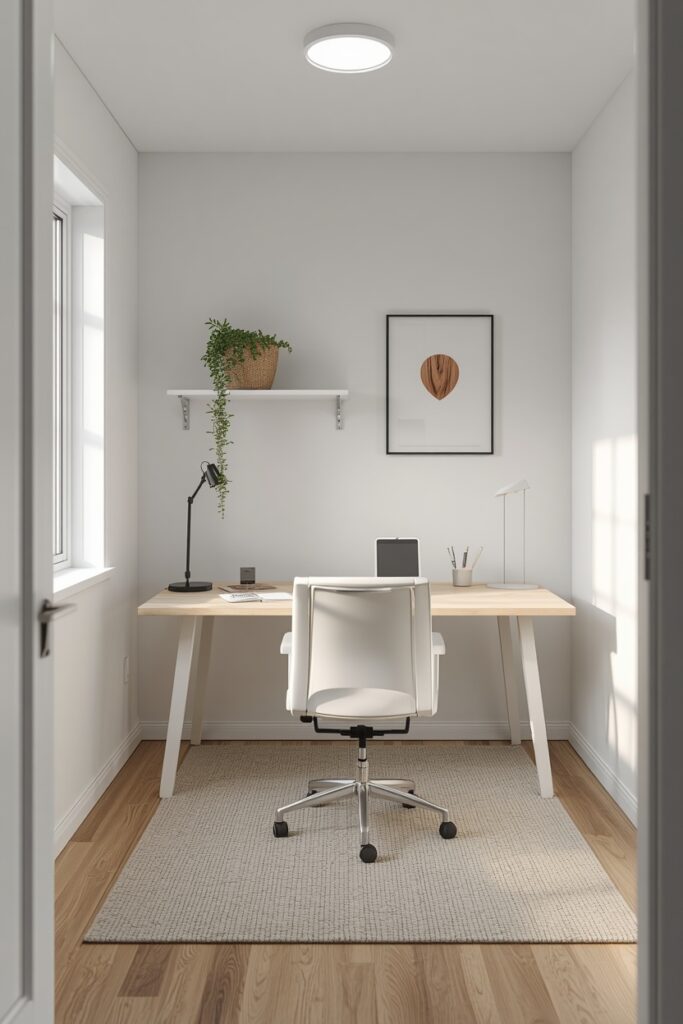
A white desk against a white wall with white shelving sounds sterile — but when every piece is chosen for its form and the room adds texture through natural materials, the result is a workspace that clears mental noise. The desk is a slim white-lacquer or white-oak piece with clean lines and a single drawer. The chair is a white or light-gray ergonomic model or a curvaceous moulded-seat design like a Tulip or Eames-style shell on a swivel base. One floating shelf in white holds a single trailing plant and a small brass clock. The floor gets a cream wool rug or a white cotton flatweave to soften acoustics.
The only colour comes from book spines, the plant, and one small piece of art in a thin white frame. Lighting is a slim white desk lamp with an adjustable arm and a flush-mount ceiling light on a dimmer. This room rewards total discipline — every object on the desk surface needs to earn its place or the minimalism collapses into mess.
3. Closet-Converted Workspace Nook
A standard closet — 120 cm wide and 60 cm deep — converts into a compact but functional home office when you remove the doors, mount a desk-height shelf (73–76 cm from the floor), and add lighting inside. A custom-cut or adjustable shelf in the same material as the surrounding trim creates the desk surface. Above it, two or three floating shelves hold books, files, and a plant. Below, a small filing cabinet or a set of baskets on the floor provides storage.
Lighting is critical in a closet office because there is no window: install a warm-white (3000K) LED strip under the top shelf to illuminate the desk, and add a small task lamp. A compact ergonomic stool or a slim office chair on castors that slides out when in use and tucks in when not keeps the nook tidy.
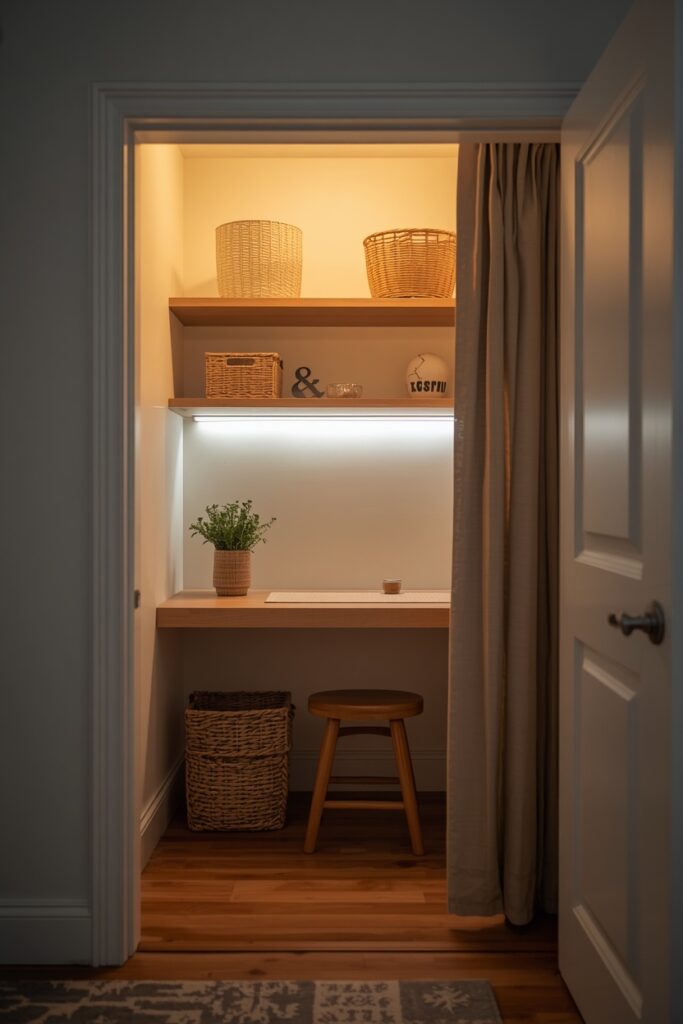
Paint the interior of the closet the same colour as the room to integrate it seamlessly. When not in use, a curtain on a tension rod or a pair of folding doors can hide the workspace.
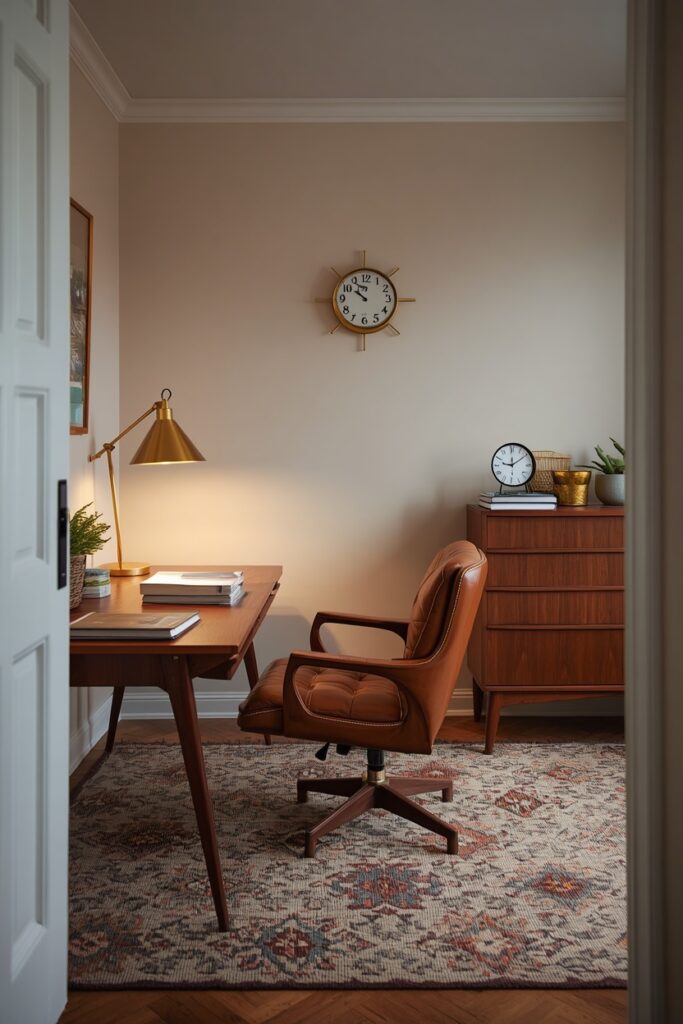
4. Mid-Century Modern Workspace With Teak Desk
A teak desk with tapered legs and a floating-top silhouette defines this office instantly. Look for a piece 140–160 cm wide with a single or double drawer pedestal and a pencil-thin frame — the mid-century hallmark is visible air between the legs and the top. Position it facing into the room rather than against the wall so the back of the desk is visible — mid-century desks are detailed on all sides for this purpose. A cognac leather swivel chair or a walnut-frame lounge-height desk chair completes the seating. The wall behind gets a single starburst clock or a graphic poster in a teak-toned frame. A small credenza or sideboard in matching teak along one wall provides closed storage for files and supplies. Lighting is a brass desk lamp with a cone shade — the classic mid-century profile — paired with a floor lamp behind the chair for ambient warmth. Keep the rug geometric: a kilim or a flat-weave in muted earthy tones.
5. Home Office Ideas With Built-In Desk and Shelving
A built-in desk — a continuous countertop running wall to wall with integrated shelving above and cabinets below — creates the most storage-dense home office possible. Use a 65–70 cm deep countertop in butcher block, white quartz, or walnut veneer, supported by base cabinets at each end. Open shelving above holds books, reference materials, and display objects, while the closed cabinets below hide printers, filing, and supplies. This setup suits rooms that serve exclusively as offices, because the built-in is permanent and defines the room’s function. Wire management is planned from the start: route cables through grommets in the countertop and along cable trays mounted under the surface.
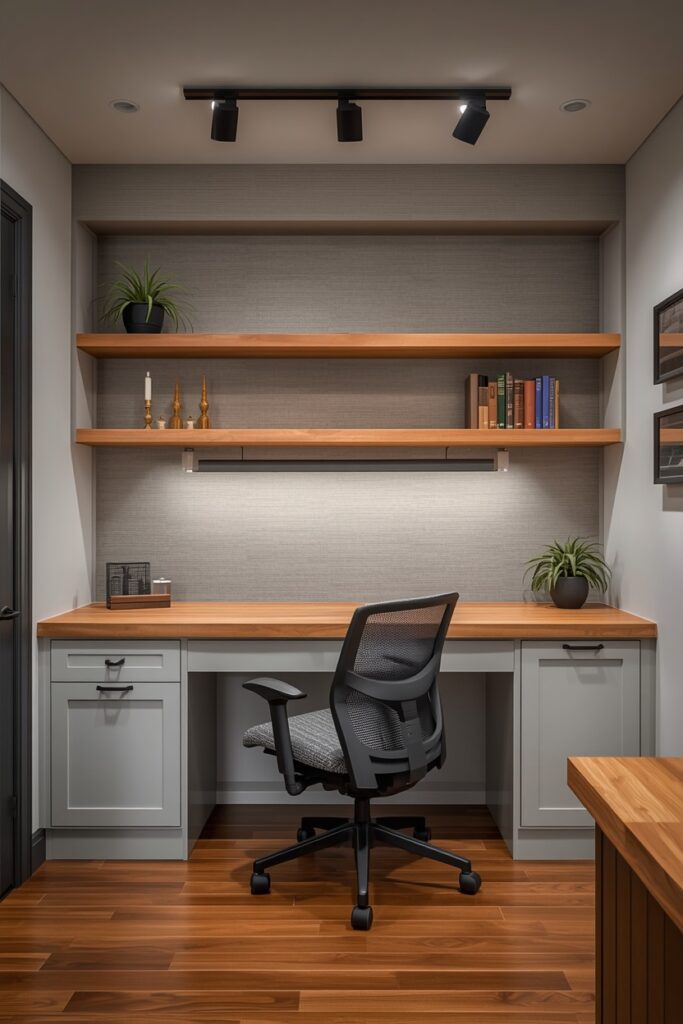
Lighting is a row of small pendant lights or track lighting above the desk, supplemented by a task lamp. The ergonomic chair should be chosen after the desk height is set, because built-in desks do not adjust — a chair with seat-height and armrest adjustability compensates.
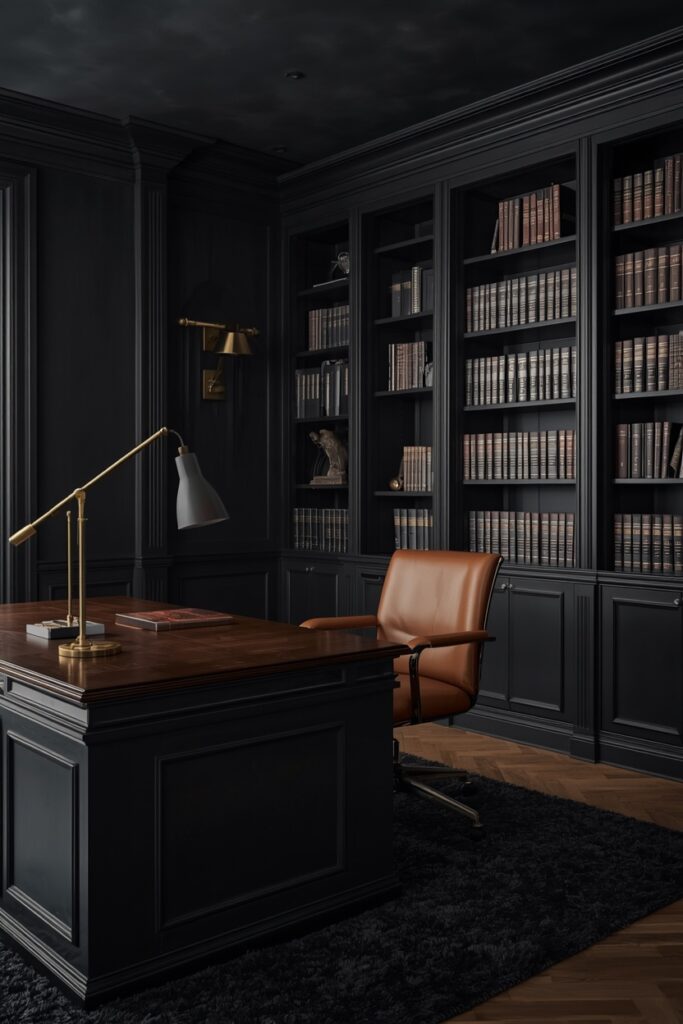
6. Dark and Moody Library-Style Study
Dark walls in a home office create a focused, enclosed atmosphere that reduces distraction — the visual equivalent of closing the door. Paint the walls in a deep charcoal, navy, or forest green in a matte or eggshell sheen. The desk should be substantial: a dark-stained oak or walnut slab, at least 150 cm wide, with brass or black-iron hardware. A leather desk chair in cognac or dark brown adds warmth against the dark walls. Floor-to-ceiling bookshelves — stained dark to match the walls or left in natural wood for contrast — line one wall.
Lighting needs special attention: a brass desk lamp, two wall sconces flanking the shelves, and a warm ceiling light on a dimmer provide enough illumination to counteract the dark surfaces. A deep-pile rug in a dark complementary tone absorbs sound and adds softness underfoot. This office reads as serious and self-contained — ideal for focused work and video calls where the background conveys professionalism.
7. Standing Desk Productivity Setup
A sit-stand desk — electric or manual crank — adds genuine health benefit to a home office by allowing posture changes throughout the day. Choose a frame in black or white steel with a solid-wood or high-quality laminate top, at least 120 × 60 cm. The minimum standing height for most people is 100–110 cm; the desk should lower to 68–76 cm for seated work. Pair it with an ergonomic stool (a perching stool or a saddle stool) for transitional sitting and a standard task chair for long seated sessions.
An anti-fatigue mat beneath the standing position cushions the feet and encourages micro-movements. Mount the monitor on an arm clamped to the desk edge so it adjusts between sitting and standing eye levels.
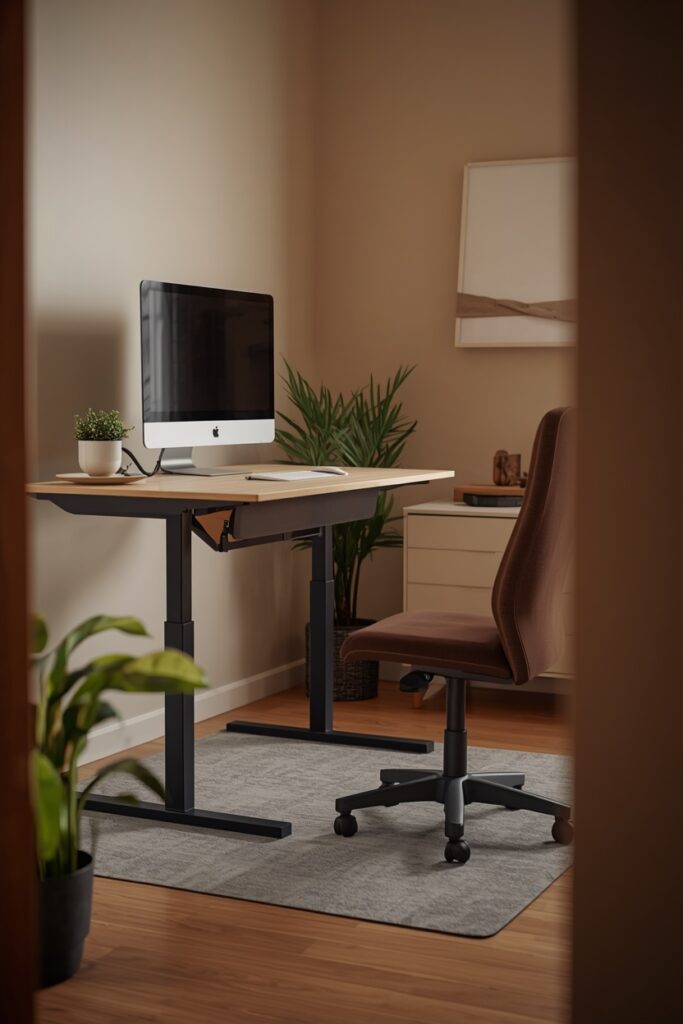
Cable management becomes more critical with a moving desk: use a cable tray or spiral cable wrap that flexes with the height change. The rest of the room stays simple — a small shelf, a plant, and warm ambient lighting — so the desk remains the functional centre.
8. Scandinavian Workspace With Light Wood
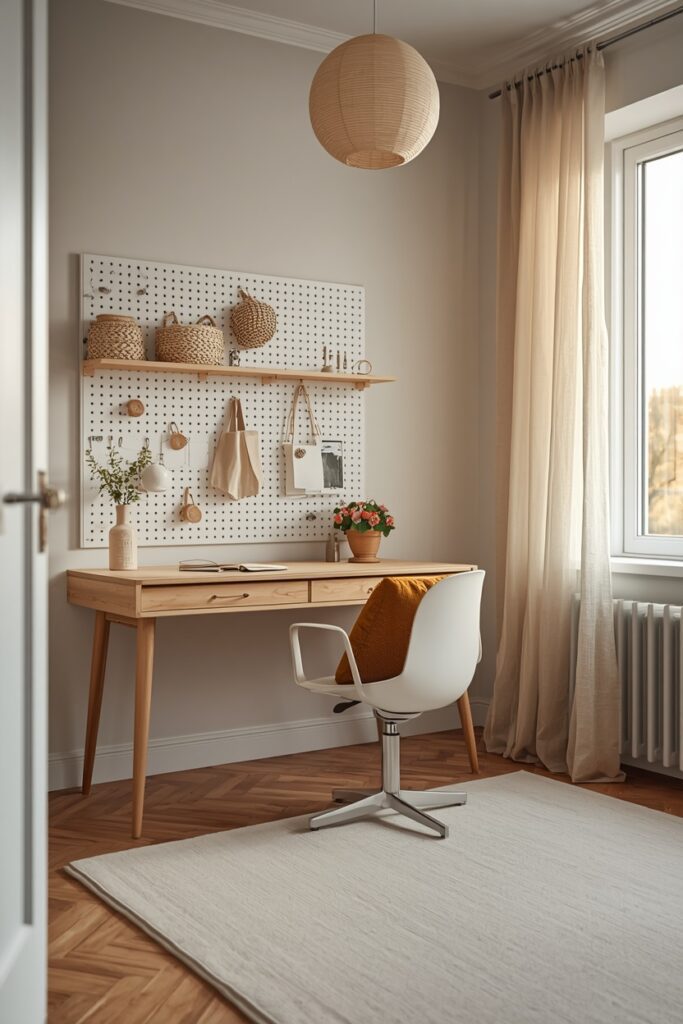
A Scandinavian home office maximises natural light and keeps every surface pale and clean. The desk is light birch, ash, or white oak — a simple rectangular top on slim legs, no drawers. A white pegboard mounted on the wall above the desk replaces a shelf system: hooks and small baskets hold supplies, headphones, and a small plant. The chair is a moulded plywood seat on a swivel base or a well-designed white task chair. The floor is bare light wood or a pale wool rug, and the curtains are the sheerest linen to let every lumen through. One accent colour — a single mustard cushion on a reading chair in the corner, or an ochre desk organiser — prevents the room from reading blank. Lighting is a slim desk lamp in white or brushed steel, supplemented by a paper pendant overhead. This room depends on natural light for its character, so it suits rooms with east- or south-facing windows. North-facing rooms may need a full-spectrum daylight lamp to compensate.
9. Bedroom Corner Workspace
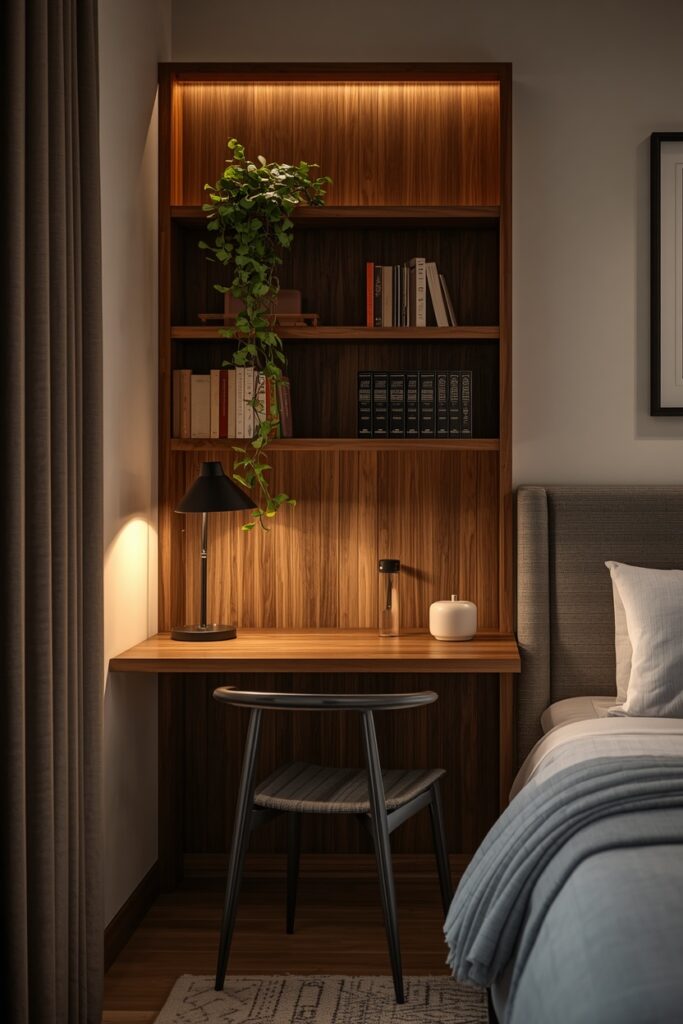
Carving a workspace from a bedroom corner requires clear visual separation between work and sleep zones. Position a compact desk (100–120 cm wide) in the corner furthest from the bed, angled so your back faces the sleeping area during work. A small room divider — a bookshelf, a curtain on a ceiling track, or a tall plant — creates the psychological boundary that lets you mentally switch between work mode and rest mode. The desk should match the bedroom furniture in tone to maintain design cohesion: if the bed frame is walnut, choose a walnut desk. Lighting is separate from the bedroom ambient: a desk lamp with a 4000K bulb for focus, switched off when work ends.
Avoid placing a monitor where its light or standby glow is visible from the bed — screen light disrupts sleep. Storage lives on a small floating shelf above the desk rather than on the floor, keeping the bedroom footprint as clean as possible.
10. Home Office Ideas With Colour-Blocked Accent Wall
A single colour-blocked accent wall behind the desk — painted in a saturated but not overwhelming tone — frames the workspace and provides a clean, professional video-call backdrop. Choose a colour that photographs well on camera: warm sage, dusty blue, soft terracotta, or warm mushroom. Apply it from corner to corner on the wall the desk faces toward (which is the wall behind you on camera). The remaining walls stay in a warm white or the palest version of the accent colour. The desk can be any material — the accent wall provides enough visual interest that the desk only needs to be functional.
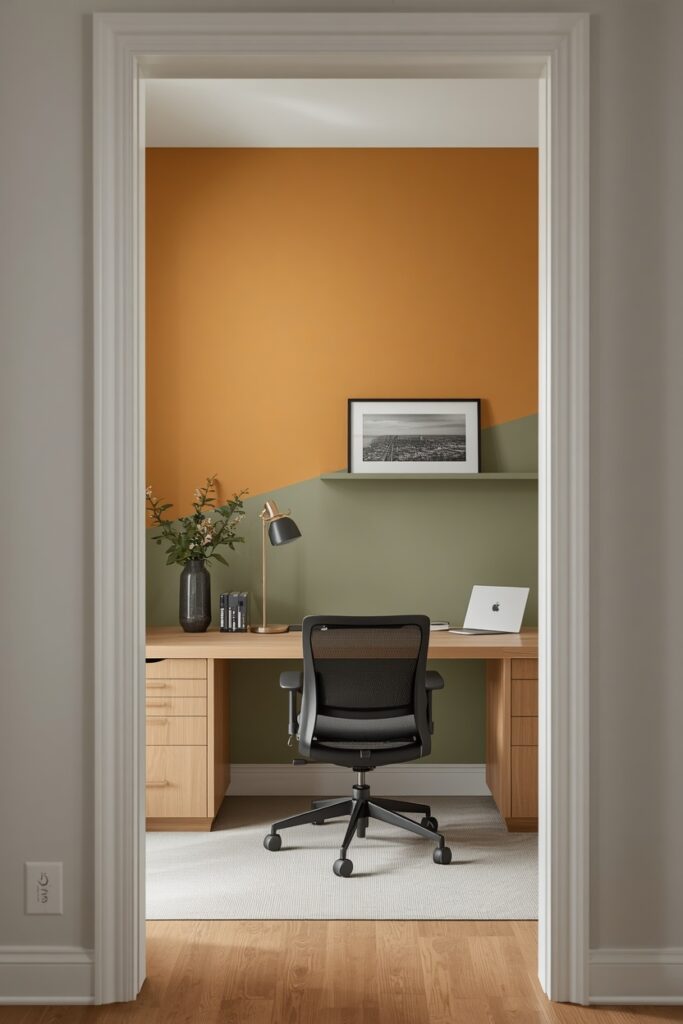
A single framed print or a floating shelf on the accent wall adds a styled touch without cluttering the background. This is one of the simplest and most cost-effective home office upgrades — a single can of paint changes the entire character of the room and gives your video calls a polished, intentional look.
11. Shared Workspace for Two People
A shared home office for two people requires either a long continuous desk (minimum 240 cm so each person gets 120 cm of workspace) or two separate desks arranged in an L-shape or facing opposite walls. The continuous desk is more space-efficient; the separated arrangement offers more privacy. Mount monitors on individual arms so each person can adjust independently, and provide a desk-mounted divider (a fabric screen, a small shelf, or a tall plant) at the midpoint for visual separation.
Each side gets its own task lamp and its own set of storage — a small drawer unit or a personal shelf. Acoustic separation is harder to solve: noise-cancelling headphones are often the practical answer in a shared room.
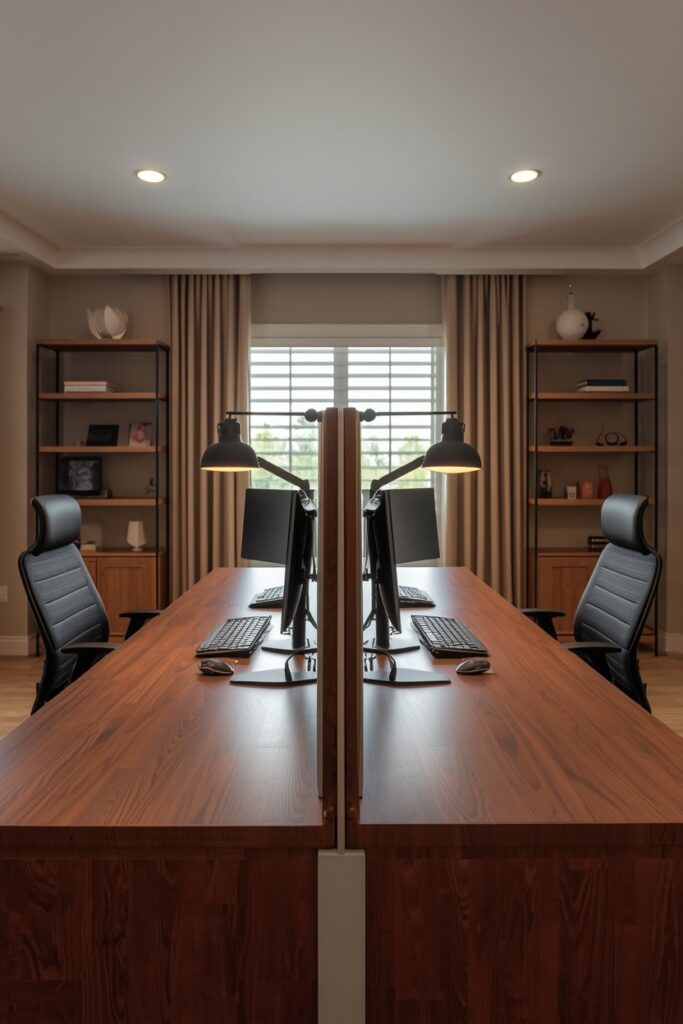
The design aesthetic should be agreed upon jointly — one person’s bohemian clutter next to another person’s minimalism creates visual tension that affects both.
12. Industrial Study With Metal and Reclaimed Wood
An industrial home office pairs a reclaimed-wood desk top — thick, rough-edged, showing the grain and character of its previous life — with a black steel pipe or metal-frame base. The contrast between the warm, organic top and the hard, angular frame defines the style. Position the desk against a wall and mount a set of black metal shelves above it — pipe shelving or floating black-steel brackets with reclaimed-wood planks. A vintage-style desk lamp in matte black or brass provides task light. The chair can be a vintage swivel stool, a leather desk chair, or a modern industrial-style task chair with exposed metal. The floor should be dark hardwood or a large polished-concrete tile. Soften the room with a flat-weave rug in a heathered gray and a couple of plants in concrete or blackened-iron planters. This office reads creative and focused — well suited to design, writing, and maker work.
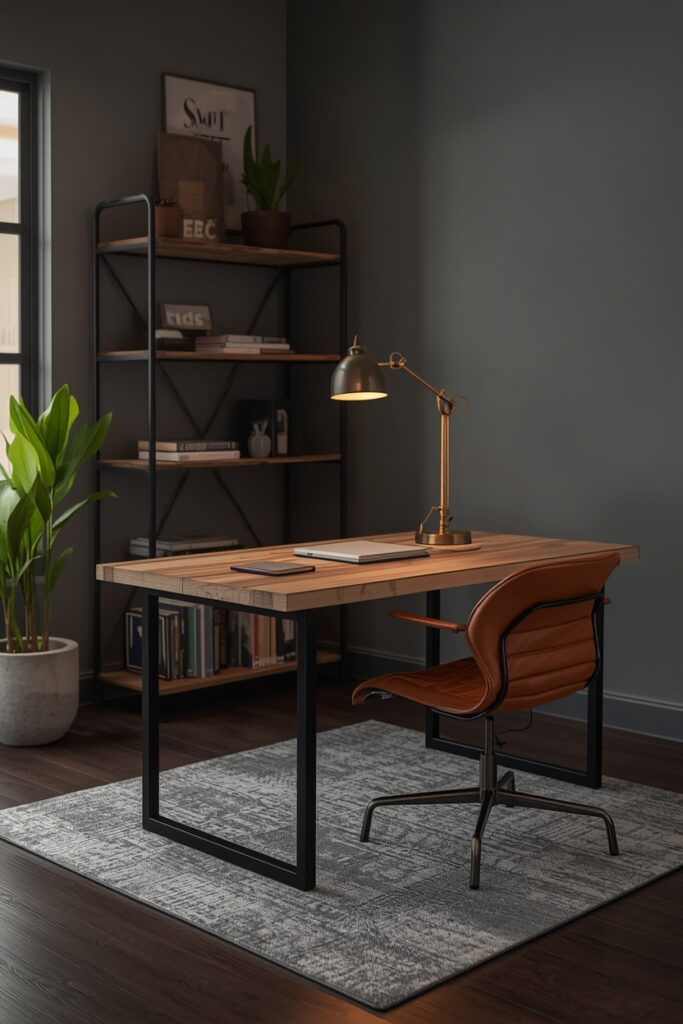
13. Gallery Wall Behind the Desk
A gallery wall behind the desk provides visual richness that you see during breaks and that appears on video calls behind you. Mix framed prints, photographs, and small objects (a mounted wooden letter, a textile swatch in a frame, a small shelf holding a plant) in a salon-style arrangement. Keep the frames in one family — all black, all natural wood, or a curated mix of two tones — and space them 5–7 cm apart. The arrangement should start 15 cm above any furniture and extend to roughly 30 cm below the ceiling. Choose imagery that inspires without distracting: abstract art, architectural photography, botanical prints, or typography.
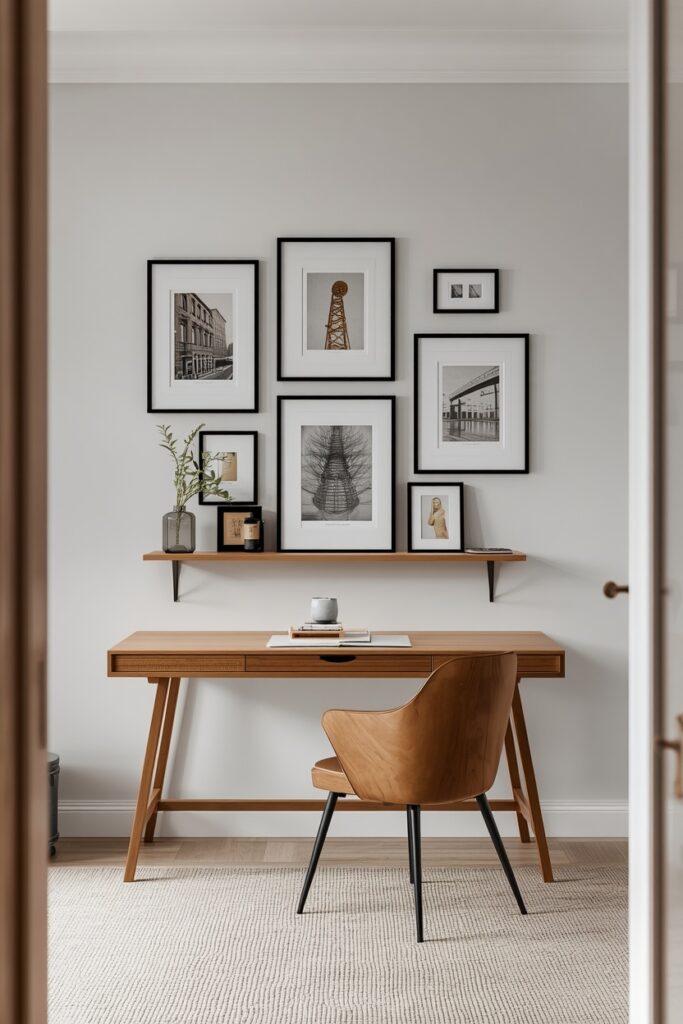
The rest of the room stays restrained — a clean desk, a simple rug, and neutral walls — so the gallery wall carries the personality. Lay the arrangement on the floor first, snap a photo, and use that as your hanging guide; gallery walls are much easier to plan on the ground than on the wall.
14. Green Workspace With Living Plant Wall
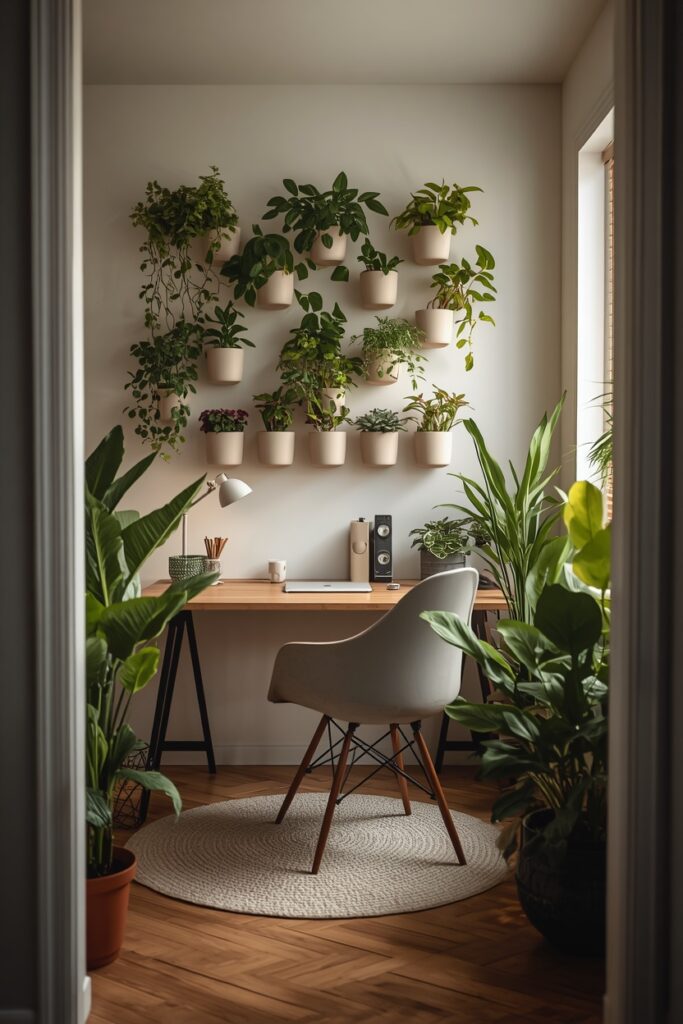
Surrounding yourself with plants in a home office is not just aesthetic — research consistently links indoor plants to reduced stress and improved concentration in work environments. A living plant wall on the wall beside or behind the desk — using modular wall-mounted planters, a grid trellis with climbing plants, or a vertical felt-pocket system — creates a green backdrop that softens acoustics and improves air quality. Choose low-maintenance species: pothos, philodendrons, snake plants, and ZZ plants tolerate indoor conditions and irregular watering. Supplement with two or three floor or desk plants in ceramic or concrete pots.
The rest of the room stays neutral — warm white walls, a simple desk, and natural-material accessories — so the green wall is the statement. Lighting for the plants may need supplementation: a full-spectrum grow light on a timer keeps the wall healthy in rooms with limited natural light, but position it so it does not glare on the monitor.
15. Home Office Ideas in a Hallway or Landing Nook
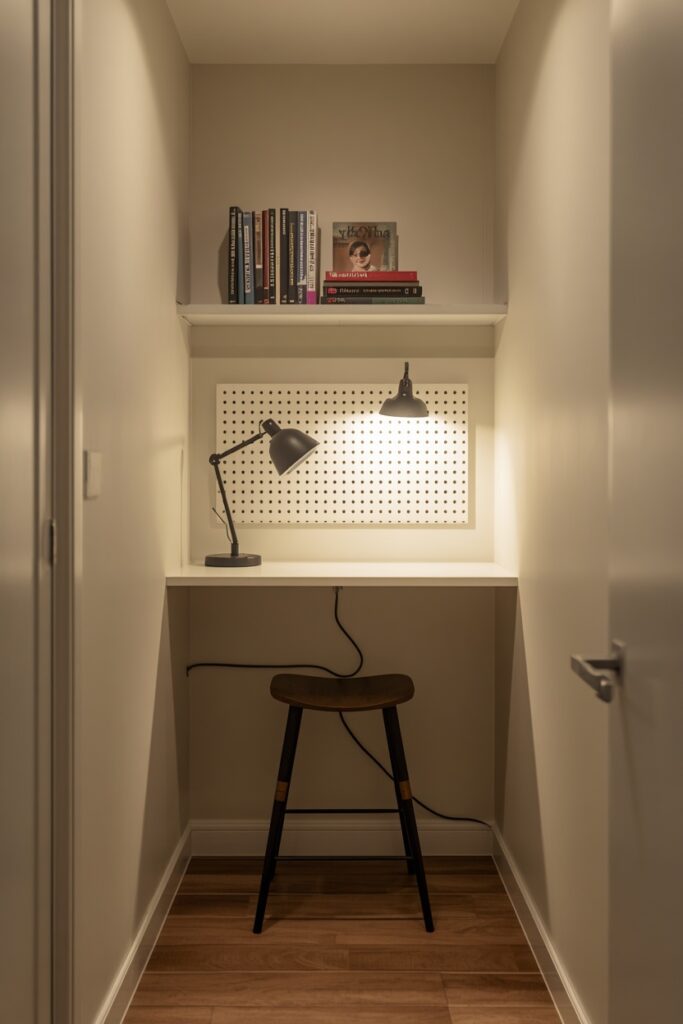
A hallway or staircase landing — even a strip as narrow as 50 cm deep — can host a functional home office when the desk is a floating wall-mounted shelf. Install a 100 × 40 cm shelf at standard desk height (73–76 cm) and pair it with a slim stool or a chair that tucks fully underneath. Mount a small pegboard or a narrow floating shelf above for supplies and a plant. Lighting is a wall-mounted adjustable lamp or a clip-on desk light that does not take surface space.
Cable management routes to the nearest outlet through a wall-mounted trunking strip painted to match the wall. This setup has zero floor footprint when the chair is stored, which is essential in a hallway that must remain a walkway.
The trade-off is privacy and noise — hallways are transition spaces, so this office suits task-based work sessions rather than full-day deep focus. For video calls, position the desk so the camera faces a clean wall rather than the hall traffic behind you.
Where I’d Start if I Only Did Three Things
If I only did three things, I would start with the chair — an ergonomic task chair with adjustable lumbar support is the single most important purchase in a home office, because every hour you spend working is an hour your body spends in that chair. Second, I would position the desk perpendicular to the window so natural light falls from the side, which eliminates screen glare and backlit video-call silhouettes simultaneously. Third, I would add a desk lamp with a 4000K bulb for task focus, separate from the room’s ambient lighting, so the workspace has its own visual zone even when the rest of the room goes dim.
Frequently Asked Questions
What home office ideas work best in a small apartment?
A closet conversion, a floating wall-mounted desk in a hallway, or a bedroom corner setup with a compact desk and visual divider are the three most space-efficient approaches. All three create a functional workspace without sacrificing a full room. Look for furniture that stores flat or tucks under the desk when not in use.
What desk size do I need for a dual-monitor setup?
A minimum of 150 cm wide and 70 cm deep gives enough space for two monitors on arms plus a keyboard and mouse. If the desk does not have a drawer, add 10 cm of depth for a desk pad. Monitor arms free up the desk surface compared to stands, so they are a worthwhile investment for dual-screen setups.
How do I reduce echo in a home office for video calls?
Soft surfaces absorb sound: a rug on the floor, curtains on the window, a fabric-upholstered chair, and a bookshelf full of books all reduce echo. Acoustic panels (fabric-wrapped foam or felt tiles) mounted on the wall behind or beside the desk provide targeted absorption. Even a folded blanket draped over a chair behind you helps during calls.
What colour wall looks best behind a desk for video calls?
Warm neutrals photograph best on camera: a warm sage, soft mushroom, or dusty blue creates a professional backdrop without the harshness of white or the cave-like effect of dark walls. Avoid strong reds and yellows, which can cast an unflattering colour onto your face from reflected light. Test your wall colour on a video call before committing to a full paint job.
Final Thoughts
The best home office ideas put function first — good lighting, the right desk height, an ergonomic chair, and a layout that minimises distraction — and then dress those foundations in materials and colours that make you want to spend time there. Whether you have a full room or a closet nook, the principles are the same: position the desk for side light, layer the illumination, and keep the surfaces clear enough that your mind can focus on the work rather than the surroundings.